


|
Have questions?
Contact us
Already a member? Sign in
|
Get every literary device explanation for Oliver TwistPlus so much more...
Sign up for LitCharts A+Get instant access to every literary device explanation, plus so much more...
Foil
Explanation and Analysis—Oliver and Fagin's Boys:
Virtually all of the other boys who work for Fagin—the Artful Dodger, Charley Bates, and even Noah Claypole—serve as foils to Oliver by falling into the life of crime he manages to resist. In Chapter 42, Noah's admission that he would like to earn money through crime allows Fagin to blackmail Noah into working for him:
Whether Noah Claypole, whose rapacity was none of the least comprehensive, would have acceded even to these glowing terms, had he been a perfectly free agent, is very doubtful; but as he recollected that, in the event of his refusal, it was in the power of his new acquaintance to give him up to justice immediately, (and more unlikely things had come to pass,) he gradually relented, and said he thought that would suit him.
Noah comes from a similar background to Oliver, having worked for Mr. Sowerberry as well. Noah spent longer there than Oliver and had already "soured" into a mean-spirited young man when Oliver met him. This difference in temperament is the main difference between Oliver and Noah, especially given their uncannily parallel encounters with Fagin immediately upon coming to the city. The fact that Noah has no choice but to work for Fagin, lest Fagin turn him into the police, suggests that Oliver may not have been so resistant to criminality had he stayed in the Sowerberry house long enough to have his inherent goodness bullied out of him.
Noah is not the only young man who is different than Oliver only in caving to Fagin's pressure. The Artful Dodger and Charley Bates have already become thieves by the time Oliver meets them, driven by Fagin's predatory "fathering" and similarly desperate circumstances to those Oliver finds himself in. Whereas Oliver has chance encounters with Mr. Brownlow and the Maylies before he gives in to Fagin's pressures, the other boys are not so lucky. In Chapter 43, Charley describes what happens to the Dodger when he is caught for a series of thefts:
"They’ve found the gentleman as owns the box; two or three more’s a coming to ’dentify him, and the Artful’s booked for a passage out," replied Master Bates.
The Dodger is set to be transported to a penal colony, ripped away from home and made to labor on behalf of the English empire as punishment for his crimes. This moment illuminates what may easily have happened to Oliver if he had gone through with the burglary at the Maylies' house, or even if the Maylies had not chosen to direct the investigators away from him. By including Fagin's other boys as foils for Oliver, Dickens emphasizes that Oliver gets his happy ending by the skin of his teeth.
Monthly
Annual (Best Value)

$595USD/mo
Charged $71.40 USD every year



 Teacher
$795USD/mo
Charged $95.40 USD every year




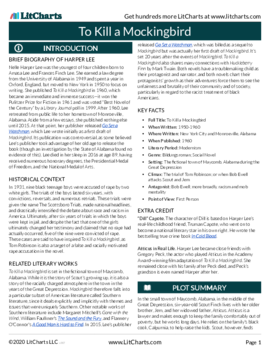
Literature Guide PDFs
LitCharts PDFs for every book you'll read this year.
Instant PDF downloads of all 2238 LitCharts literature guides and of every new one we publish. Try a free sample literature guide.
"Would not have made it through AP Literature without the printable PDFs. They're like having in-class notes for every discussion!"




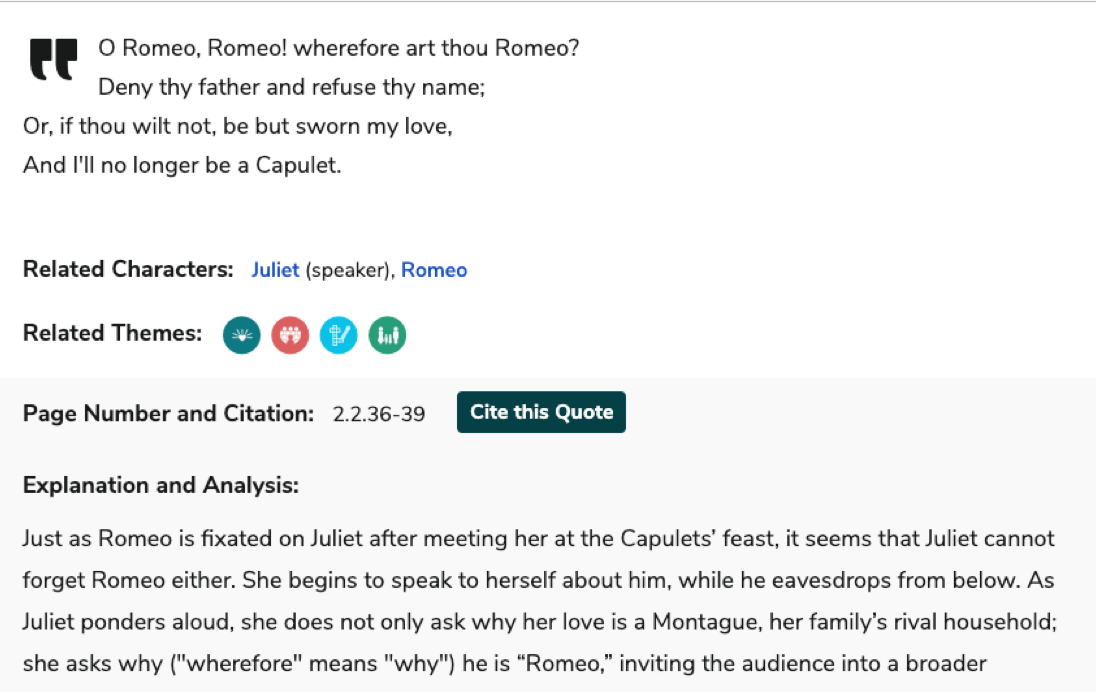
Quotes Explanations
Find the perfect quote. Understand it perfectly. Then rock the citation, too.
For all 49,909 quotes we cover.
For all 49,909 quotes we cover.



Teacher Editions
Close reading made easy for students.
Time saved for teachers.
For every book we cover.
Time saved for teachers.
For every book we cover.


Common Core-aligned


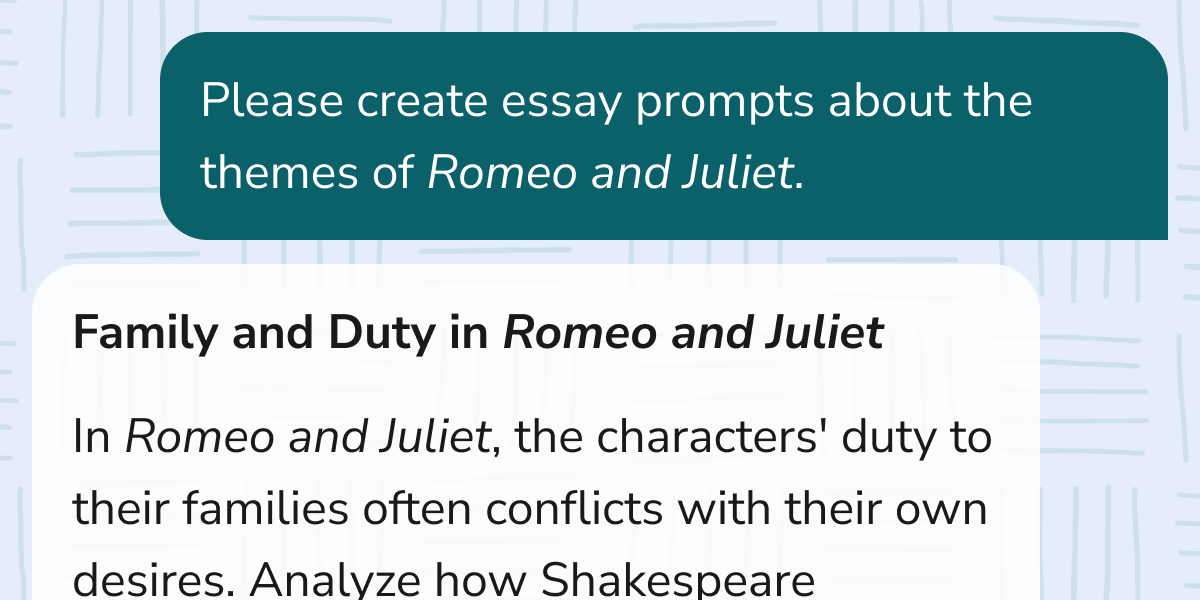
PDFs of modern translations of every one of Shakespeare's 37 plays, 154 sonnets, and 3 longer poems.

Literary Terms and Devices
Definitions and examples for every literary term and device you need to know.
Plus a quick-reference PDF with concise definitions of all 136 terms in one place.
Plus a quick-reference PDF with concise definitions of all 136 terms in one place.


Try a free sample literary term PDF.


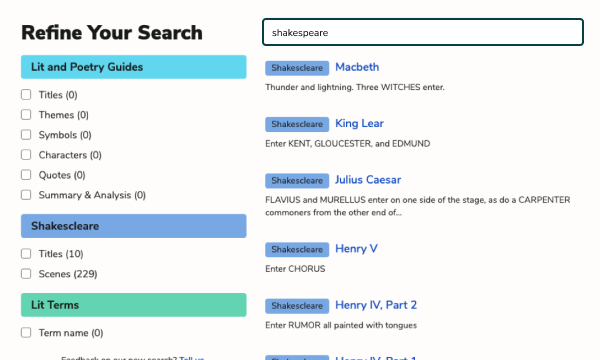
Advanced Search
Refine any search. Find related themes, quotes, symbols, characters, and more.


Related Themes
Comparing and contrasting texts? Find where any theme occurs across all of LitCharts in seconds.



Poetry Guides
Line-by-line explanations and analysis of figurative language and poetic devices.
For every lyric poem we cover.
For every lyric poem we cover.
