


|
Have questions?
Contact us
Already a member? Sign in
|
Get every literary device explanation for Le Morte d’ArthurPlus so much more...
Sign up for LitCharts A+Get instant access to every literary device explanation, plus so much more...
Metaphor
Explanation and Analysis—Sangreal Prophecy:
In Volume 2, Book 14, Chapter 2, the Queen of the Waste Lands tells Percivale about how Merlin made the Round Table and informed the men about the future of the Grail quest. Merlin's prophecy reportedly involved a great deal of figurative language, including a metaphor and a pair of similes:
And men asked him how men might know them that should best do and to achieve the Sangrail. Then he said there should be three white bulls that should achieve it, and the two should be maidens, and the third should be chaste. And that one of the three should pass his father as much as the lion passeth the leopard, both of strength and hardiness.
The three white bulls (two maidens and one chaste) are a metaphor for the people who will find the grail (Percivale, Sir Bors, and Galahad). But this metaphor has multiple layers. White is usually associated with good and with devout Christianity in Malory's book. The white bulls themselves could represent any knights, as long as they are aligned with good and with God, and as long as one of them is "chaste."
The first real clue to who these three will be lies in the metaphorical comparison between "white bulls" and "maidens." Bulls are male, but the prophecy describes two of them as "maidens" (a feminine term). Maidens are women who have never been married, which should mean (according to the conventions of Arthur's court and Malory's day) that they have never had sex. There is no equivalent term for men because the same standard does not apply to them, so Merlin simply uses a metaphor to compare two of the "white bulls" (or good knights) to "maidens." A "maiden" knight is in fact so special that this status is part of what qualifies him to achieve the Sangreal. By the time Galahad and Percivale reach the Sangreal, they are the only two knights who qualify. It is notable that Sir Bors also qualifies to "achieve" the Sangreal even though he is merely "chaste," not strictly virginal. This means he has given into sexual temptation once but that it doesn't count against him enough to disqualify him. Just as Launcelot is lax and hypocritical about his own definition of fidelity, the book gives Sir Bors leeway that is rarely if ever offered to women.
The second clue that Galahad in particular will reach the Sangreal lies in the analogy claiming that one of the "white bulls" will surpass his father like a lion surpasses a leopard. The central father and son duo is Launcelot and Galahad, so this is a fairly clear indicator that Galahad will prevail. This analogy is a three-part simile. Merlin compares the relationship between the father and son in question to the relationship between a leopard and a lion. Within that comparison, he compares Launcelot to a leopard and Galahad to a lion. The lion comes up again and again in the book as a symbol of Christ, and Galahad's achievement of the Sangreal makes him a Christ-like figure. It is a flattering comparison. By contrast, Merlin compares Launcelot to a leopard. The leopard may be powerful and fast, but it cannot quite compete with the lion. This is the tragedy of Launcelot's character: he is extremely powerful and very good, but he is not a match for Galahad. However, he gets some redemption at the end of the book, when he is carried to heaven just as Galahad was.
Monthly
Annual (Best Value)

$595USD/mo
Charged $71.40 USD every year



 Teacher
$795USD/mo
Charged $95.40 USD every year




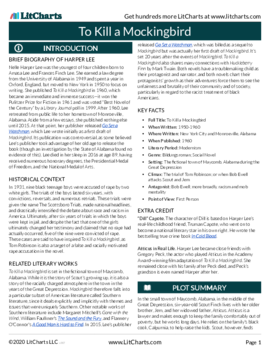
Literature Guide PDFs
LitCharts PDFs for every book you'll read this year.
Instant PDF downloads of all 2238 LitCharts literature guides and of every new one we publish. Try a free sample literature guide.
"Would not have made it through AP Literature without the printable PDFs. They're like having in-class notes for every discussion!"




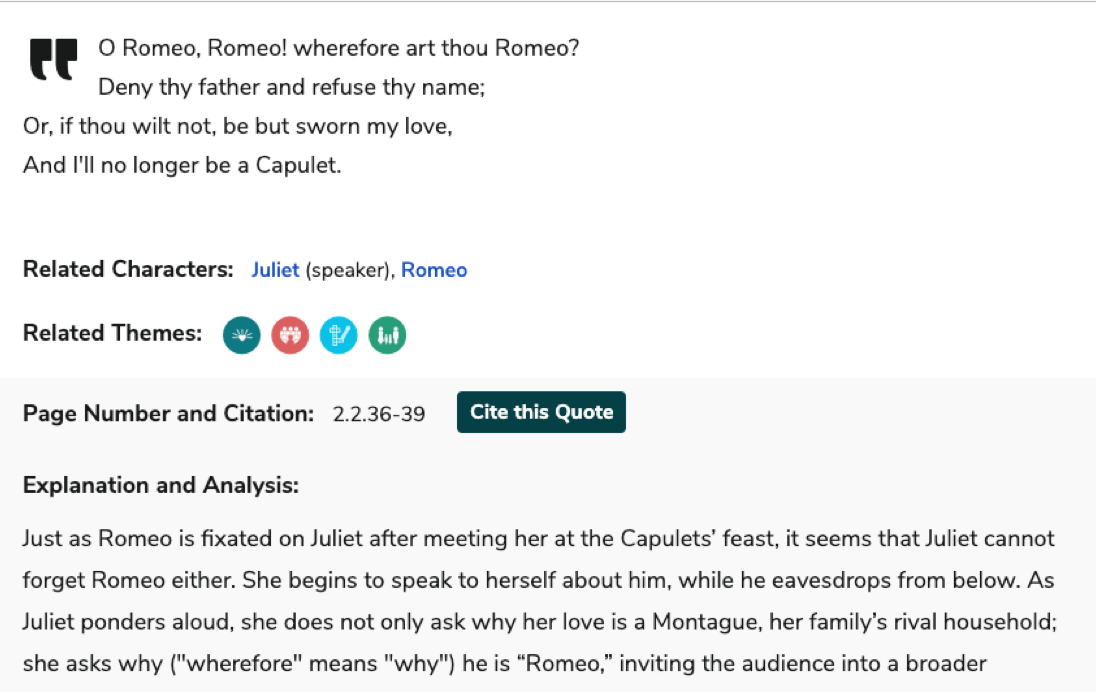
Quotes Explanations
Find the perfect quote. Understand it perfectly. Then rock the citation, too.
For all 49,909 quotes we cover.
For all 49,909 quotes we cover.



Teacher Editions
Close reading made easy for students.
Time saved for teachers.
For every book we cover.
Time saved for teachers.
For every book we cover.


Common Core-aligned


PDFs of modern translations of every one of Shakespeare's 37 plays, 154 sonnets, and 3 longer poems.

Literary Terms and Devices
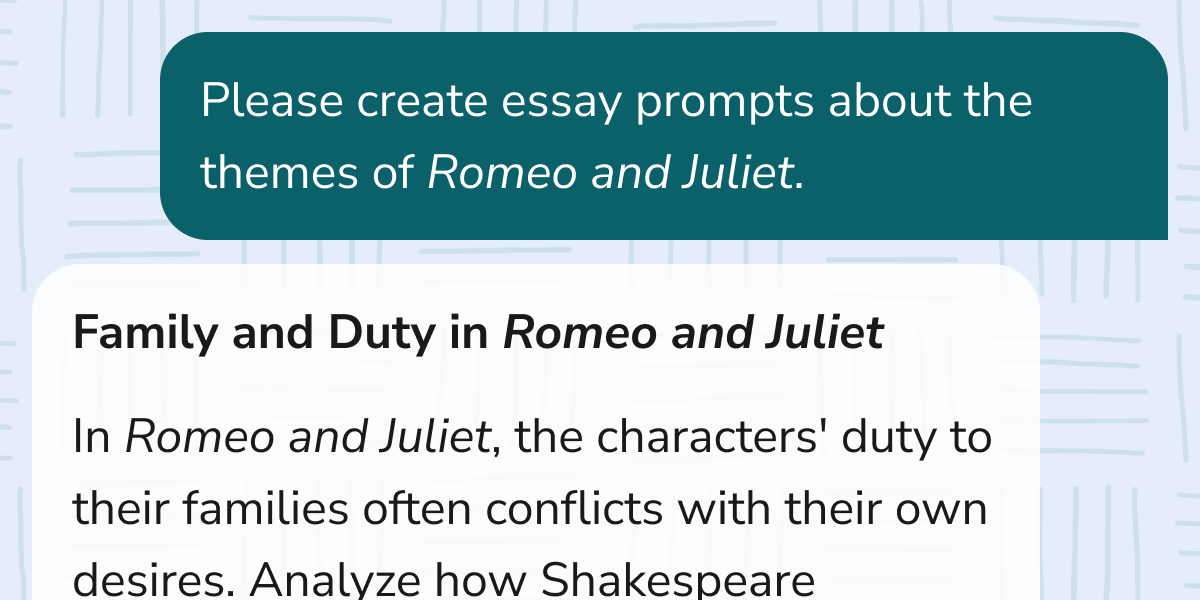
Definitions and examples for every literary term and device you need to know.
Plus a quick-reference PDF with concise definitions of all 136 terms in one place.
Plus a quick-reference PDF with concise definitions of all 136 terms in one place.


Try a free sample literary term PDF.


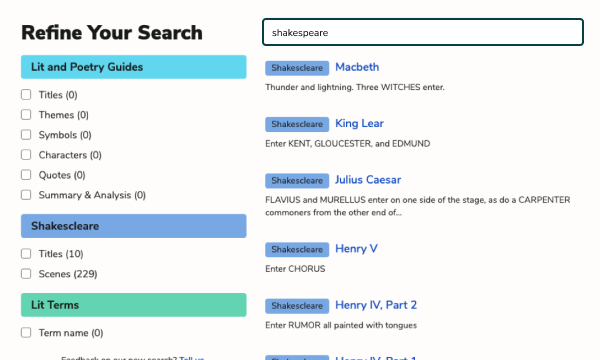
Advanced Search
Refine any search. Find related themes, quotes, symbols, characters, and more.

Related Themes
Comparing and contrasting texts? Find where any theme occurs across all of LitCharts in seconds.



Poetry Guides
Line-by-line explanations and analysis of figurative language and poetic devices.
For every lyric poem we cover.
For every lyric poem we cover.
