


|
Have questions?
Contact us
Already a member? Sign in
|
Get every literary device explanation for Tess of the d'UrbervillesPlus so much more...
Sign up for LitCharts A+Get instant access to every literary device explanation, plus so much more...
Situational Irony
Explanation and Analysis—Angel's Name:
Angel Clare's very name serves as an example of situational irony in Tess of the D'Urbervilles, given that he refuses to enter into the Church as a profession. He also denounces the religious establishment, much to the sorrow of his traditional father:
Once upon a time Angel had been so unlucky as to say to his father, in a moment of irritation, that it might have resulted far better for mankind if Greece had been the source of the religion of modern civilization, and not Palestine; and his father's grief was of that blank description which could not realize that there might lurk a thousandth part of a truth, much less a half truth or whole truth, in such a proposition.
Though it makes sense that a religious father might name his son "Angel," it is a form of situational irony that the character named after a religious figure happens to be one who opposes the constraints of the religion he was raised in. This situational irony accentuates Hardy's critique of the church's hypocrisies, which continues throughout the novel. The conflict between Angel and his father also represents the conflict between Christian values and secular values, the former of which often privileges science and reason over faith in the determination of universal "truths."
Monthly
Annual (Best Value)

$595USD/mo
Charged $71.40 USD every year



 Teacher
$795USD/mo
Charged $95.40 USD every year




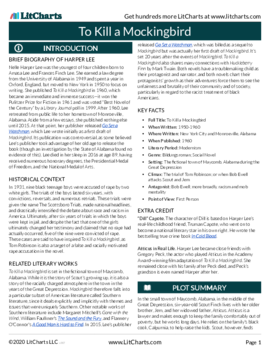
Literature Guide PDFs
LitCharts PDFs for every book you'll read this year.
Instant PDF downloads of all 2238 LitCharts literature guides and of every new one we publish. Try a free sample literature guide.
"Would not have made it through AP Literature without the printable PDFs. They're like having in-class notes for every discussion!"




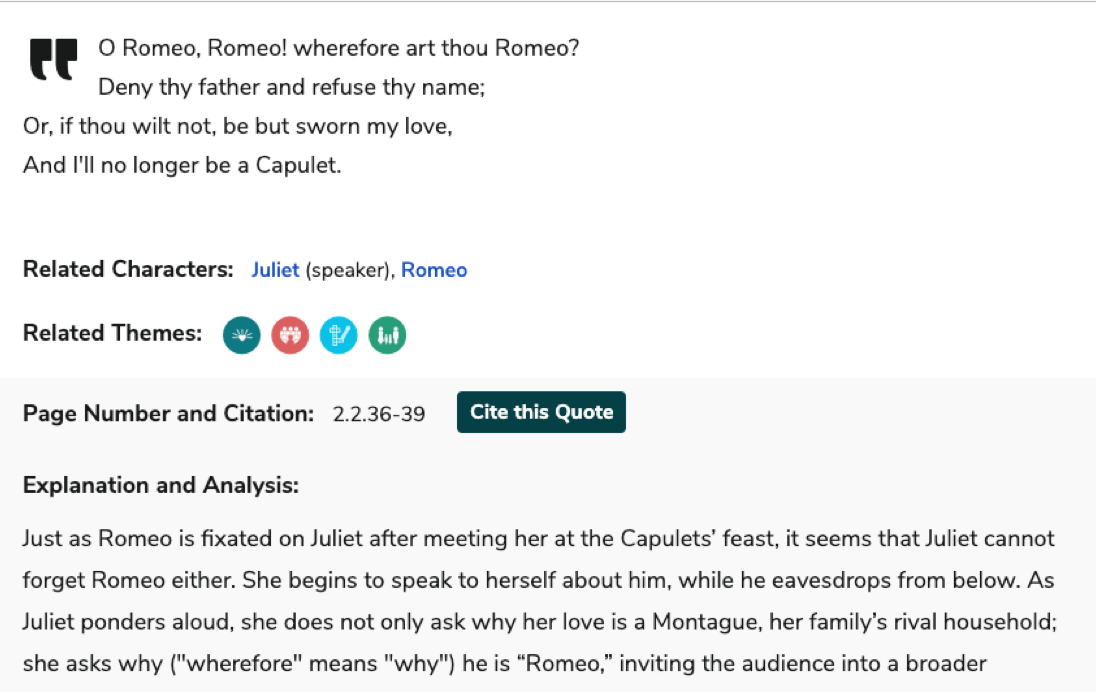
Quotes Explanations
Find the perfect quote. Understand it perfectly. Then rock the citation, too.
For all 49,909 quotes we cover.
For all 49,909 quotes we cover.



Teacher Editions
Close reading made easy for students.
Time saved for teachers.
For every book we cover.
Time saved for teachers.
For every book we cover.


Common Core-aligned


PDFs of modern translations of every one of Shakespeare's 37 plays, 154 sonnets, and 3 longer poems.

Literary Terms and Devices
Definitions and examples for every literary term and device you need to know.
Plus a quick-reference PDF with concise definitions of all 136 terms in one place.
Plus a quick-reference PDF with concise definitions of all 136 terms in one place.


Try a free sample literary term PDF.


Advanced Search
Refine any search. Find related themes, quotes, symbols, characters, and more.


Related Themes
Comparing and contrasting texts? Find where any theme occurs across all of LitCharts in seconds.



Poetry Guides
Line-by-line explanations and analysis of figurative language and poetic devices.
For every lyric poem we cover.
For every lyric poem we cover.
