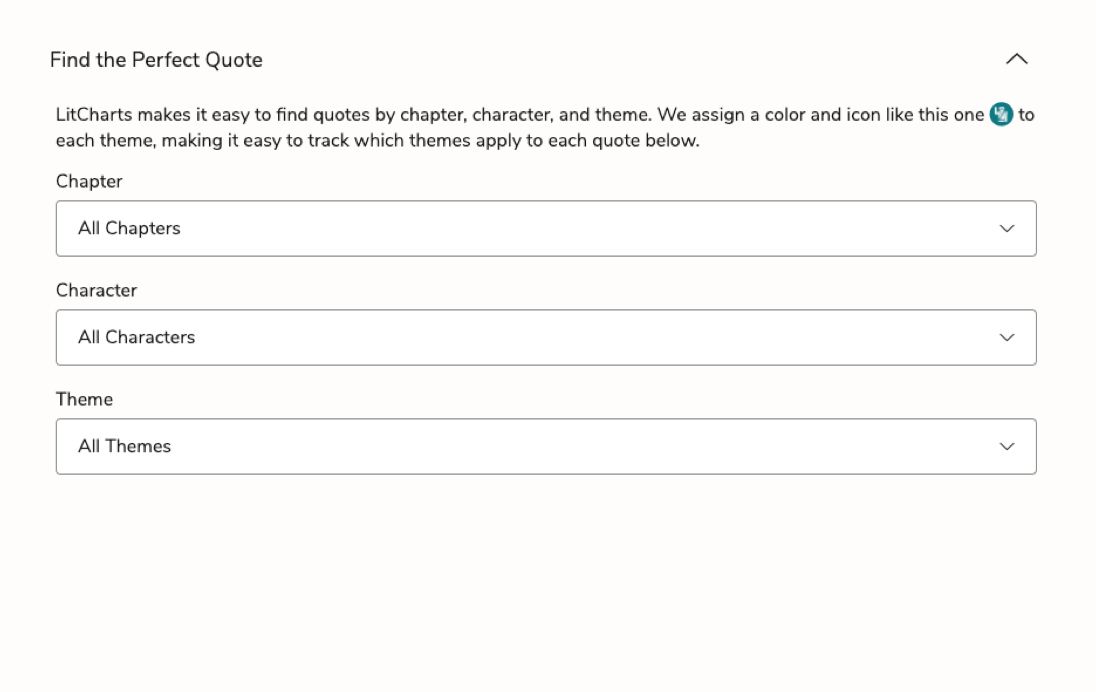
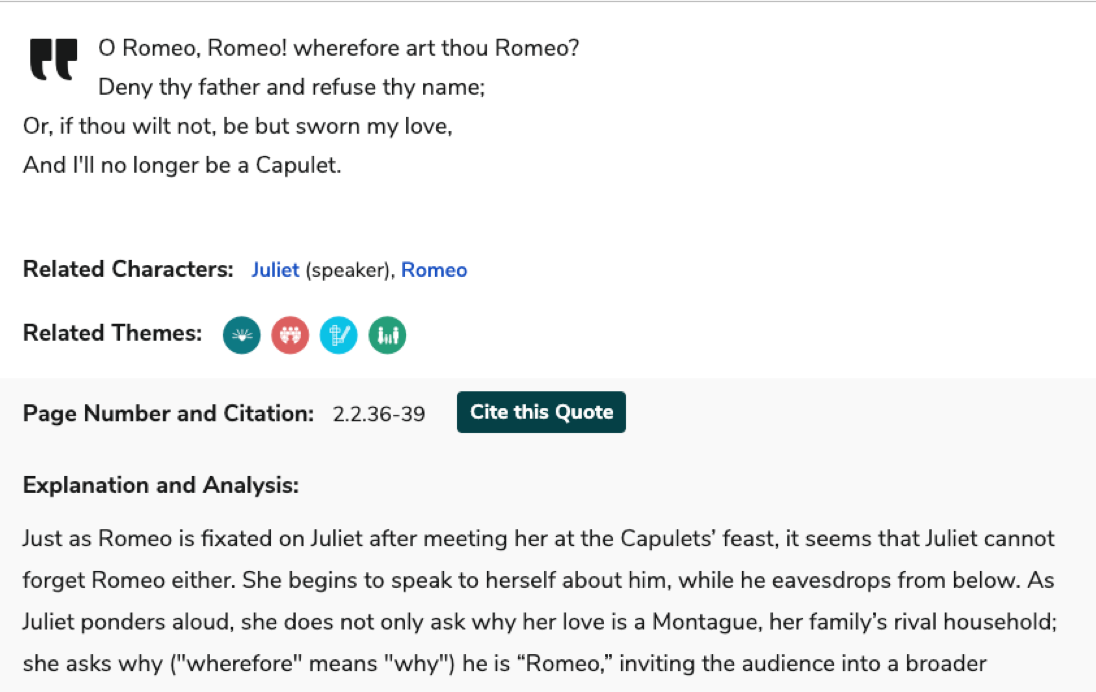
Find the perfect quote
Then understand it perfectly. And get the citation, too. For all 35,000+ quotes we cover.

|
Have questions?
Contact us
Already a member? Sign in
|
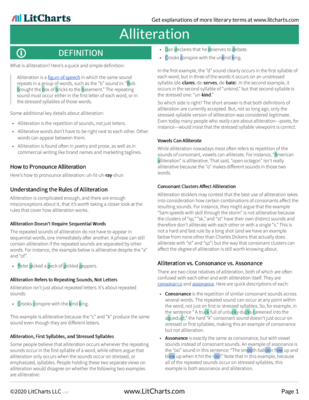
Madame Bovary uses alliteration to enhance the poetic rhythm and emphasize the romanticism of a passage for better or worse. For example, in Part 3, Chapter 1, when Emma is reunited with Léon and is beginning to rekindle their romance, the novel describes her as follows:
Emma held forth on the miseries of earthly love and the eternal isolation that everlastingly entombs the heart.
While Emma may be expressing some true unhappiness about her lot in life, especially as a woman, the novel's highly stylized alliteration emphasizes how much of Emma’s miserable expression is a calculated performance meant to entice Léon. She plays the role of a miserable wife who needs to be saved by a lover in mimicry of the romantic fantasies from her novels. The alliterative “e” paints the picture of her hopelessness, bringing Emma together with words relating to eternity ("eternal" and "everlastingly") and entrapment ("earthly" and "entombs"). By taking on a more romantic writing style through its alliteration and hyperbolic statements, the novel furthers the idea of Emma’s dalliances being incongruous with the real world and doomed to fail as a result. This change in style through alliteration highlights the constructed nature of the scene and how both characters are using each other to fulfill their romantic fantasies rather than living in undiluted reality. Emma and Léon see each other and themselves as characters rather than people, so the novel strips away its realist style in these moments to emphasize their distorted worldview.


 Teacher









|
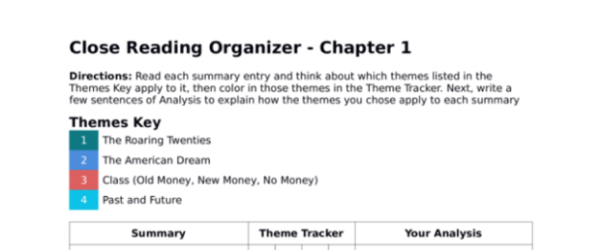
Close Reading Organizers |

|
Character Analysis Organizers |

|
Symbol Analysis Organizers |

|
Theme Analysis Organizers |

|
Quote Analysis Organizers |
Common Core-aligned