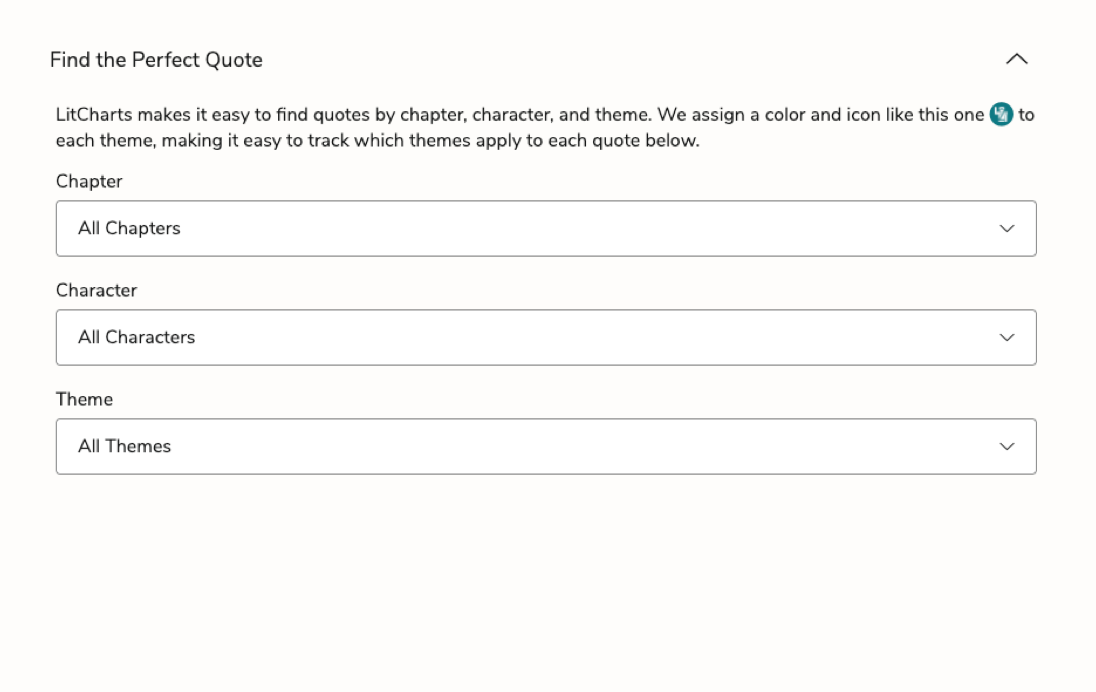
Find the perfect quote
Then understand it perfectly. And get the citation, too. For all 35,000+ quotes we cover.

|
Have questions?
Contact us
Already a member? Sign in
|
The morals of Little Women are grounded in Christianity. Mrs. March tries to cultivate generosity, graciousness, productivity, and womanhood in her daughters. The Bible is not directly referenced, but Alcott subtly alludes to its lessons. For instance, Meg indirectly references Galatians 5:14 in Chapter 2 when she says that giving their Christmas breakfast to the Hummels is “loving our neighbors better than ourselves, and I like it.”
Furthermore, womanhood and learning how to be a "wife of noble character" (Proverbs 31:10) are important aspects of growing up in the March household. According to the Bible, this kind of woman should be revered by all. Jo admires Meg's married life and this admiration makes her reconsider the concept of marriage.
A more fleeting allusion to the Bible appears in the following passage from Jo's journal in Chapter 33:
Speaking of books reminds me that I'm getting rich in that line, for on New Year's Day Mr. Bhaer gave me a fine Shakespeare. It is one he values much, and I've often admired it, set up in the place of honor with his German Bible, Plato, Homer, and Milton, so you may imagine how I felt when he brought it down, without its cover, and showed me my own name in it, "from my friend Friedrich Bhaer".
The presence of the Bible among literary texts signifies the similar set of tastes between Jo and Mr. Bhaer. They have matching morals and aspirations that set them up for a successful venture in starting a boys' school at the end of the story.










 Teacher

















|
Close Reading Organizers |

|
Character Analysis Organizers |

|
Symbol Analysis Organizers |

|
Theme Analysis Organizers |

|
Quote Analysis Organizers |
Common Core-aligned