Find the perfect quote
Then understand it perfectly. And get the citation, too. For all 35,000+ quotes we cover.

|
Have questions?
Contact us
Already a member? Sign in
|
In the tenth chapter, Lucy finds out that Cecil has obstructed her efforts to get the Miss Alans to rent one of Sir Harry Otway's villas and instead prompted him to rent it out to a father and son with the familiar name Emerson. She asks Freddy what he knows about them, and Mrs Honeychurch joins the conversation, making an allusion to the transcendentalist philosopher Ralph Waldo Emerson:
I was merely going to remark, Freddy, that I trusted they were no relations of Emerson the philosopher, a most trying man. Pray, does that satisfy you?
Associated with Ralph Waldo Emerson and Henry David Thoreau, transcendentalism was a philosophical and social movement that developed in the 1830s. A reaction against rationalism, the movement was built on the core belief that society inhibits the inherent goodness of human beings and nature.
Forster likely had fun when writing this line, as it is no coincidence that Mr. Emerson and Emerson the philosopher share the same name. Ralph Waldo Emerson championed individualism and the power of nature; Mr. Emerson is guided by very similar principles. His adherence to this view of the world comes to be reinforced when Mr. Beebe and Freddy pay the Emersons a visit at the start of the twelfth chapter. Looking through their books and things, they discover a wardrobe that bears an inscription:
On the cornice of the wardrobe the hand of an amateur had painted this inscription: ‘Mistrust all enterprises that require new clothes.’
This inscription is another allusion to transcendentalism, as it cites Henry David Thoreau's Walden. Thoreau, a friend of Ralph Waldo Emerson's and fellow transcendentalist, believed in leading a simple life that is in touch with nature. Soon after Mr. Beebe and Freddy come across this inscription, they are frolicking naked around a pond that calls to mind Thoreau's Walden Pond.


 Teacher









|
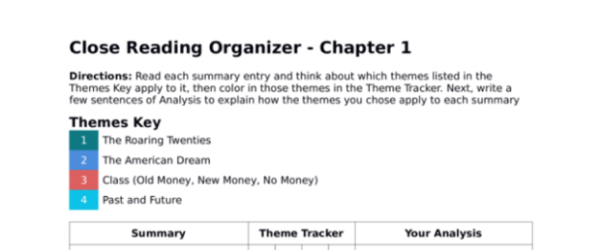
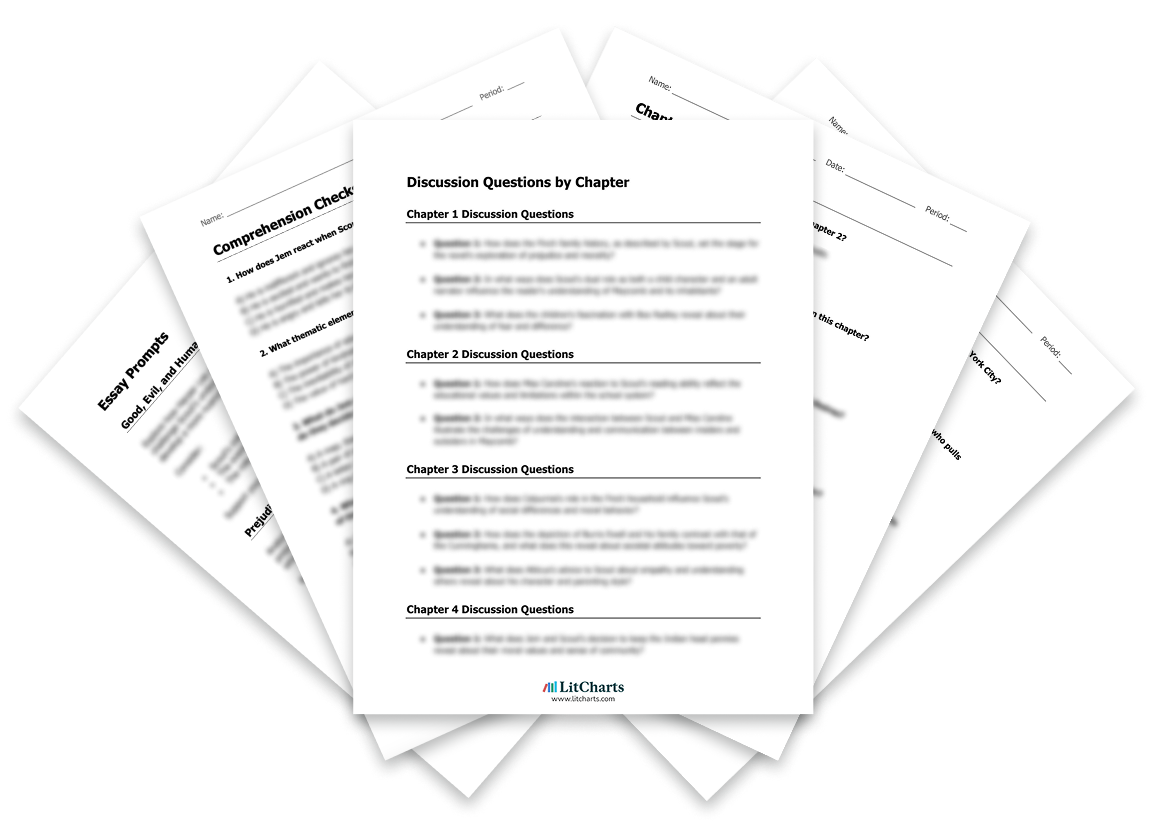
Close Reading Organizers |

|
Character Analysis Organizers |

|
Symbol Analysis Organizers |

|
Theme Analysis Organizers |

|
Quote Analysis Organizers |
Common Core-aligned