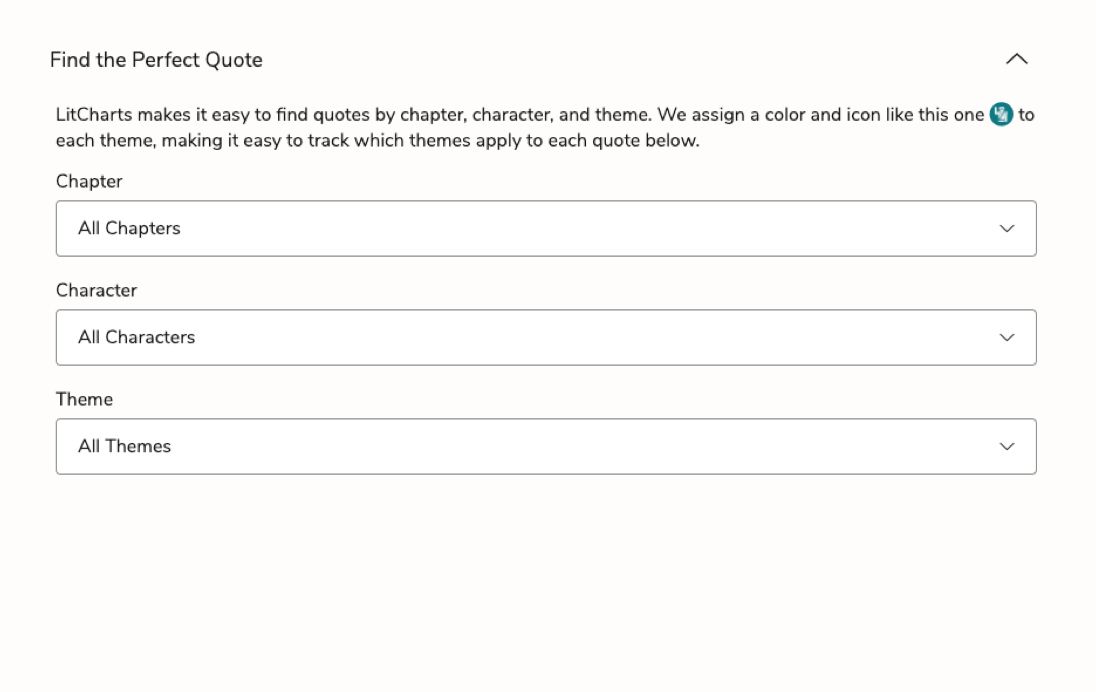
Find the perfect quote
Then understand it perfectly. And get the citation, too. For all 35,000+ quotes we cover.

|
Have questions?
Contact us
Already a member? Sign in
|
In Chapter 38, the Count continues to make waves in French society after his sudden appearance on the scene with his mysterious—and apparently bottomless—fortune. In this passage, Franz discusses these questions with Albert and generates a great deal of dramatic irony for the reader:
‘Precisely, there you have it! What country does the count come from? What is his language? What are his means of support? Where does his huge fortune come from? What was the first half of this mysterious and unknown life, that it has cast over the second half such a dark and misanthropic shadow? That, if I were you, is what I should want to know.’
The mysterious identity of the Count is a central source of dramatic irony in The Count of Monte Cristo, because the reader is well aware of the Count's background and true identity. The interactions between the other characters of the novel as they struggle to figure out—with increasing exasperation—who exactly the Count is and what exactly he wants are some of the most entertaining moments in the novel. Moments such as this are also the central source of the satisfaction of the Count's revenge narrative: he is operating with almost all the information for much of the novel, and his conspirators, enemies, and former lovers all struggle (and largely fail) to keep up with his machinations.


 Teacher









|
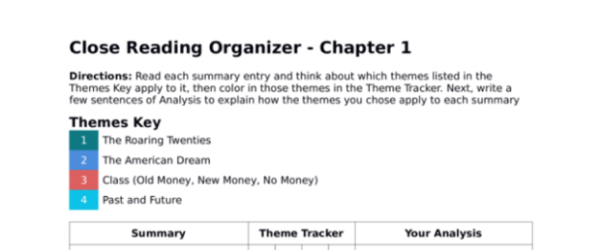
Close Reading Organizers |

|
Character Analysis Organizers |

|
Symbol Analysis Organizers |

|
Theme Analysis Organizers |

|
Quote Analysis Organizers |
Common Core-aligned