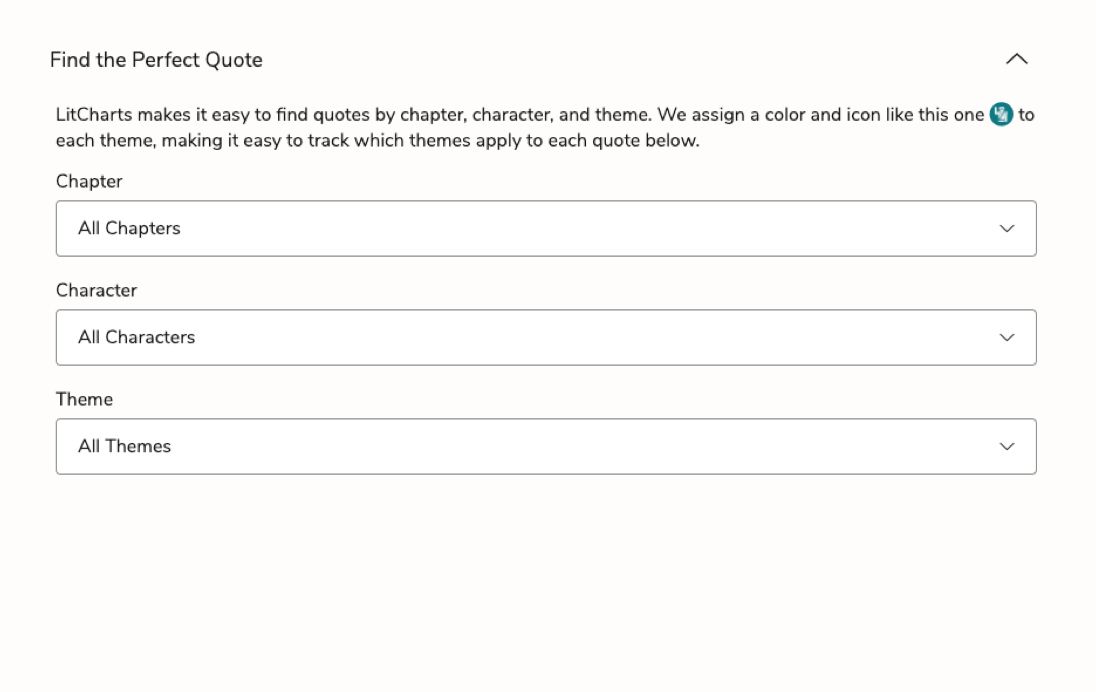
Find the perfect quote
Then understand it perfectly. And get the citation, too. For all 35,000+ quotes we cover.

|
Have questions?
Contact us
Already a member? Sign in
|
In a moment of dramatic irony, Lydia returns home from her elopement with Wickham and flaunts her haphazard marriage as if it's something to be celebrated, telling her mother:
“Oh! mamma, do the people hereabouts know I am married to-day? I was afraid they might not; and we overtook William Goulding in his curricle, so I was determined he should know it, and so I let down the side-glass next to him, and took off my glove, and let my hand just rest upon the window frame, so that he might see the ring, and then I bowed and smiled like anything.”
This is an example of dramatic irony because, unlike Lydia, readers know that she has nothing to be proud of—Wickham was uninterested in marrying her until he was offered money to do so. He married her as a form of manipulation, not because he loved her. The quote shows how, as a 15-year-old, Lydia doesn’t understand the threat that she posed to her family (i.e., her sisters’ reputations would have been ruined had she run away with Wickham without getting married) or the fact that the man she is celebrating being married to was actively using her to make money.
This moment also highlights how much clout being married gives women in this society. Lydia wants her neighbors to see the ring because it means that she has earned something important—a romantic partner along with financial security.


 Teacher









|
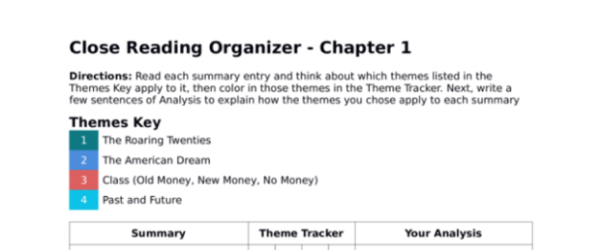
Close Reading Organizers |

|
Character Analysis Organizers |

|
Symbol Analysis Organizers |

|
Theme Analysis Organizers |

|
Quote Analysis Organizers |
Common Core-aligned