Find the perfect quote
Then understand it perfectly. And get the citation, too. For all 35,000+ quotes we cover.

|
Have questions?
Contact us
Already a member? Sign in
|
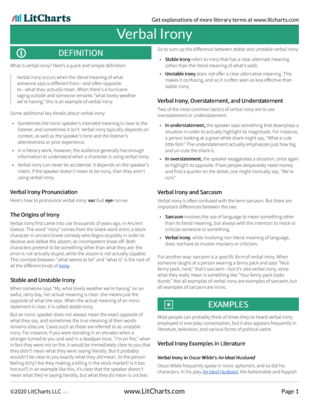
One of the play’s many ironies is Willy’s unraveling mind. The audience is aware of Willy’s deteriorating mind, even though he himself is not, and this gap in understanding is an example of pathos: it appeals to the audience's emotions and cultivates sympathy toward the aging salesman. Willy’s fraying memory announces itself early in Act 1, when he first addresses his sons and wife from the past. Repeated flashbacks—he speaks to his deceased brother Ben, Bernard, and Charley—affirm his crumbling sanity and evoke the reader’s pity.
By presenting to the reader what Willy himself is unaware of, the play dramatizes the salesman’s ignorance and, by extension, his delusion. Willy is as oblivious to his faith in upward mobility as he is to his mental weakness. His blindness culminates in his ultimate act of delusion. When Biff declares his separation from Willy, the salesman interprets the gesture instead as an admission of love:
BIFF: Will you take that phony dream and burn it before something happens? (Struggling to contain himself, he pulls away and moves to the stairs.) I’ll go in the morning. Put him—put him to bed. (Exhausted, Biff moves up the stairs to his room.)
WILLY (after a long pause, astonished, elevated): Isn’t that—isn’t that remarkable? Biff—he likes me!
In this scene, Willy misunderstands Biff's rejection of him and his “phony dream," instead interpreting it as an affirmation of adoration for his father. As with his mental degeneration, Willy is oblivious to his son’s estrangement and even further empowered to support Biff through suicide. Willy’s sacrifice—like his own mental faculties—takes on tragic proportions through its heart-wrenching irony.


 Teacher









|
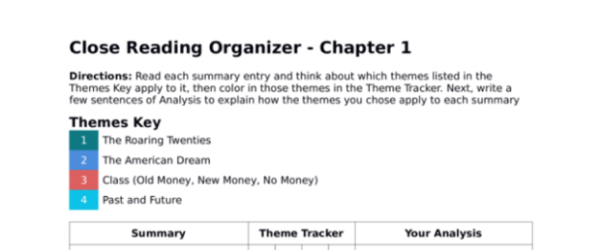
Close Reading Organizers |

|
Character Analysis Organizers |

|
Symbol Analysis Organizers |

|
Theme Analysis Organizers |

|
Quote Analysis Organizers |
Common Core-aligned