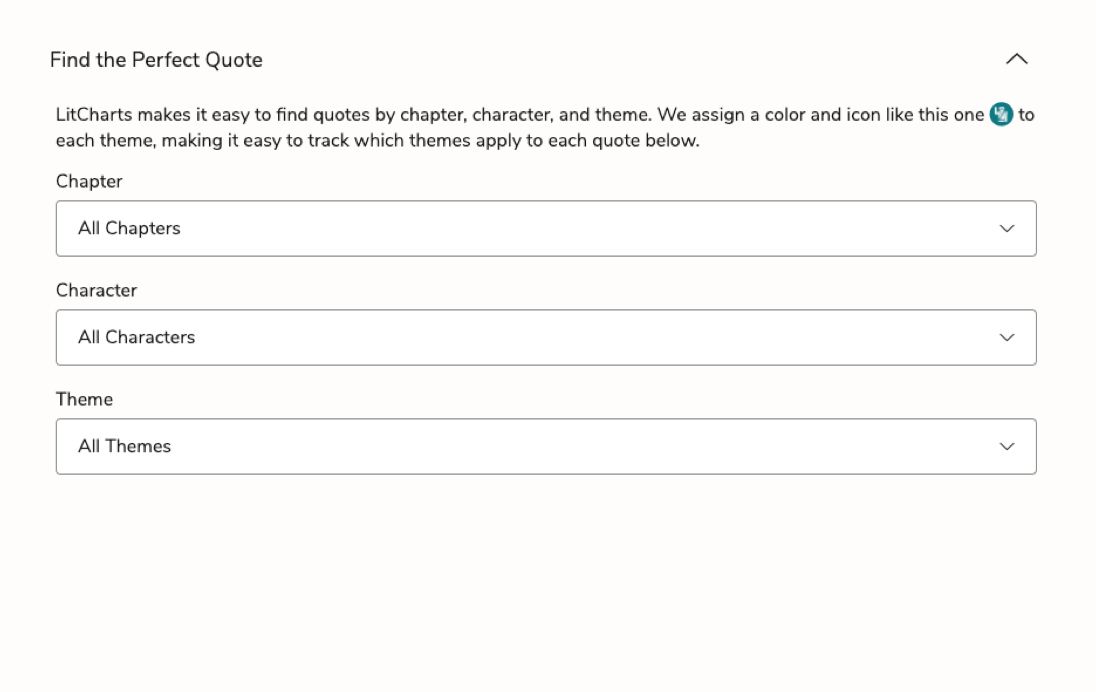
Find the perfect quote
Then understand it perfectly. And get the citation, too. For all 35,000+ quotes we cover.

|
Have questions?
Contact us
Already a member? Sign in
|
In a military hospital, a deeply injured Prince Andrei sees a man whose leg has been amputated and realizes, with surprise, that he recognizes the man. Here, Tolstoy employs a flashback to clarify the identity of the injured soldier:
“What is this man’s connection with my childhood, with my life?” [Prince Andrei] asked himself, without finding an answer. And suddenly a new and unexpected memory from the world of childhood, purity, and love came to Prince Andrei. He remembered Natasha as he had seen her for the first time at the ball in 1810, with her slender neck and arms, with her frightened, happy face ready for rapture, and in his soul love and tenderness for her awakened, stronger and more alive than ever. He now remembered the connection between him and this man [...]
As he stares at the man, he is suddenly struck with a "new and unexpected memory from the world of childhood," which is presented in the form of a brief flashback. When he sees the man, he suddenly thinks of Natasha "as he had seen her for the first time at the ball in 1810." He describes her as though he can see the scene directly in front of him, noting her "slender neck and arms" and her "frightened, happy face." Suddenly, he is overwhelmed with love for her, despite the bad terms upon which they ended their engagement.
Feeling "in his soul love and tenderness," he recognizes the man as Anatole Kuragin, whose bigamous attempt to elope with Natasha put a swift and humiliating end to Prince Andrei's own engagement with her. Though, earlier, he attempted to find Anatole in the hopes of provoking the man into challenging him to a duel, Prince Andrei is no longer able to carry hate for others. He not only forgives Anatole in his own mind, but resolves to love his enemy as well, marking his final acceptance of "Christian" or universal love.


 Teacher









|
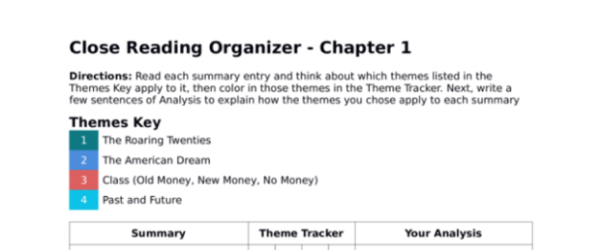
Close Reading Organizers |

|
Character Analysis Organizers |

|
Symbol Analysis Organizers |

|
Theme Analysis Organizers |

|
Quote Analysis Organizers |
Common Core-aligned