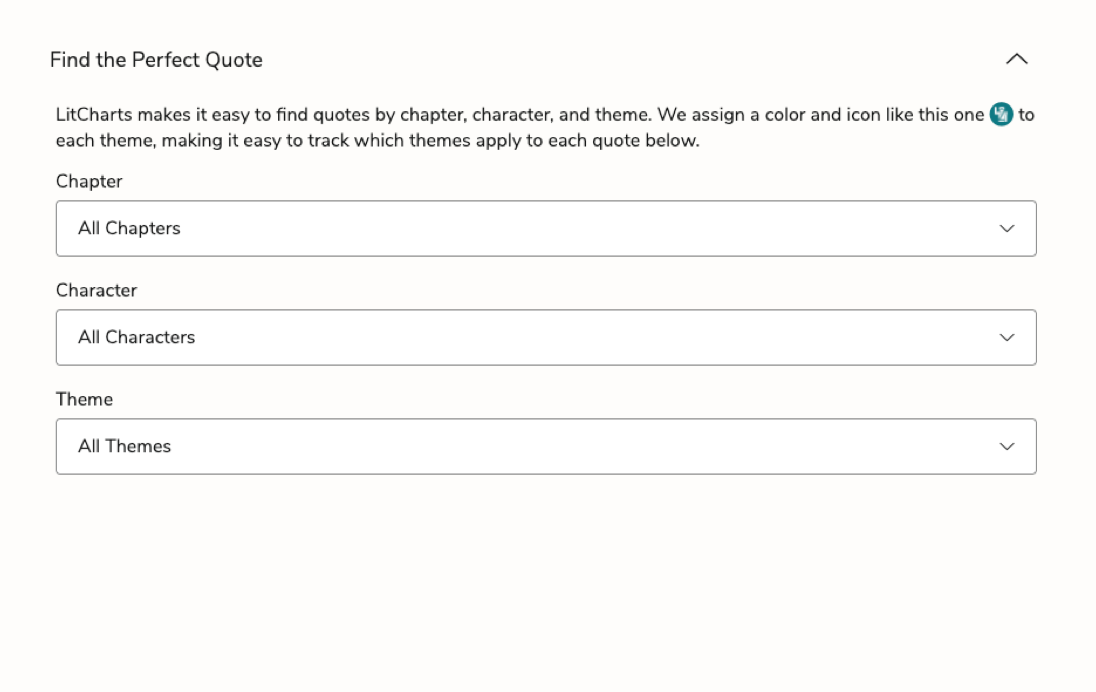
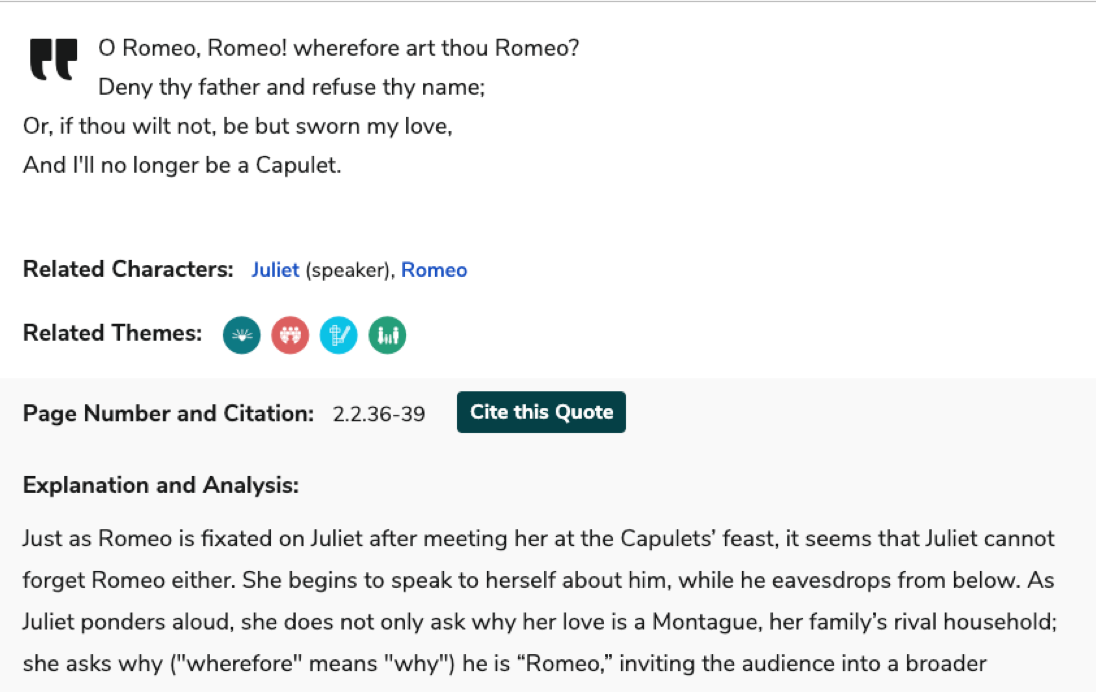
Find the perfect quote
Then understand it perfectly. And get the citation, too. For all 35,000+ quotes we cover.

|
Have questions?
Contact us
Already a member? Sign in
|
This moment appears in a flashback to Hatsue’s youth during one of her etiquette lessons with Mrs. Shigemura. Guterson uses flashback and simile in this scene to show how Mrs. Shigemura teaches Hatsue to treat her hair as a tool:
Mrs. Shigemura lifted Hatsue’s hair in her palms and said its consistency reminded her of mercury and that Hatsue should learn to play her hair lovingly, like a stringed musical instrument or a flute. Then she combed it down Hatsue’s back until it lay opened like a fan and shimmered in unearthly black waves.
The similes comparing the “unearthly black waves” of Hatsue’s hair to a musical instrument and to a fan illustrate Mrs. Shigemura’s view of beauty as something that must be managed and performed. Hatsue’s hair is not simply a feature of her body. Because it is beautiful, it is one of the tools she has been given to use as a woman with limited powers in the world. Because she has this asset, she must learn to handle it with grace. The suggestion that she learns to “play her hair lovingly” turns Hatsue’s body into a force that needs control and discipline. Just as one must study an instrument to produce music or operate a fan judiciously to cool oneself elegantly, Hatsue must learn to “play” her hair. The image of the hair spreading “like a fan” reinforces this idea. A fan is a delicate object that must be opened carefully and used in a specific way to meet its purpose. Its movement is not casual, and women often used fans to act flirtatiously or alluringly to other people. Guterson shows that this instruction is important to Hatsue’s overall understanding of femininity and how it can be used to her advantage.


 Teacher










|
Close Reading Organizers |

|
Character Analysis Organizers |

|
Symbol Analysis Organizers |

|
Theme Analysis Organizers |

|
Quote Analysis Organizers |
Common Core-aligned