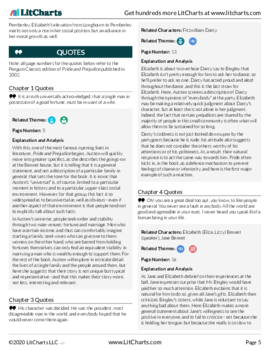
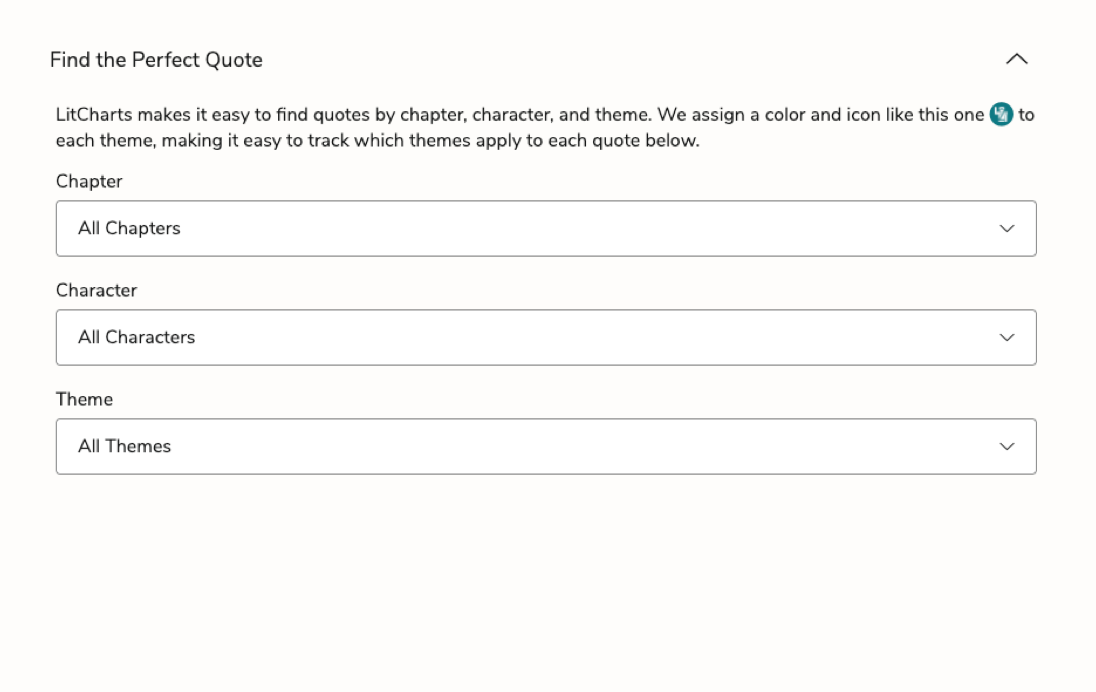
Find the perfect quote
Then understand it perfectly. And get the citation, too. For all 35,000+ quotes we cover.

|
Have questions?
Contact us
Already a member? Sign in
|
In a novel replete with unusual—in some cases hostile—character relationships, the wholesome friendship between Mike and Albert feels simple, amusing, and even redeeming. Despite their numerous differences, the two boys respect and admire each other. Through this pair of character foils, Lindsay explores the contrasts between the working class and aristocracy, between Australia and England, and between easygoing and more sensitive dispositions.
In conversations and interactions between the two characters, Lindsay often underlines their different appearances, backgrounds, personalities, and manners of speech. This underlying contrast is already front and center when they're first introduced in Chapter 2:
A slender fair youth – or very young man – in English riding breeches was absorbed in a magazine, while another of about the same age, or a little older, as tough and sunburned as the other was tender and pink of cheek, was engaged in rinsing the champagne glasses at the edge of the pool. His coachman’s cap and dark blue jacket with silver buttons were thrown carelessly over a clump of reeds, exposing exposing a mop of thick dark hair and a pair of strong copper-coloured arms, heavily tattooed with mermaids.
This passage encapsulates several of the differences between Mike and Albert, which Lindsay further develops as the narrative progresses. One of these is on the level of appearance: Mike is blonde and pale, Albert is dark-haired and tan. These physical differences reveal further levels of difference between the two characters. By describing Albert as "tough and sunburned" and Mike as "tender and pink of cheek," Lindsay gives the reader reason to believe that they belong to different classes. It seems as though Albert spends a lot of time outside; it seems as though Mike does not. This impression is corroborated by their actions: While Mike lounges about reading a magazine, Albert cleans up after their picnic. His "strong copper-coloured arms" and mermaid tattoos reinforce the idea that his background differs from that of the "slender fair youth" next to him.
Conscious of their differences, Mike and Albert feel intrigued by each other. Mike, having grown up in cushy upper-class circles in England, is especially drawn to his free-spirited Australian friend. The narrator elaborates on this several times, such as in Chapter 6, when he gazes at Albert "with something like awe." This leads into an extended reflection on their friendship:
Since the afternoon of the picnic a comfortable non-demanding friendship had developed between the two young men. To see them now – Albert loose of limb in rolled-up shirt sleeves and moleskin trousers. Michael stiff in garden party attire with a carnation in his buttonhole – they looked an ill-assorted pair. ‘Mike’s all right,’ Albert had told his friend the cook. ‘Him and me are mates.’ And so in the finest sense of that much abused word, they were.
As in the passage from Chapter 2, Lindsay again lets the young men's physical differences—this time their clothing—symbolize their differences in birth, circumstances, and dispositions. Nevertheless, Mike and Albert have become true friends: "In each other’s presence neither young man was conscious of his shortcomings, if such they were." Throughout the novel, Lindsay repeatedly underlines the simplicity yet depth of the "tide of friendship that [flows] between them."
By repeatedly emphasizing that these two characters not only get along well but have fostered a mutual understanding, she shows that growing up in the same place and in the same circumstances are not requirements for intimacy—rather, it's sometimes those who are different from ourselves who see us the most clearly.




 Teacher














|
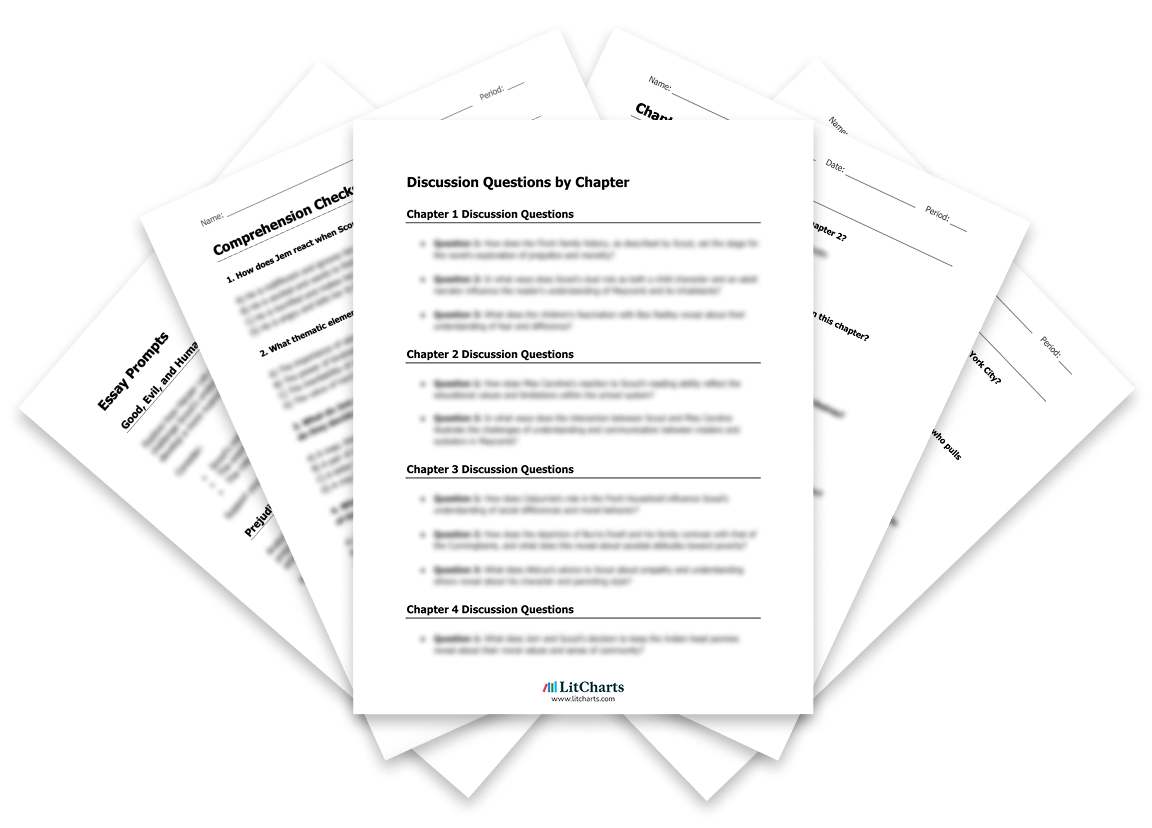
Close Reading Organizers |

|
Character Analysis Organizers |

|
Symbol Analysis Organizers |

|
Theme Analysis Organizers |

|
Quote Analysis Organizers |
Common Core-aligned