Find the perfect quote
Then understand it perfectly. And get the citation, too. For all 35,000+ quotes we cover.

|
Have questions?
Contact us
Already a member? Sign in
|
As Heathcliff anticipates death and reunion with Catherine, he hyperbolically compares her to both a devil and "heaven."
In Chapter 29, Heathcliff tells Nelly how strongly he senses his beloved Catherine's spirit near him, yet he can't see her. This is such a torment for him that he calls Catherine a "devil" whose "tortures" are "infernal" (hellish):
I ought to have sweat blood then, from the anguish of my yearning, from the fervour of my supplications to have but one glimpse! I had not one. She showed herself, as she often was in life, a devil to me! And, since then, sometimes more, and sometimes less, I’ve been the sport of that intolerable torture! Infernal—keeping my nerves at such a stretch, that, if they had not resembled catgut, they would, long ago, have relaxed to the feebleness of Linton’s.
Catgut is tough string or cord that's made from dried animal intestines (like those of sheep, hogs, or cattle). Basically, Heathcliff's nerves are extremely strong, unlike his feeble son's. Even so, Catherine's teasing presence has kept Heathcliff's nerves intolerably taut for years. She is a "devil" because she has the ghostly power to toy with Heathcliff, letting him feel her closeness but not see or touch her, making him long for death and reunion with her.
While this is Heathcliff's typical hyperbole (he wouldn't literally sweat blood, for example), his comparison of Catherine to a "devil" and the sense of her nearness to "torture" shows how desperately and obsessively he still yearns for Catherine, some 18 years after her death. It also suggests that his passion for her is disturbingly tangled up with resentment and even hatred.
Later, in Chapter 34, Heathcliff gives Nelly directions regarding his funeral:
No minister need come; nor need anything be said over me—I tell you, I have nearly attained my heaven; and that of others is altogether unvalued, and uncoveted by me!
Nearing death, Heathcliff has almost attained "his heaven"—that is, Catherine. Though, as the previous passage shows, he's just as inclined to call her a devil. At the same time, Heathcliff shockingly says he doesn't need a Christian burial, implying that Catherine is all the blessing he'll require as he enters the afterlife. Essentially, then, Catherine is Heathcliff's deity, even if she takes a cruelly unattainable form while Heathcliff remains alive.




 Teacher











|
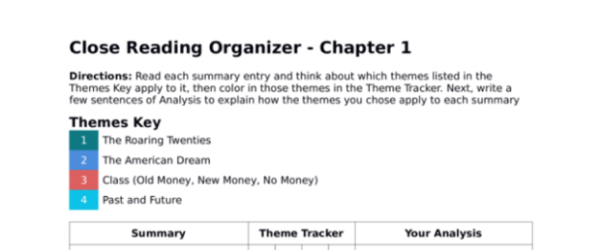
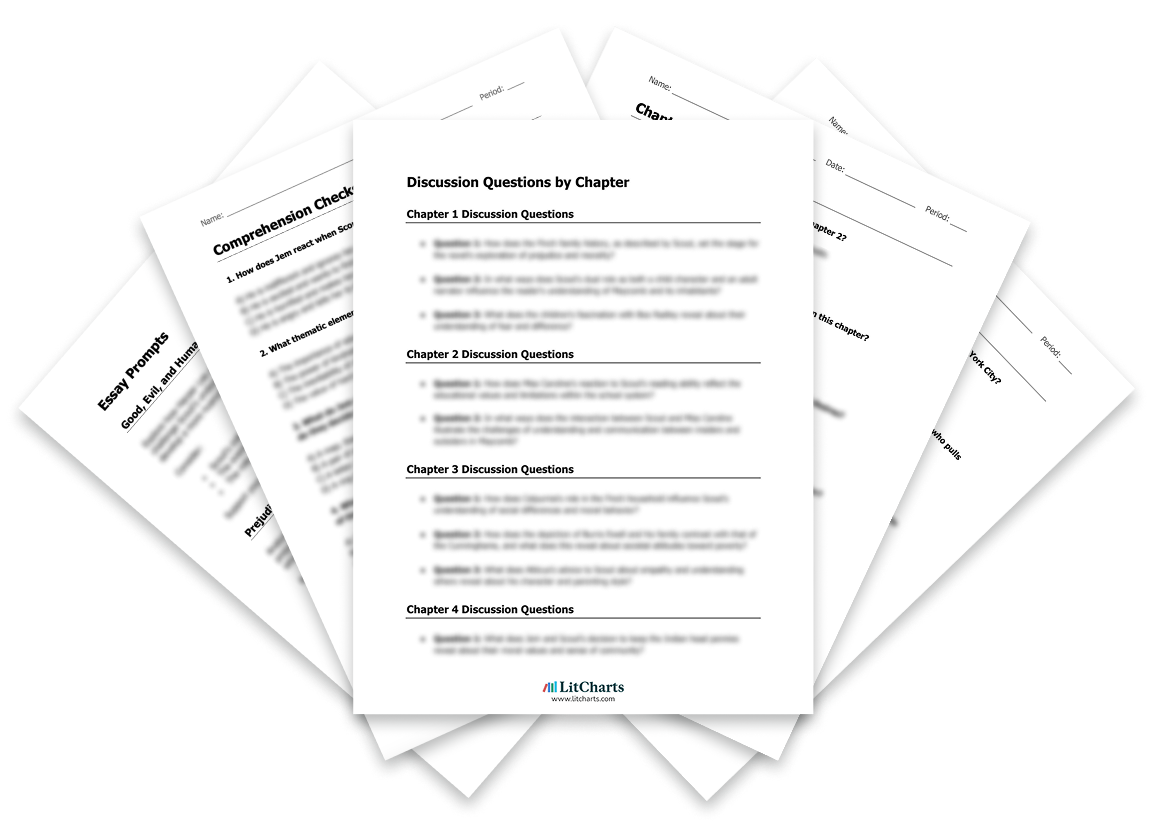
Close Reading Organizers |

|
Character Analysis Organizers |

|
Symbol Analysis Organizers |

|
Theme Analysis Organizers |

|
Quote Analysis Organizers |
Common Core-aligned