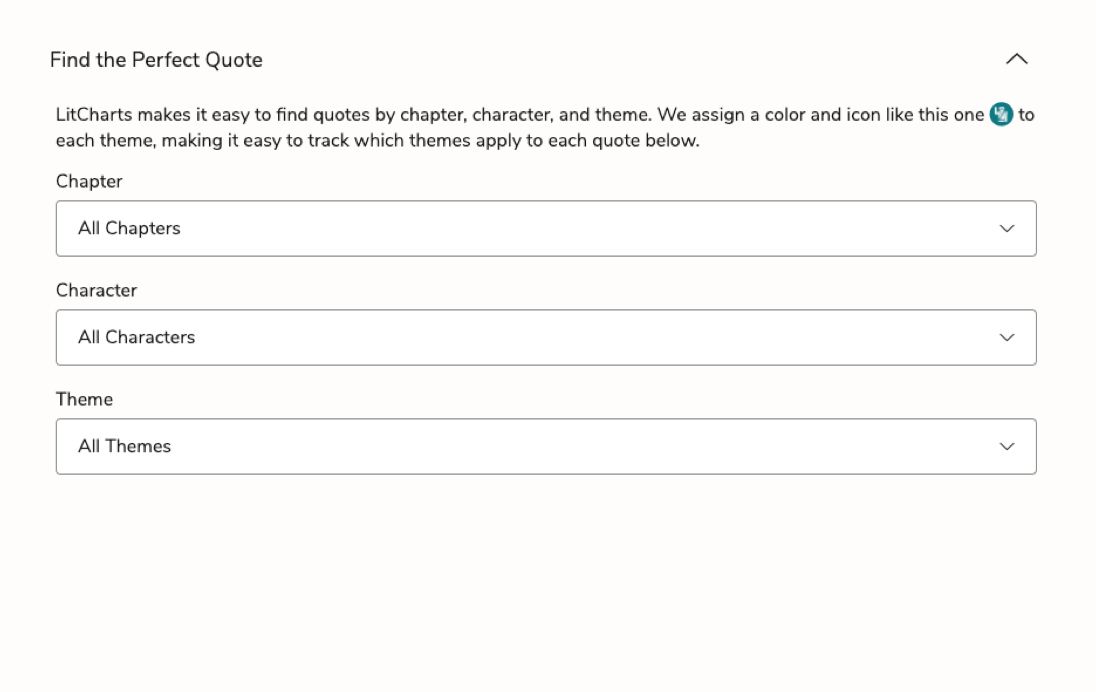
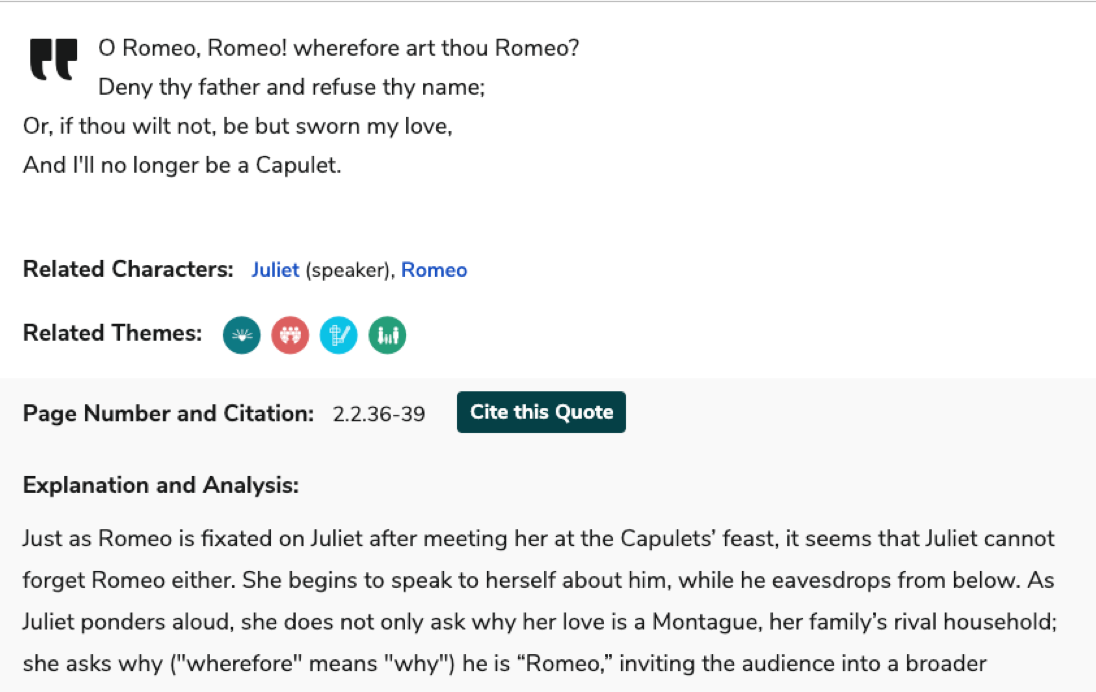
Find the perfect quote
Then understand it perfectly. And get the citation, too. For all 35,000+ quotes we cover.

|
Have questions?
Contact us
Already a member? Sign in
|
At the battle site of Pavla, Henry and the other ambulance drivers get hit by a mortar shell while eating macaroni and cheese, an instance of situational irony. The passage also contains simile and imagery to make the scene all the more vivid:
I ate the end of my piece of cheese and took a swallow of wine. […] Then there was a flash, as when a blast-furnace door is swung open, and a roar that started white and went red and on and on in a rushing wind. […] The ground was torn up and in front of my head there was a splintered beam of wood. In the jolt of my head I heard somebody crying. I thought somebody was screaming. I tried to move but I could not move.
One would expect the danger to occur during the battle itself, so this scene comes about unexpectedly. Unlike the glorified injuries that soldiers receive in battles, Henry gets hit while eating with his fellow soldiers. Getting hit by a mortar shell while doing something as mundane as eating macaroni and cheese, though, undermines the gravity and glory of war. It is so sudden and unceremonious that it is almost darkly humorous, demonstrating the absurdity and senselessness of World War I.
Moreover, the sharp shift from discussing Henry’s “piece of cheese” to the "screaming" and splintering world around him takes the reader by surprise. The simile comparing the exploding shell to "a blast-furnace door sw[inging] open" and the ensuing visual and auditory imagery make the moment even more shocking and vivid. The jarring escalation in imagery, in particular, mirrors the shock that accompanies an explosion. This is one of the more emotive and dramatic moments in the novel, made ironic by its banal prelude.


 Teacher









|
Close Reading Organizers |

|
Character Analysis Organizers |

|
Symbol Analysis Organizers |

|
Theme Analysis Organizers |

|
Quote Analysis Organizers |
Common Core-aligned