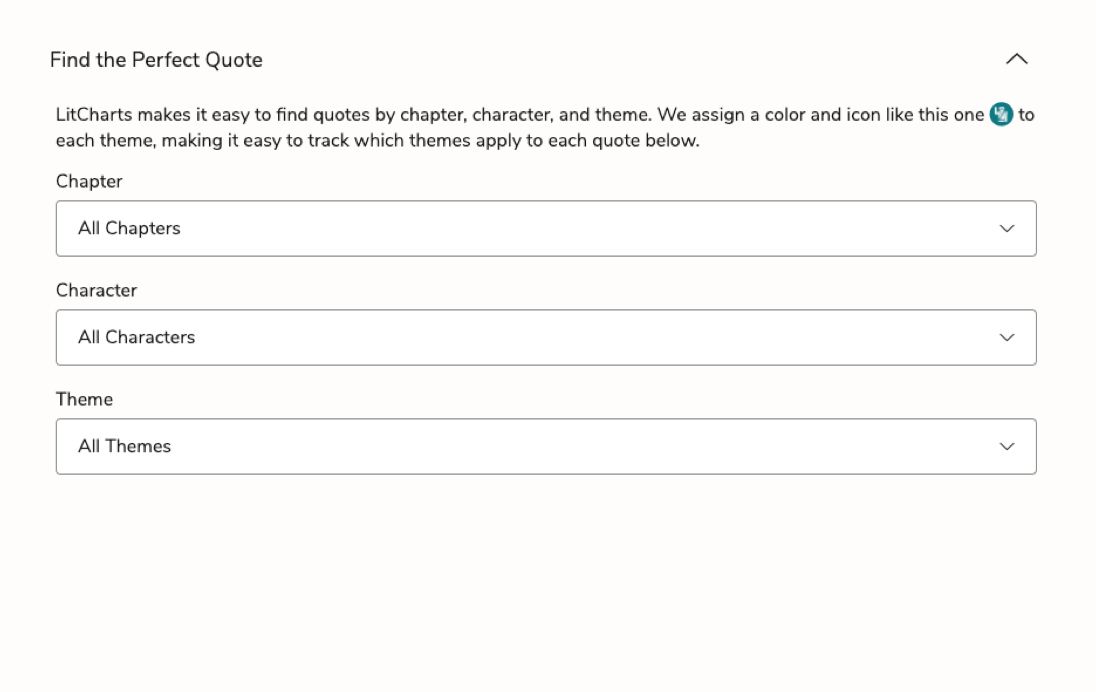
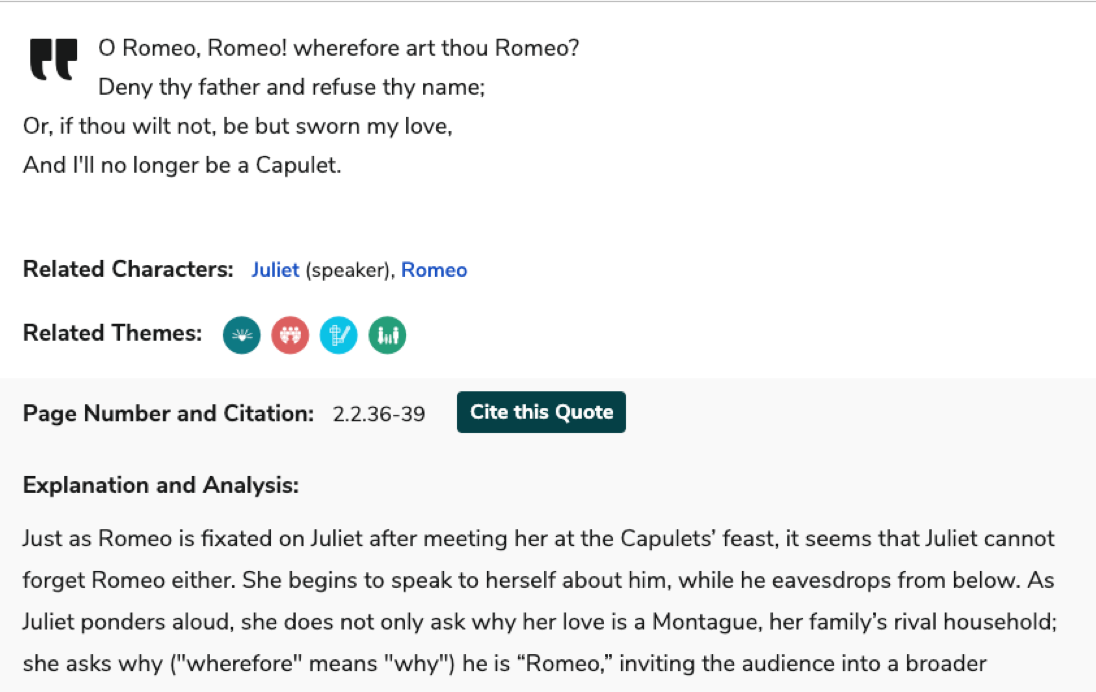
Find the perfect quote
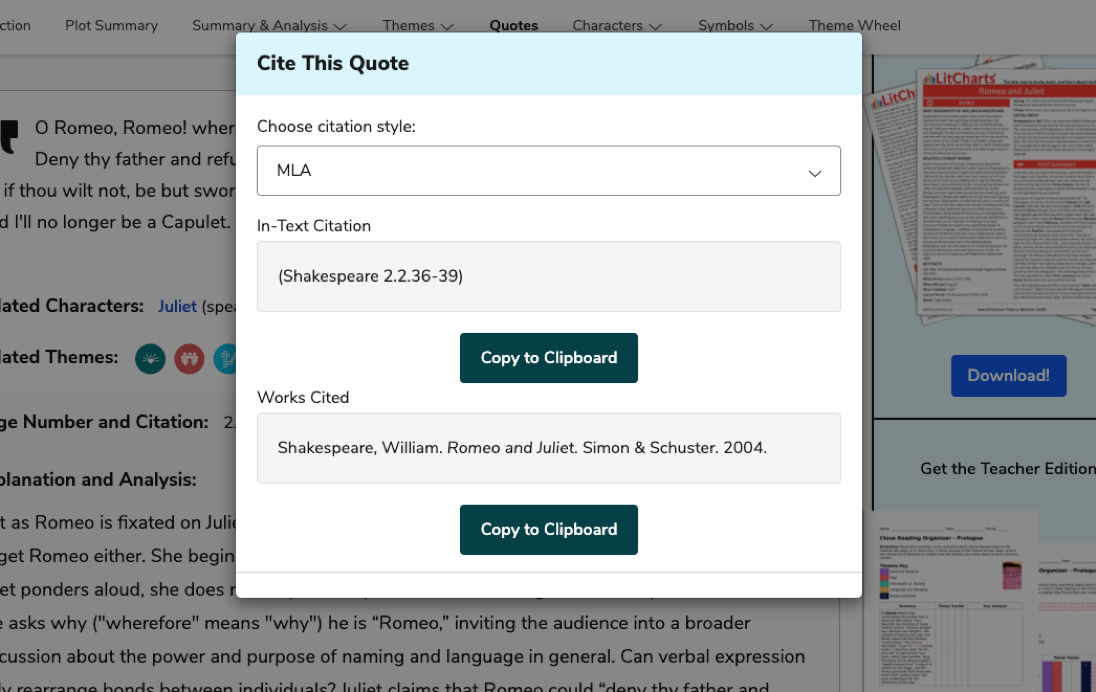
Then understand it perfectly. And get the citation, too. For all 35,000+ quotes we cover.

|
Have questions?
Contact us
Already a member? Sign in
|
Throughout Macbeth, Shakespeare uses the motif of seeds and roots to illustrate themes of kingship and lineage. Duncan's use of imagery in Act 1, Scene 4, for example, suggests that he views Scotland as a kind of vast garden, with himself as the caretaker:
Duncan: I have begun to plant thee and will labor
To make thee full of growing.
Malcolm echoes his father's wording when he first addresses the Scottish lords as their king in Act 5, Scene 11:
Malcolm: What's more to do,
Which would be planted newly with the time
While Duncan and Malcolm seek to cultivate loyal subjects and make their country flourish, Macbeth is characterized as an inadequate caretaker. In Act 4, Scene 3, Malcolm laments that Scotland "sinks beneath the yoke," likening Macbeth to a plowman who overburdens his oxen. In Act 5, Scene 2, Lennox uses plant imagery to draw a sharp contrast between Malcolm and Macbeth's approaches to rule:
Lennox: Or so much as it needs
To dew the sovereign flower and drown the weeds.
While Malcolm represents life and prosperity, Macbeth is a bothersome interloper who threatens to choke out the plants growing in the garden that is Scotland.
Shakespeare also associates seeds and roots with the theme of lineage. The play's first mention of seeds comes in Act 1, Scene 3, when Banquo speaks to the witches:
Banquo: If you can look into the seeds of time
And say which grain will grow and which will not
The Weird Sisters respond by prophesying that Banquo's children will be kings, linking the image of growing grain to patrilineal inheritance. Banquo continues this motif in Act 3, Scene 1 by imagining himself as the "root and father" of a thriving family tree. Later in the same scene, Macbeth echoes this figurative language to express the jealousy he feels toward his friend. While Banquo has a son and is prophesied to become the ancestor of many kings, Macbeth has no children to carry on his name or his bloodline:
Macbeth: Upon my head they placed a fruitless crown
And put a barren scepter in my grip,
Thence to be wrenched with an unlineal hand,
No son of mine succeeding.
Macbeth bitterly remarks that he has not committed the ultimate act treason for his own sake but to make "the seeds of Banquo kings." This comment, along with his preoccupation with his own "barren scepter," indicates that Macbeth feels threatened and also emasculated by Banquo's superior reproductive ability.



 Teacher









|
Close Reading Organizers |

|
Character Analysis Organizers |

|
Symbol Analysis Organizers |

|
Theme Analysis Organizers |

|
Quote Analysis Organizers |
Common Core-aligned