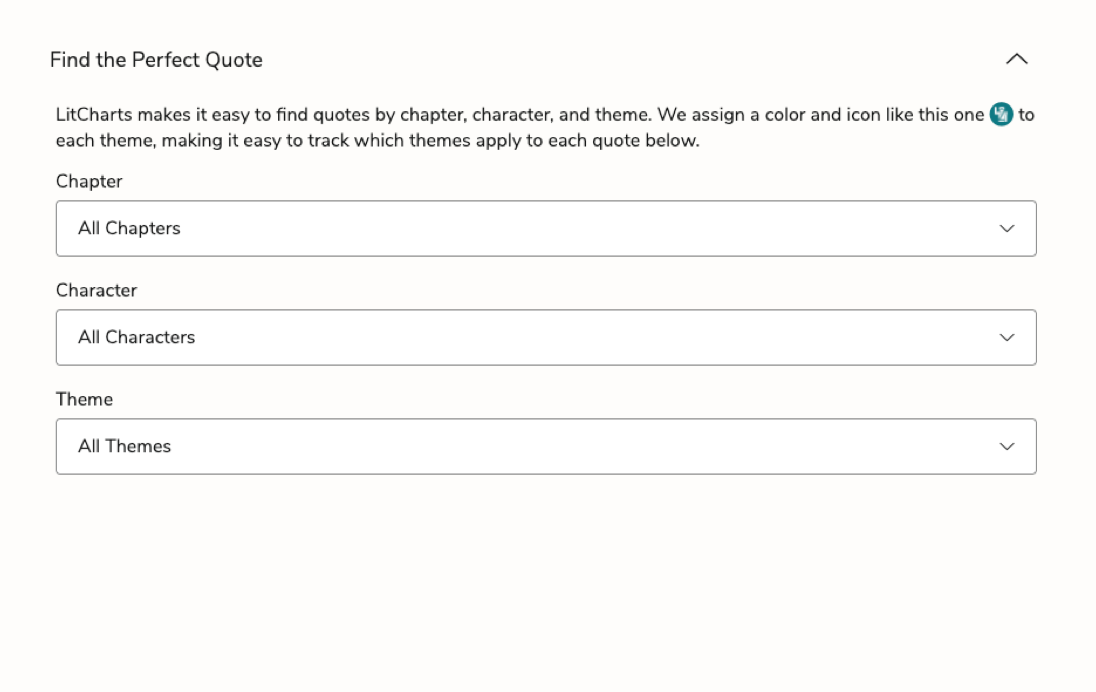
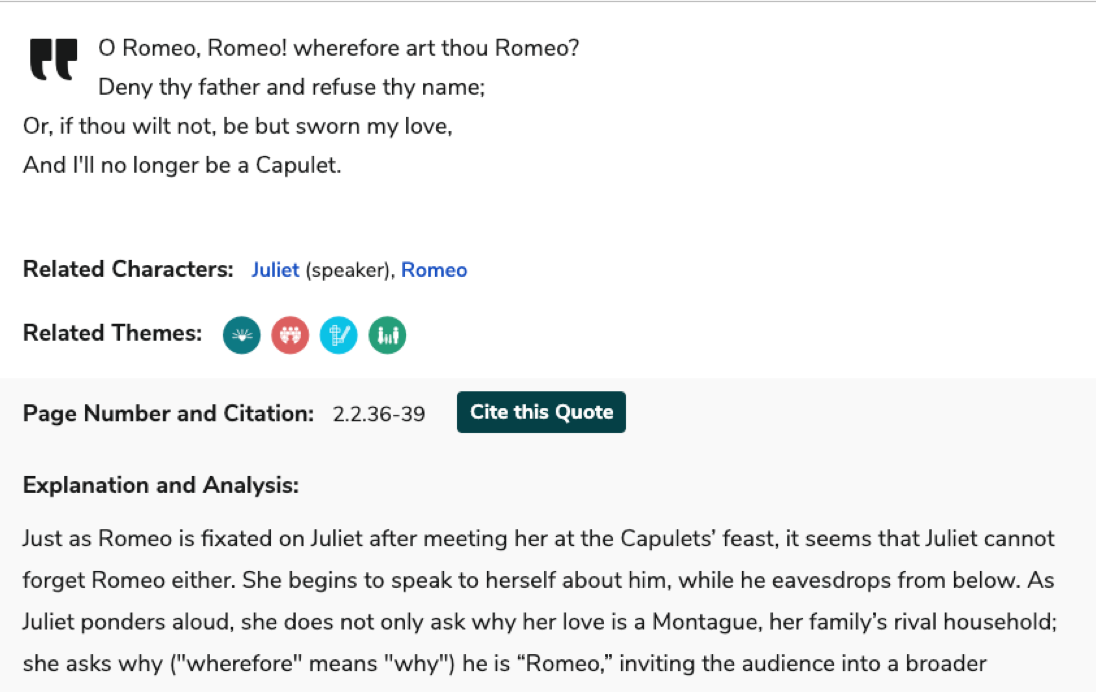
Find the perfect quote
Then understand it perfectly. And get the citation, too. For all 35,000+ quotes we cover.

|
Have questions?
Contact us
Already a member? Sign in
|
In this bittersweet passage from the end of the novel, the author uses dramatic irony and a simile describing a memory to show Charlie’s growing separation from his former self. Charlie tries to remember what it was like to read and begins to see his past self from the outside:
I remembir a littel bit how nice I had a feeling with the blue book that I red with the toren cover. And when I close my eyes I think about the man who tored the book and he looks like me only he looks different and he talks different but I dont think its me because its like I see him from the window.
The simile, “like I see him from the window,” compares the way Charlie views himself in his memories to a person watching a stranger through glass. This phrase shows Charlie’s inability to connect his past self with his present self after the operation to make him smarter fails. He cannot claim the memory as his own because it now feels distant, as though it belonged to someone else outside his current life. The use of the word “window” also creates an image of a barrier between him and the person he once was when he was intelligent.
This is also a moment of dramatic irony, because the reader can tell that the man in the memory is Charlie even though Charlie himself cannot. The narrative gives the audience knowledge that Charlie has lost. This effect makes Charlie’s situation even clearer and more painful for the reader, who understands what Charlie no longer can. Although Charlie is having a flashback to his own past, he cannot recognize his own experience.




 Teacher















|
Close Reading Organizers |

|
Character Analysis Organizers |

|
Symbol Analysis Organizers |

|
Theme Analysis Organizers |

|
Quote Analysis Organizers |
Common Core-aligned