Find the perfect quote
Then understand it perfectly. And get the citation, too. For all 35,000+ quotes we cover.

|
Have questions?
Contact us
Already a member? Sign in
|
During Rosh Hashanah, many of the Jews pray together, but Eliezer no longer believes in any of the Jewish holidays or the Jewish faith altogether. With an ironic metaphor, the story depicts Eliezer’s declining relationship with God:
But now, I no longer pleaded for anything. I was no longer able to lament. On the contrary, I felt very strong. I was the accuser, God the accused. My eyes had opened and I was alone, terribly alone in a world without God, without man. Without love or mercy. I was nothing but ashes now, but I felt myself to be stronger than this Almighty to whom my life had been bound for so long. In the midst of these men assembled for prayer, I felt like an observer, a stranger.
Eliezer’s belief in God perishes as he watches an innocent boy die slowly by hanging. Eliezer not only completely loses his faith in God, but he also loses the need for God. Eliezer feels stronger that God, who he feels has been weak to allow so many Jews to be horribly killed. Despite being “nothing but ashes,” tortured and starved and scarred beyond repair, Eliezer is strong enough to recognize God’s weakness. The juxtaposition between being “alone,” “without love or mercy,” and yet being “stronger than this Almighty” is ironic, perhaps even paradoxical.
In Eliezer’s eyes, all that made him human before—desire, faith, love, companionship—allowed him to be weak. Every death and every moment of pain was an arrow to the heart, a blow to his soul. Now that he no longer has these human necessities and traits, he can no longer be affected with such intensity. He is a rock, emotionless and unbreakable, unaffected by the Gestapo, yet whittled down over time, all the same.


 Teacher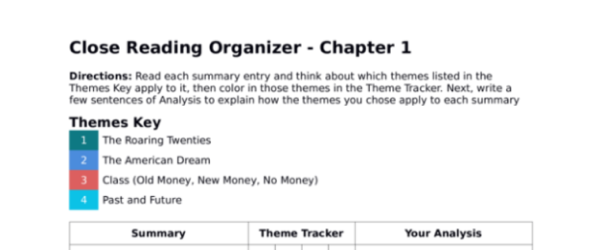












|
Close Reading Organizers |

|
Character Analysis Organizers |

|
Symbol Analysis Organizers |

|
Theme Analysis Organizers |

|
Quote Analysis Organizers |
Common Core-aligned