Find the perfect quote
Then understand it perfectly. And get the citation, too. For all 35,000+ quotes we cover.

|
Have questions?
Contact us
Already a member? Sign in
|
Dimmesdale's sermons throughout the novel are wrought with situational irony because he is calling on people to behave virtuously even though he himself has failed to do so. An early example of situational irony in Dimmesdale's sermons occurs in Chapter 3, when Dimmesdale tells Hester why she should reveal Pearl's father:
"Be not silent from any mistaken pity and tenderness for him; for, believe me, Hester, though he were to step down from a high place, and stand there beside thee, on thy pedestal of shame, yet better were it so than to hide a guilty heart through life."
Dimmesdale knows that he is Pearl's father. It is hypocritical for him to place a moral burden on Hester to reveal Pearl's father when he himself is "hiding a guilty heart through life." As the town minister, Dimmesdale ought to lead by example. At the very least, he ought to live up to the moral codes he imposes on others. The irony of the situation (Dimmesdale tells Hester and the town to do the opposite of what he is doing) emphasizes how all-consuming Dimmesdale finds his own shame to be. He cannot bring himself to reveal his identity, and so he pleads with Hester to do it for him. He therefore calls upon her to behave in the way that everyone would expect him to behave.
Although some Puritans in the novel (such as Governor Winthrop) seem to delude themselves about their own hypocrisy, Dimmesdale is keenly aware of his. In Chapter 11, he points out the irony that he has maintained his office as pastor through the entire scandal:
["]I, your pastor, whom you so reverence and trust, am utterly a pollution and a lie!”
The role of the pastor, according to Dimmesdale, commands "reverence and trust." He sees himself not only as unsuited to the role, but also as dangerous to its sanctity: he "pollutes" it. It is true that Dimmesdale is a liar, but it is important to note that what he calls himself is a "lie." The townspeople see him as their pastor, but he believes he is deceiving them. He does not deserve their reverence and trust, so he is not a real pastor. Instead, he is a wolf in sheep's clothing who threatens everyone's morality by passing himself off as a perfect Puritan.





 Teacher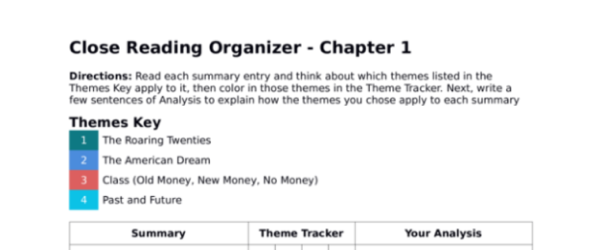















|
Close Reading Organizers |

|
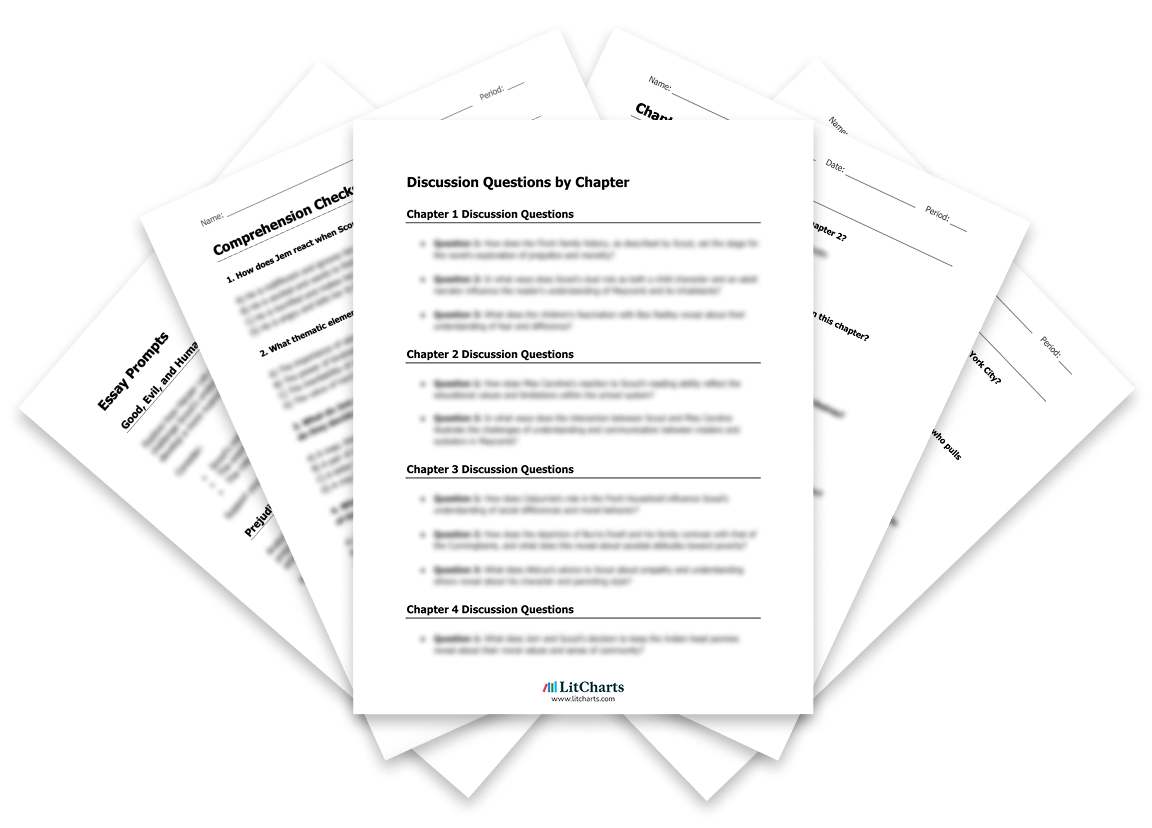
Character Analysis Organizers |

|
Symbol Analysis Organizers |

|
Theme Analysis Organizers |

|
Quote Analysis Organizers |
Common Core-aligned