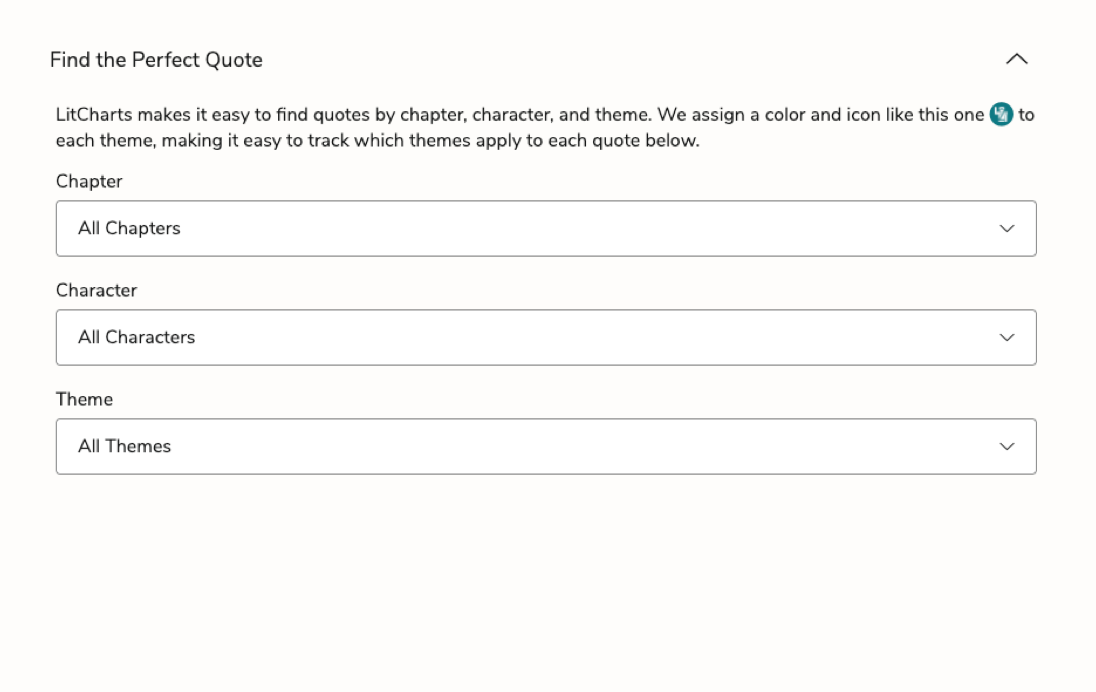
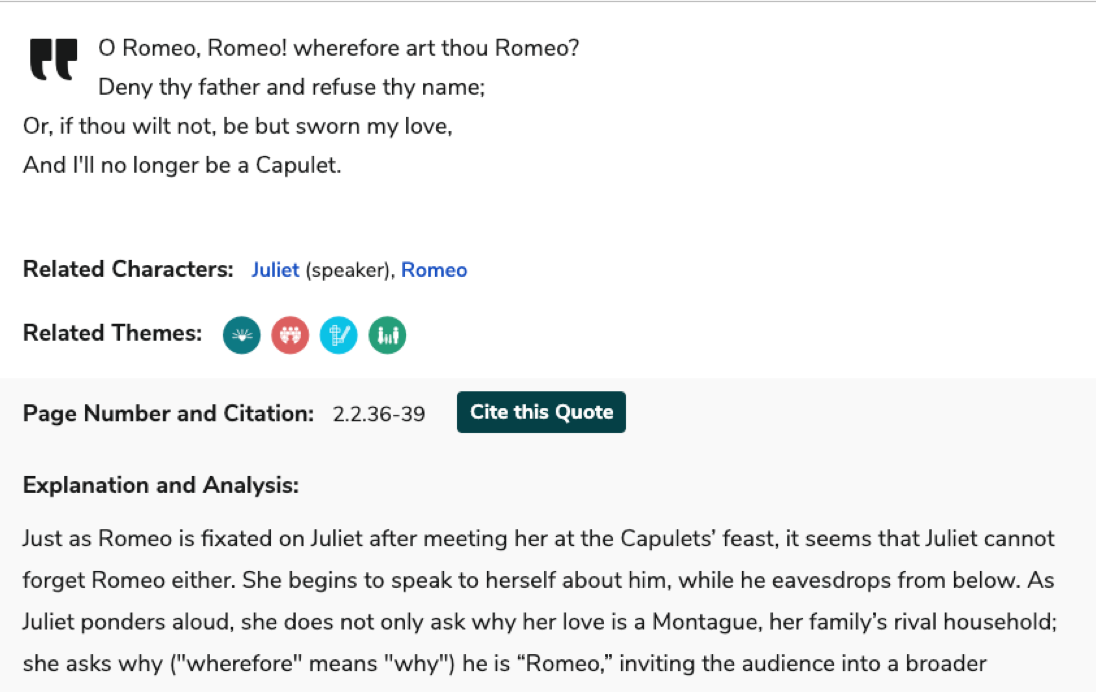
Find the perfect quote
Then understand it perfectly. And get the citation, too. For all 35,000+ quotes we cover.

|
Have questions?
Contact us
Already a member? Sign in
|
After several chapters in which Huck is focused on describing the duke and the king's antics, his attention turns to Jim, whom he witnesses mourning over being separated from his family. Huck's observations contain situational irony:
He was thinking about his wife and his children, away up yonder, and he was low and homesick; because he hadn’t ever been away from home before in his life; and I do believe he cared just as much for his people as white folks does for their’n. It don’t seem natural, but I reckon it’s so.
This is an example of situational irony because Huck expects Jim to be one way (less human than a white person) and he turns out to be the opposite (a person with feelings the same as Huck). Here, Twain uses irony to show how backwards the institution of slavery (as well as the racist logic on which it was built) was, as it was founded on the erroneous idea that one group of human beings was somehow less human than other groups.
What’s more, this moment shows that Huck is maturing from a boy into a young man able to discern what he thinks about himself separate from the racist beliefs he was taught as a white child in pre-Civil War America. It’s likely that witnessing the exploitative and harmful actions of two white men—the king and the duke—he is learning that race is not an indicator of someone’s behavior or morality.


 Teacher













|
Close Reading Organizers |

|
Character Analysis Organizers |

|
Symbol Analysis Organizers |

|
Theme Analysis Organizers |

|
Quote Analysis Organizers |
Common Core-aligned