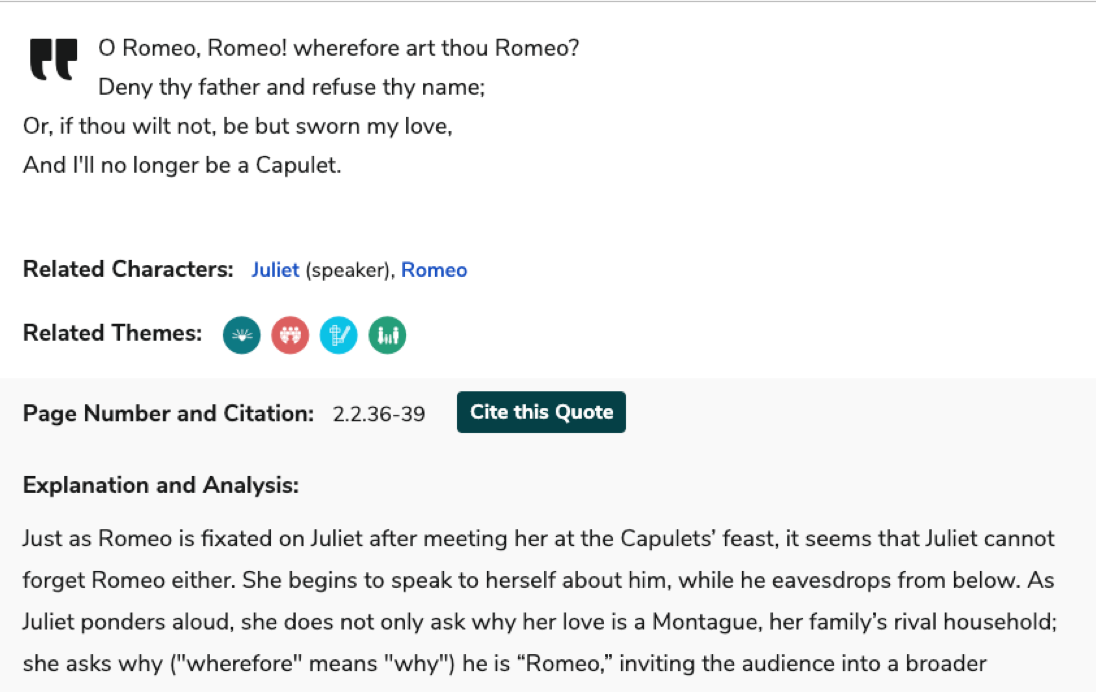
Find the perfect quote
Then understand it perfectly. And get the citation, too. For all 35,000+ quotes we cover.

|
Have questions?
Contact us
Already a member? Sign in
|
Situational irony permeates Márquez’s depiction of the final days of the war, during which Aureliano reflects cynically upon how little progress has been made despite the great sacrifice of time, resources, and lives. As he reflects upon his order to execute Colonel Gerineldo Márquez, and his mother’s threat to kill him with her own bare hands if he carries out the execution, Aureliano’s thoughts turn towards his own life:
During that interminable night [...] Colonel Aureliano Buendía scratched for many hours trying to break the hard shell of his solitude. His only happy moments, since that remote afternoon when his father had taken him to see ice, had taken place in his silver workshop where he passed the time putting little gold fishes together. He had had to start thirty-two wars and had had to violate all of his pacts with death and wallow like a hog in the dung heap of glory in order to discover the privileges of simplicity almost forty years late.
The narrator’s language emphasizes the sad ironies of the war. Aureliano has become a powerful and prominent figure during the war, leading armies, receiving honors, and executing his enemies with the stroke of a pen. However, he does not experience the feelings of contentment, satisfaction, or security that one might expect to accompany power. Instead, he notes that he was happier before the war, in simpler times, such as when he would work in his silver workshop, “putting little gold fishes together.” These reflections cement Aureliano’s disillusionment at this point in the novel, as well as his desire to put a quick end to the war.





 Teacher

















|
Close Reading Organizers |

|
Character Analysis Organizers |

|
Symbol Analysis Organizers |

|
Theme Analysis Organizers |

|
Quote Analysis Organizers |
Common Core-aligned