Find the perfect quote
Then understand it perfectly. And get the citation, too. For all 35,000+ quotes we cover.

|
Have questions?
Contact us
Already a member? Sign in
|
In Chapter 11, Quoyle wakes up to a hammering sound, which he soon discovers to be a bird trying to poke through the window and enter the house. A paradox describes this bird's strange behavior:
It seemed the bird was trying to break from the closed room of sea and rock and sky into the vastness of his bare chamber.
This sentence constitutes a paradox because it describes an area of open space (the sea) as a closed room and a contained space (his bedroom) as a vast one.
The paradox here indicates the way one person's (or animal's) closed or contained space is another's freedom. For the bird, the outside world is also its bedroom, and it wants the freedom to explore new territory.
Ironically, Quoyle will later picture the house as a prison in Chapter 33:
The coast around the house seemed beautiful. But the house was wrong. Had always been wrong, he thought. [...] Winched onto the rock. Groaning. A bound prisoner straining to get free.
For the bird, the house may be a safe haven, but the house itself wants to fly free. Placing these two descriptions alongside each another invites an interesting discussion about the secret desires a person harbors but does not voice in the interest of maintaining a sense of stability and community.


 Teacher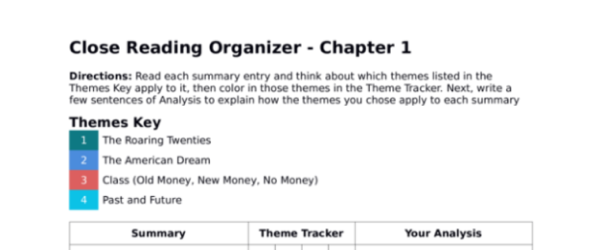








|
Close Reading Organizers |

|
Character Analysis Organizers |

|
Symbol Analysis Organizers |

|
Theme Analysis Organizers |

|
Quote Analysis Organizers |
Common Core-aligned