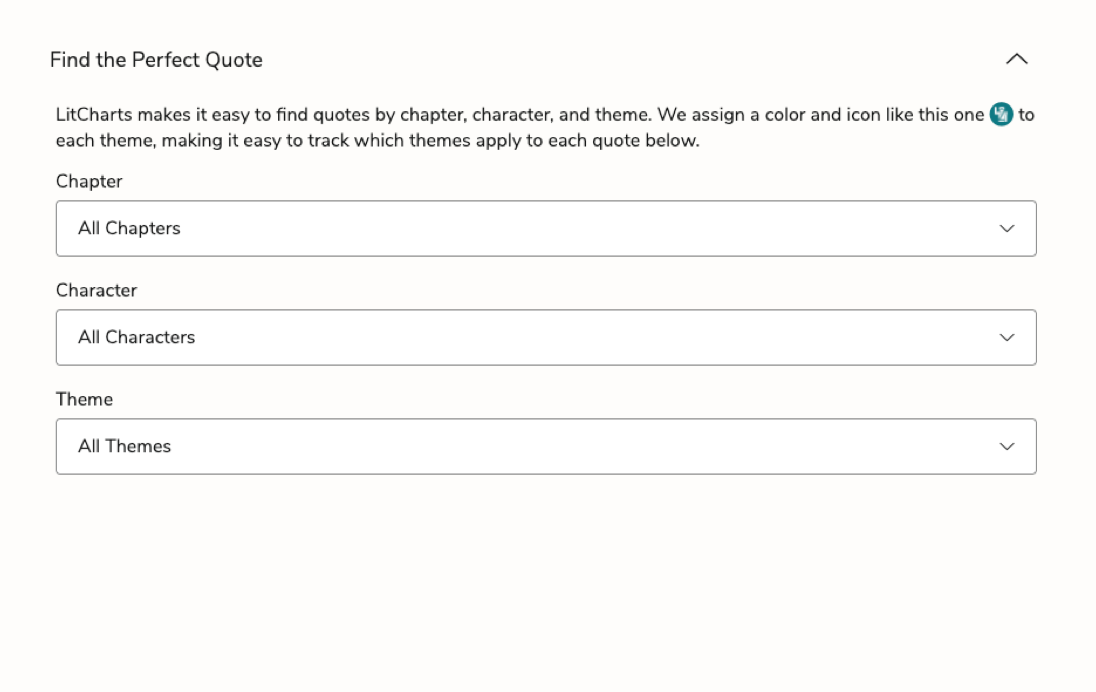
Find the perfect quote
Then understand it perfectly. And get the citation, too. For all 35,000+ quotes we cover.

|
Have questions?
Contact us
Already a member? Sign in
|
In Chapter 16, the narration uses pathos to appeal directly to the reader’s emotions through the primal, universal bond between mother and child:
Here were a mother and her daughter, nothing less. A mother and child—in a world that could barely be bothered with mothers and children—who were going to be taken apart. Everybody believed it. Possibly Turtle believed it. I did. Of all the many times when it seemed to be so, that was the only moment in which I really came close to losing Turtle.
By repeating the phrase “a mother and her daughter,” the narrator underscores the sanctity of this relationship, intensifying the sense of injustice in its impending rupture. The use of “in a world that could barely be bothered” extends the scene beyond the personal, layering in a subtle but pointed social critique of systemic neglect of vulnerable families.
The phrase “Everybody believed it” bridges cultural, linguistic, and experiential divides, suggesting that grief and love are universally understood. The narrator’s own inclusion—“I did”—removes the separation between observer and participant, drawing the reader more intimately into the shared experience of loss.
Through this framing, the stakes of the custody battle are elevated from a legal matter to a moral crisis. The reader is not merely a witness but is invited to feel the emotional urgency of the moment and to confront the broader societal indifference that allows such separations to occur.


 Teacher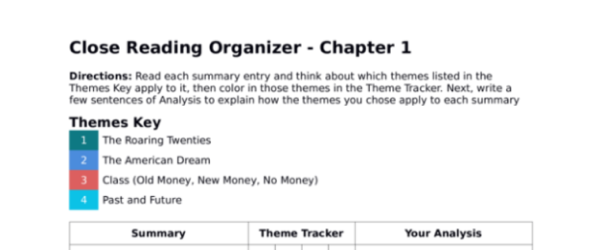












|
Close Reading Organizers |

|
Character Analysis Organizers |

|
Symbol Analysis Organizers |

|
Theme Analysis Organizers |

|
Quote Analysis Organizers |
Common Core-aligned