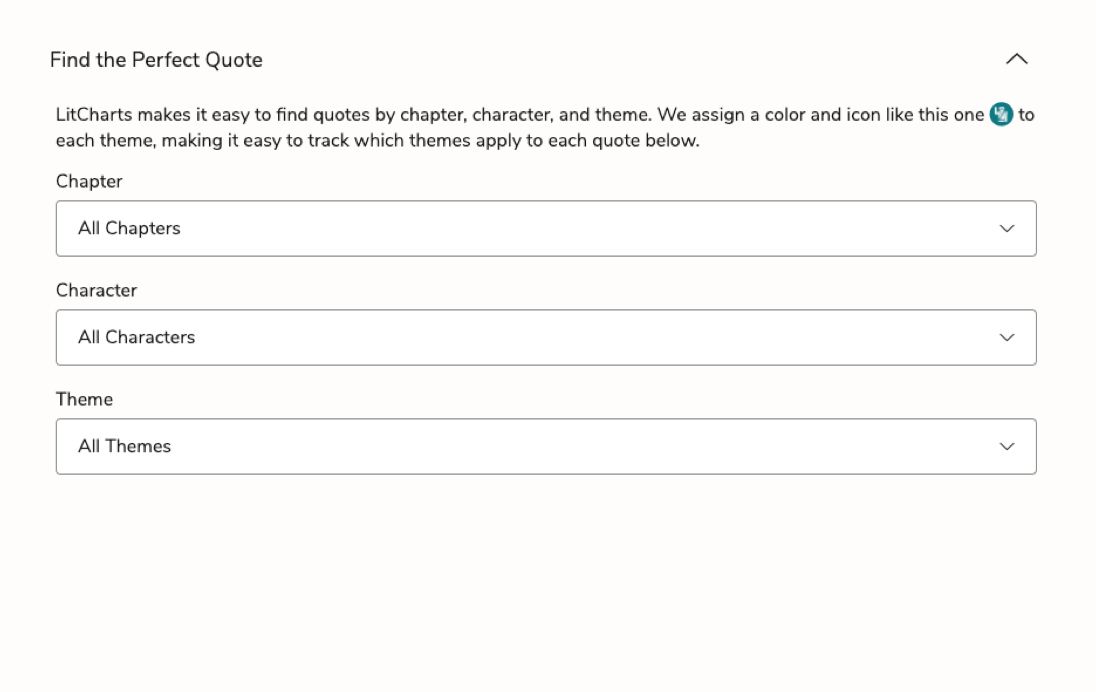
Find the perfect quote
Then understand it perfectly. And get the citation, too. For all 35,000+ quotes we cover.

|
Have questions?
Contact us
Already a member? Sign in
|
At various points in Leviathan, Hobbes satirizes Catholic belief, especially the Catholic idea that during a mass the bread and wine used in communion physically become the flesh and blood of Christ—not as a metaphor, but literally. Offering a materialist critique of transubstantiation, Hobbes writes:
When men write whole volumes of such stuffe, are they not Mad, or intend to make others so? And particularly, in the question of Transubstantiation; where after certain words spoken, they that say, the Whitenesse, Roundnesse, Magnitude, Quality, Corruptibility, all which are incorporeall, &c. go out of the Wafer, into the Body of our blessed Saviour, do they not make those Nesses, Tudes and Ties, to be so many spirits possessing his body? For by Spirits, they mean alwayes things, that being incorporeall, are neverthelesse moveable from one place to another.
Hobbes’s tone is harsh and satirical in his critique of Catholic dogma, which he treats as nothing but superstition and deception. Transubstantiation, the process by which the bread and wine is transformed in communion according to Catholic belief, is for Hobbes a farce in which “after certain words are spoken” the various physical characteristics of the communion wafer—its “Whiteness, Roudnesse, Magnitude,” etc.—are transferred into the body of Christ.
For Hobbes, the major mistake here is a confusion of the physical and the non-physical: how, he asks, can an “incorporeal” quality that has no mass also be thought of as “moveable”? With satirical humor, he suggests that the communion wafer is like a ghost “possessing” the body of Christ. Such beliefs, he concludes, are the product either of madness or of deliberate deception.


 Teacher









|
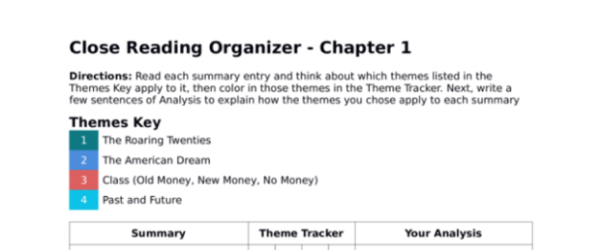
Close Reading Organizers |

|
Character Analysis Organizers |

|
Symbol Analysis Organizers |

|
Theme Analysis Organizers |

|
Quote Analysis Organizers |
Common Core-aligned