Find the perfect quote
Then understand it perfectly. And get the citation, too. For all 35,000+ quotes we cover.

|
Have questions?
Contact us
Already a member? Sign in
|
In Chapter 12, Whitechapel's great-granddaughter describes his dead body with imagery, simile, and metaphor:
He lies half-curled. His skin is already cold. I start at his head, his face, neck and behind his ears; wiping the slack skin in his neck to catch a streak of water, wiping the set creases at the corners of his mouth.[...] I uncurl the fingers which have the resistance of the dead in them and wipe the palms with their pathways of an ant’s nest. His knuckles are round as stones. His nails are as dark brown as his skin.
Imagery is used to describe what Whitechapel's body looks like and feels like now that he is dead, namely "half-curled," "cold," and "dark brown." Whitechapel's body is set in the same ways it was when he was living: for instance, there are the "set creases at the corners of his mouth" that led to him being called "sour face." The fact that his knuckles are compared to "stones" with a simile and the fact that his palms are metaphorically described as containing "their pathways of an ant's nest" both serve to make Whitechapel seem subhuman. His body is not the body of a person; rather, it is like an object, merely a rock or a path through the dirt.
In the first chapter, Whitechapel compares his "dead eyes," which witnessed the death of his own son due to Whitechapel's misguided actions, to "stone." Whitechapel's great-granddaughter's description of his dead body makes it clear that this self-description was accurate. Although knuckles and eyes are not the same, Whitechapel is similar to a stone in death, just as he was in life. In both instances, the simile comparing Whitechapel to stone suggest an unchanging and obstinate nature.


 Teacher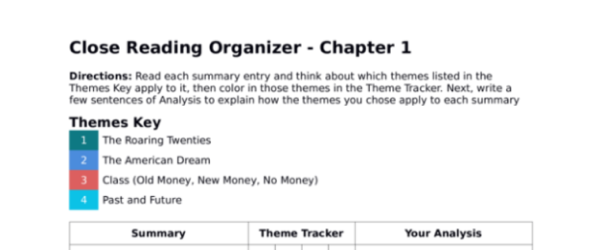









|
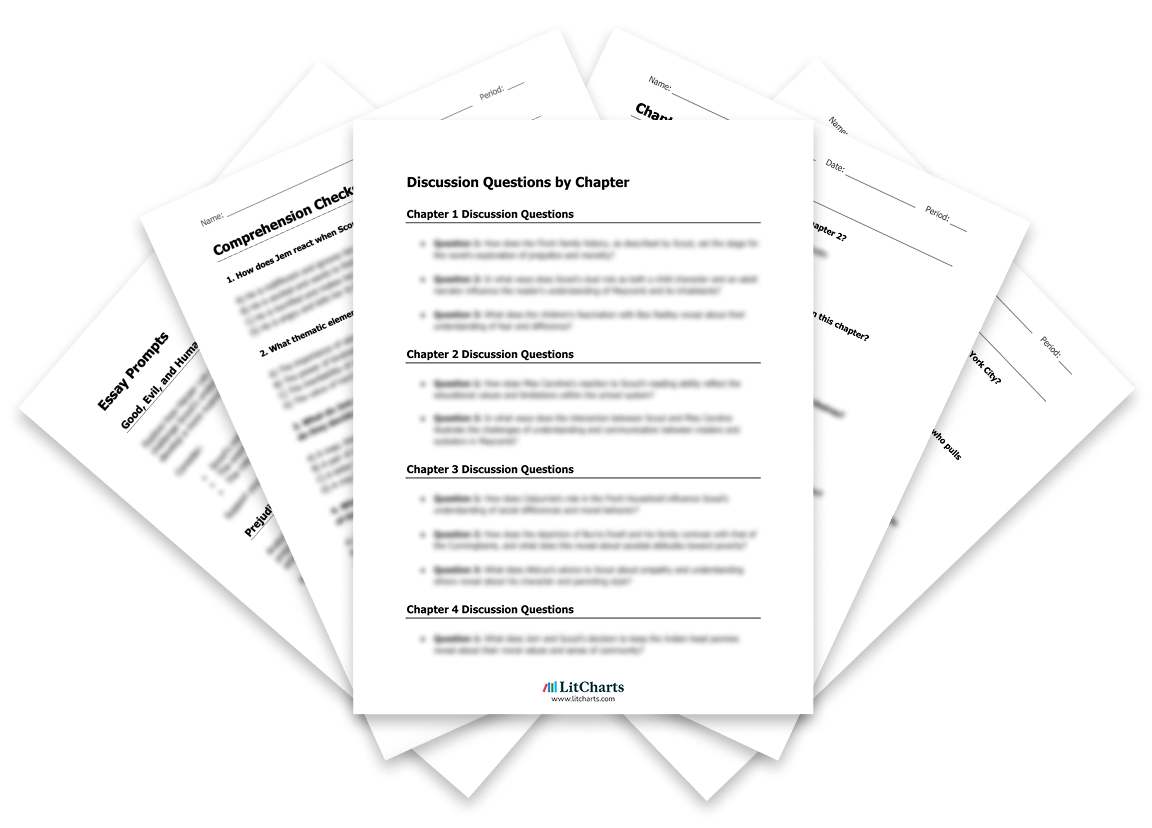
Close Reading Organizers |

|
Character Analysis Organizers |

|
Symbol Analysis Organizers |

|
Theme Analysis Organizers |

|
Quote Analysis Organizers |
Common Core-aligned