Find the perfect quote
Then understand it perfectly. And get the citation, too. For all 35,000+ quotes we cover.

|
Have questions?
Contact us
Already a member? Sign in
|
In Chapter 3, Ondaatje crafts a simile to compare Caravaggio’s behavior as a husband to a thief, as a means of highlighting his issues with emotional intimacy, even before World War II began:
He is a man in his middle age who has never become accustomed to families. All his life he has avoided permanent intimacy. Till this war he has been a better lover than husband. He has been a man who slips away, in the way lovers leave chaos, the way thieves leave reduced houses.
The simile "He has been a man who slips away" likens Caravaggio to a thief, because he enjoys intimacy, but only in a temporary manner. Caravaggio chooses to escape the boundaries of a formal relationship out of fear of getting stuck in a singular place. This simile of Caravaggio as a thief—given his tendency to act as an absent husband before the war—heightens imagery of his character and his fear of intimacy. Although he was married, he was not truly present for his family. He enjoyed physical intimacy, as he implies, but when it was over, when the house was empty so to say, he disappeared like a thief in the night. This passage provides important context for Caravaggio’s character, as he falls in love with Hana and becomes accustomed to this makeshift family in the villa San Girolamo—however dysfunctional the family may be.





 Teacher













|
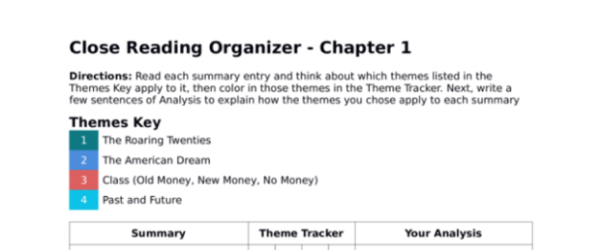
Close Reading Organizers |

|
Character Analysis Organizers |

|
Symbol Analysis Organizers |

|
Theme Analysis Organizers |

|
Quote Analysis Organizers |
Common Core-aligned