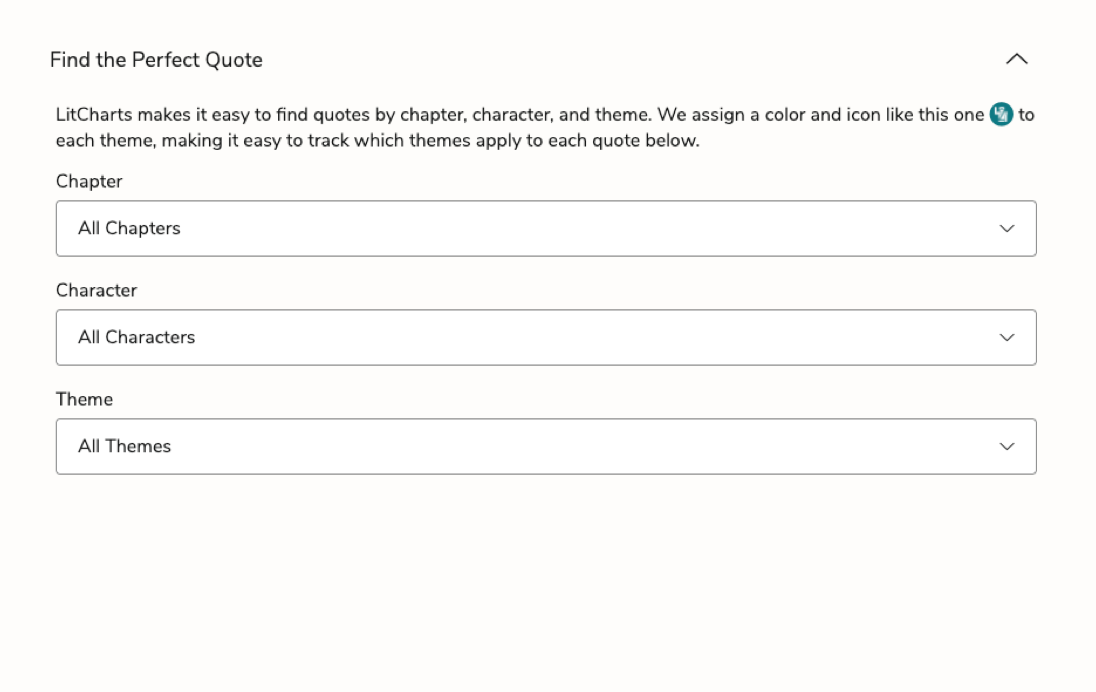
Find the perfect quote
Then understand it perfectly. And get the citation, too. For all 35,000+ quotes we cover.

|
Have questions?
Contact us
Already a member? Sign in
|
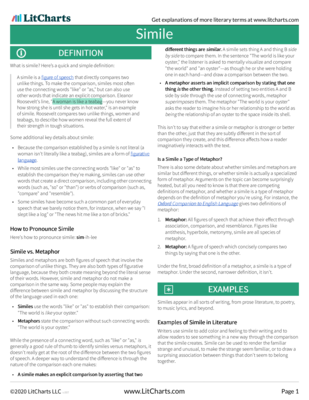
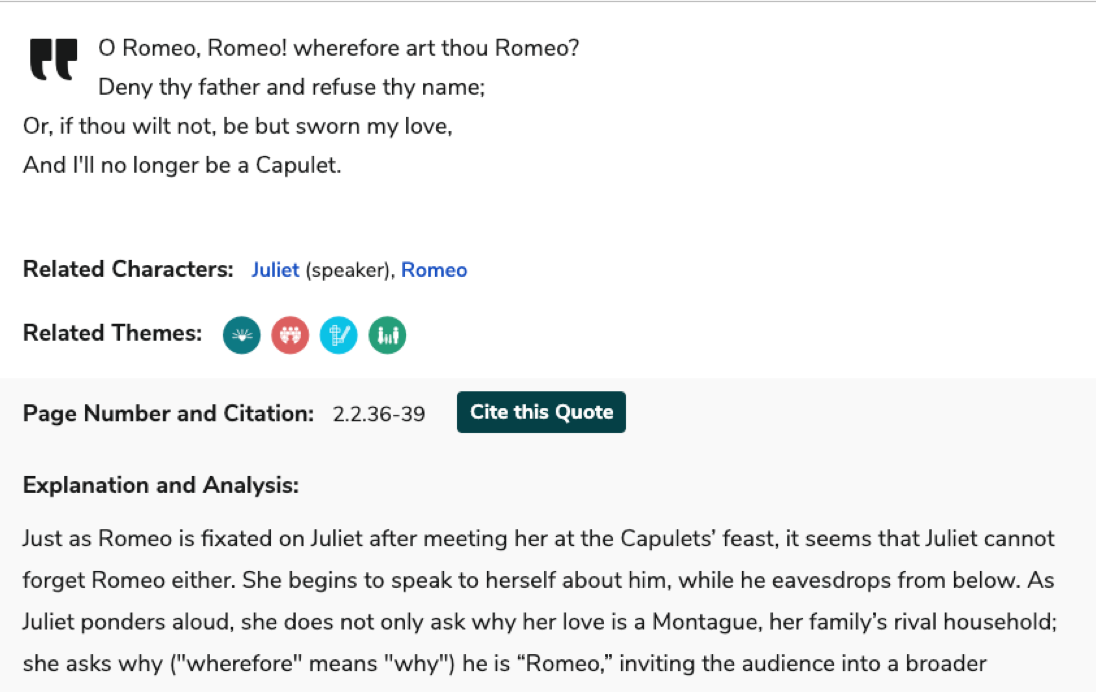
In Chapter 71, the Count and Mercédès discuss their pasts as they walk around the Morcerf property. In a moment laden with dramatic irony, the Count shares a fabricated tale of a lost love and uses a simile to underscore his loss:
It is not my fault, Madame. In Malta I loved a girl and was going to marry her, when the war came and swept me away from her like a whirlwind. I thought that she loved me enough to wait for me, even to remain faithful to my tomb. When I came back, she was married.
Once again, Dumas uses weather in a literary device to illustrate the force of human struggle: the Count's fictional lover was "swept away" like a "whirlwind." The simile holds true to the emotion behind the Count's falsified backstory—he was, in fact, swept away from Mercédès when he was imprisoned—but does not reveal the Count's identity. For the reader, this moment carries particular suspense. It would appear that Mercédès and the Count both know exactly who the other is, and the Count is not especially careful in sharing a backstory with a one-to-one correlation to his real relationship to Mercédès, but neither character has let anything on. For now, they stick to their assumed identities and carry on the charade.
Dumas uses questions of identity as a propulsive narrative device in The Count of Monte Cristo, drawing out the ambiguity of each character's true identity for as long as possible. By letting the reader stay just a bit more informed than the characters in the story, Dumas can mine the effects of dramatic irony and heighten the reader's feeling of suspense as these long-lost lovers almost reunite. After all, The Count of Monte Cristo is also a love story—and the Count's relationship with Mercédès is a central source of motivation for his rampage of revenge.


 Teacher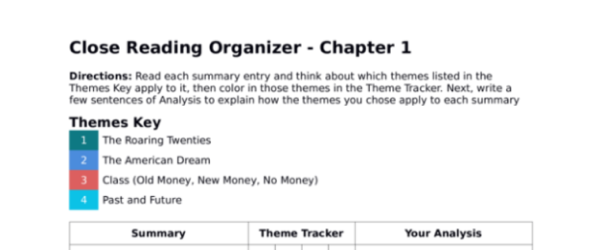










|
Close Reading Organizers |

|
Character Analysis Organizers |

|
Symbol Analysis Organizers |

|
Theme Analysis Organizers |

|
Quote Analysis Organizers |
Common Core-aligned