Find the perfect quote
Then understand it perfectly. And get the citation, too. For all 35,000+ quotes we cover.

|
Have questions?
Contact us
Already a member? Sign in
|
Arguing that humans can never have certain knowledge about the nature or intentions of God, Hobbes uses a simile that compares human ignorance to blindness.
For as a man that is born blind, hearing men talk of warming themselves by the fire, and being brought to warm himself by the same, may easily conceive, and assure himselfe, there is somewhat there, which men call Fire, and is the cause of the heat he feeles; but cannot imagine what it is like; nor have an Idea of it in his mind, such as they have that see it: so also, by the visible things of this world, and their admirable order, a man may conceive there is a cause of them, which men call God; and yet not have an Idea, or Image of him in his mind.
Though Hobbes was accused of being an atheist after the publication of Leviathan, he insists that he is not skeptical of the existence of God, but rather of the human ability to understand God. In a lengthy simile, he argues that humans are as ignorant of the true nature of God “as a man that is born blind” is of fire. Though the blind man of Hobbes’s simile can “assure himselfe” that there is something “which men call Fire” and can feel the “heat” of the fire, ultimately he can never truly have a perfect understanding of fire as he has never seen it, but only feels it from a distance. Likewise, Hobbes writes, a man may feel the effects of God and believe in his existence but can never “have an Idea, or Image of him in his mind.” The human senses, for Hobbes, are incapable of grasping God




 Teacher















|
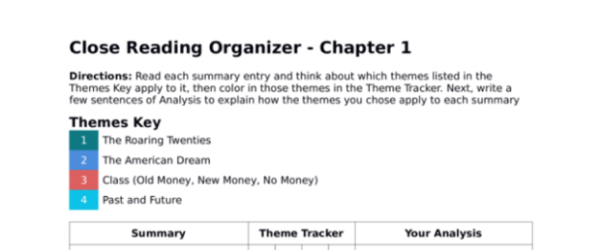
Close Reading Organizers |

|
Character Analysis Organizers |

|
Symbol Analysis Organizers |

|
Theme Analysis Organizers |

|
Quote Analysis Organizers |
Common Core-aligned