Find the perfect quote
Then understand it perfectly. And get the citation, too. For all 35,000+ quotes we cover.

|
Have questions?
Contact us
Already a member? Sign in
|
In a discussion of the human passions, chief of which for Hobbes is the desire for power, he uses a simile that compares the thoughts to “Scouts, and Spies”:
For the Thoughts, are to the Desires, as Scouts, and Spies, to range abroad, and find the way to the things Desired: All Stedinesse of the minds motion, and all quicknesse of the same, proceeding from thence. For as to have no Desire, is to be Dead: so to have weak Passions, is Dulnesse; and to have Passions indifferently for every thing, GIDDINESSE, and Distraction; and to have stronger, and more vehement Passions for any thing, than is ordinarily seen in others, is that which men call MADNESSE.
For Hobbes, all mental activity relates in some way to the outside world. This is important for Hobbes’s argument in favor of philosophical materialism, as those philosophers who argue against materialism often point to the activity of the mind as a phenomenon that cannot easily be explained materially. If nothing exists but matter, the opponents of materialism ask, then what is a thought? Hobbes’s answer to this objection is that thoughts exist only to help us achieve our desires in the physical world. Just as a king sends out spies to do his bidding, the mind sends out thoughts to “range abroad” and achieve the mind’s goals. Desire for things in the physical world, then, is the source of all thinking, and mental disorders stem, for Hobbes, from improper amounts of desire.









 Teacher















|
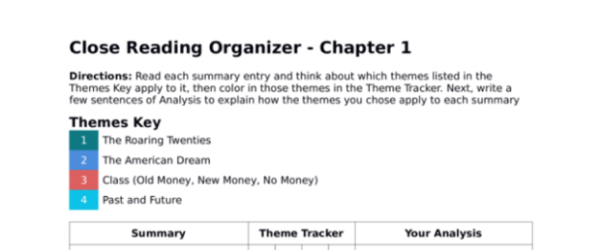
Close Reading Organizers |

|
Character Analysis Organizers |

|
Symbol Analysis Organizers |

|
Theme Analysis Organizers |

|
Quote Analysis Organizers |
Common Core-aligned