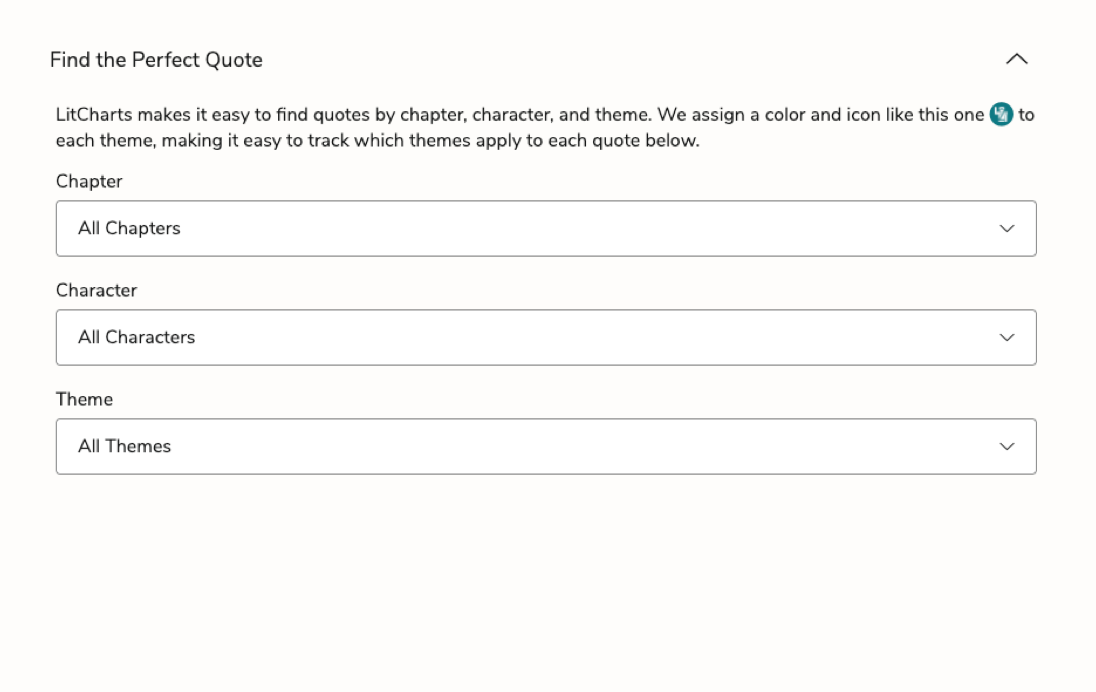
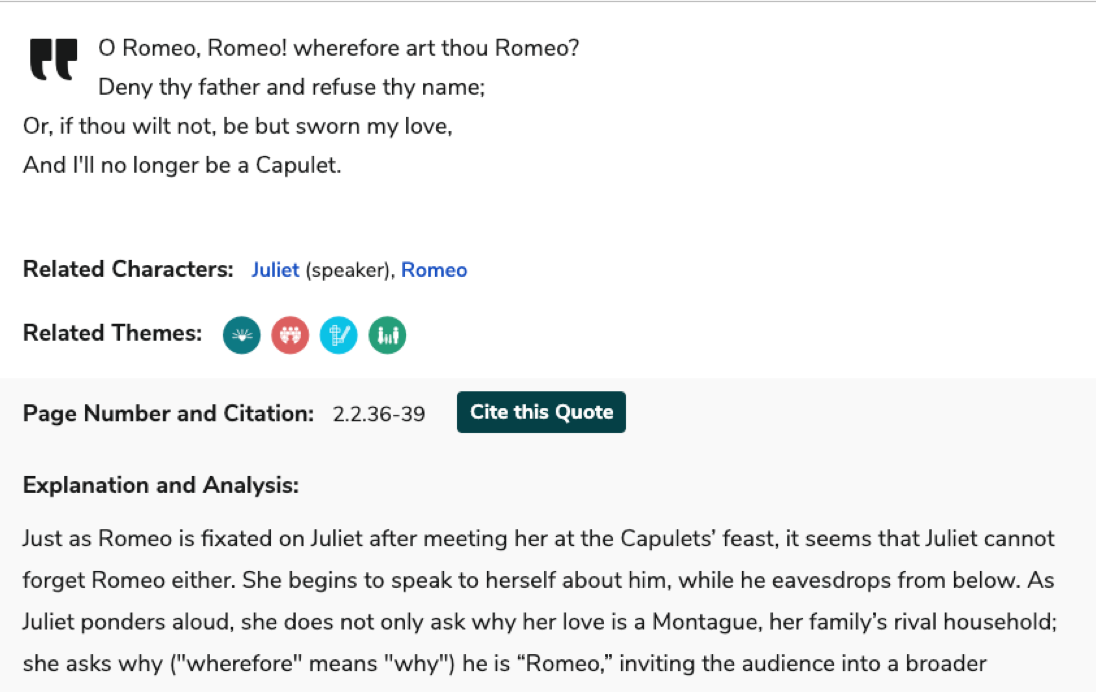
Find the perfect quote
Then understand it perfectly. And get the citation, too. For all 35,000+ quotes we cover.

|
Have questions?
Contact us
Already a member? Sign in
|
In the second act of the play, Prince Hal is introduced in a disreputable tavern alongside his companion and mentor, Falstaff. In a state of drunken contentment, the young Prince uses an elaborate simile that compares his fate to the tides of the sea:
Thou sayest well, and it holds well too, for the
fortune of us that are the moon’s men doth ebb and
flow like the sea, being governed, as the sea is, by
the moon. As for proof now: a purse of gold most
resolutely snatched on Monday night and most
dissolutely spent on Tuesday morning, got with
swearing “Lay by” and spent with crying “Bring
in”; now in as low an ebb as the foot of the ladder,
and by and by in as high a flow as the ridge of the
gallows.
Hal characterizes himself and Falstaff as “the moon’s men” due to their nocturnal lifestyle; they spend much of the day asleep and then drink through the night. Similarly, his emphasis on the evening carries criminal connotations: their attempts to steal from others take place under the cover of darkness. Continuing his discussion of the moon, Hal states that his “fortune [...] doth ebb and flow like the sea.” Just as the moon influences the tides, causing the sea level to rise and fall, so too does he experience highs and lows as a result of his decadent lifestyle. He might be successful in stealing a “purse of gold” one night, but he’ll probably lose it again the next evening.




 Teacher












|
Close Reading Organizers |

|
Character Analysis Organizers |

|
Symbol Analysis Organizers |

|
Theme Analysis Organizers |

|
Quote Analysis Organizers |
Common Core-aligned