The LitCharts.com logo. Have questions? Contact us
Already a member? Sign in
Sign in
Get every literary device explanation for Jurassic Park Plus so much more...
Sign up for LitCharts A+ Get instant access to every literary device explanation, plus so much more...
Situational Irony
Explanation and Analysis—Halfhearted Attack:

In Fourth Iteration: Control (III), Harding explains why Malcolm's fall from the tyrannosaur's jaws did more damage to him than the bite itself. Through this conversation about the irony of the situation, the novel advances the ethos of both Malcolm and the tyrannosaur in service of its message about the hubris of corporate science:

Harding said, “....[W]ith a small creature like Dr. Malcolm, the animal would just shake him, and then toss him.”

“I’m afraid that’s right,” Malcolm said. “I doubt I’d have survived, except the big chap’s heart wasn’t in it. To tell the truth, he struck me as a rather clumsy attacker of anything less than an automobile or a small apartment building.”

“You think he attacked halfheartedly?”

“It pains me to say it,” Malcolm said, “but I don’t honestly feel I had his full attention. He had mine, of course. But, then, he weighs eight tons. I don’t.”

At first, the revelation that the tyrannosaur's bite is survivable seems to diminish its status as the most fearsome predator any of the humans have ever faced. If Malcolm can survive this surprise encounter, maybe tyrannosaurs are no worse than other modern predators, like lions, that humans keep in zoos. Lions might be dangerous, but humans have learned how to coexist with them while maintaining the upper hand. Humans might be able to do the same with tyrannosaurs. A zoo accident here or there would be nothing new, and it certainly would not threaten the human species. Clearly, some such accidents are even survivable. Malcolm, who has been consistently worried about Jurassic Park as an existential threat to human life, should be heartened by his own survival. 

However, as Harding explains, Malcolm is probably not alive because humans can truly stand up to tyrannosaurs. The tyrannosaur's jaws were never what made it an apex predator. Instead, its immense strength comes from its neck. Its teeth allow it to grip its prey, which it then kills by shaking its head with such force that the prey is torn to shreds. Ironically, what saved Malcolm was his relatively small size compared to the tyrannosaur. Malcolm suggests that the tyrannosaur is a "clumsy attacker" when it comes to prey as small as humans, but he also wagers that the tyrannosaur could easily have killed him if it had tried. Should humans ever capture the "full attention" of this predator, the result would be far worse than a lion attack.

Malcolm and Harding's exchange helps the reader see the tyrannosaur as the existential threat it is. Furthermore, by acknowledging how tiny and insignificant he is compared to his attacker, Malcolm demonstrates humility and perspective that the park's founders consistently fail to show. Malcolm often serves as the book's mouthpiece, giving voice to Crichton's critiques of science that is mixed up with corporate money. These critiques can come off as arrogant, as though Malcolm wants Jurassic Park to fail so that he can be right. However, this scene demonstrates the difference between arrogance and expertise. Malcolm knows what he is talking about with regard to Chaos Theory, and he is realistic about the limitations of his own knowledge and power. He admits when he is out of his depth. By demonstrating the humility that is lacking from Hammond and Wu's god complex, Malcolm wins the reader over to his side.

Monthly
Annual (Best Value)
A+ logo.
$595USD/mo
Charged $71.40 USD every year
  • Quote explanations & citation info
    Arrow Icon
    Find the perfect quote
    Then understand it perfectly. And get the citation, too. For all 35,000+ quotes we cover.

    Quote explanations & citation info
  • Every PDF download
    Arrow Icon
    Printable PDFs for every guide
    "Would not have made it through without the printable PDFs. They're like having in-class notes for every discussion!"
    – LitCharts A⁺ user
    Every PDF download
  • One-page Quick Lit Guides
    Arrow Icon
    Understand key basics—fast
    Printable, one-page guides that cover the plot points, themes, and ideas you need to know.
    One-page Quick Lit Guides
  • Detailed chapter analysis
    Arrow Icon
    Get what happens and what it means
    Targeted analysis next to the summary ensures you’ll understand more than just the plot.
    Detailed chapter analysis
  • Line-by-line poetry analysis
    Arrow Icon
    Get the meaning in every line
    Never feel lost reading a poem again with clear and in-depth analysis of each and every line.
    Line-by-line poetry analysis
  • Literary & poetic device analysis
    Arrow Icon
    Decode the author’s language
    Quickly find and understand the key devices in whatever you’re reading.
    Literary & poetic device analysis
  • Unlimited quizzes
    Arrow Icon
    Unlimited quizzes and feedback
    Boost your learning with quizzes that pinpoint and address knowledge gaps.
    Unlimited quizzes
  • Advanced search
    Arrow Icon
    Find exactly what you need
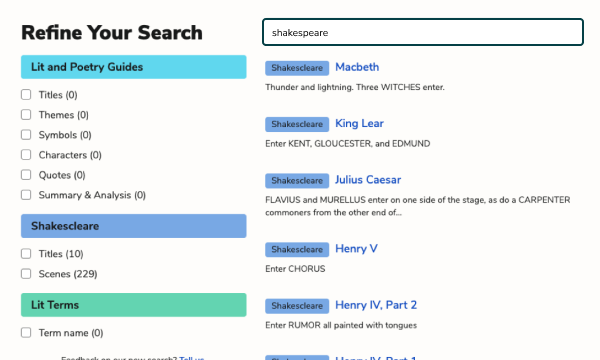
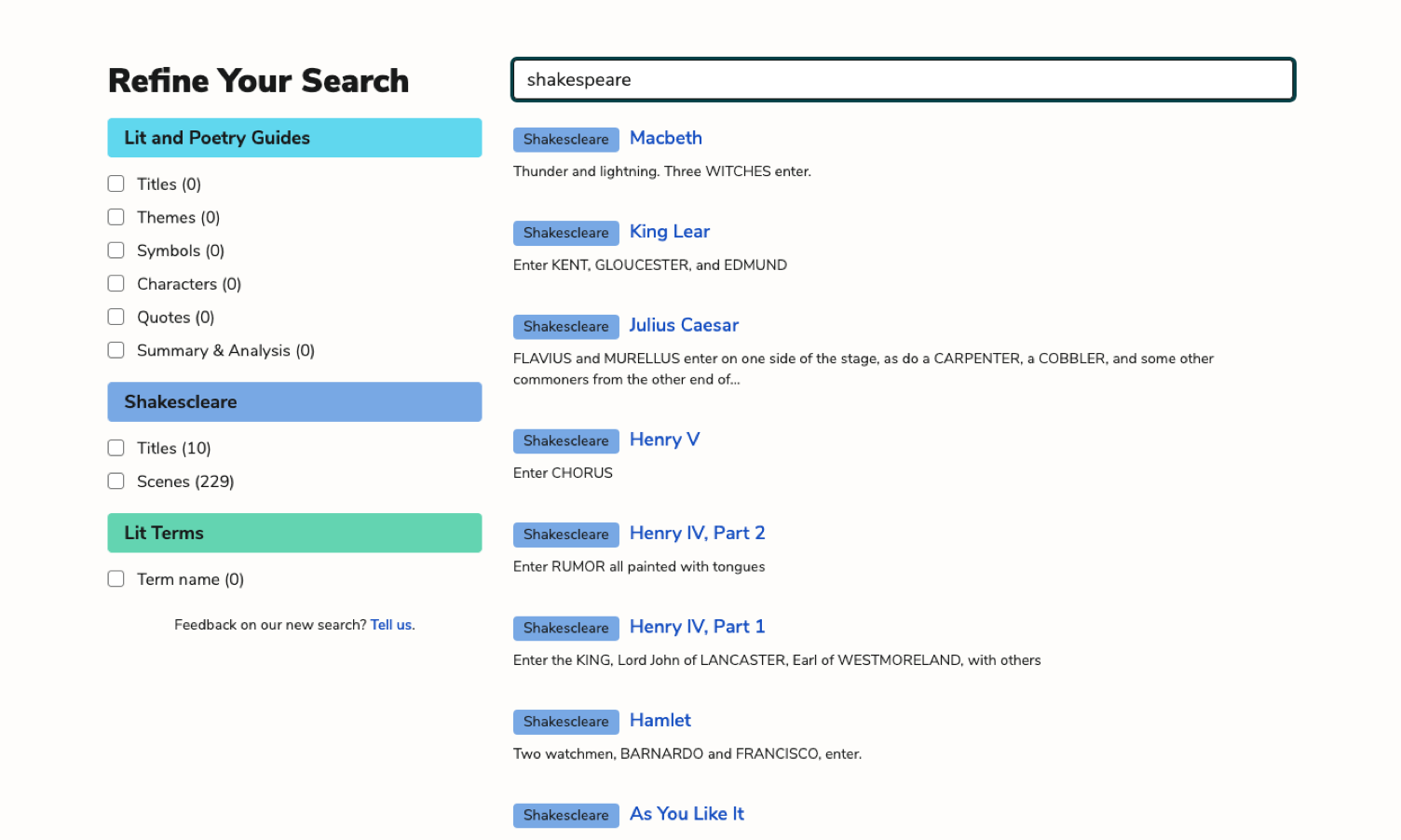
    Refine your search using advanced filters like genre, time period, literary movement, author context, grade level, and more.
    Advanced search
  • Ask LitCharts AI
    Arrow Icon
    Ask LitCharts AI
    Instant answers to all your lit questions. Powered by LitCharts content and AI.
    Ask LitCharts AI
  • Theme comparisons across books
    Arrow Icon
    Compare and contrast
    Identify similar themes across books, making comparisons fast and simple.
    Theme comparisons across books
  • Highlight, take notes, & save guides
    Arrow Icon
    Make LitCharts your own
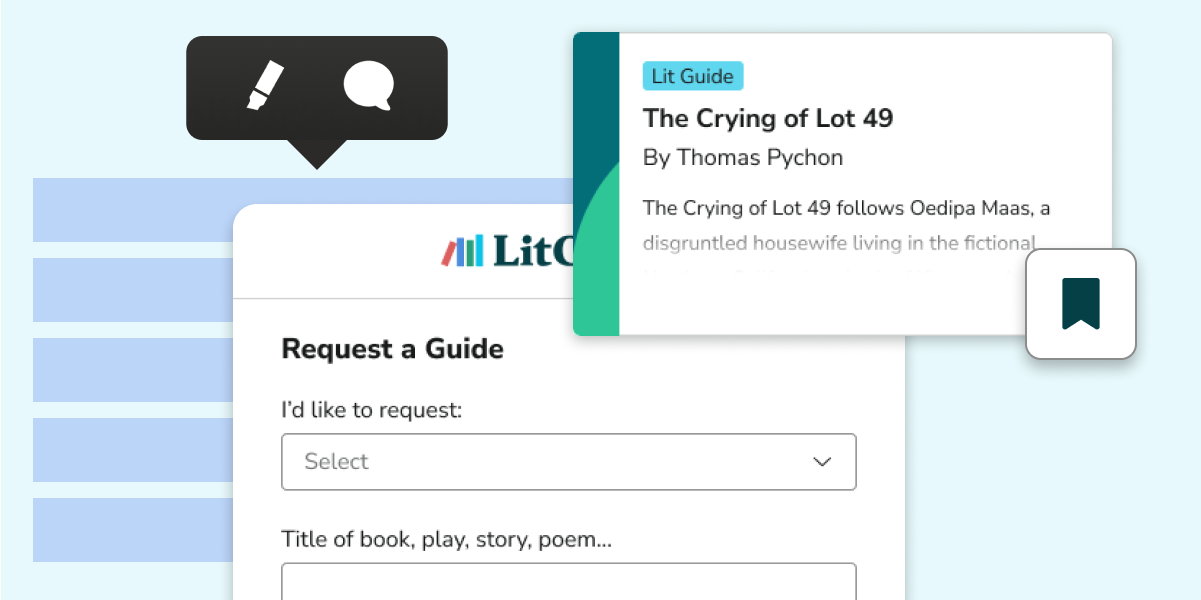
    Add highlights or notes, save guides for easy access later, and request new titles.
    Highlight, take notes, & save guides
  • A+ logo.Teacher
    $795USD/mo
    Charged $95.40 USD every year
  • Quote explanations & citation info
    Arrow Icon
    Find the perfect quote
    Then understand it perfectly. And get the citation, too. For all 35,000+ quotes we cover.
    Quote explanations & citation info
  • Every PDF download
    Arrow Icon
    Printable PDFs for every guide
    "Would not have made it through without the printable PDFs. They're like having in-class notes for every discussion!"
    – LitCharts A⁺ user
    Every PDF download
  • One-page Quick Lit Guides
    Arrow Icon
    Understand key basics—fast
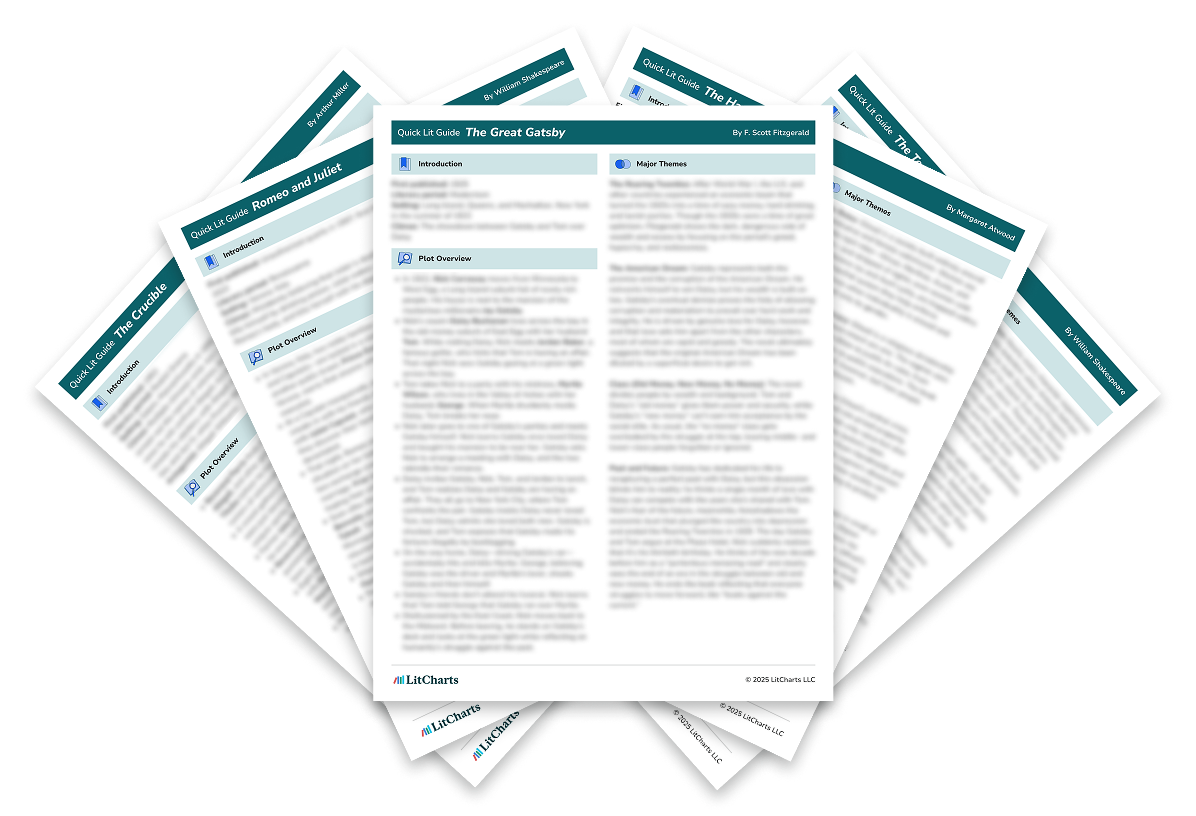
    Printable, one-page guides that cover the plot points, themes, and ideas you need to know.
    One-page Quick Lit Guides
  • Detailed chapter analysis
    Arrow Icon
    Get what happens and what it means
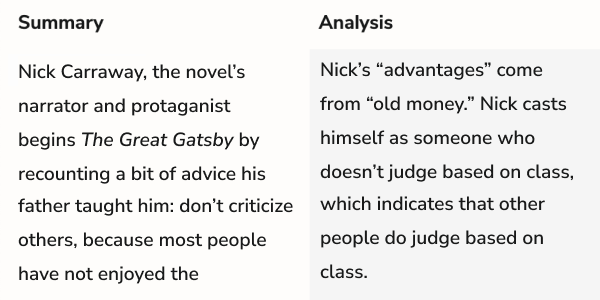
    Targeted analysis next to the summary ensures you’ll understand more than just the plot.
    Detailed chapter analysis
  • Line-by-line poetry analysis
    Arrow Icon
    Get the meaning in every line
    Never feel lost reading a poem again with clear and in-depth analysis of each and every line.
    Line-by-line poetry analysis
  • Literary & poetic device analysis
    Arrow Icon
    Decode the author’s language
    Quickly find and understand the key devices in whatever you’re reading.
    Literary & poetic device analysis
  • Unlimited quizzes
    Arrow Icon
    Unlimited quizzes and feedback
    Boost your learning with quizzes that pinpoint and address knowledge gaps.
    Unlimited quizzes
  • Advanced search
    Arrow Icon
    Find exactly what you need
    Refine your search using advanced filters like genre, time period, literary movement, author context, grade level, and more.
    Advanced search
  • Ask LitCharts AI
    Arrow Icon
    Ask LitCharts AI
    Instant answers to all your lit questions. Powered by LitCharts content and AI.
    Ask LitCharts AI
  • Theme comparisons across books
    Arrow Icon
    Compare and contrast
    Identify similar themes across books, making comparisons fast and simple.
    Theme comparisons across books
  • Highlight, take notes, & save guides
    Arrow Icon
    Make LitCharts your own
    Add highlights or notes, save guides for easy access later, and request new titles.
    Highlight, take notes, & save guides
  • Teacher editions
    Arrow Icon
    Save time with in-depth organizers
    "THE best teaching resource I have ever used. My students love the handouts."
    – LitCharts A⁺ User
    Teacher editions
  • Printable classroom resources
    Arrow Icon
    Cut prep time in half
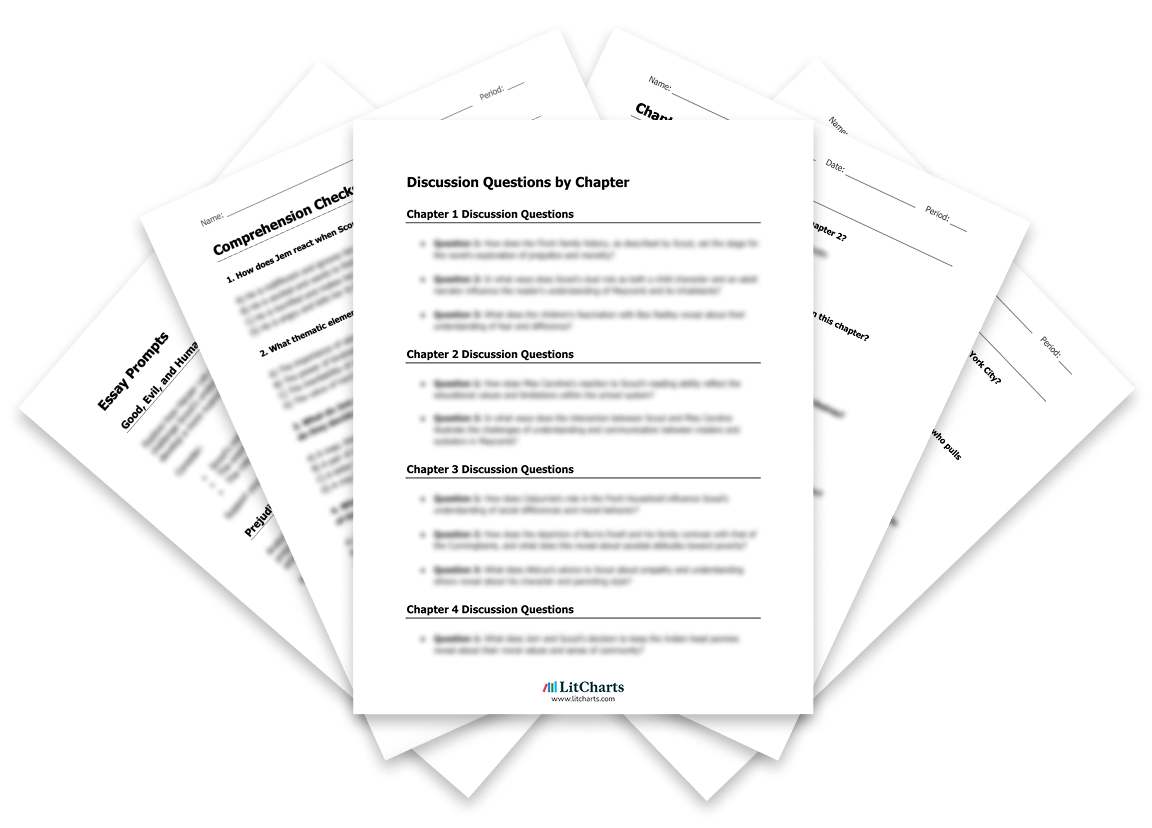
    Essay prompts, discussion questions, and comprehension checks—easy to print and ready to use in class.
    Printable classroom resources
  • Discussion question generator
    Arrow Icon
    Discussion question generator
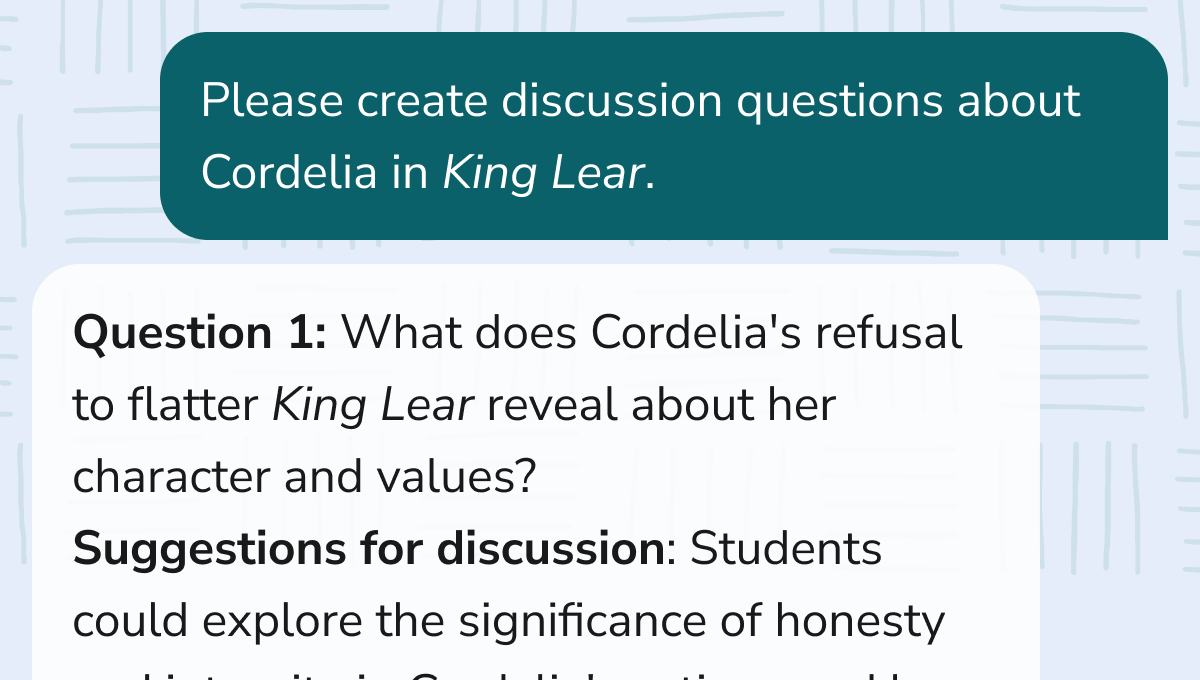
    Instantly create discussion questions that get people talking, through the power of LitCharts analysis and AI.
    Discussion question generator
  • Essay prompt generator
    Arrow Icon
    Essay prompt generator
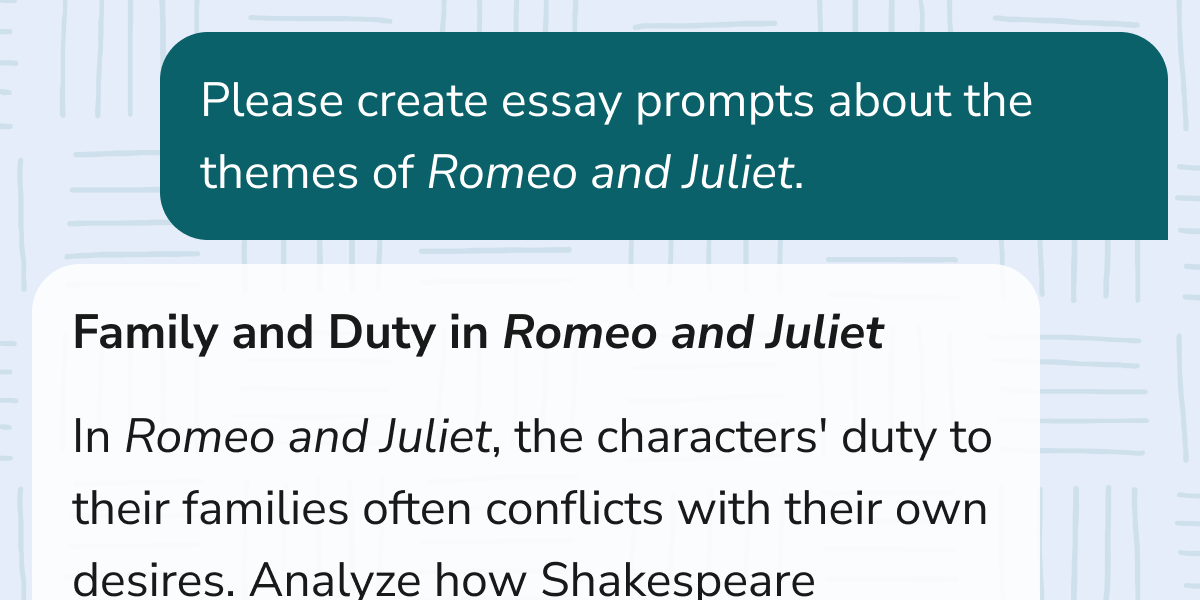
    Quickly create thought-provoking essay prompts that will get your students writing, powered by LitCharts analysis and AI.
    Essay prompt generator
  • Quiz question generator
    Arrow Icon
    Quiz question generator
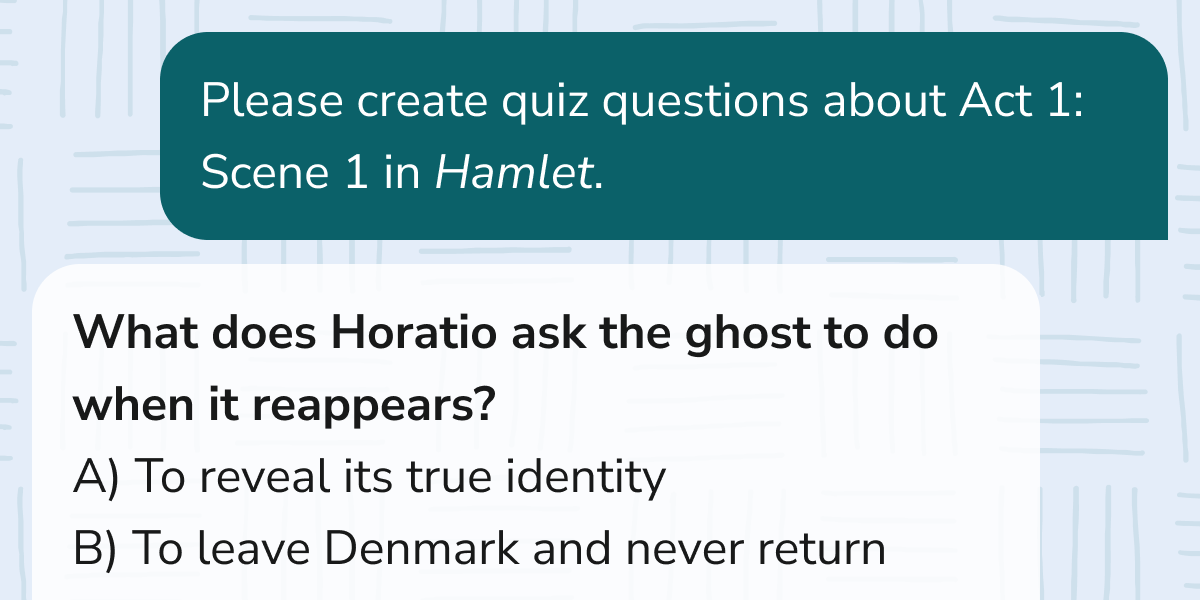
    Effortlessly generate targeted quiz questions, powered by the world’s best literary analysis and AI.
    Quiz question generator
  • PDFs

    Literature Guide PDFs

    LitCharts PDFs for every book you'll read this year.

    Instant PDF downloads of all 2267 LitCharts literature guides and of every new one we publish. Try a free sample literature guide.
    "Would not have made it through AP Literature without the printable PDFs. They're like having in-class notes for every discussion!"
    Pride and Prejudice PDF
    Quotes

    Quotes Explanations

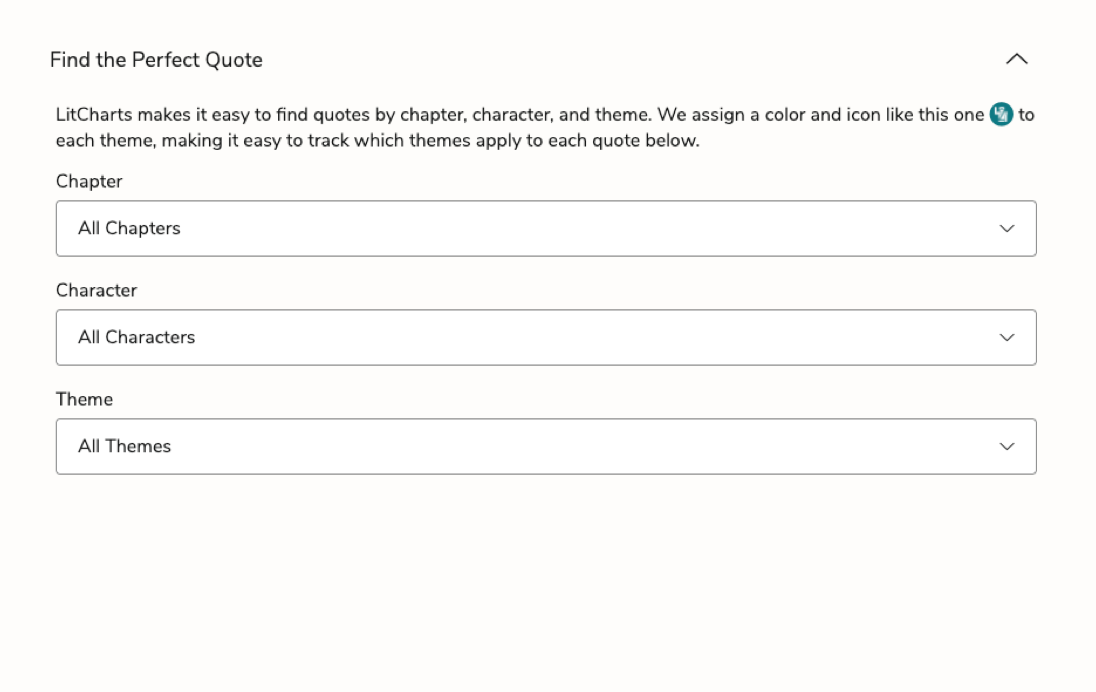
    Find the perfect quote. Understand it perfectly. Then rock the citation, too.
    For all 50,591 quotes we cover.
    Find. Search every LitChart by chapter, theme, or character to find just the quote you need.
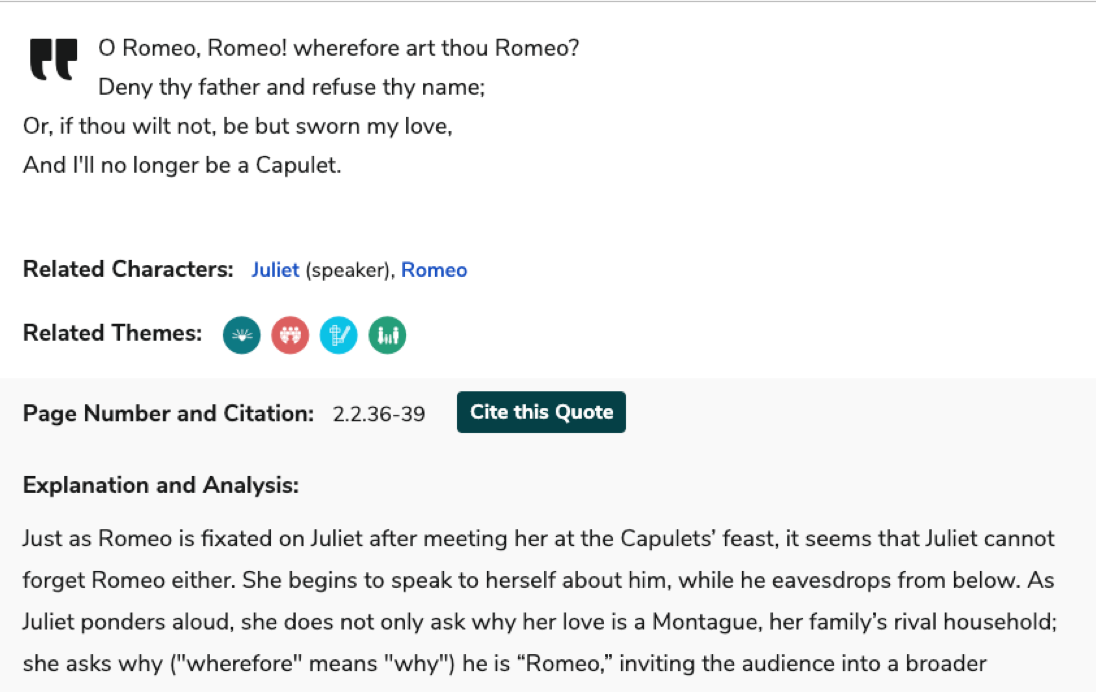
    Understand. Grasp the quote's significance with our detailed Explanation and Analysis.
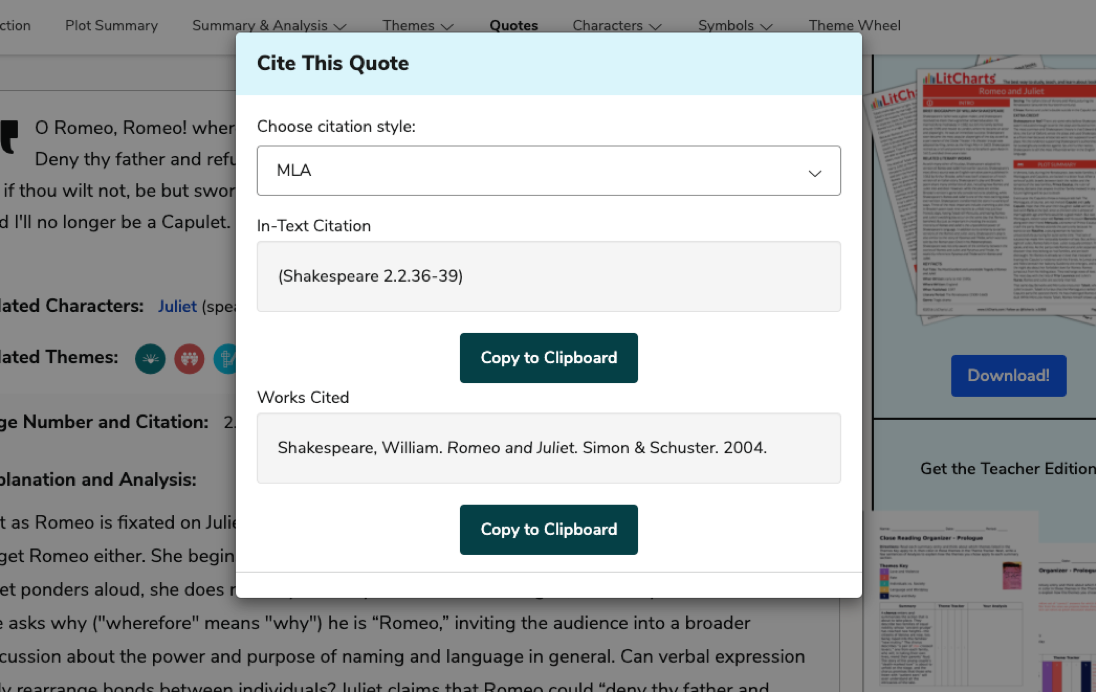
    Cite. Get the quote's page or line number, or a perfect citation with our Cite this Quote button.
    Teacher editions

    Teacher Editions

    Close reading made easy for students.
    Time saved for teachers.
    For every book we cover.

    Teacher Edition Contents

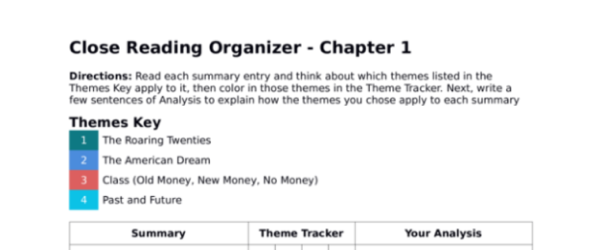
    Close Reading Organizers
    Character Analysis Organizers
    Symbol Analysis Organizers
    Theme Analysis Organizers
    Quote Analysis Organizers

    Common Core-aligned

    ""
    Try a free and complete sample Teacher Edition.

    PDFs of modern translations of every one of Shakespeare's 37 plays, 154 sonnets, and 3 longer poems.

    Every translation available to download as a PDF. Try a free sample Shakespeare translation.
    "Every teacher of literature should use these translations. They completely demystify Shakespeare. Students love them!"
    Original
    Romeo
    (aside) She speaks.
    O, speak again, bright angel! For thou art
    As glorious to this night, being o’er my head,
    As is a winged messenger of heaven
    Unto the white, upturnèd, wondering eyes
    Of mortals that fall back to gaze on him
    When he bestrides the lazy-puffing clouds
    And sails upon the bosom of the air.
    Juliet
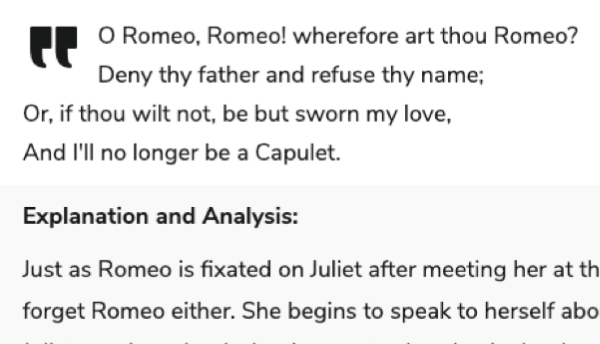
    O Romeo, Romeo! Wherefore art though Romeo?
    Deny they father and refuse they name.
    Or, if thou wilt not, be but sworn my love,
    And I’ll no longer be a Capulet.
    Modern
    Romeo
    (to himself) She speaks. Speak again, bright angel! For tonight you are as glorious, there up above me, as a winged messenger of heaven who makes mortals fall onto their backs to gaze up with awestruck eyes as he strides across the lazy clouds and sails through the air.
    Juliet
    O Romeo, Romeo! Why must you be Romeo? Deny your father and give up your name. Or, if you won’t change your name, just swear your love to me and I’ll give up being a Capulet.
    Lit terms
    Literary Terms and Devices
    Definitions and examples for every literary term and device you need to know.
    Plus a quick-reference PDF with concise definitions of all 136 terms in one place.
    Try a free sample literary term PDF.
    Advanced search
    Advanced Search
    Refine any search. Find related themes, quotes, symbols, characters, and more.
    Advanced search
    Related themes
    Related Themes
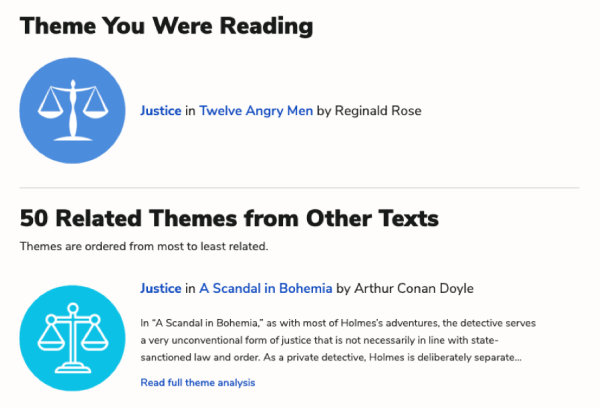
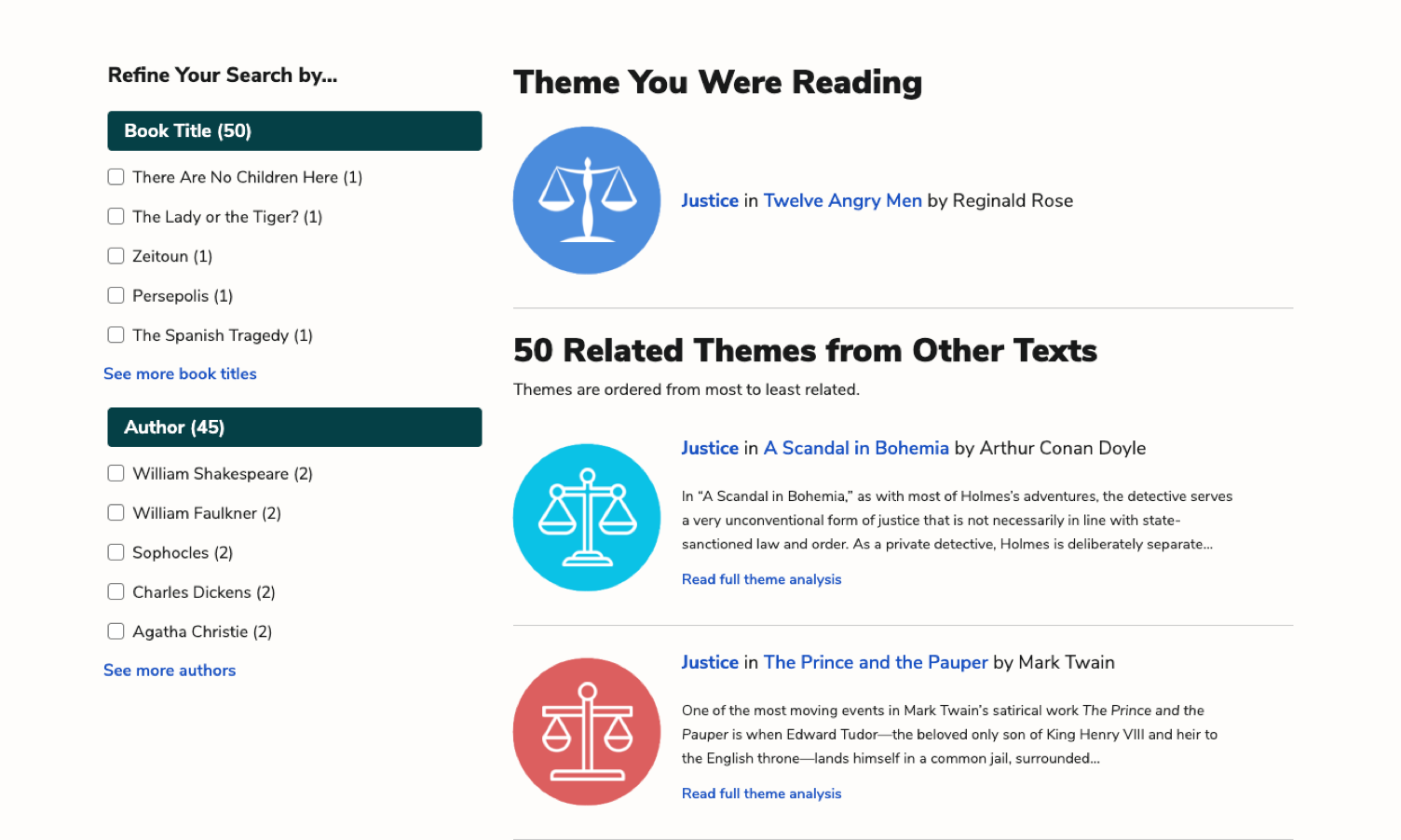
    Comparing and contrasting texts? Find where any theme occurs across all of LitCharts in seconds.
    Related themes
    Poetry guides
    Poetry Guides
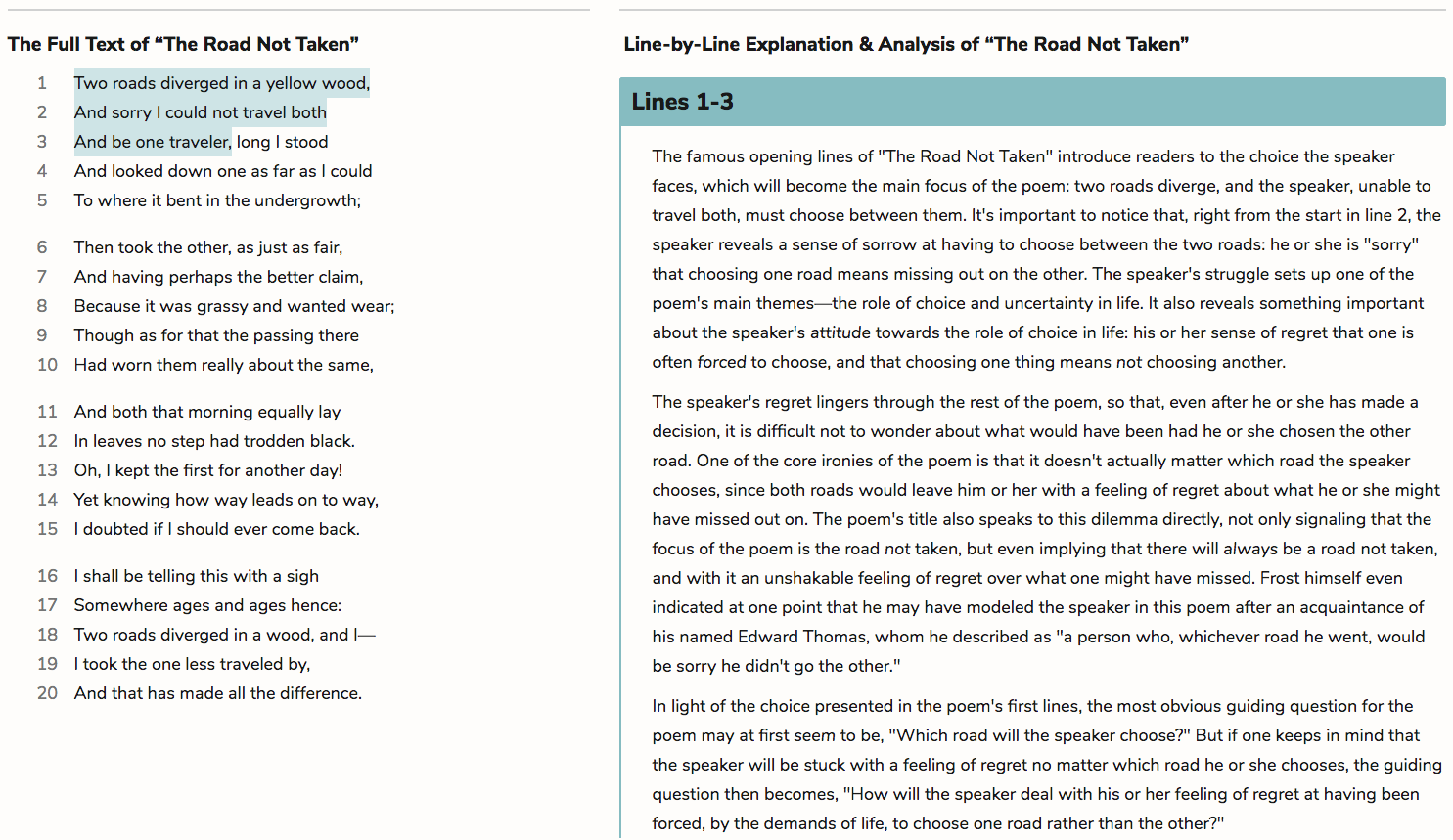
    Line-by-line explanations and analysis of figurative language and poetic devices.
    For every lyric poem we cover.
    Poetry guides
    Company
    About Us Our Story
    Support
    Help Center Contact Us
    Connect
    Facebook Twitter
    Legal
    Terms of Service Privacy Policy Privacy Request
    Home About Contact Help
    LitCharts, a Learneo, Inc. business
    Copyright © 2026 All Rights Reserved
    Terms Privacy Privacy Request