Find the perfect quote
Then understand it perfectly. And get the citation, too. For all 35,000+ quotes we cover.

|
Have questions?
Contact us
Already a member? Sign in
|
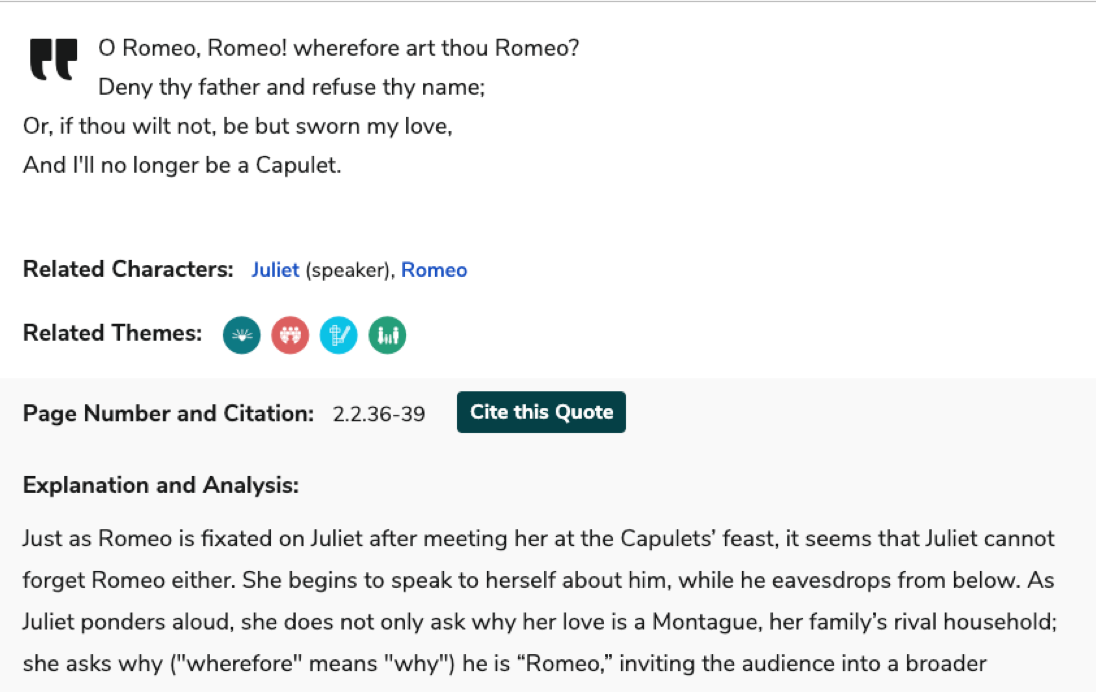
In Part 3, when Guy realizes the fire truck has stopped in front of his house, his wife runs out into a taxi in an ironic moment.
She shoved the valise in the waiting beetle, climbed in, and sat mumbling, “Poor family, poor family, oh everything gone, everything, everything gone now. . . .”
Mildred turned Guy in, and she now leaves the house where they once lived together. The situational irony lies in the fact that Mildred says "poor family" after putting her husband's life in danger and effectively ending their marriage, but she is not talking about Guy! Instead, she is talking about her television screens, which will be destroyed in the house fire. Recall that Mildred described the characters in the television programs as her "relatives" and "family" because she was so attached to them; she would even participate in their conversations. Mildred betrayed her actual family by calling in a tip on Guy, but she has displaced her affection and love onto the television show characters and newscasters. They are all she cares about as she runs away from her former home.
This particular ironic moment is situational irony because the reader would expect Mildred to have some guilt about turning in her husband, even if she believes she has done the right thing. But instead, her concern is for a "family" that the reader knows is the artifice of compelling and addictive mass media.






 Teacher


















|
Close Reading Organizers |

|
Character Analysis Organizers |

|
Symbol Analysis Organizers |

|
Theme Analysis Organizers |

|
Quote Analysis Organizers |
Common Core-aligned