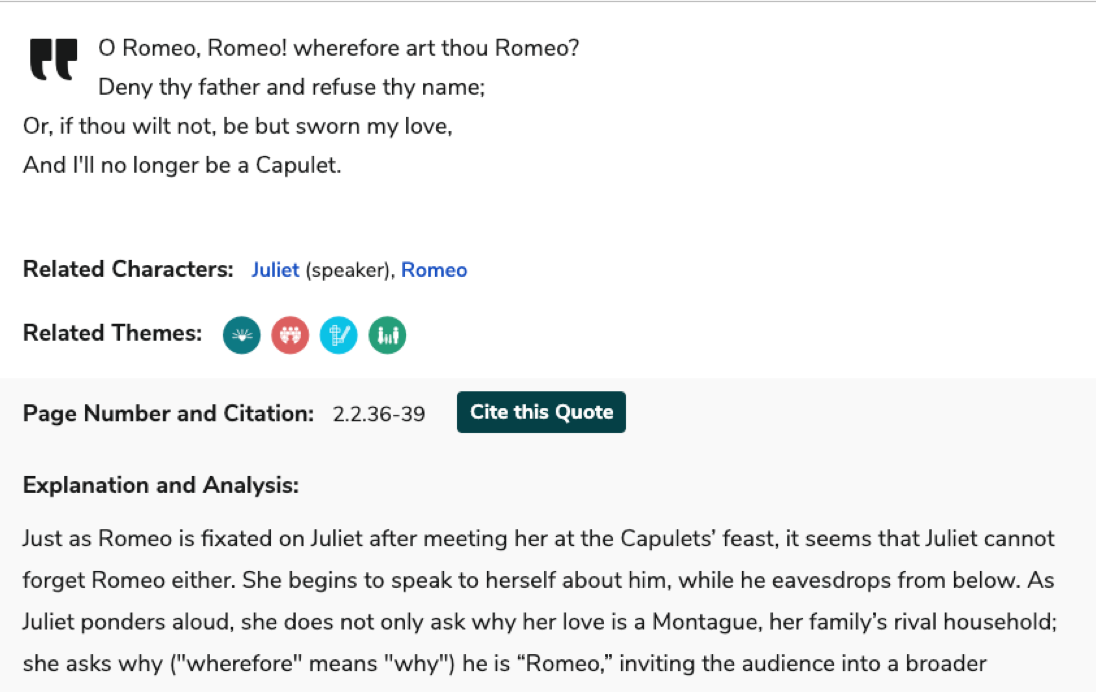
Find the perfect quote
Then understand it perfectly. And get the citation, too. For all 35,000+ quotes we cover.

|
Have questions?
Contact us
Already a member? Sign in
|
Yunior’s narration is infused with verbal irony, particularly when he’s writing about Trujillo’s dictatorship in his footnotes. This irony emerges out of a gap between Yunior’s stated words and his intended meaning. For example, in a footnote to the Preface, he writes:
Outstanding accomplishments include: the 1937 genocide against the Haitian and Haitian-Dominican community; one of the longest, most damaging U.S.-backed dictatorships in the Western Hemisphere (and if we Latin types are skillful at anything it’s tolerating U.S.-backed dictators, so you know this was a hard-earned victory, the chilenos and the argentinos are still appealing); the creation of the first modern kleptocracy (Trujillo was Mobutu before Mobutu was Mobutu); the systematic bribing of American senators; and, last but not least, the forging of the Dominican peoples into a modern state (did what his Marine trainers, during the Occupation, were unable to do).
This mock reverence is characteristic of Yunior’s footnotes. By following the phrase “outstanding accomplishments” with a reference to genocide and a list of other atrocities, Yunior conveys his disdain—as if there is truly nothing for which to praise Trujillo. His ironic and sarcastic tone effectively conveys his hatred toward the dictatorship and infuses the novel with a bitterness that would not be accomplished with earnest, straightforward lamentation of these tragedies.
Sometimes this irony is accomplished by relating events very bluntly with snide commentary. In a footnote to Chapter 3, he writes,
It was only after the cubano refused to accept the boy as blood that Trujillo recognized Ramfis as his own. (Thanks, Dad!)
This sarcasm again creates disdain—as if Yunior finds Trujillo so distasteful that he cannot deal with him earnestly. The bluntness shows readers that Yunior doesn’t need to editorialize to convey the message that Trujillo was evil.



 Teacher












|
Close Reading Organizers |

|
Character Analysis Organizers |

|
Symbol Analysis Organizers |

|
Theme Analysis Organizers |

|
Quote Analysis Organizers |
Common Core-aligned