
|
Have questions?
Contact us
Already a member? Sign in
|
Get every literary device explanation for Look Back in Anger
Plus so much more...
Sign up for LitCharts A+
Get instant access to every literary device explanation, plus so much more...
Motif
Explanation and Analysis—Bear and Squirrel :
Jimmy and Alison struggle to communicate with one another openly despite their occasional moments of peace and happiness. Their tendency to express affection only indirectly, through such props as their teddy bear and toy squirrel, serves as a notable motif throughout the play. Their treatment of these toys reflects the various states and stages of their marriage, through its ups and downs. When Alison decides to accompany Helena to church, which Jimmy perceives as a betrayal, the stage directions note:
She goes out, Helena following. Jimmy gets up, looks about him unbelievingly, and leans against the chest of drawers. The teddy bear is close to his face, and he picks it up gently, looks at it quickly, and throws it downstage. It hits the floor with a thud, and it makes a rattling, groaning sound – as guaranteed in the advertisement. Jimmy falls forward on to the bed, his face buried in the covers.
In his fury, he cannot bear to see the toys, which they play with when making up after fights. He takes his anger out on the teddy bear, first holding it “gently” but then, upon recalling their most recent argument, he throws it across the room. Later, in the final scene of the play, Alison and Jimmie reunite after several months of separation. At the conclusion of a tense conversation, in which Alison discloses that she has suffered a miscarriage, Jimmy comforts her by returning to their reassuring game, in which Jimmy pretends to be a bear and Alison a squirrel:
Jimmy: We’ll be together in our bear’s cave, and our squirrel’s drey, and we’ll live on honey, and nuts – lots and lots of nuts. And we’ll sing songs about ourselves – about warm trees and snug caves, and lying in the sun. And you’ll keep those big eyes on my fur, and help me keep my claws in order, because I’m a bit of a soppy, scruffy sort of a bear. And I’ll see that you keep that sleek, bushy tail glistening as it should, because you’re a very beautiful squirrel.
Hoping to soothe her in her miserable state, he describes them as living together in a warm cave, eating honey and nuts and taking care of one another. Here, as elsewhere in the play, he adopts a story-book tone when playing this game, pacifying the distraught Alison. Though their relationship is marked by miscommunication and tension, this child-like game allows them to express themselves more honestly, though in an indirect fashion.
Monthly
Annual (Best Value)

$595USD/mo
Charged $71.40 USD every year
Quote explanations & citation info

Every PDF download
Printable PDFs for every guide
"Would not have made it through without the printable PDFs. They're like having in-class notes for every discussion!"
– LitCharts A⁺ user
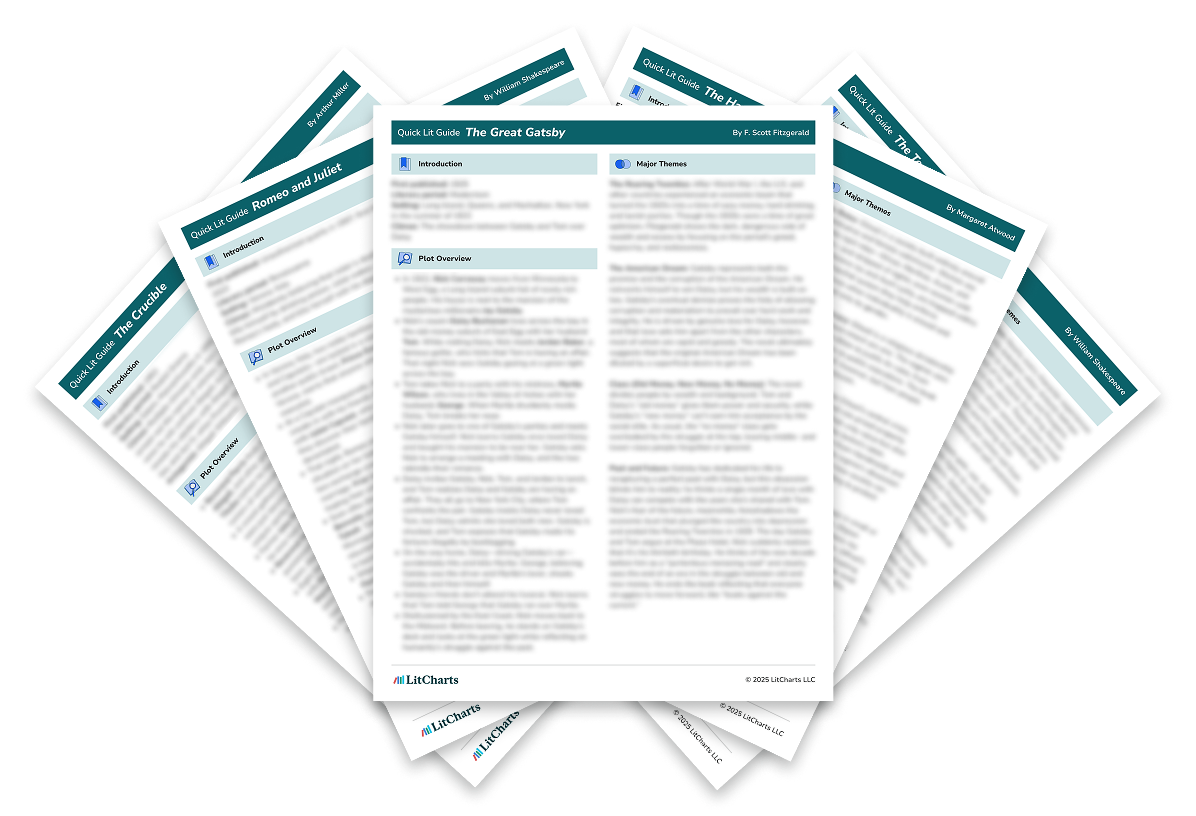
One-page Quick Lit Guides
Understand key basics—fast
Printable, one-page guides that cover the plot points, themes, and ideas you need to know.
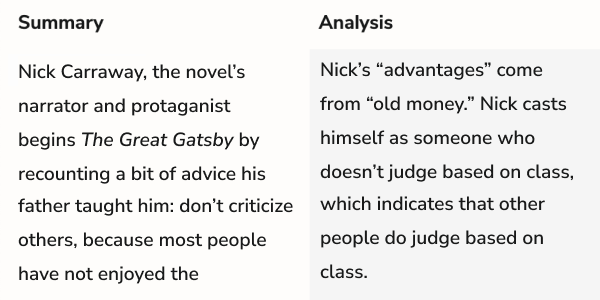
Detailed chapter analysis
Get what happens and what it means
Targeted analysis next to the summary ensures you’ll understand more than just the plot.
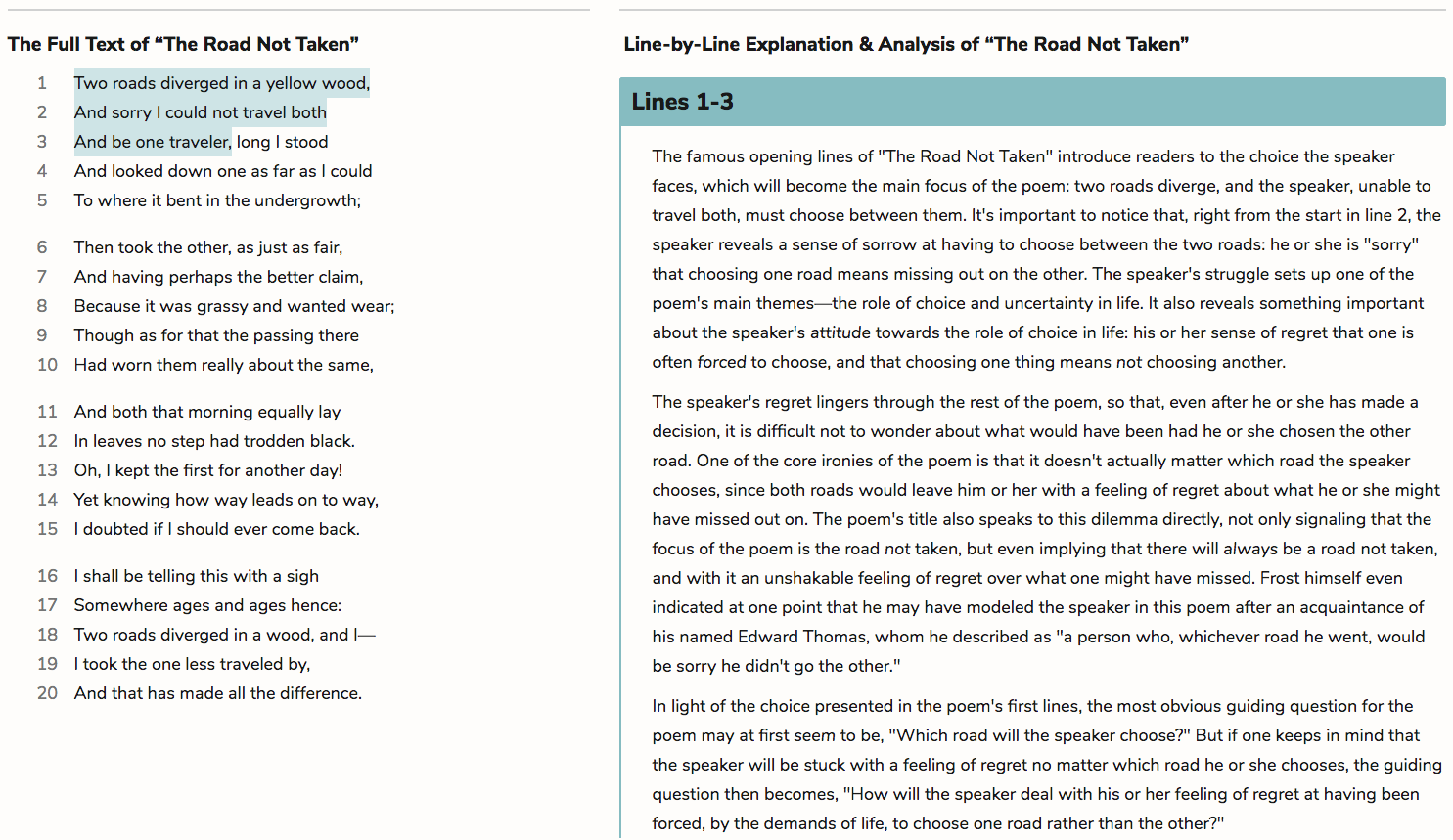
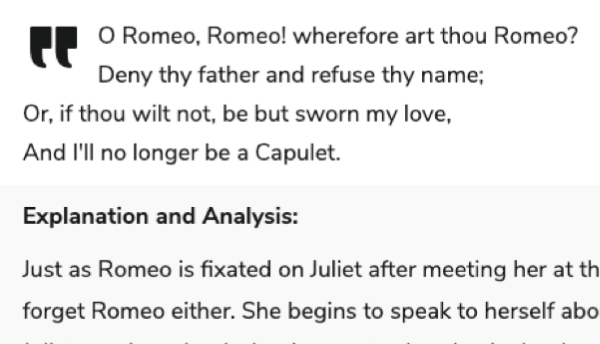
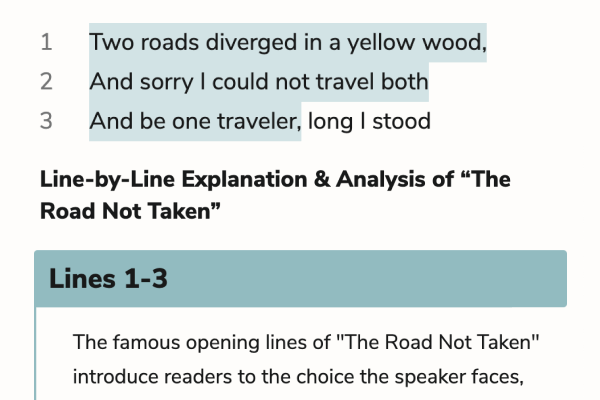
Line-by-line poetry analysis
Get the meaning in every line
Never feel lost reading a poem again with clear and in-depth analysis of each and every line.
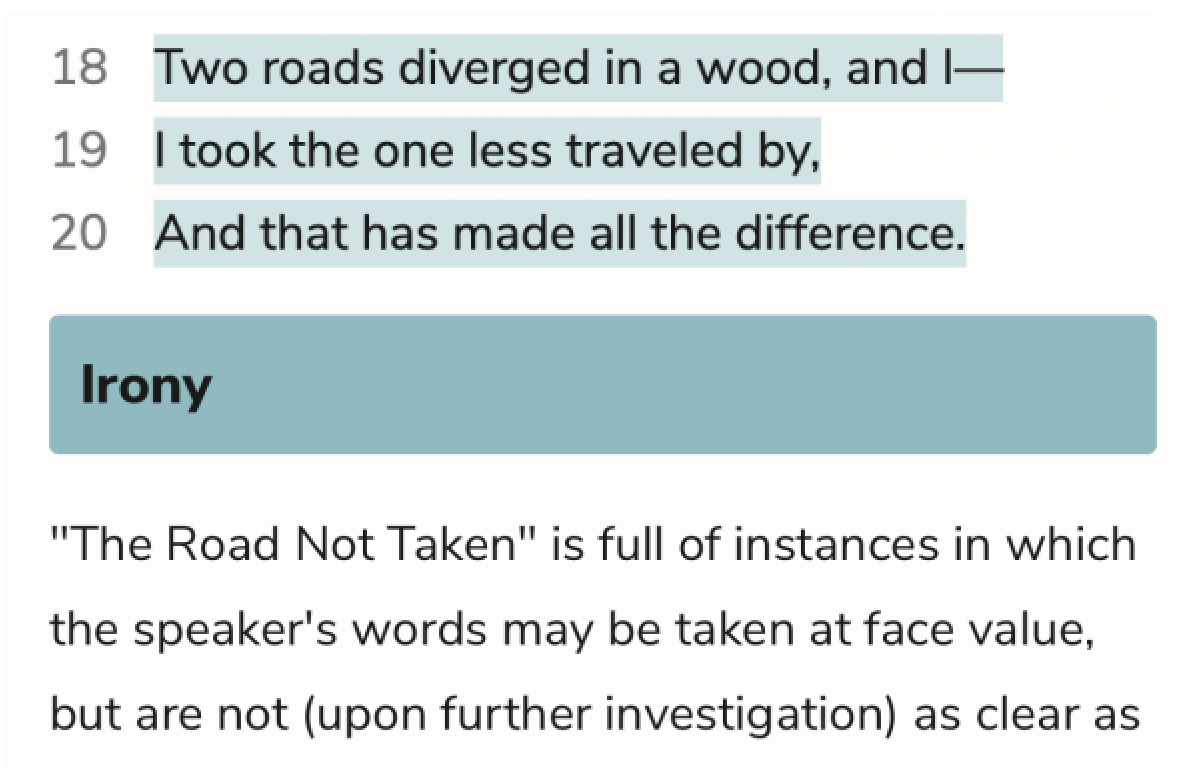
Literary & poetic device analysis
Decode the author’s language
Quickly find and understand the key devices in whatever you’re reading.
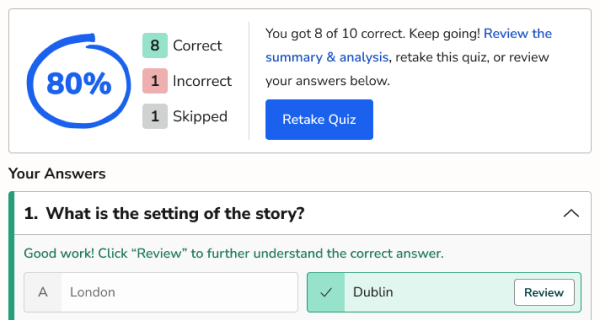
Unlimited quizzes
Unlimited quizzes and feedback
Boost your learning with quizzes that pinpoint and address knowledge gaps.
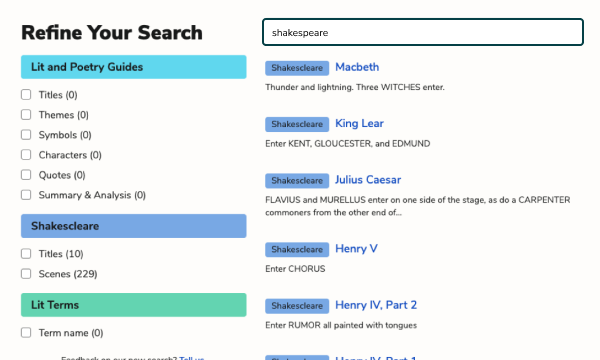
Advanced search
Find exactly what you need
Refine your search using advanced filters like genre, time period, literary movement, author context, grade level, and more.
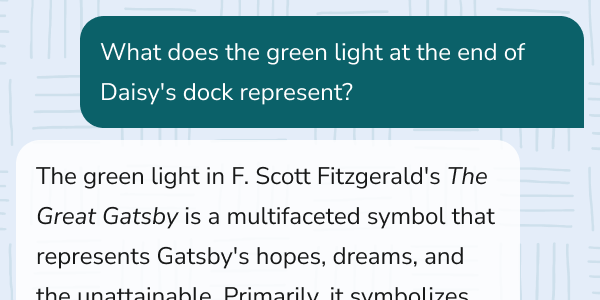
Ask LitCharts AI
Ask LitCharts AI
Instant answers to all your lit questions. Powered by LitCharts content and AI.
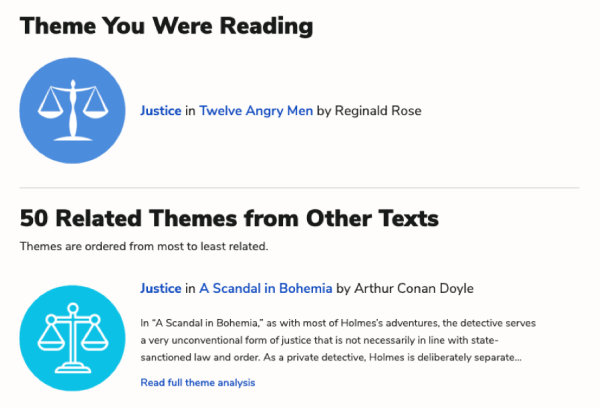
Theme comparisons across books
Compare and contrast
Identify similar themes across books, making comparisons fast and simple.
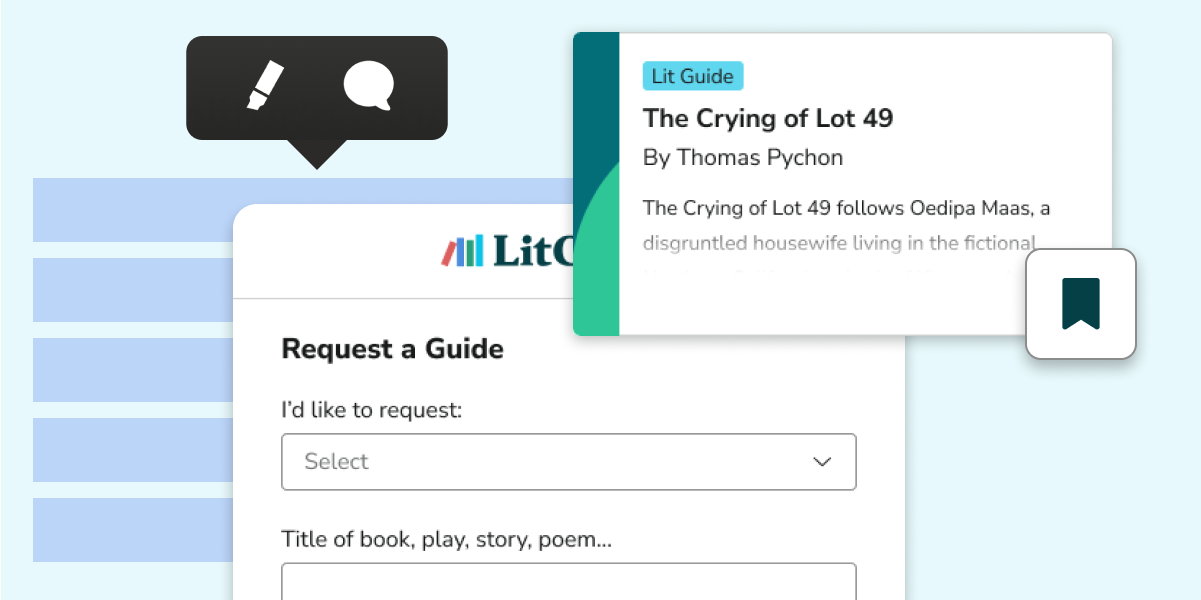
Highlight, take notes, & save guides
Make LitCharts your own
Add highlights or notes, save guides for easy access later, and request new titles.
 Teacher
$795USD/mo
Charged $95.40 USD every year
Quote explanations & citation info
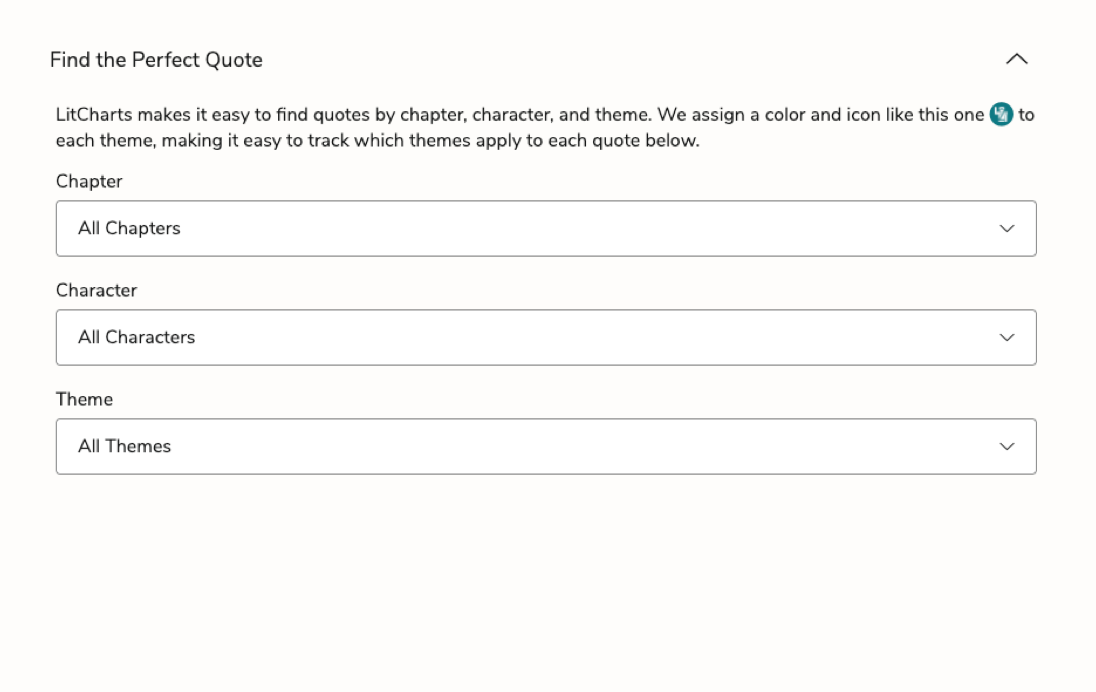
Find the perfect quote
Then understand it perfectly. And get the citation, too. For all 35,000+ quotes we cover.
Every PDF download
Printable PDFs for every guide
"Would not have made it through without the printable PDFs. They're like having in-class notes for every discussion!"
– LitCharts A⁺ user
One-page Quick Lit Guides
Understand key basics—fast
Printable, one-page guides that cover the plot points, themes, and ideas you need to know.
Detailed chapter analysis
Get what happens and what it means
Targeted analysis next to the summary ensures you’ll understand more than just the plot.
Line-by-line poetry analysis
Get the meaning in every line
Never feel lost reading a poem again with clear and in-depth analysis of each and every line.
Literary & poetic device analysis
Decode the author’s language
Quickly find and understand the key devices in whatever you’re reading.
Unlimited quizzes
Unlimited quizzes and feedback
Boost your learning with quizzes that pinpoint and address knowledge gaps.
Advanced search
Find exactly what you need
Refine your search using advanced filters like genre, time period, literary movement, author context, grade level, and more.
Ask LitCharts AI
Ask LitCharts AI
Instant answers to all your lit questions. Powered by LitCharts content and AI.
Theme comparisons across books
Compare and contrast
Identify similar themes across books, making comparisons fast and simple.
Highlight, take notes, & save guides
Make LitCharts your own
Add highlights or notes, save guides for easy access later, and request new titles.
Teacher editions
Save time with in-depth organizers
"THE best teaching resource I have ever used. My students love the handouts."
– LitCharts A⁺ User
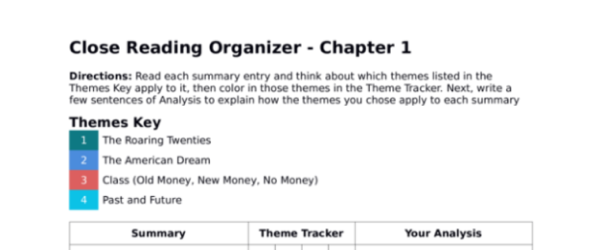
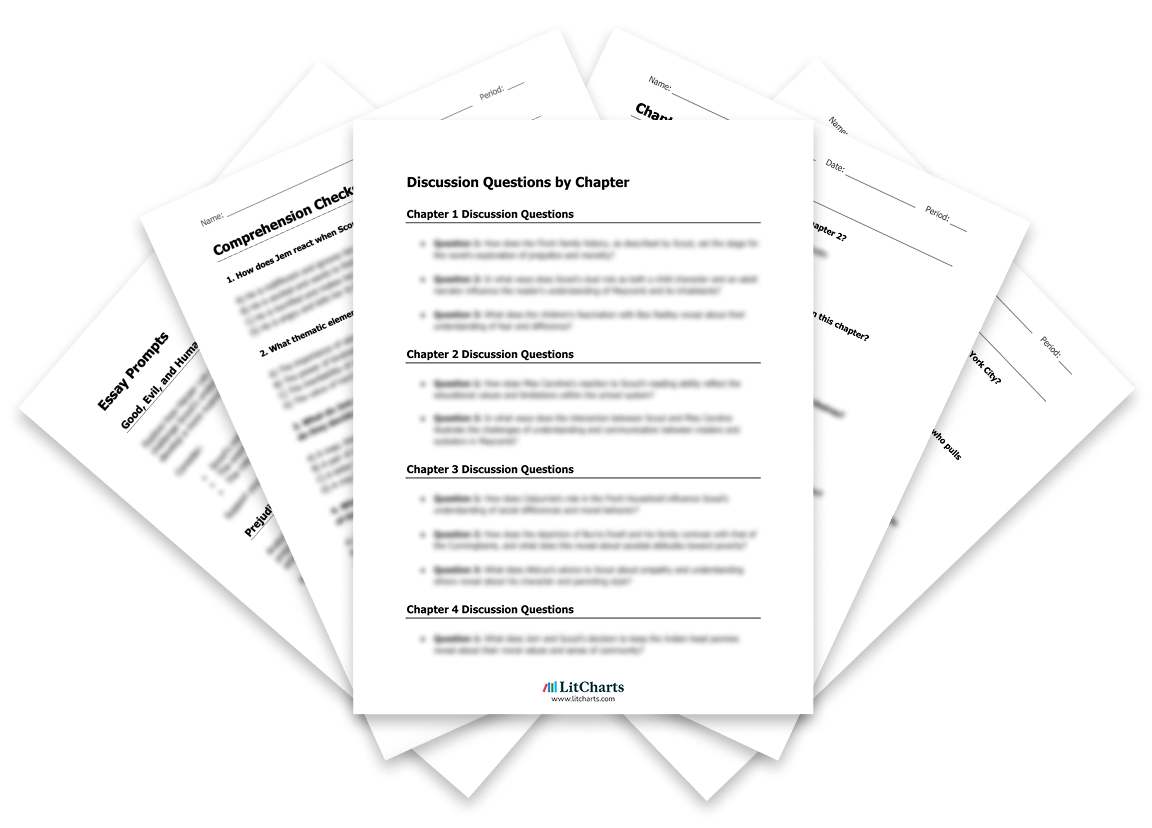
Printable classroom resources
Cut prep time in half
Essay prompts, discussion questions, and comprehension checks—easy to print and ready to use in class.
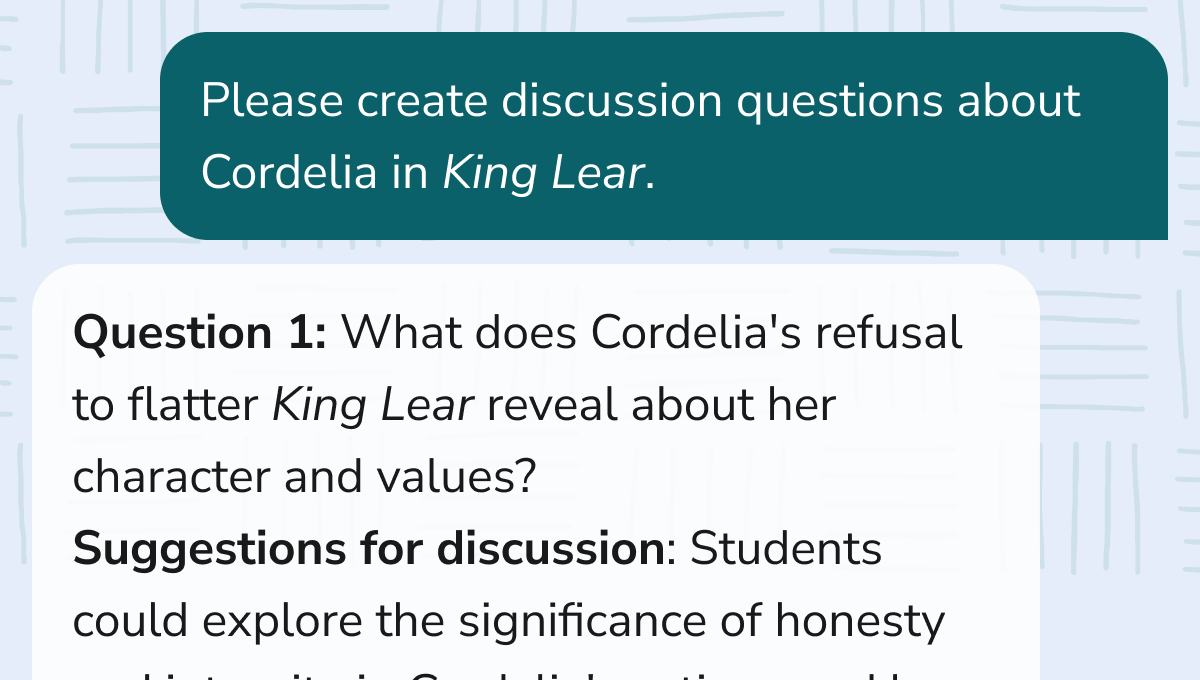
Discussion question generator
Discussion question generator
Instantly create discussion questions that get people talking, through the power of LitCharts analysis and AI.
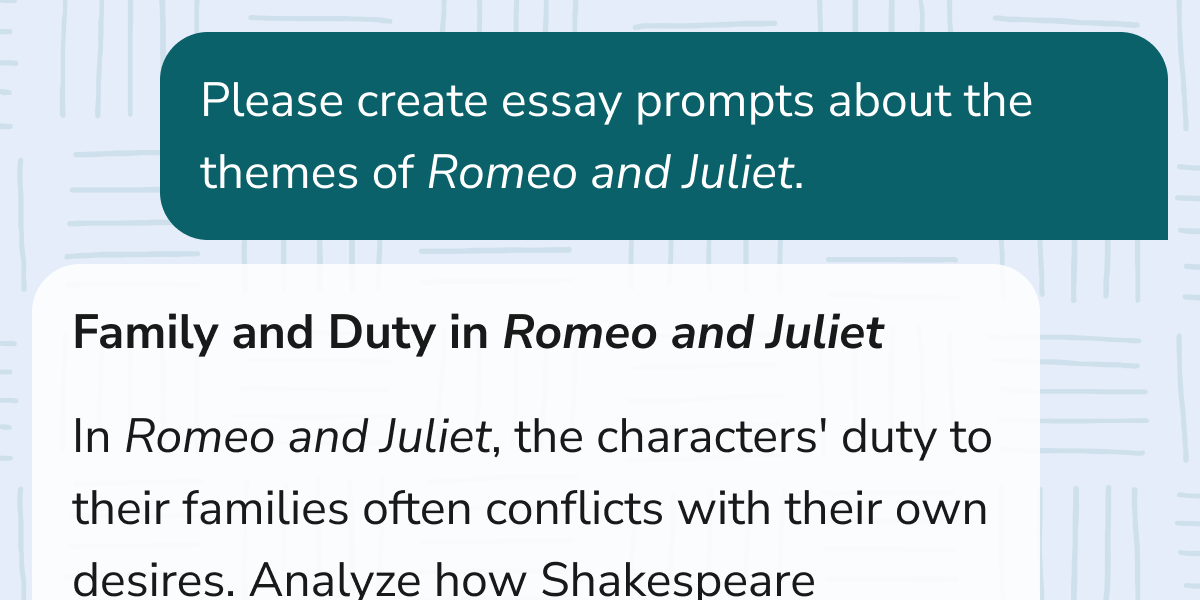
Essay prompt generator
Essay prompt generator
Quickly create thought-provoking essay prompts that will get your students writing, powered by LitCharts analysis and AI.
Quiz question generator
Quiz question generator
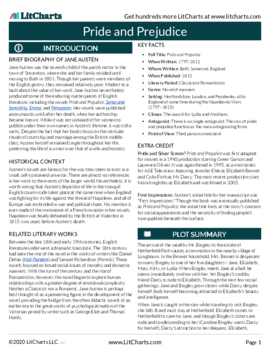
Effortlessly generate targeted quiz questions, powered by the world’s best literary analysis and AI.


Literature Guide PDFs
LitCharts PDFs for every book you'll read this year.
Instant PDF downloads of all 2257 LitCharts literature guides and of every new one we publish. Try a free sample literature guide.
"Would not have made it through AP Literature without the printable PDFs. They're like having in-class notes for every discussion!"



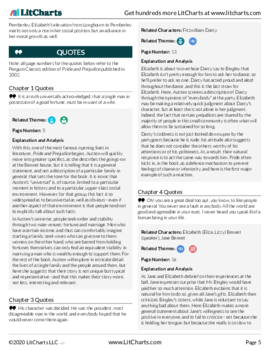


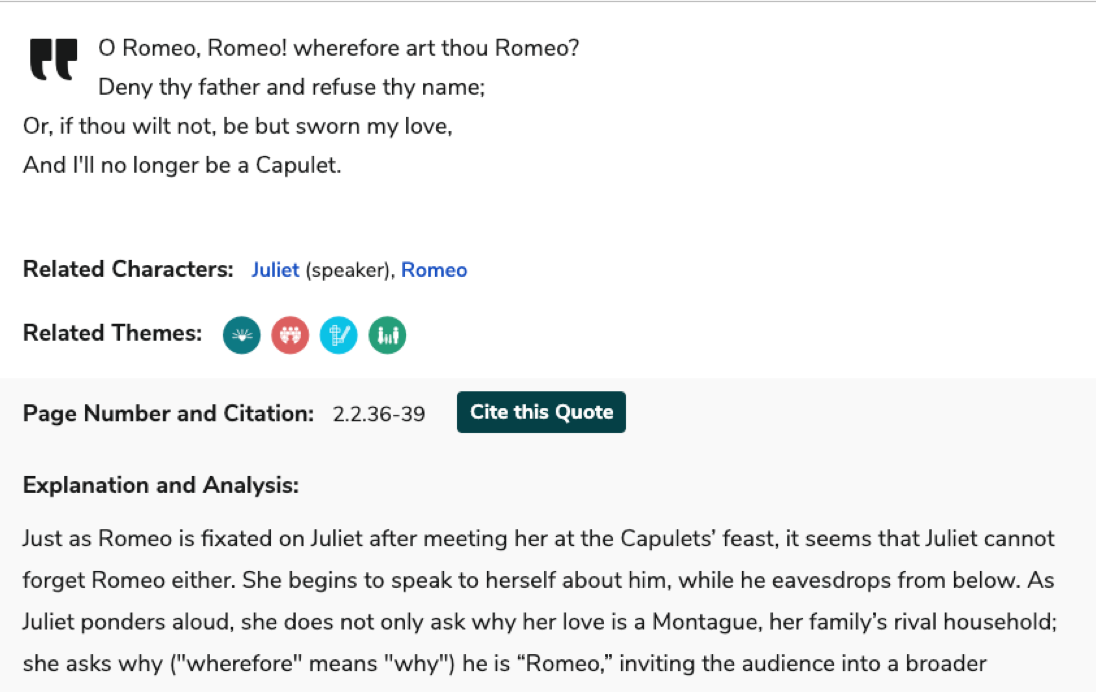
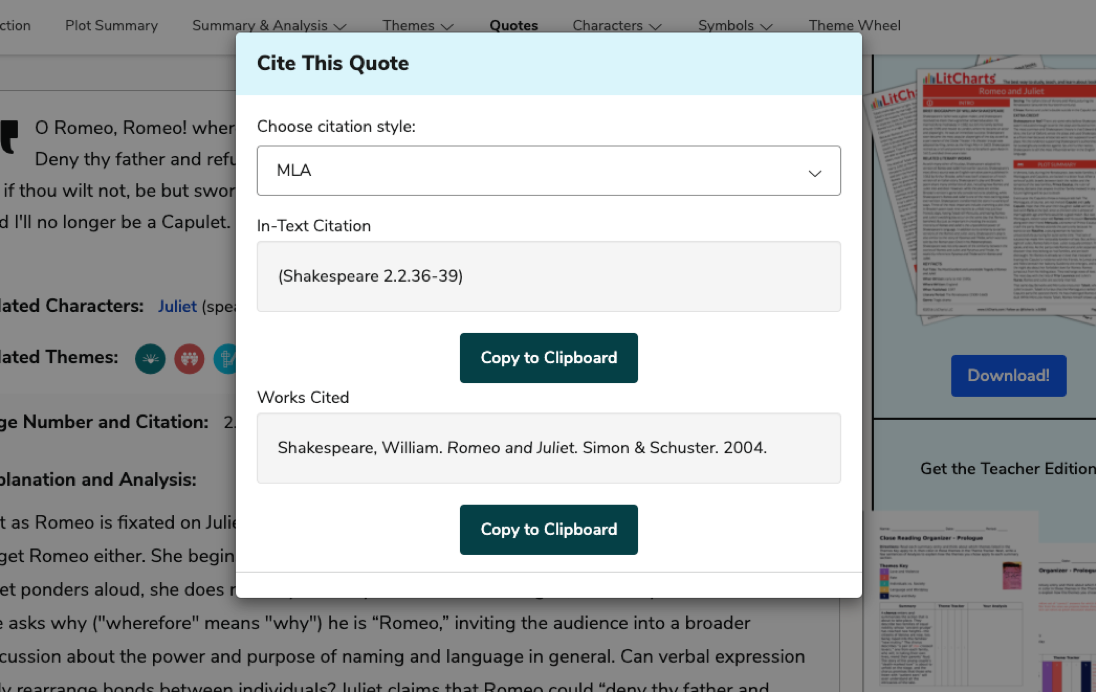
Quotes Explanations
Find the perfect quote. Understand it perfectly. Then rock the citation, too.
For all 50,338 quotes we cover.
For all 50,338 quotes we cover.


Teacher Editions
Close reading made easy for students.
Time saved for teachers.
For every book we cover.
Time saved for teachers.
For every book we cover.
Teacher Edition Contents

|
Close Reading Organizers |

|
Character Analysis Organizers |

|
Symbol Analysis Organizers |

|
Theme Analysis Organizers |

|
Quote Analysis Organizers |
Common Core-aligned
""
Try a free and complete sample Teacher Edition.


PDFs of modern translations of every one of Shakespeare's 37 plays, 154 sonnets, and 3 longer poems.
Every translation available to download as a PDF.
Try a free sample Shakespeare translation.
"Every teacher of literature should use these translations. They completely demystify Shakespeare. Students love them!"

Literary Terms and Devices
Definitions and examples for every literary term and device you need to know.
Plus a quick-reference PDF with concise definitions of all 136 terms in one place.
Plus a quick-reference PDF with concise definitions of all 136 terms in one place.
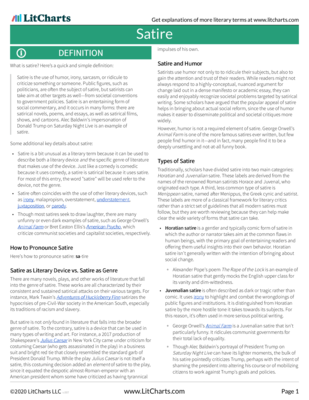
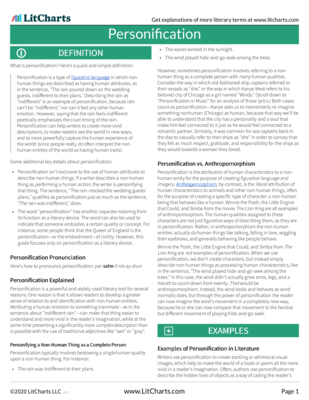
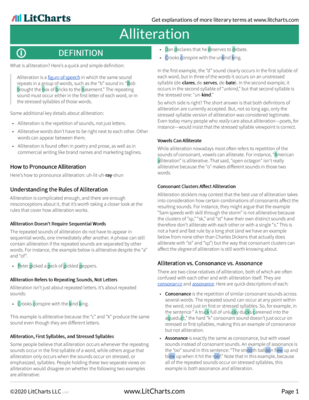
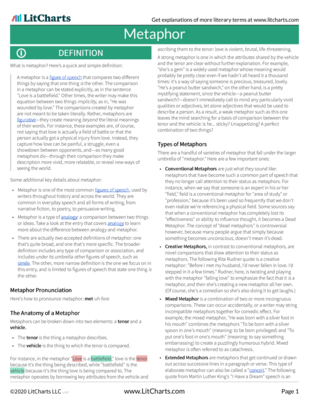
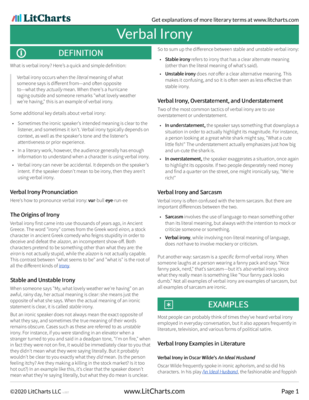
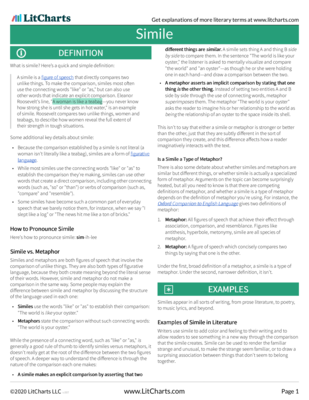
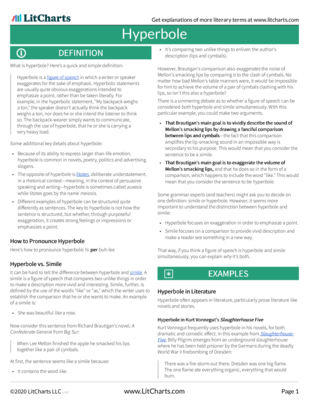
Try a free sample literary term PDF.


Advanced Search
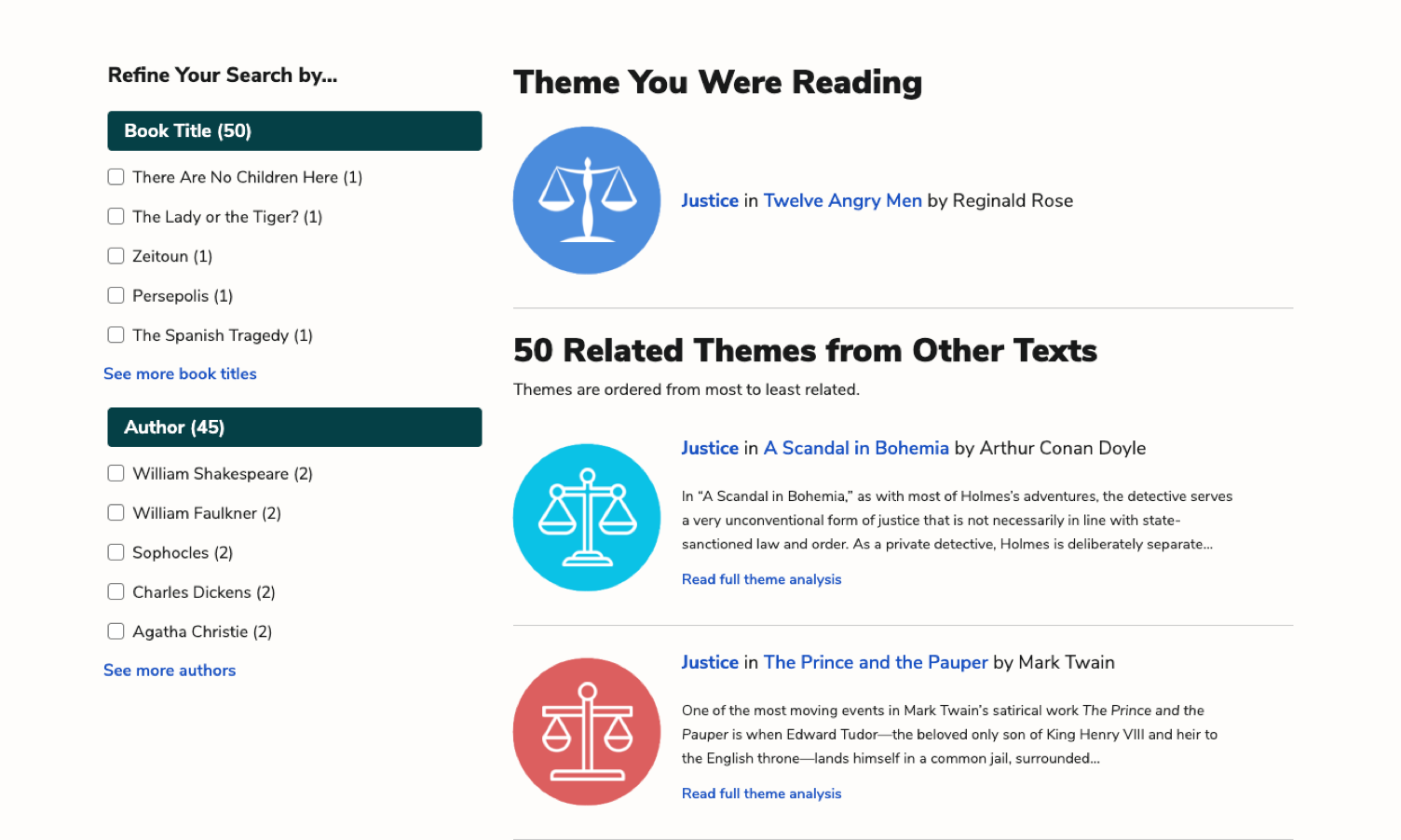
Refine any search. Find related themes, quotes, symbols, characters, and more.
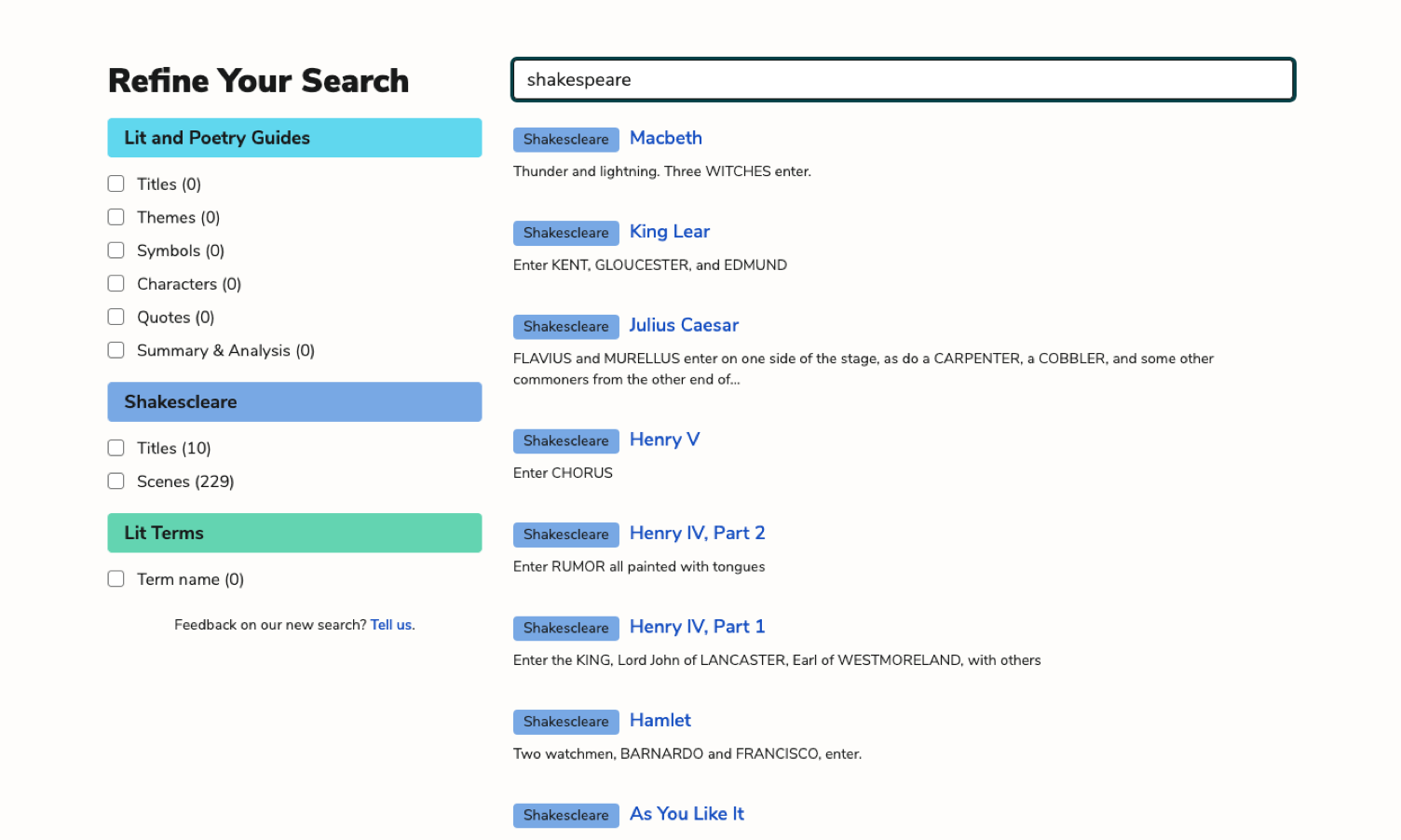
Related Themes
Comparing and contrasting texts? Find where any theme occurs across all of LitCharts in seconds.


Poetry Guides
Line-by-line explanations and analysis of figurative language and poetic devices.
For every lyric poem we cover.
For every lyric poem we cover.