
|
Have questions?
Contact us
Already a member? Sign in
|
Get every literary device explanation for Picnic at Hanging Rock
Plus so much more...
Sign up for LitCharts A+
Get instant access to every literary device explanation, plus so much more...
Motif
Explanation and Analysis—Measuring Time:
Clocks and dates play an important role in the narrative. Lindsay begins to establish this motif already in Chapter 2, when various circumstances keep the characters from keeping track of time during the picnic. In the rest of the novel, the narrator often notes the calendar date and how many days or weeks have passed since the picnic. Additionally, both at Appleyard College and at the Fitzhuberts', the characters often check what time it is. Through the motif of clocks and dates, Lindsay explores the illusion of order that humans find in the measurement of time.
In Chapter 1, Mrs. Appleyard concludes her send-off speech with a reminder that she expects the group back "at about eight o'clock." This reminder underlines that their freedom is inextricably bound to the rigid world of precise and punctual order. The students and governesses may be leaving the college behind for a day, but they're still expected to orient themselves around the clock. In the following chapter, this proves difficult. Mr. Hussey finds that his "old ticker seems to have stopped dead at twelve o'clock," and Mademoiselle happens to have sent her clock to be repaired. Meanwhile, Miranda has stopped wearing her "pretty little diamond watch" because she "can't stand hearing it ticking all day long just above [her] heart." Reinforcing the mystery of Mr. Hussey's stopped clock, Greta McCraw discovers that her clock has also stopped at 12. It's worth noting that the reader comes across yet another stopped clock much later in the novel. As Mademoiselle and Alice clear out Sara and Miranda's room in Chapter 15, Mademoiselle notices a "stopped clock on the marble mantelpiece," next to a photo of Miranda. As in Chapter 2, the stopped clock hints that something's not quite right.
As the novel proceeds, the narrator frequently makes note of what time it is. In line with this, it becomes clear that certain characters are particularly attached to time and punctuality. It has already been made clear that this applies to Mrs. Appleyard, who keeps track of the time by checking the grandfather clock in the College staircase and the clock behind the desk in her office. The Fitzhuberts have a similar fixation. For instance, Colonel Fitzhubert has a "nightly ritual of altering the date on the calendar of his desk." In addition, "the punctual appearance" of the Fitzhuberts' meals serves to "define and regulate their idle otherwise formless days." Before Irma visits them for lunch, Mike warns her that "unpunctuality was a cardinal sin in a visitor." Mrs. Appleyard and the Fitzhuberts are the characters most committed to upholding European norms and standards. Through their exaggerated fixation on punctuality, Lindsay seems to suggest that the measurement of time merely provides an illusion of control and order.
If the novel starts with Mrs. Appleyard treating time as a sort of protection from the unpredictability of the natural world, it ends with the unraveling of this refuge. Losing control over her surroundings, she also starts feeling haunted by the passage of time: "From the staircase the grandfather clock had become so loud that Mrs Appleyard fancied she could hear its everlasting tick-tock through the study wall." No longer instilling order, the sound of the clock now sounds to her "like a heart beating in a body already dead." While the grandfather clock once bolstered her sense of order and control, it eventually becomes a menacing threat.
Monthly
Annual (Best Value)

$595USD/mo
Charged $71.40 USD every year
Quote explanations & citation info

Every PDF download
Printable PDFs for every guide
"Would not have made it through without the printable PDFs. They're like having in-class notes for every discussion!"
– LitCharts A⁺ user
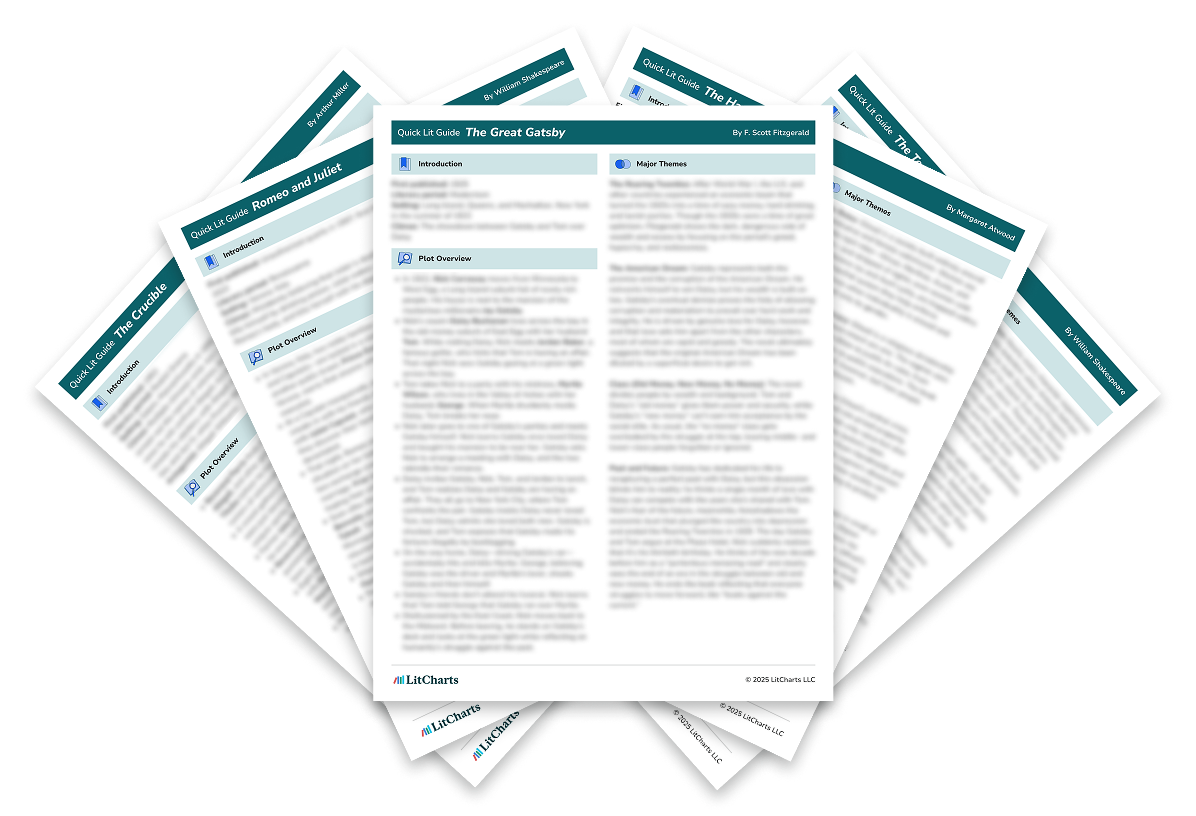
One-page Quick Lit Guides
Understand key basics—fast
Printable, one-page guides that cover the plot points, themes, and ideas you need to know.
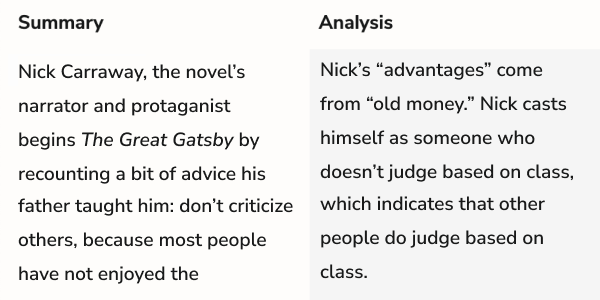
Detailed chapter analysis
Get what happens and what it means
Targeted analysis next to the summary ensures you’ll understand more than just the plot.
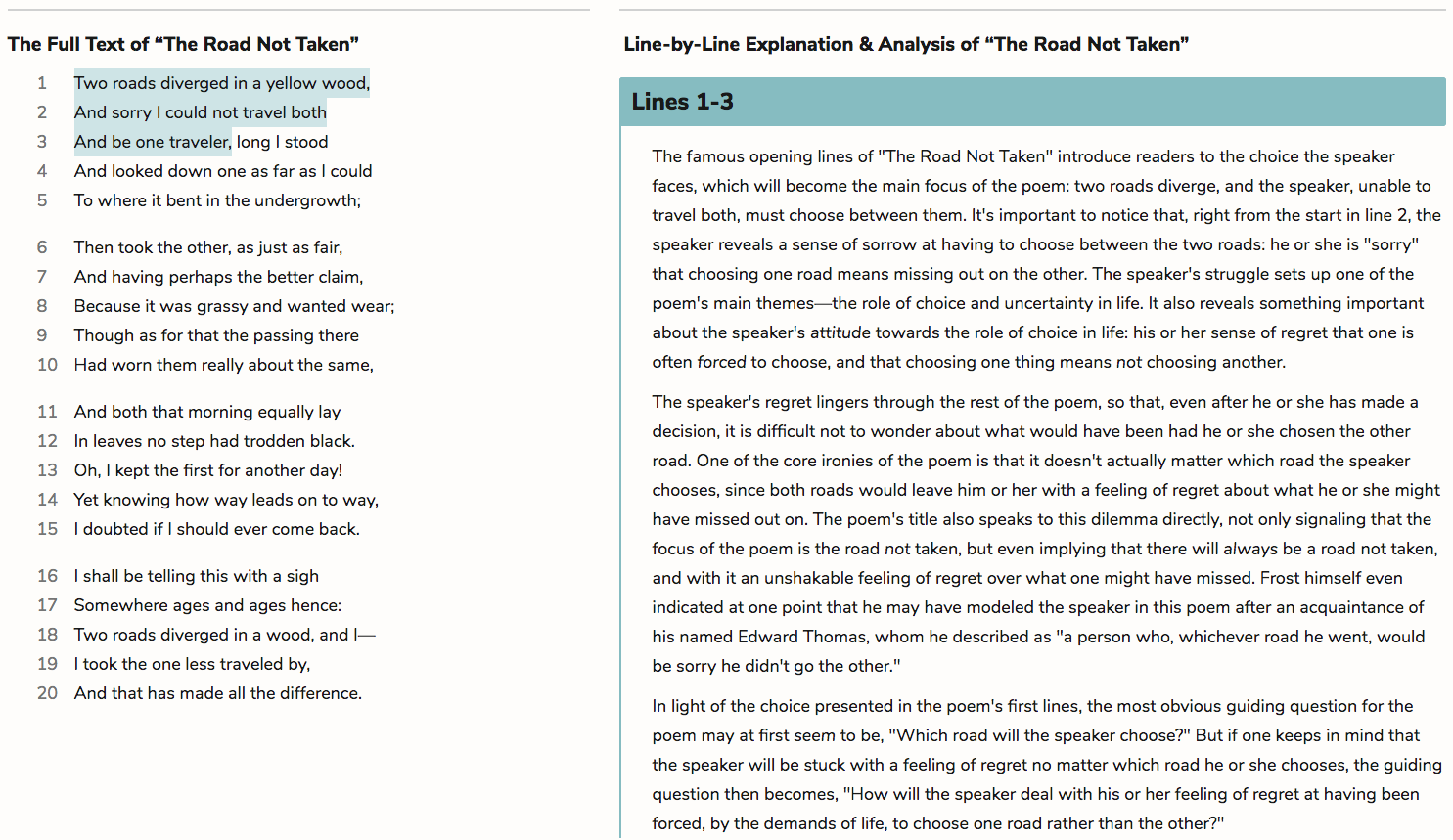
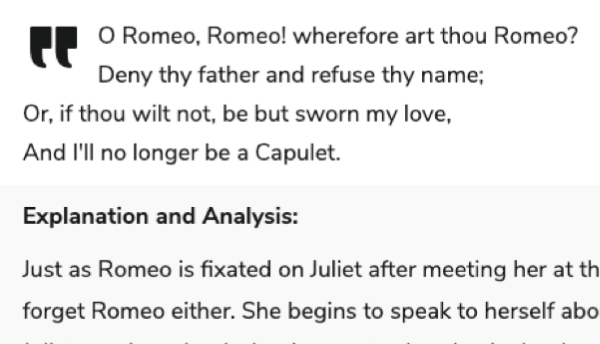
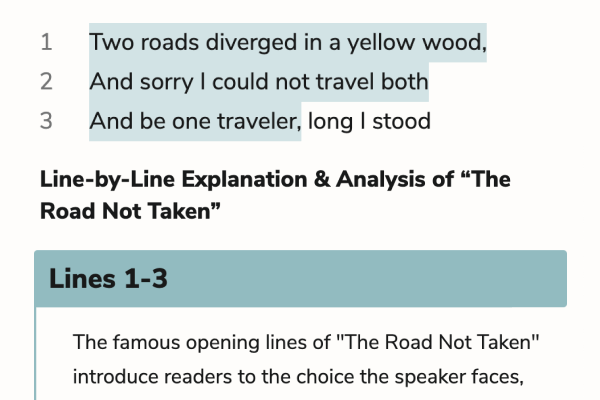
Line-by-line poetry analysis
Get the meaning in every line
Never feel lost reading a poem again with clear and in-depth analysis of each and every line.
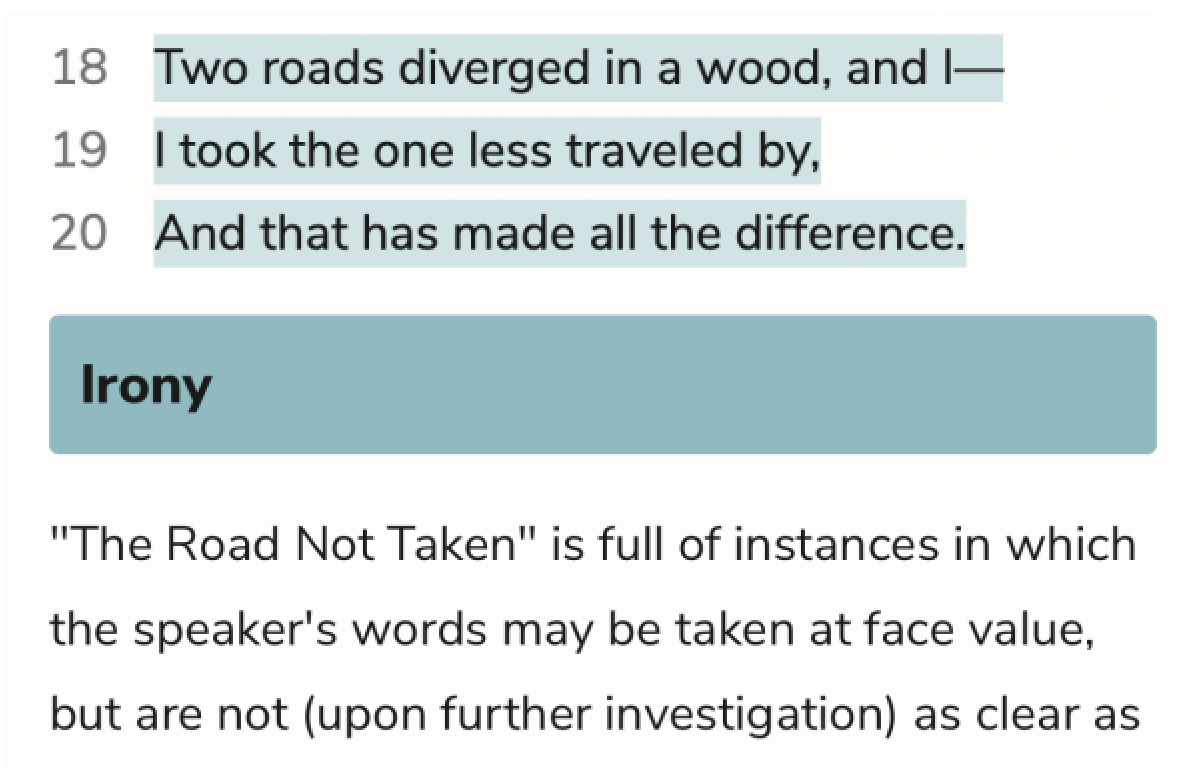
Literary & poetic device analysis
Decode the author’s language
Quickly find and understand the key devices in whatever you’re reading.
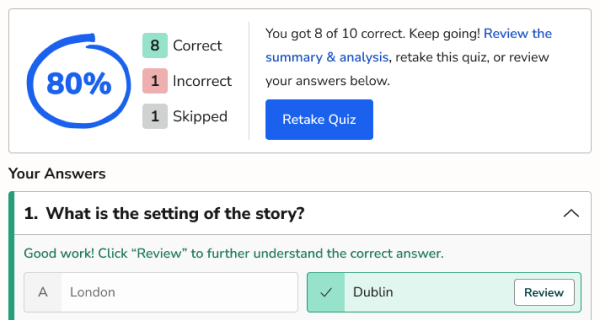
Unlimited quizzes
Unlimited quizzes and feedback
Boost your learning with quizzes that pinpoint and address knowledge gaps.
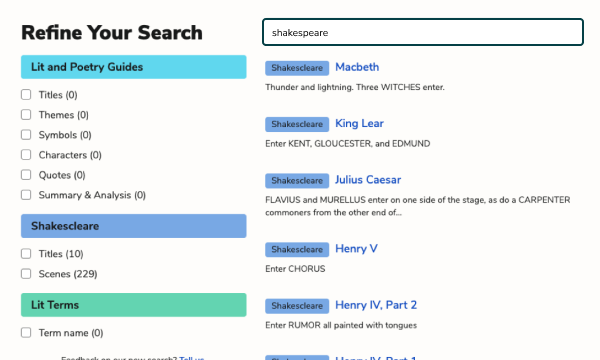
Advanced search
Find exactly what you need
Refine your search using advanced filters like genre, time period, literary movement, author context, grade level, and more.
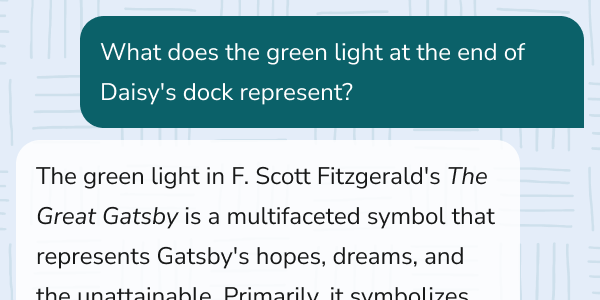
Ask LitCharts AI
Ask LitCharts AI
Instant answers to all your lit questions. Powered by LitCharts content and AI.
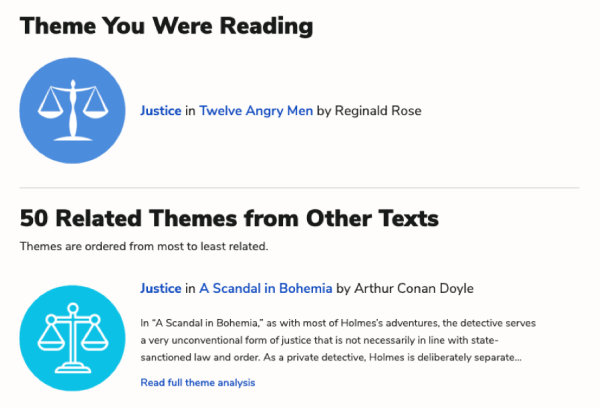
Theme comparisons across books
Compare and contrast
Identify similar themes across books, making comparisons fast and simple.
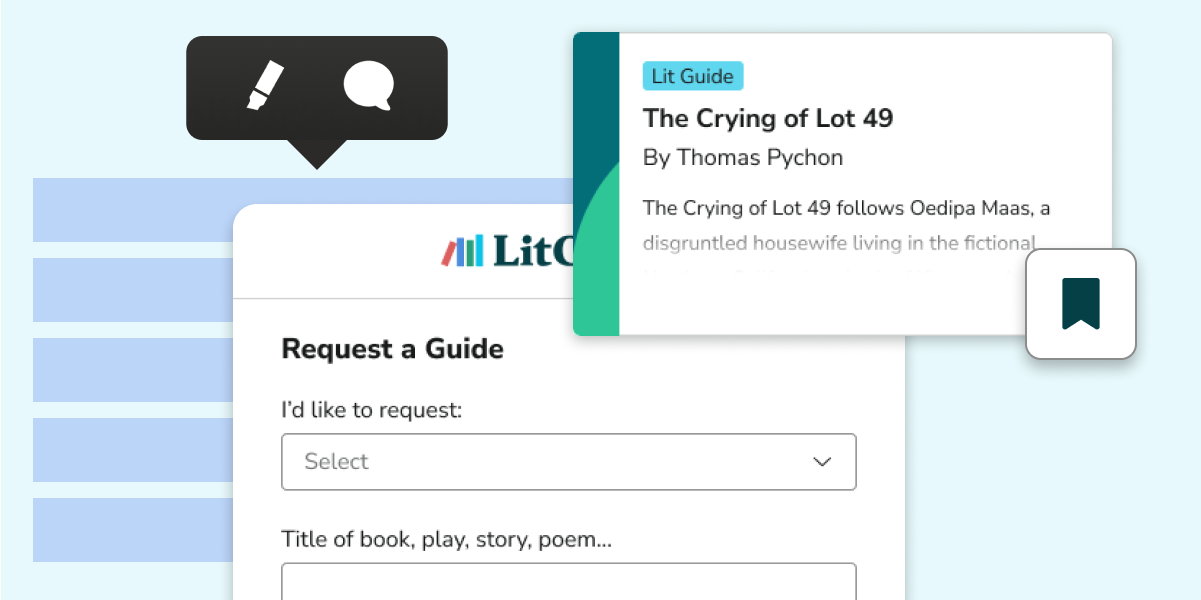
Highlight, take notes, & save guides
Make LitCharts your own
Add highlights or notes, save guides for easy access later, and request new titles.
 Teacher
$795USD/mo
Charged $95.40 USD every year
Quote explanations & citation info
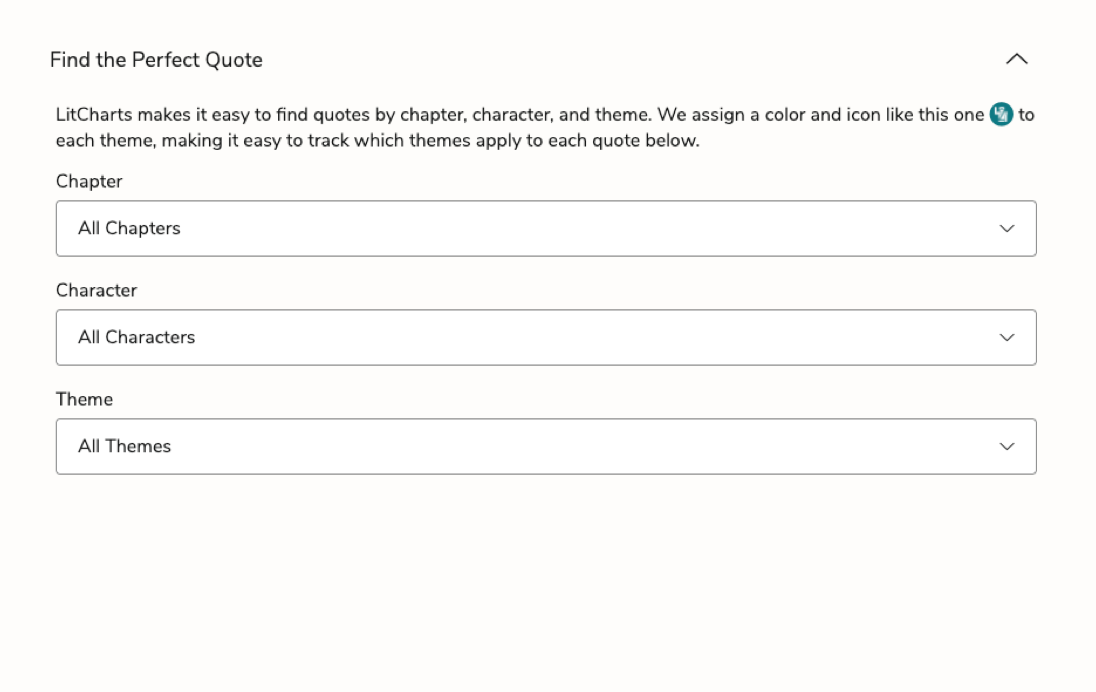
Find the perfect quote
Then understand it perfectly. And get the citation, too. For all 35,000+ quotes we cover.
Every PDF download
Printable PDFs for every guide
"Would not have made it through without the printable PDFs. They're like having in-class notes for every discussion!"
– LitCharts A⁺ user
One-page Quick Lit Guides
Understand key basics—fast
Printable, one-page guides that cover the plot points, themes, and ideas you need to know.
Detailed chapter analysis
Get what happens and what it means
Targeted analysis next to the summary ensures you’ll understand more than just the plot.
Line-by-line poetry analysis
Get the meaning in every line
Never feel lost reading a poem again with clear and in-depth analysis of each and every line.
Literary & poetic device analysis
Decode the author’s language
Quickly find and understand the key devices in whatever you’re reading.
Unlimited quizzes
Unlimited quizzes and feedback
Boost your learning with quizzes that pinpoint and address knowledge gaps.
Advanced search
Find exactly what you need
Refine your search using advanced filters like genre, time period, literary movement, author context, grade level, and more.
Ask LitCharts AI
Ask LitCharts AI
Instant answers to all your lit questions. Powered by LitCharts content and AI.
Theme comparisons across books
Compare and contrast
Identify similar themes across books, making comparisons fast and simple.
Highlight, take notes, & save guides
Make LitCharts your own
Add highlights or notes, save guides for easy access later, and request new titles.
Teacher editions
Save time with in-depth organizers
"THE best teaching resource I have ever used. My students love the handouts."
– LitCharts A⁺ User
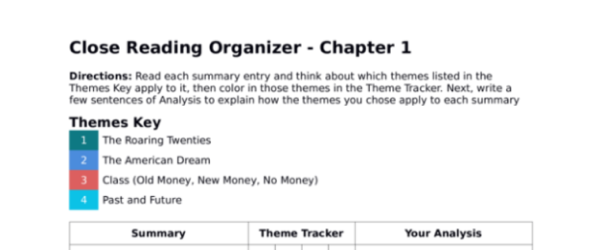
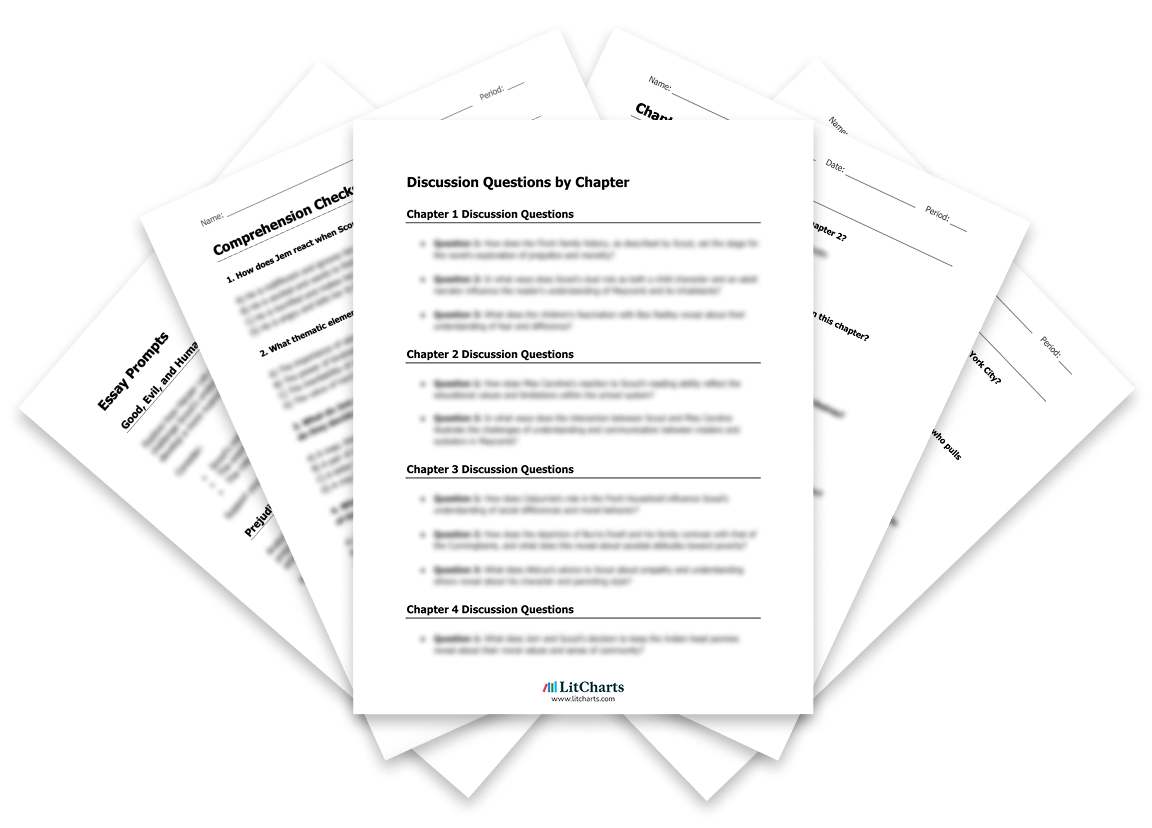
Printable classroom resources
Cut prep time in half
Essay prompts, discussion questions, and comprehension checks—easy to print and ready to use in class.
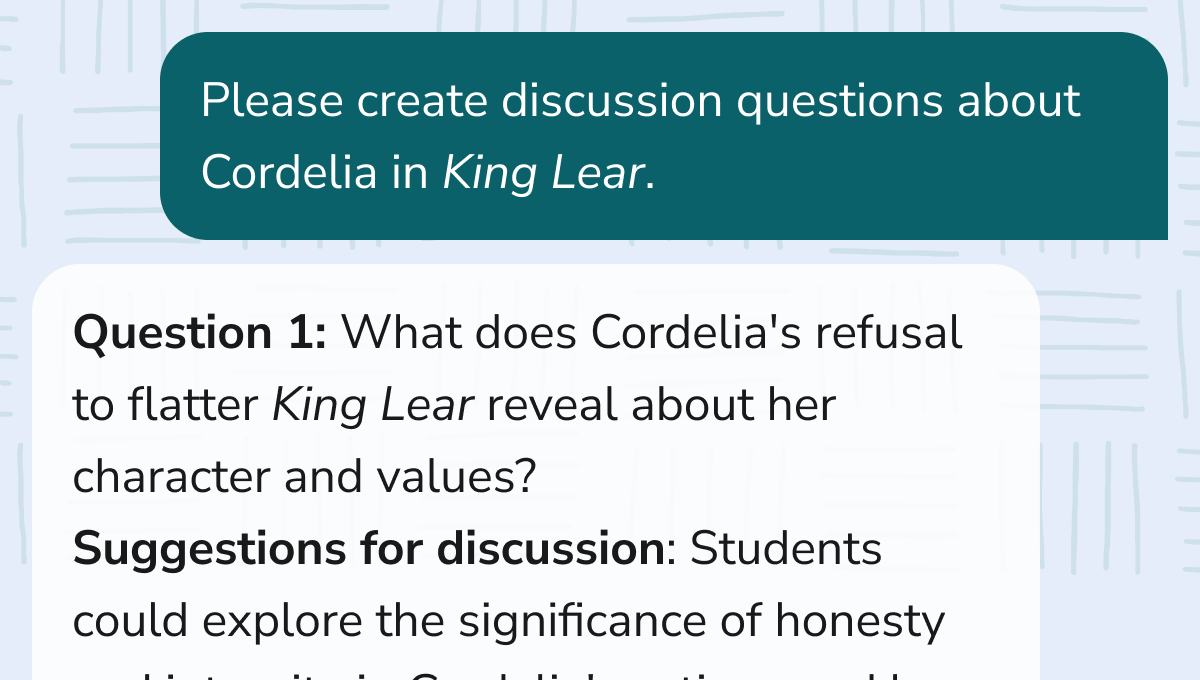
Discussion question generator
Discussion question generator
Instantly create discussion questions that get people talking, through the power of LitCharts analysis and AI.
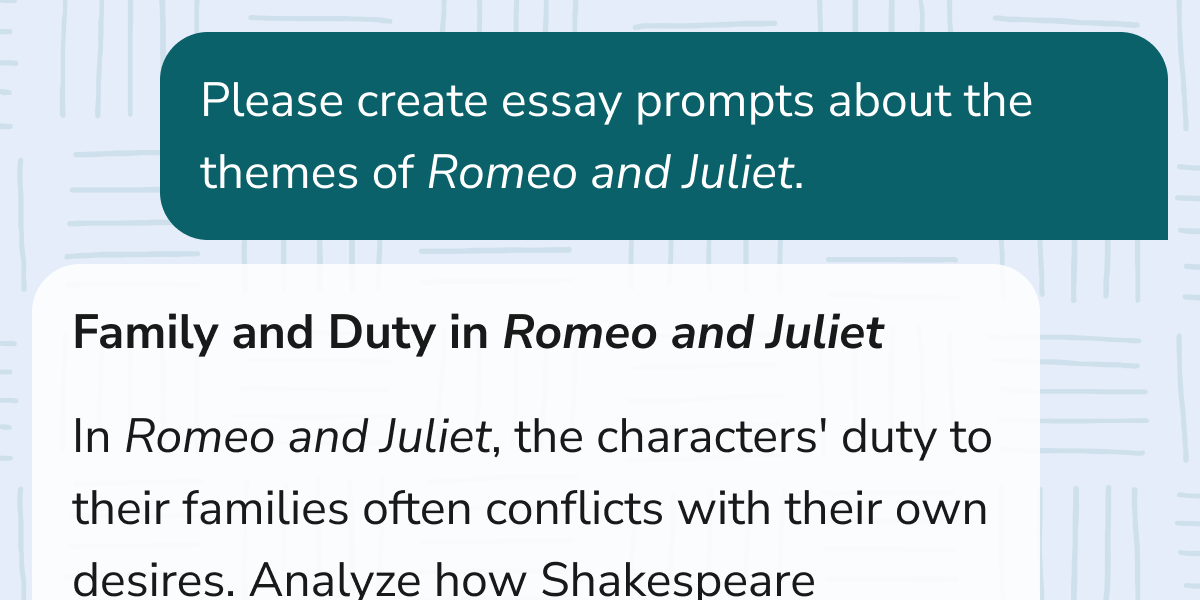
Essay prompt generator
Essay prompt generator
Quickly create thought-provoking essay prompts that will get your students writing, powered by LitCharts analysis and AI.
Quiz question generator
Quiz question generator
Effortlessly generate targeted quiz questions, powered by the world’s best literary analysis and AI.


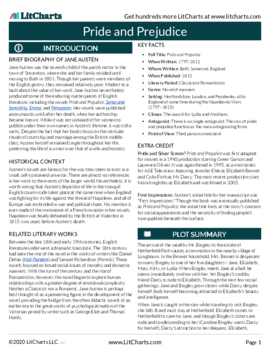
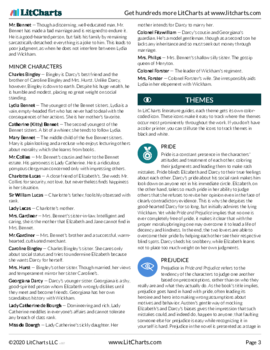
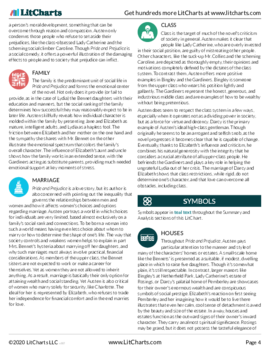
Literature Guide PDFs
LitCharts PDFs for every book you'll read this year.
Instant PDF downloads of all 2266 LitCharts literature guides and of every new one we publish. Try a free sample literature guide.
"Would not have made it through AP Literature without the printable PDFs. They're like having in-class notes for every discussion!"



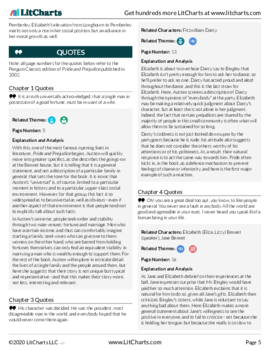


Quotes Explanations
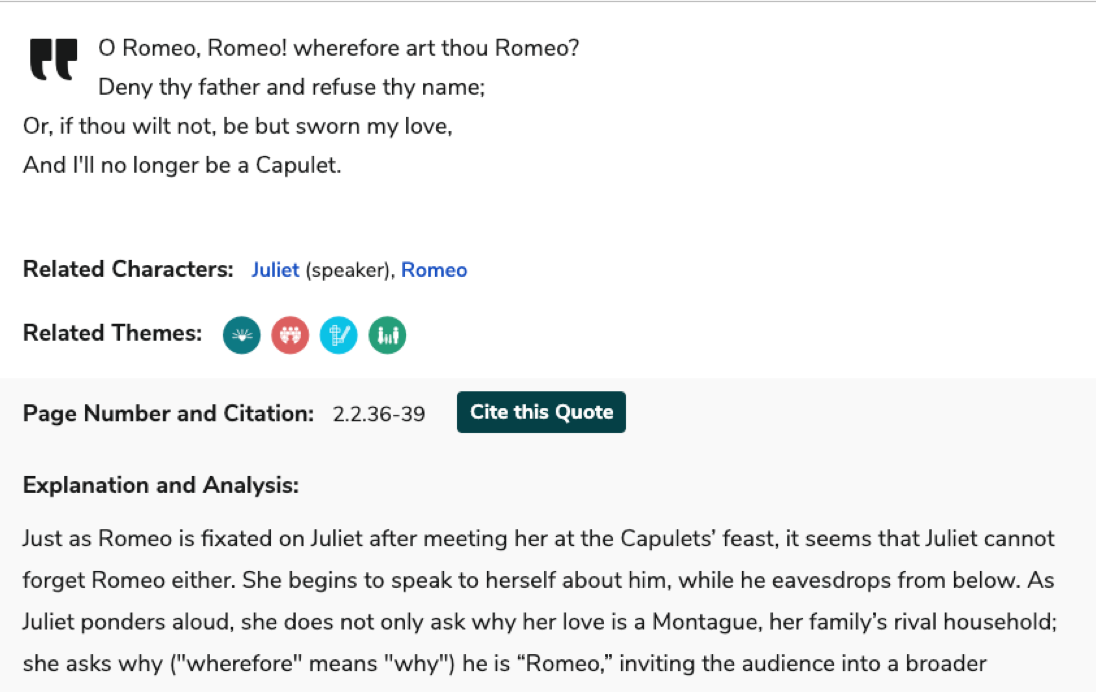
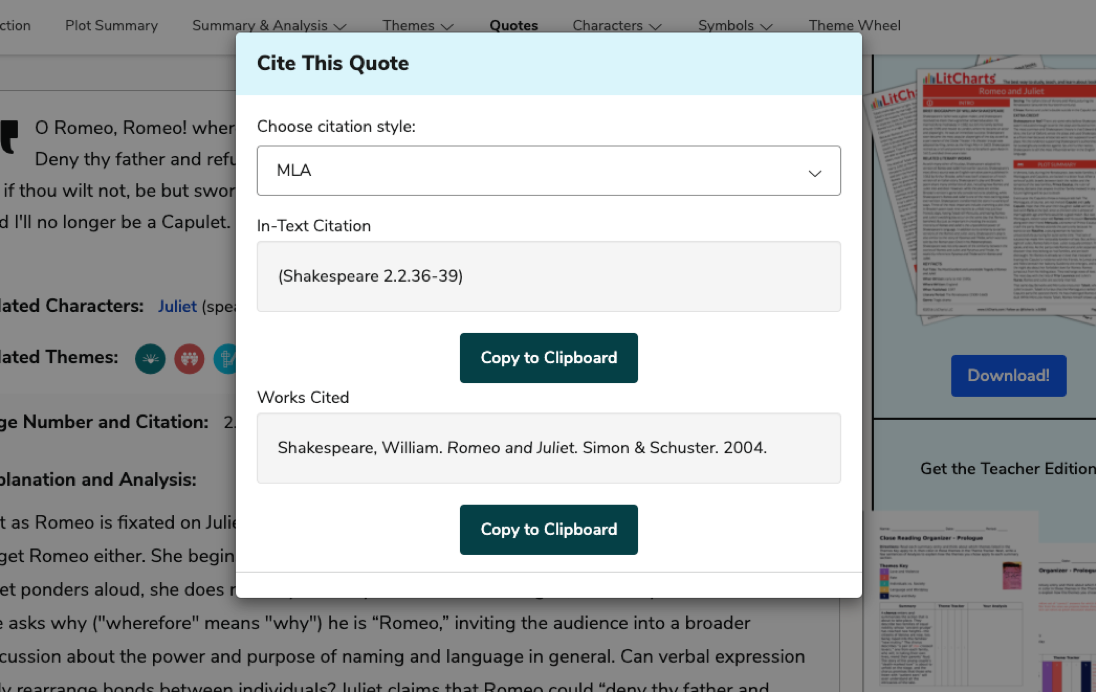
Find the perfect quote. Understand it perfectly. Then rock the citation, too.
For all 50,566 quotes we cover.
For all 50,566 quotes we cover.


Teacher Editions
Close reading made easy for students.
Time saved for teachers.
For every book we cover.
Time saved for teachers.
For every book we cover.
Teacher Edition Contents

|
Close Reading Organizers |

|
Character Analysis Organizers |

|
Symbol Analysis Organizers |

|
Theme Analysis Organizers |

|
Quote Analysis Organizers |
Common Core-aligned
""
Try a free and complete sample Teacher Edition.


PDFs of modern translations of every one of Shakespeare's 37 plays, 154 sonnets, and 3 longer poems.
Every translation available to download as a PDF.
Try a free sample Shakespeare translation.
"Every teacher of literature should use these translations. They completely demystify Shakespeare. Students love them!"

Literary Terms and Devices
Definitions and examples for every literary term and device you need to know.
Plus a quick-reference PDF with concise definitions of all 136 terms in one place.
Plus a quick-reference PDF with concise definitions of all 136 terms in one place.
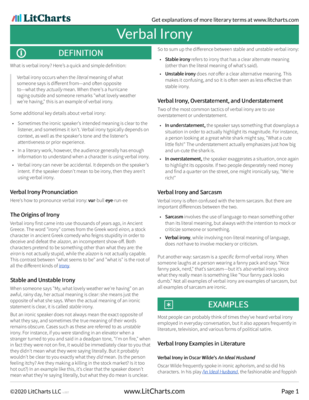
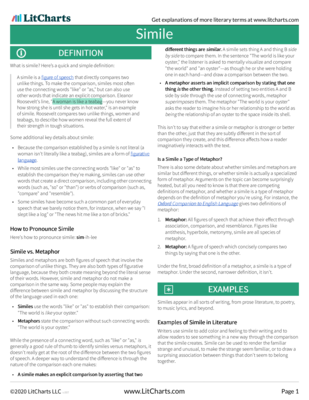
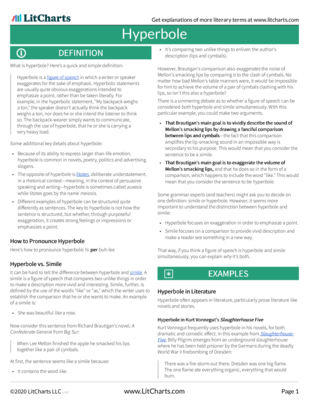
Try a free sample literary term PDF.


Advanced Search
Refine any search. Find related themes, quotes, symbols, characters, and more.
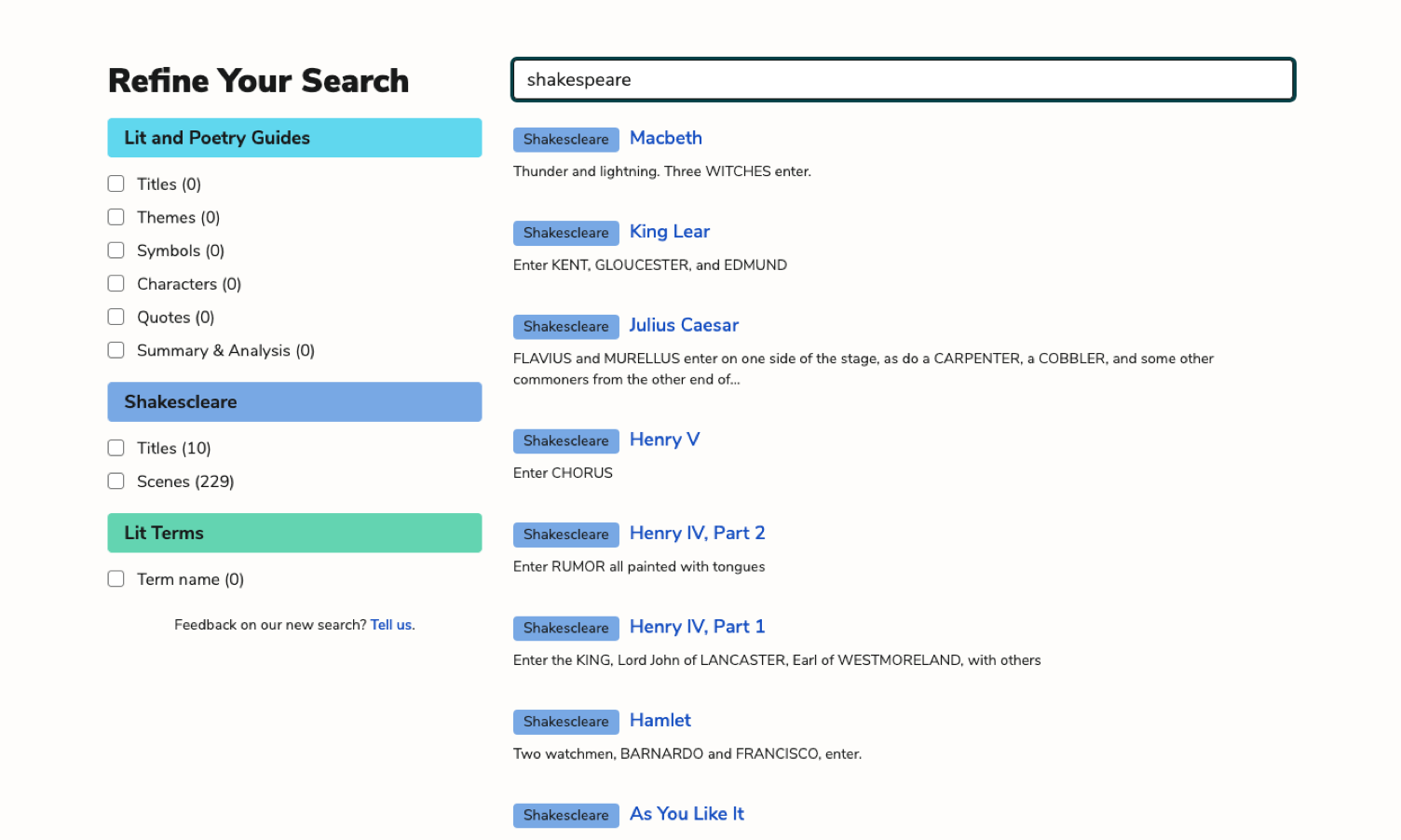

Related Themes
Comparing and contrasting texts? Find where any theme occurs across all of LitCharts in seconds.


Poetry Guides
Line-by-line explanations and analysis of figurative language and poetic devices.
For every lyric poem we cover.
For every lyric poem we cover.