
|
Have questions?
Contact us
Already a member? Sign in
|
Get every literary device explanation for The Bridge of San Luis ReyPlus so much more...
Sign up for LitCharts A+Get instant access to every literary device explanation, plus so much more...
Allusion
Explanation and Analysis—Jupiter and Semele:
Describing how the Abbess's mentorship overwhelms her young charge Pepita, the narrator makes an allusion to the myth of Jupiter and Semele:
[...the Abbess] had unthinkingly turned upon Pepita the full blaze of her personality, as Jupiter had turned his upon Semele.
In Greco-Roman mythology, Jupiter, the god of the sky, was one of the most powerful and fearsome deities. Semele was one of his human lovers. While Jupiter initially took on human form in order to woo Semele without frightening her, she eventually demanded that he show himself as a god in order to prove his divinity. However, this religious tradition held that it was deadly for humans to look at gods. So, when Zeus complied, Semele instantly died.
In the context of The Bridge of San Luis Rey, this allusion highlights the imbalance of power between a powerful authority figure and her humble apprentice. Because she's so determine that her charitable works will survive her, the Abbess has adopted Pepita as a successor. During the novel, she puts her through an intense and difficult training process that includes sending her to live with Doña Maria in order to learn to interact with members of the wealthy upper class. This relationship is hard on Pepita intellectually (as a teenager, she's been asked to take on a very adult level of responsibility) and emotionally (although Pepita and the Abbess are not romantically involved, their relationship carries the force of this mythical love affair). While Pepita struggles with the Abbess's expectations of her, she ultimately makes her peace with the relationship and accepts responsibility for carrying out her mentor's wishes shortly before dying in the bridge collapse.
This allusion also shows how the Abbess's desire to do good has led her astray. Even though she's motivated by the best intentions—she wants to make sure that someone is taking care of the city's poor after she dies—she ends up harming Pepita through her focus on her legacy, just as Jupiter harms Semele. Only when the Abbess learns how to concentrate on her work in the present moment is she able to find tranquility and form more equal relationships.
Monthly
Annual (Best Value)

$595USD/mo
Charged $71.40 USD every year
 Teacher
$795USD/mo
Charged $95.40 USD every year
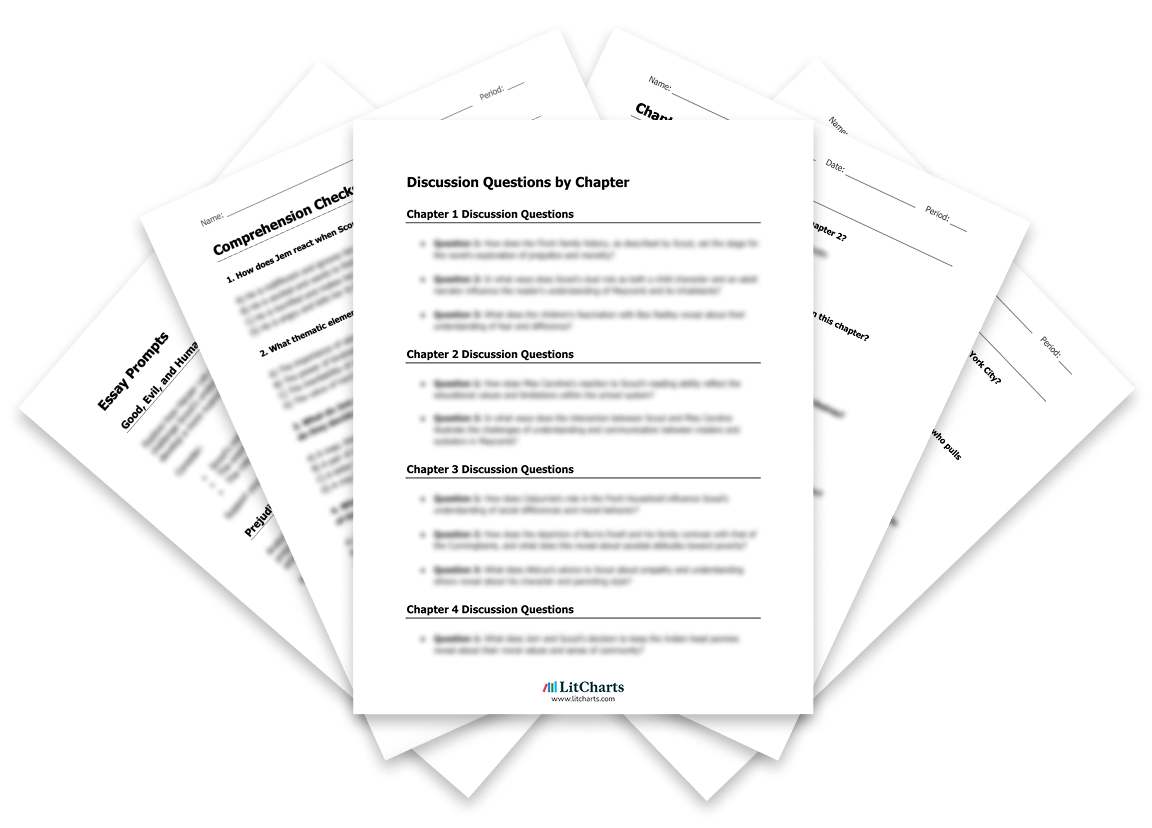


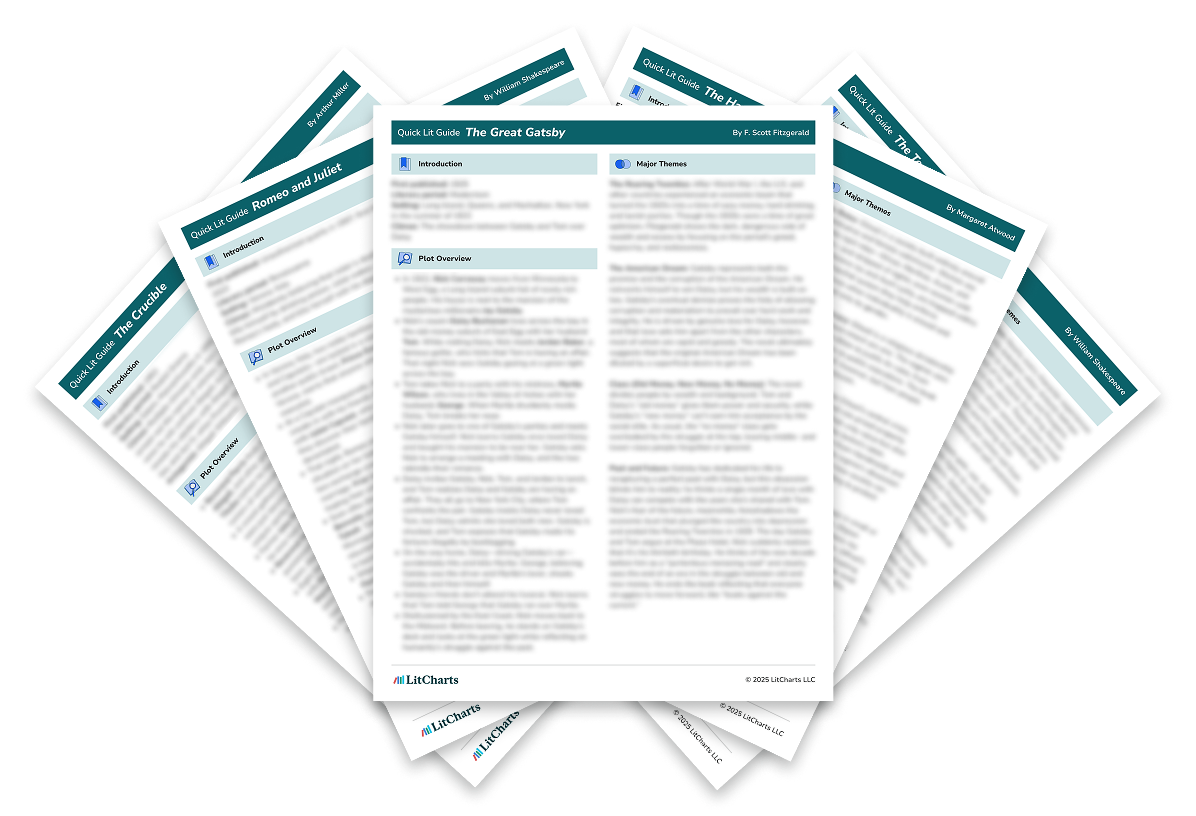
Literature Guide PDFs
LitCharts PDFs for every book you'll read this year.
Instant PDF downloads of all 2251 LitCharts literature guides and of every new one we publish. Try a free sample literature guide.
"Would not have made it through AP Literature without the printable PDFs. They're like having in-class notes for every discussion!"



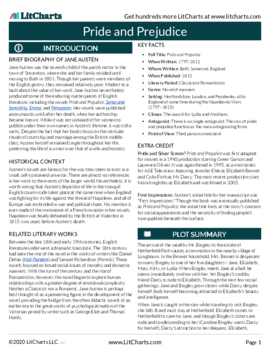


Quotes Explanations
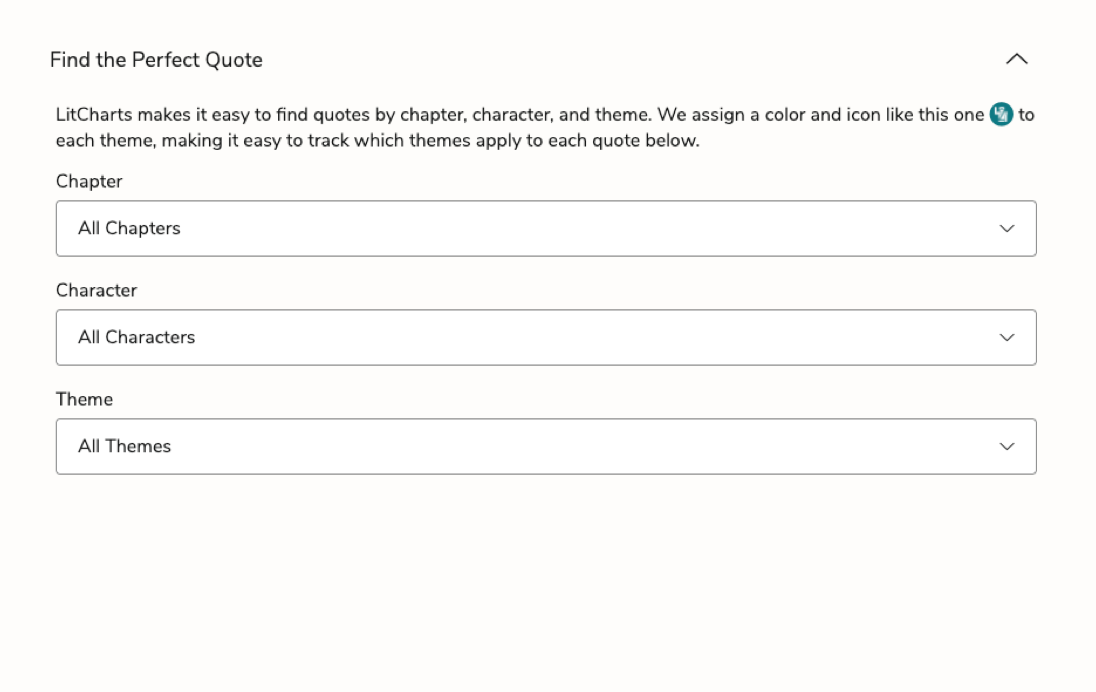
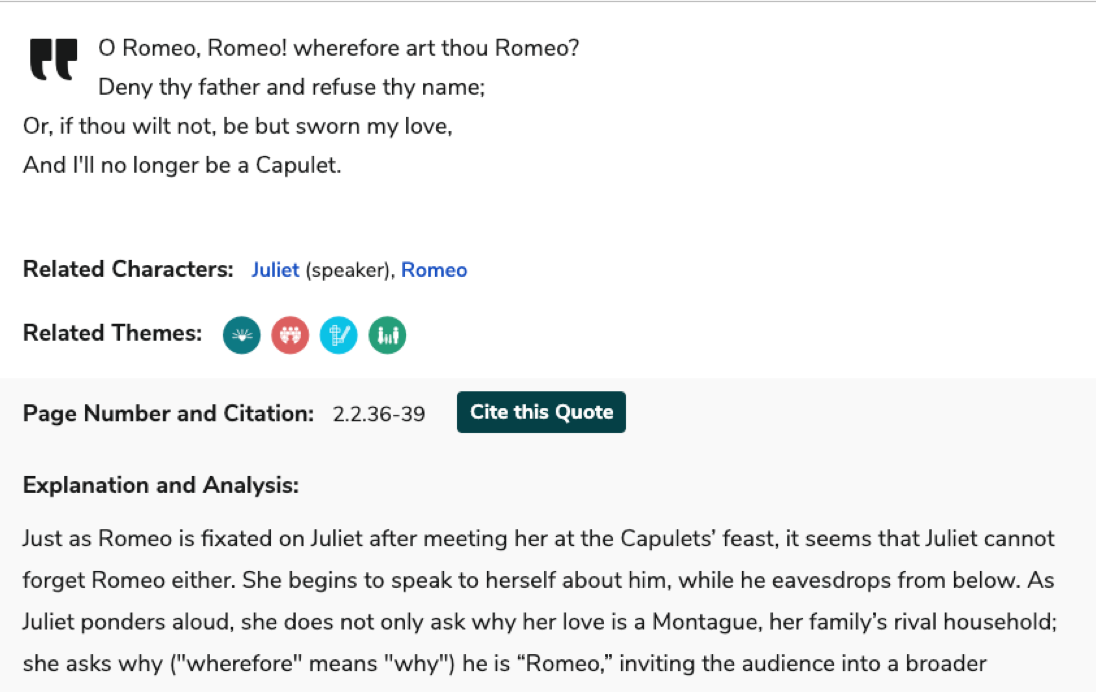
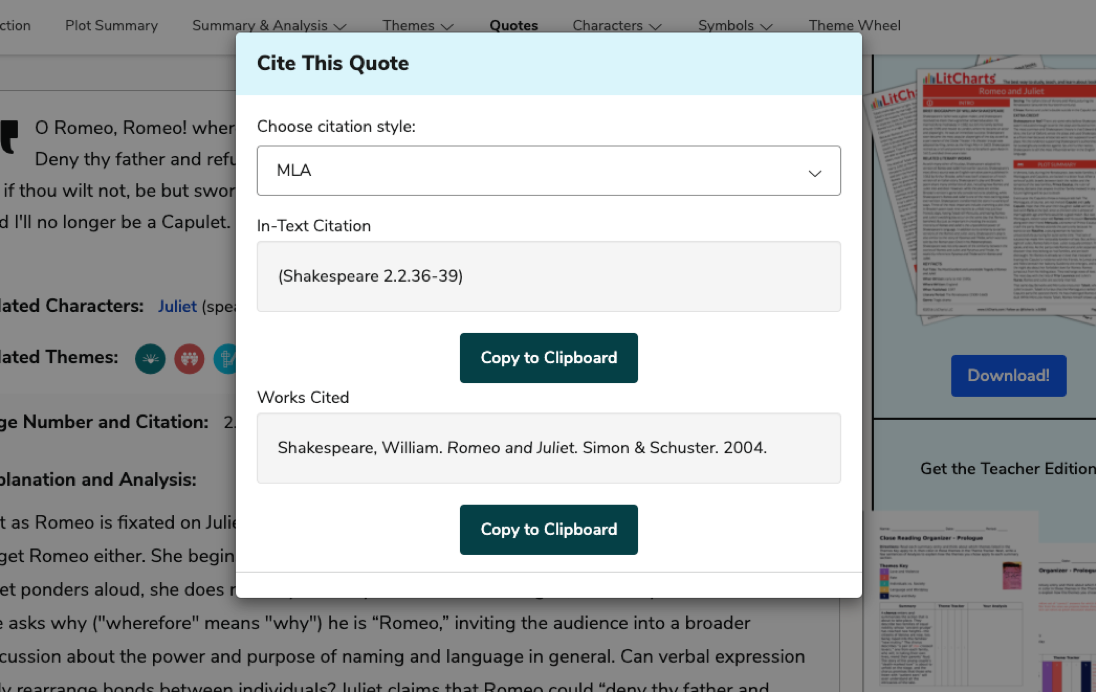
Find the perfect quote. Understand it perfectly. Then rock the citation, too.
For all 50,202 quotes we cover.
For all 50,202 quotes we cover.


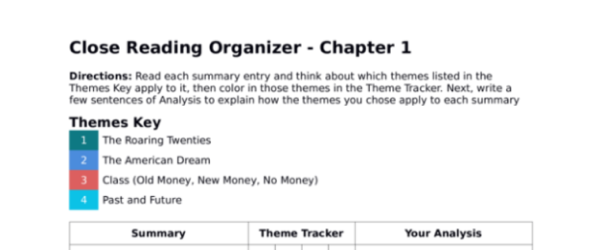
Teacher Editions
Close reading made easy for students.
Time saved for teachers.
For every book we cover.
Time saved for teachers.
For every book we cover.


Common Core-aligned


PDFs of modern translations of every one of Shakespeare's 37 plays, 154 sonnets, and 3 longer poems.

Literary Terms and Devices
Definitions and examples for every literary term and device you need to know.
Plus a quick-reference PDF with concise definitions of all 136 terms in one place.
Plus a quick-reference PDF with concise definitions of all 136 terms in one place.
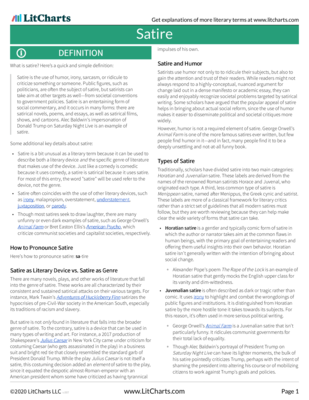
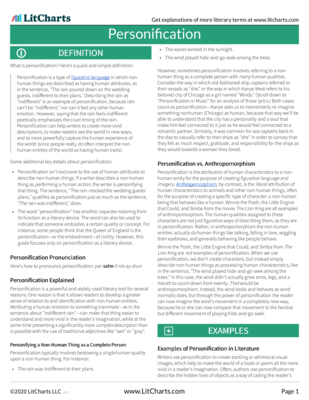
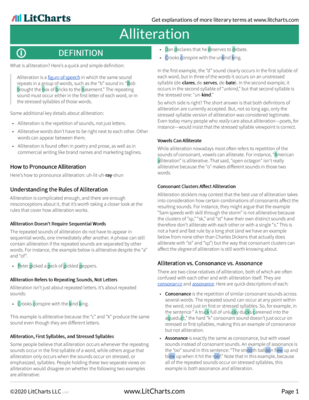
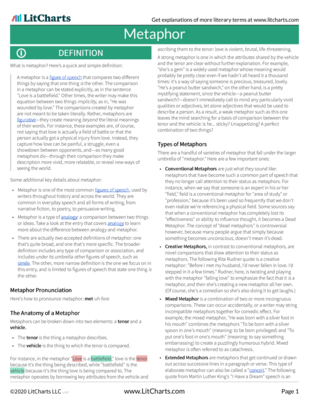
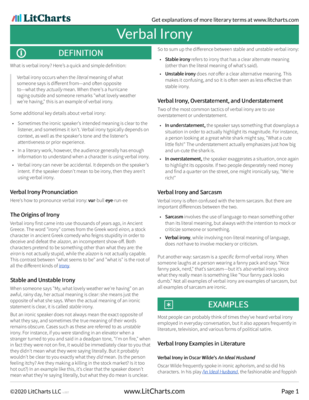
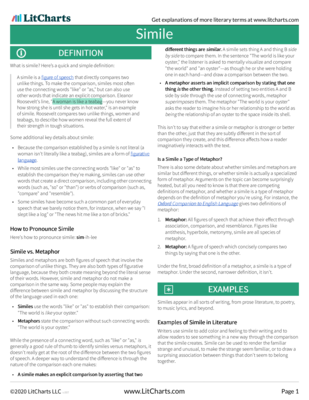
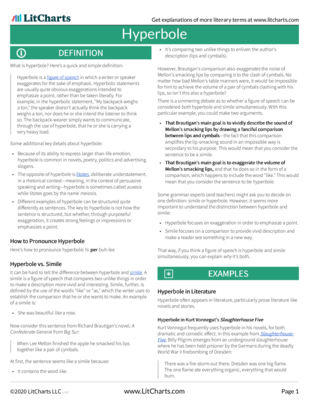
Try a free sample literary term PDF.


Advanced Search
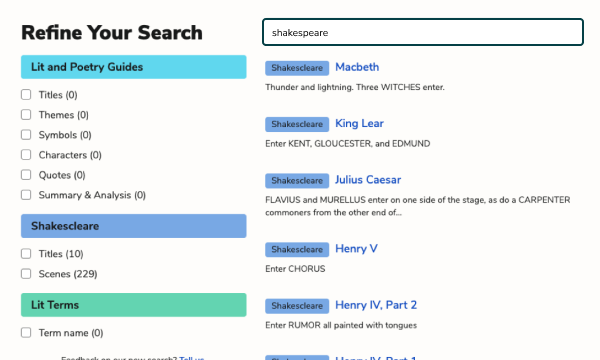
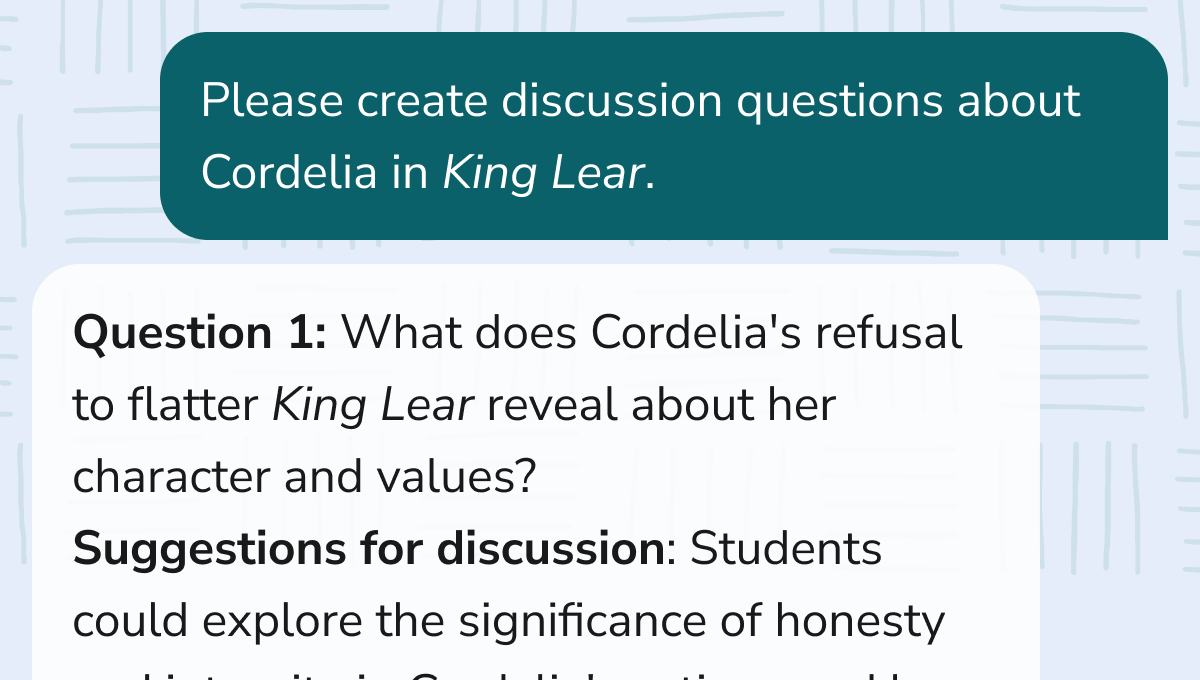
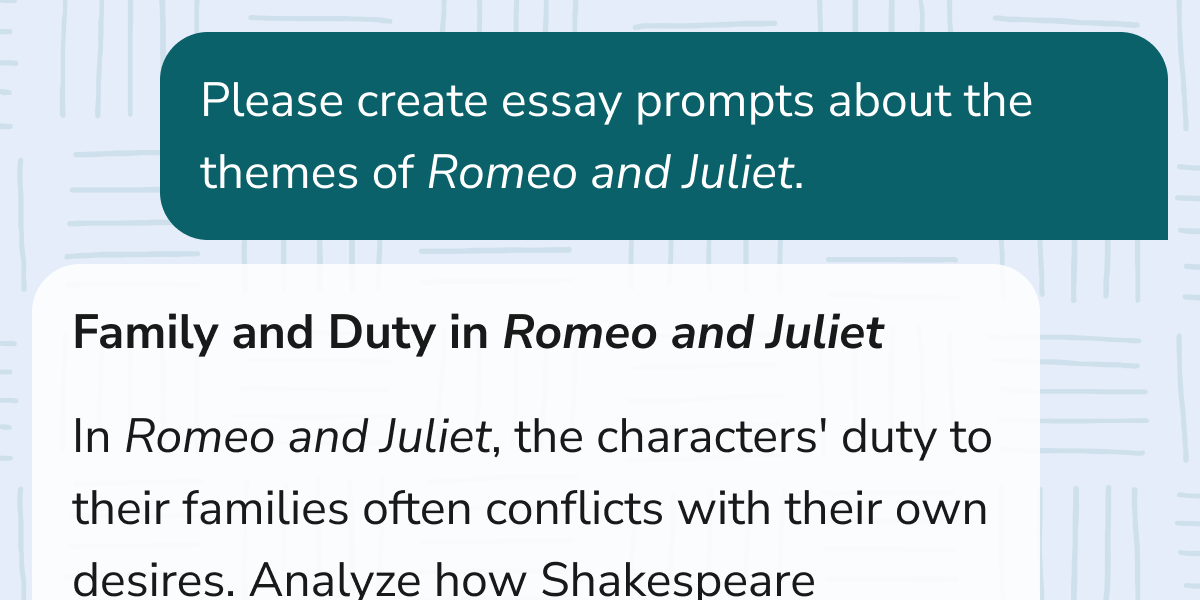
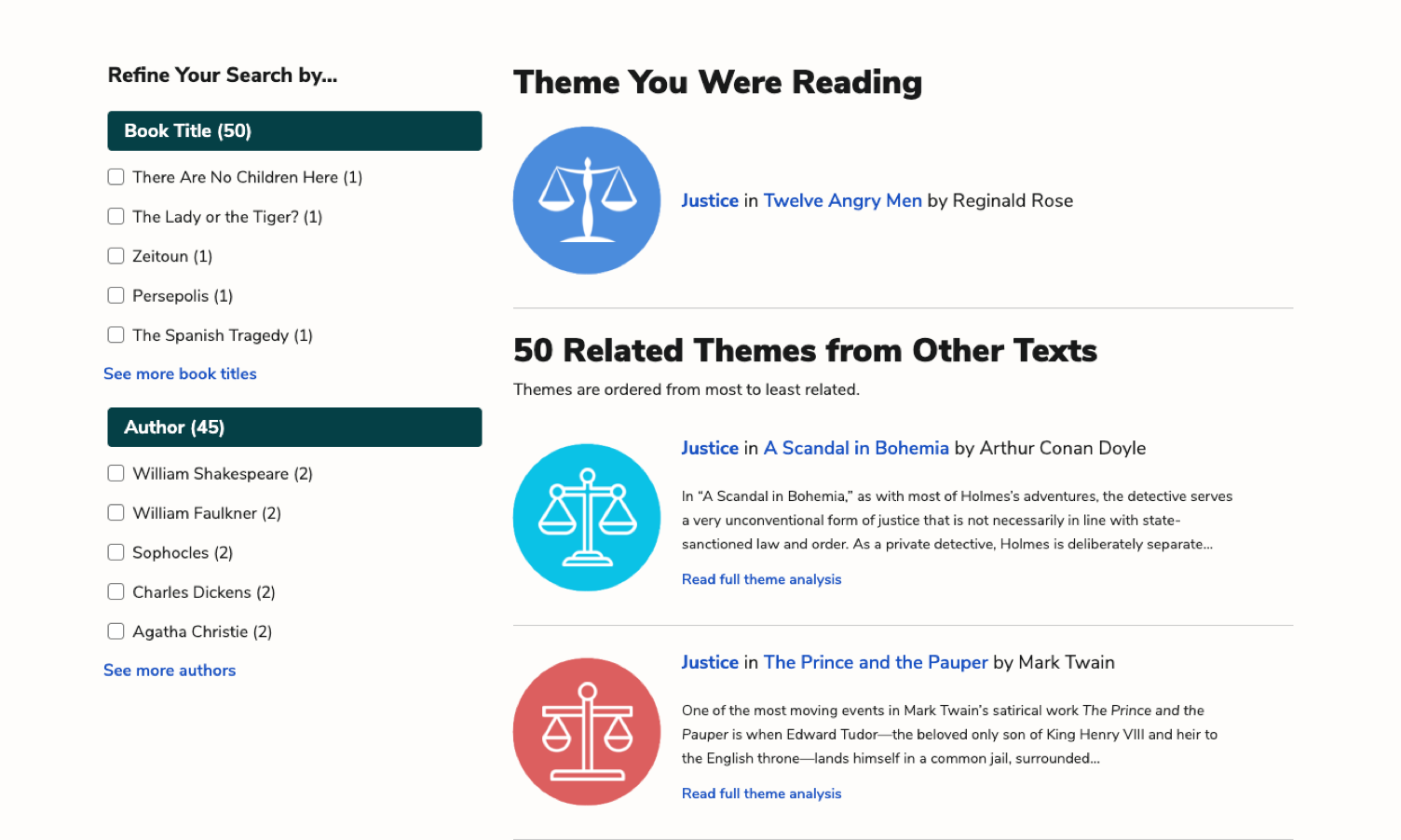
Refine any search. Find related themes, quotes, symbols, characters, and more.
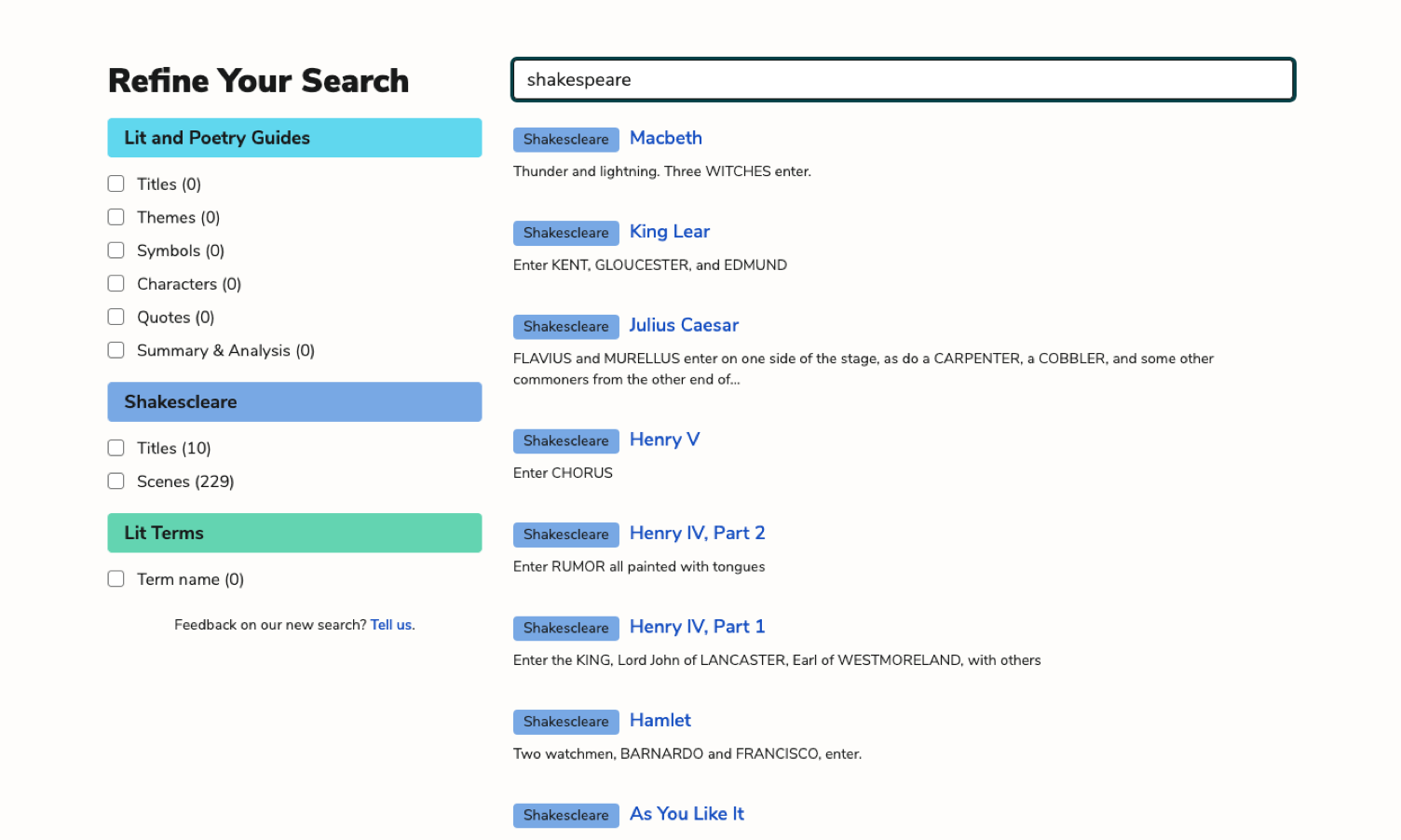

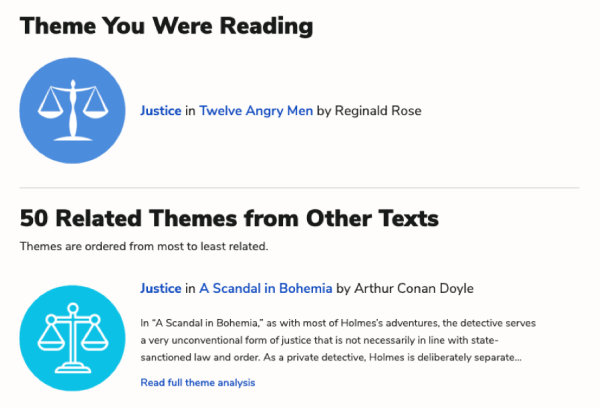
Related Themes
Comparing and contrasting texts? Find where any theme occurs across all of LitCharts in seconds.


Poetry Guides
Line-by-line explanations and analysis of figurative language and poetic devices.
For every lyric poem we cover.
For every lyric poem we cover.