
|
Have questions?
Contact us
Already a member? Sign in
|
Get every literary device explanation for The Scarlet LetterPlus so much more...
Sign up for LitCharts A+Get instant access to every literary device explanation, plus so much more...
Foil
Explanation and Analysis—Hester, Arthur, and Roger:
Hester Prynne, Arthur Dimmesdale, and Roger Chillingworth form the love triangle at the center of the novel's plot, but they also all serve as foils for one another. The narrator begins to establish Chillingworth and Dimmesdale as foils in Chapter 4, when Chillingworth visits Hester in the prison and swears her to secrecy about the fact that he is her husband:
“I will keep thy secret, as I have his,” said Hester.
“Swear it!” rejoined he.
And she took the oath.
As Hester notes here, Dimmesdale and Chillingworth have both sworn her to secrecy about their relationships to her. Despite their twin desires for secrecy, they have opposite responses to Hester's pregnancy and Pearl's birth. Chillingworth has a "chilly," inhumane streak that leads him to plot revenge in secret. He wants secrecy so that he can obsess over Dimmesdale. Dimmesdale, meanwhile, is "dim" and spineless, suffering in secret for his own sins. He wants secrecy so that he can obsess over himself. Hester's willingness to keep their secrets allows both men to destroy themselves, but in different ways. By placing these two characters side by side, the novel allows each of their flaws to stand out as they careen toward self-destruction.
Both men are in turn foils for Hester, who bears her shame and her love for Pearl openly instead of in secret. In Chapter 3, Dimmesdale tells Hester that she can lighten her punishment by revealing Pearl's father. Hester looks into Dimmesdale's eyes and refuses:
“Never!” replied Hester Prynne, looking, not at Mr. Wilson, but into the deep and troubled eyes of the younger clergyman. “It is too deeply branded. Ye cannot take it off. And would that I might endure his agony, as well as mine!”
By staring "into the deep and troubled eyes" of Dimmesdale, Hester conveys to him a double standard he has failed to accept: keeping the adultery secret is a choice he has made, and it is a choice that has never been available to her. She can't hide the fact that she has a child when her husband has been long absent, so she chooses to bear this fact as openly as she can. In Chapter 14, a conversation between Hester and Chillingworth demonstrates once more that Hester finds honor, openness, and self-determination to be the best way to deal with pain:
“I must reveal the secret,” answered Hester, firmly. “He must discern thee in thy true character. What may be the result, I know not. But this long debt of confidence, due from me to him, whose bane and ruin I have been, shall at length be paid.["]
Hester feels that she "must" tell Dimmesdale that Chillingworth is her husband because she owes it to him to be honest. Although she has promised both men that she will stay silent about who they are, she eventually decides that their secrets are different. Keeping Chillingworth's secret turns out to be a bridge too far for Hester because it enables him to manipulate and harm Dimmesdale. Keeping Dimmesdale's secret does not harm anyone except Dimmesdale himself. Hester cannot force Dimmesdale to choose openness, but she can choose to be open herself about what she knows that might help him. Hester's commitment to honor, openness, and everyone's right to self-determination stands in sharp relief against both men's secret-keeping and manipulation.
Monthly
Annual (Best Value)

$595USD/mo
Charged $71.40 USD every year
 Teacher
$795USD/mo
Charged $95.40 USD every year


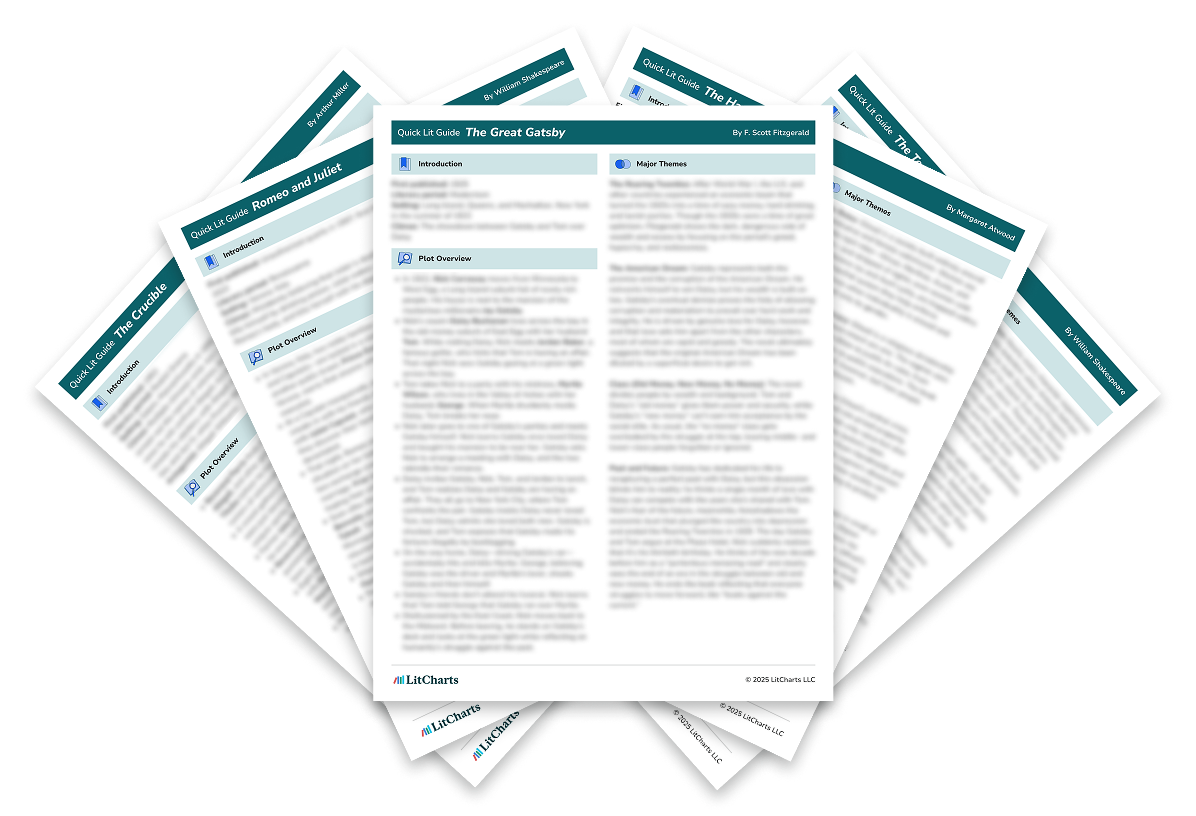
Literature Guide PDFs
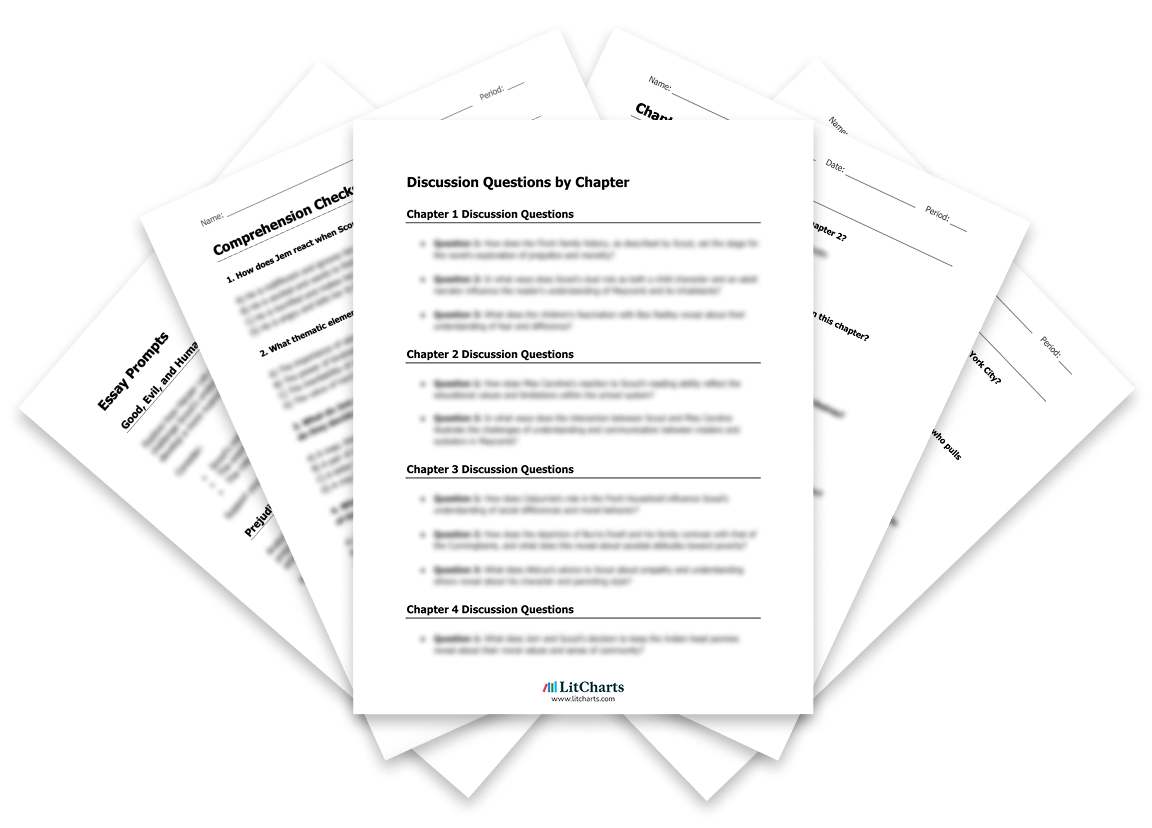
LitCharts PDFs for every book you'll read this year.
Instant PDF downloads of all 2252 LitCharts literature guides and of every new one we publish. Try a free sample literature guide.
"Would not have made it through AP Literature without the printable PDFs. They're like having in-class notes for every discussion!"







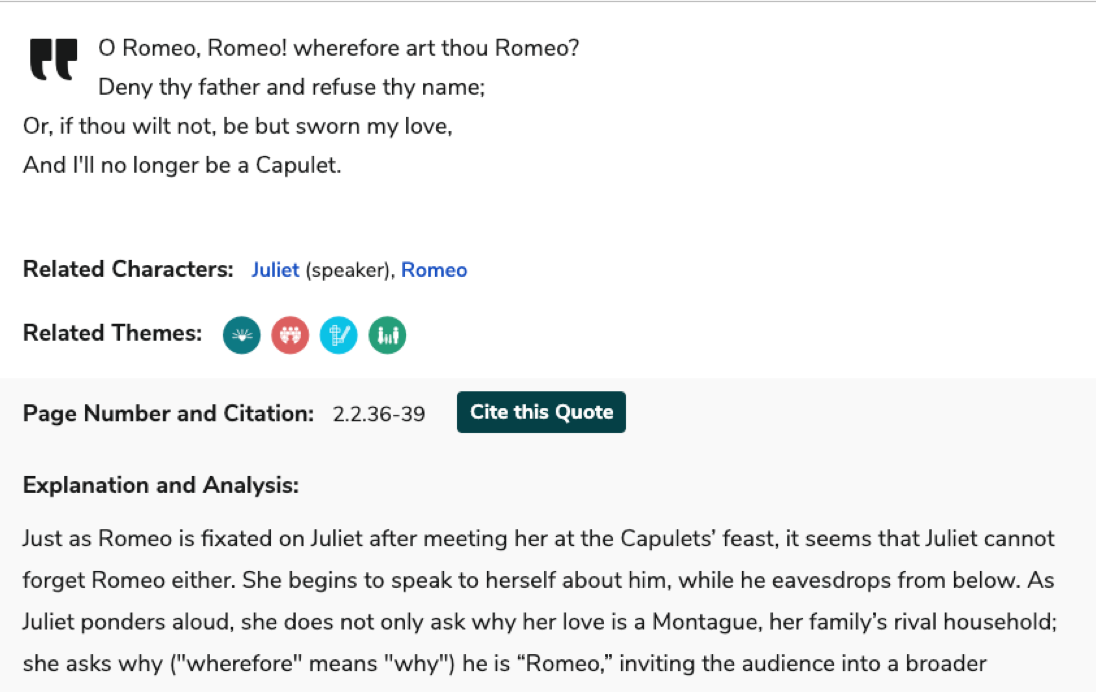
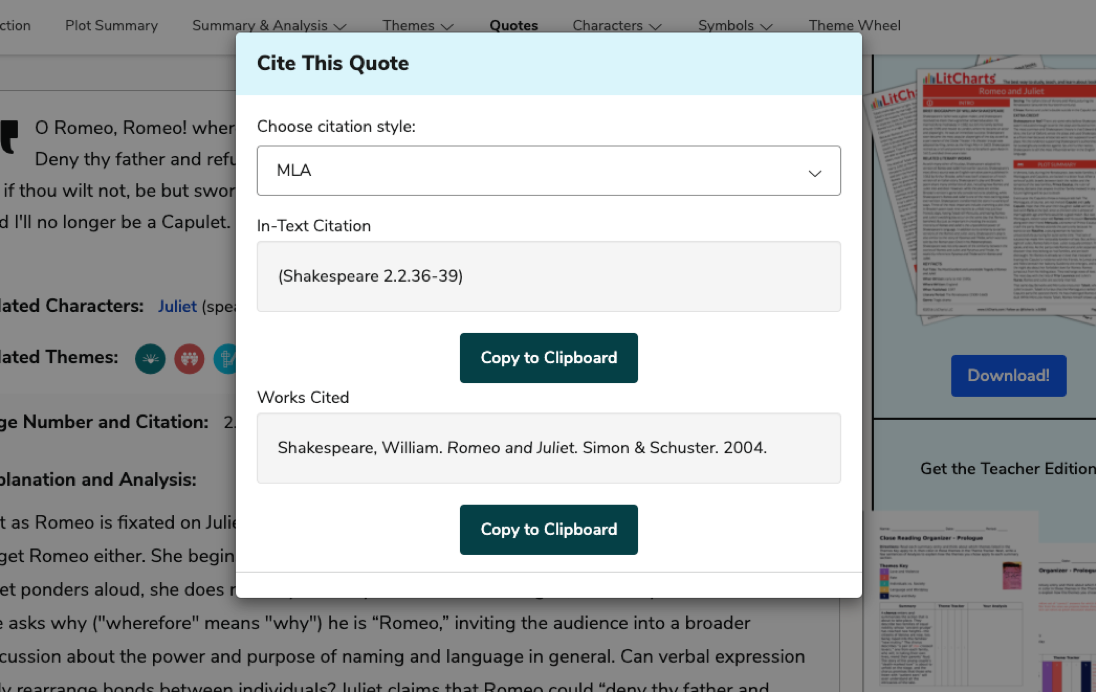
Quotes Explanations
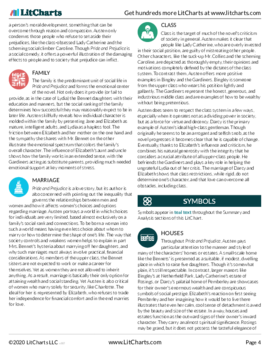
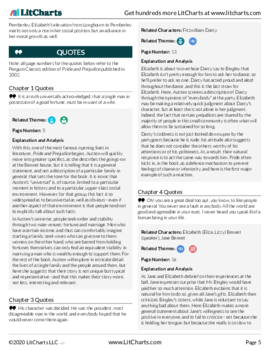
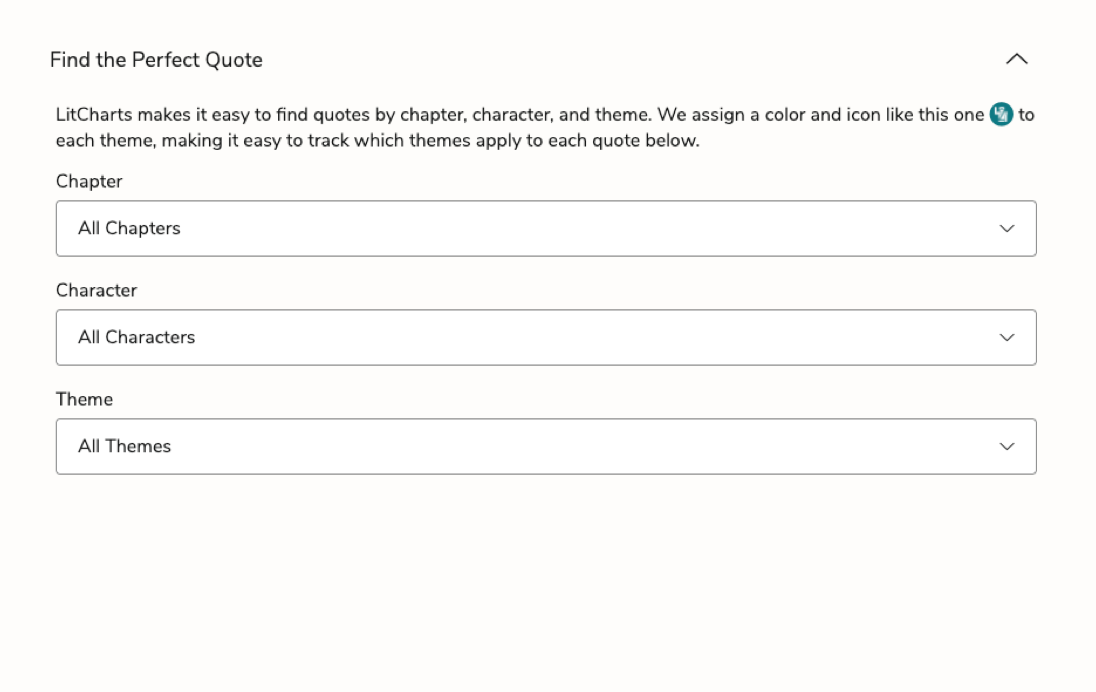
Find the perfect quote. Understand it perfectly. Then rock the citation, too.
For all 50,213 quotes we cover.
For all 50,213 quotes we cover.


Teacher Editions
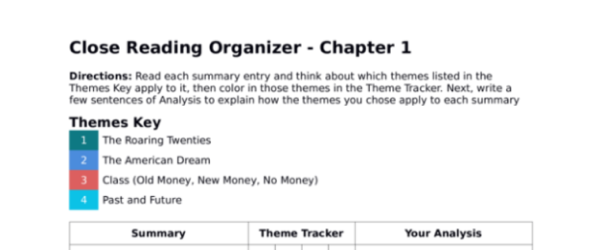
Close reading made easy for students.
Time saved for teachers.
For every book we cover.
Time saved for teachers.
For every book we cover.


Common Core-aligned


PDFs of modern translations of every one of Shakespeare's 37 plays, 154 sonnets, and 3 longer poems.

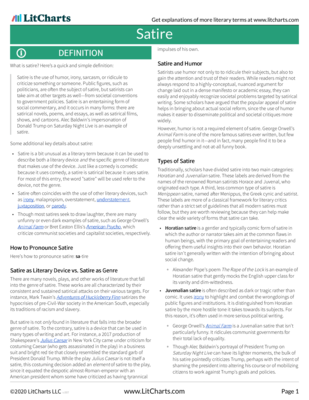
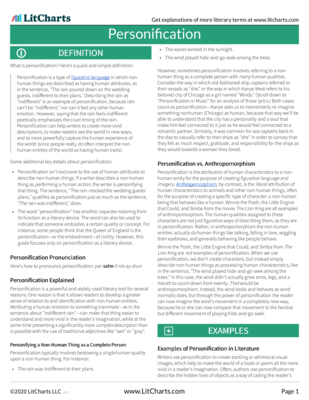
Literary Terms and Devices
Definitions and examples for every literary term and device you need to know.
Plus a quick-reference PDF with concise definitions of all 136 terms in one place.
Plus a quick-reference PDF with concise definitions of all 136 terms in one place.
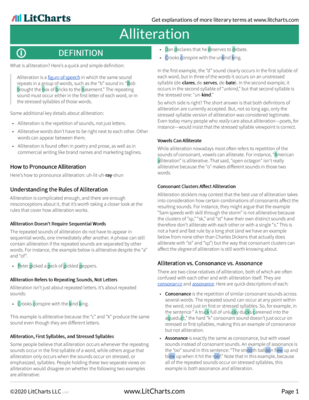
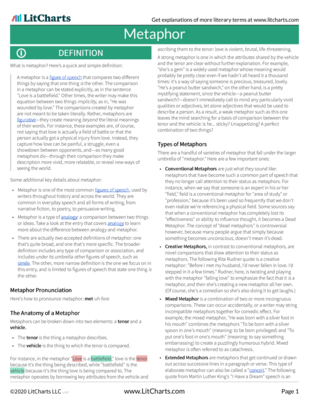
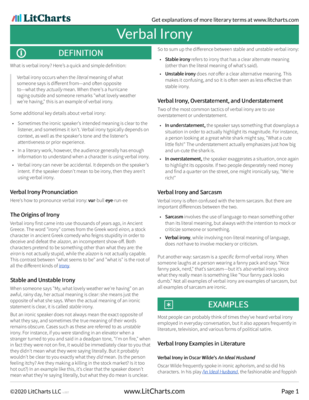
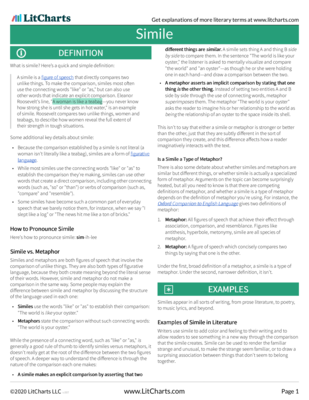
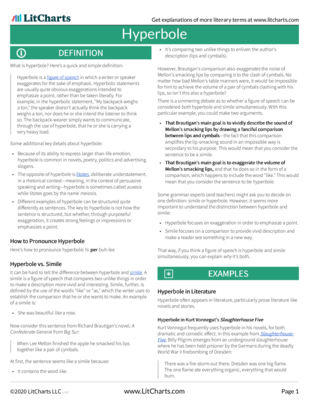
Try a free sample literary term PDF.


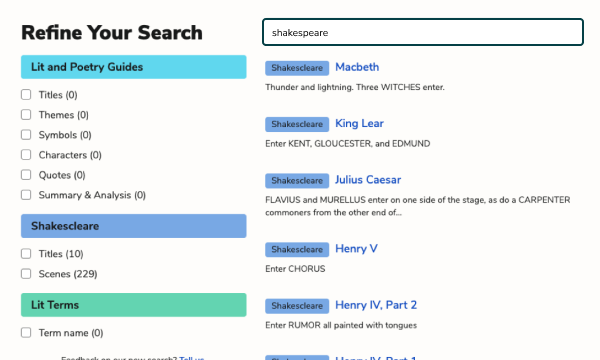
Advanced Search
Refine any search. Find related themes, quotes, symbols, characters, and more.
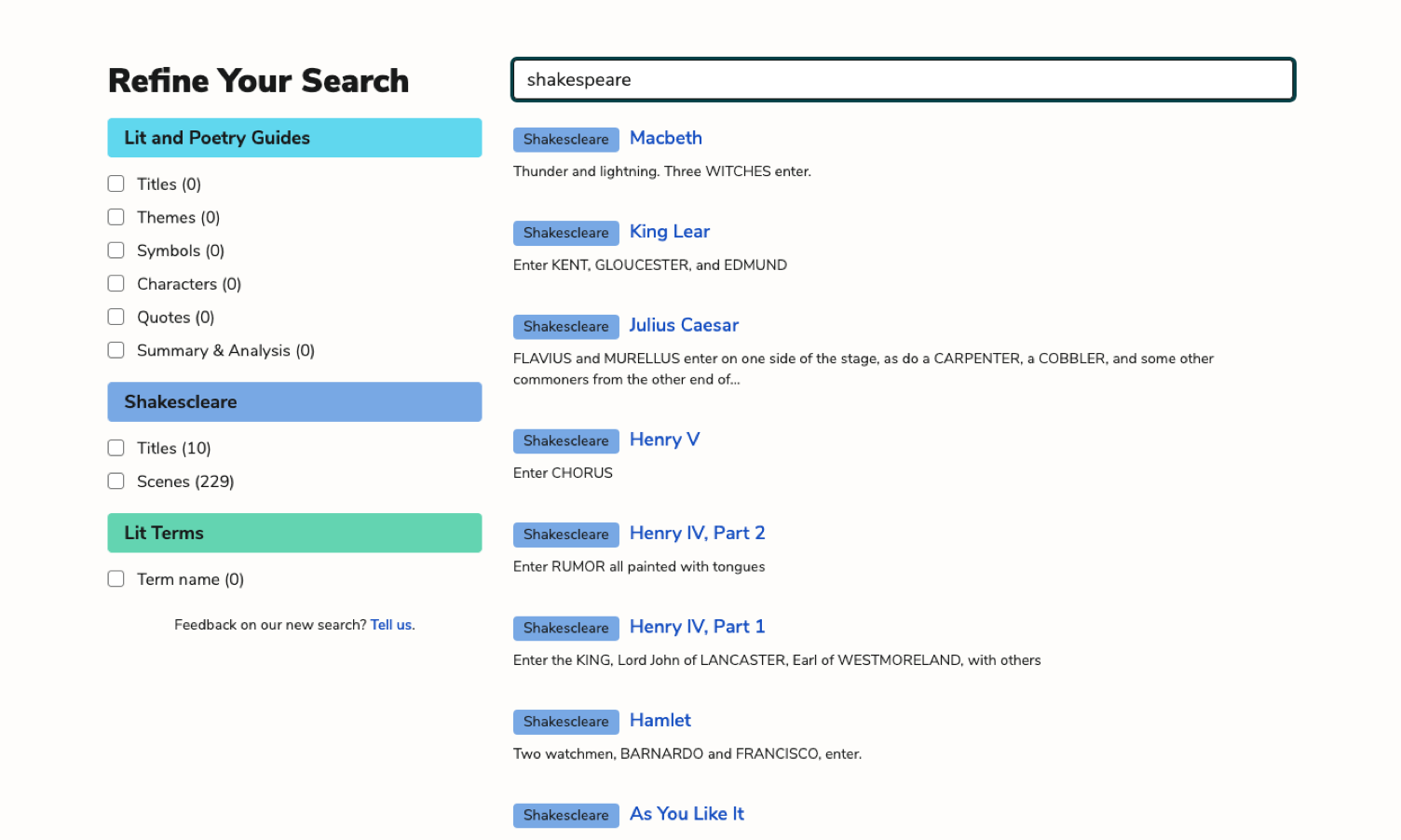

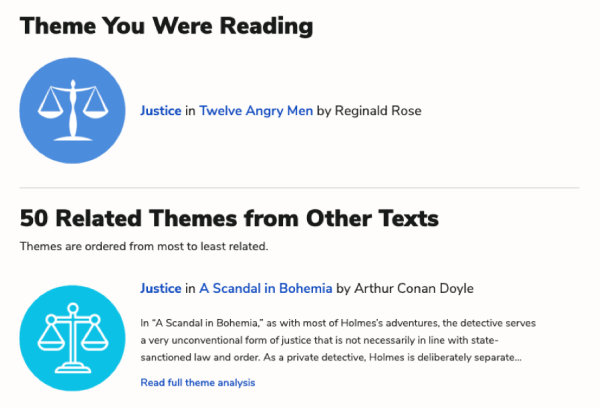
Related Themes
Comparing and contrasting texts? Find where any theme occurs across all of LitCharts in seconds.
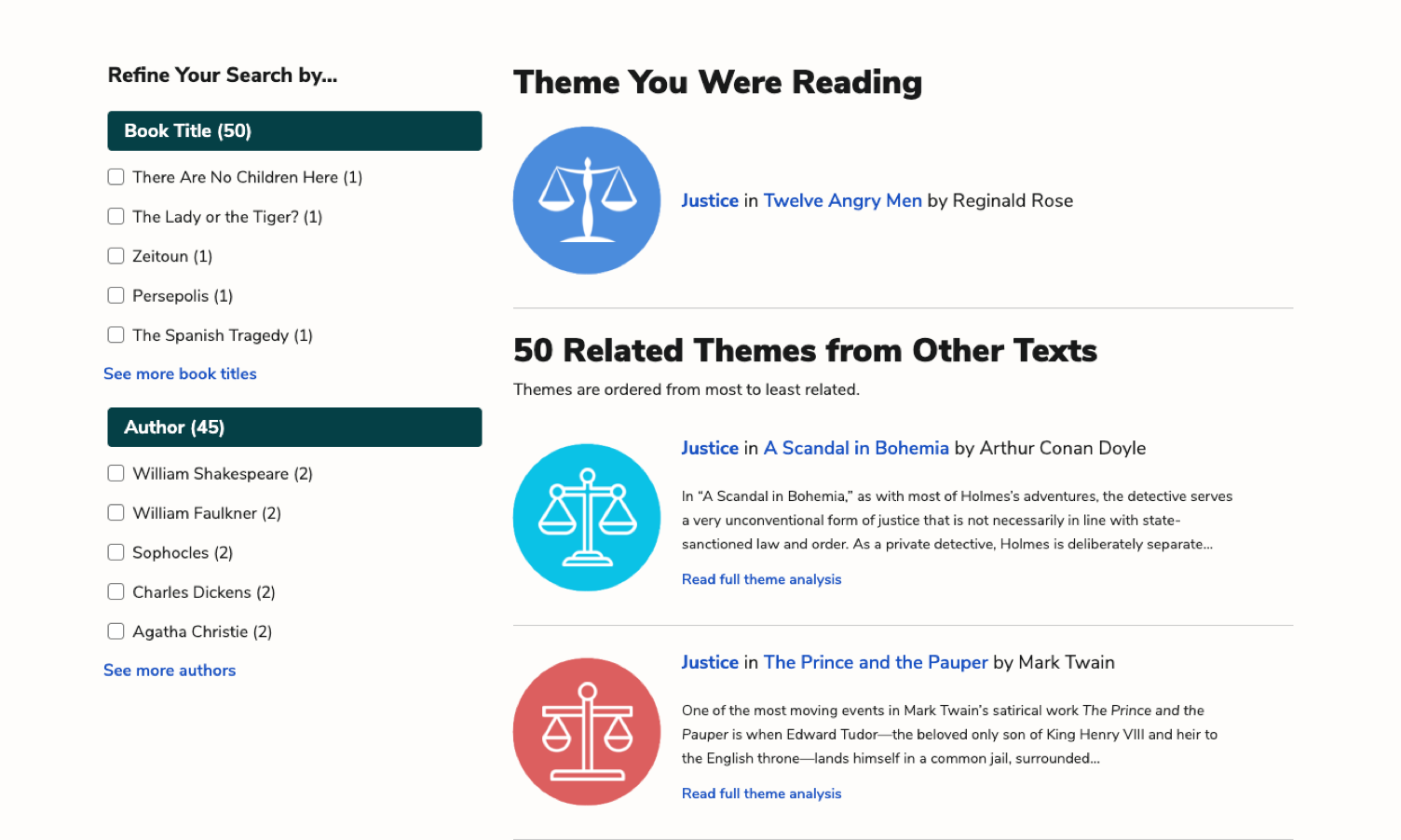


Poetry Guides
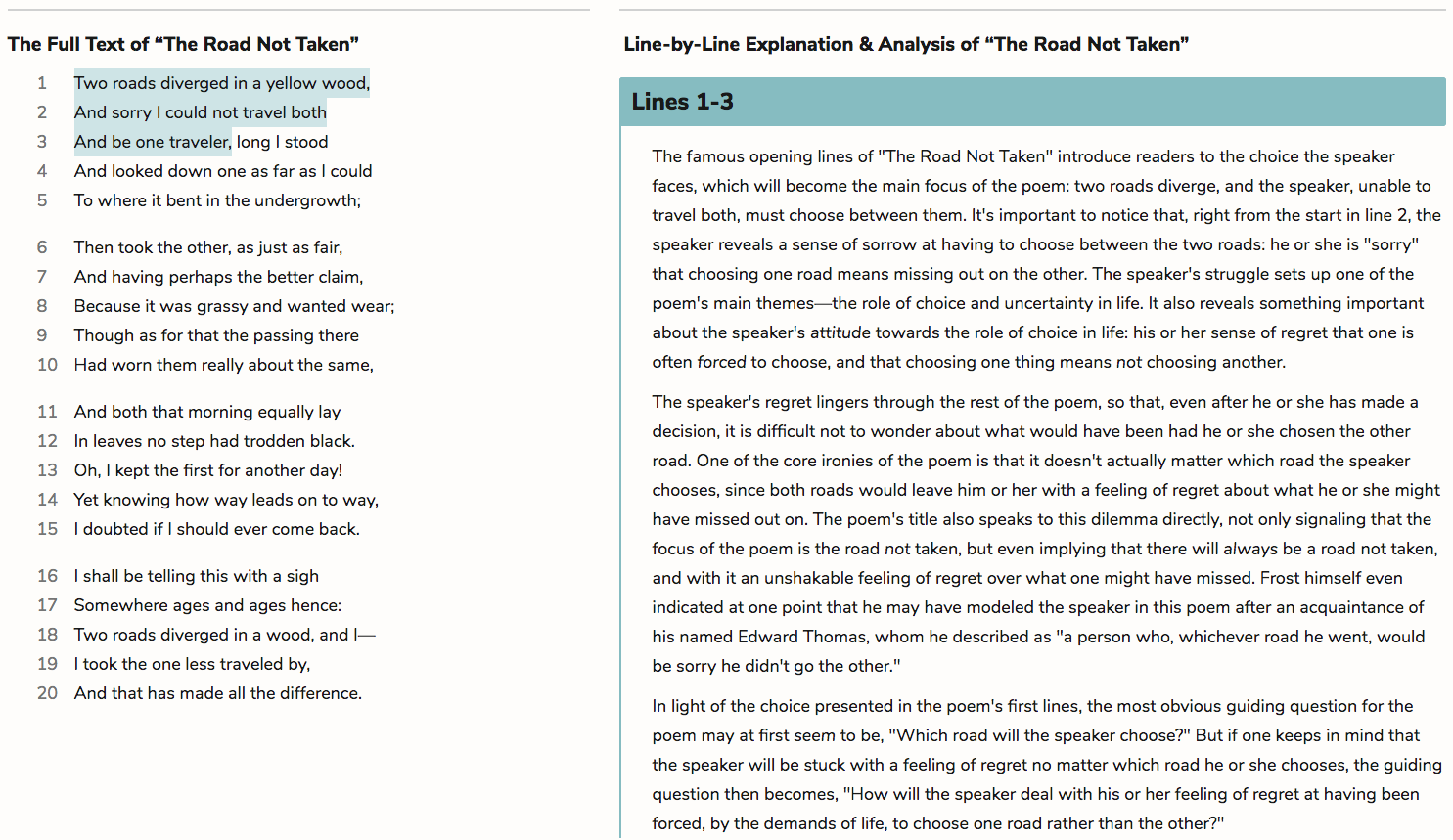
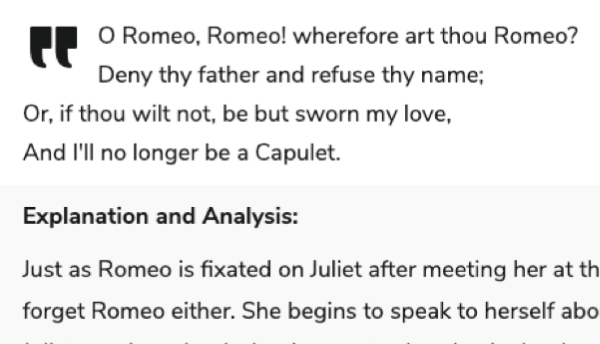
Line-by-line explanations and analysis of figurative language and poetic devices.
For every lyric poem we cover.
For every lyric poem we cover.