


|
Have questions?
Contact us
Already a member? Sign in
|
Get every literary device explanation for The Grapes of WrathPlus so much more...
Sign up for LitCharts A+Get instant access to every literary device explanation, plus so much more...
Imagery
Explanation and Analysis—Weedpatch Camp:
Steinbeck uses detailed imagery to describe the Weedpatch government camp where the Joad family seeks shelter during their journey to California. After speaking to a night watchmen, who informs Tom that there are no police offers present as the migrants themselves govern the camp in an autonomous and democratic fashion, Tom looks around the camp as he walks back to the family car:
Tom walked down the street between the rows of tents. His eyes grew used to the starlight. He saw that the rows were straight and that there was no litter about the tents. The ground of the street had been swept and sprinkled. From the tents came the snores of sleeping people. The whole camp buzzed and snorted. Tom walked slowly. He neared Number Four Sanitary Unit and he looked at it curiously, an unpainted building, low and rough. Under a roof, but open at the sides, the rows of wash trays.
Steinbeck describes the “rows of tents” illuminated by starlight. Tom is surprised to see that the “rows were straight” and “there was no litter about the tents.” The floor, he observes, has been “swept and sprinkled” in a clean and orderly manner. Steinbeck also invokes the sense of sound, noting the “snores of sleeping people” in their tents. Though the Weedpatch camp has limited resources and its bathrooms are “unpainted, low and rough,” Steinbeck’s imagery nevertheless emphasizes the quiet dignity and communal spirit of the camp. When left to their own devices, Steinbeck suggests, most people can get along with each other in a harmonious fashion, as reflected in the orderly and self-governed camp.
Monthly
Annual (Best Value)

$595USD/mo
Charged $71.40 USD every year





 Teacher
$795USD/mo
Charged $95.40 USD every year




Literature Guide PDFs
LitCharts PDFs for every book you'll read this year.
Instant PDF downloads of all 2240 LitCharts literature guides and of every new one we publish. Try a free sample literature guide.
"Would not have made it through AP Literature without the printable PDFs. They're like having in-class notes for every discussion!"




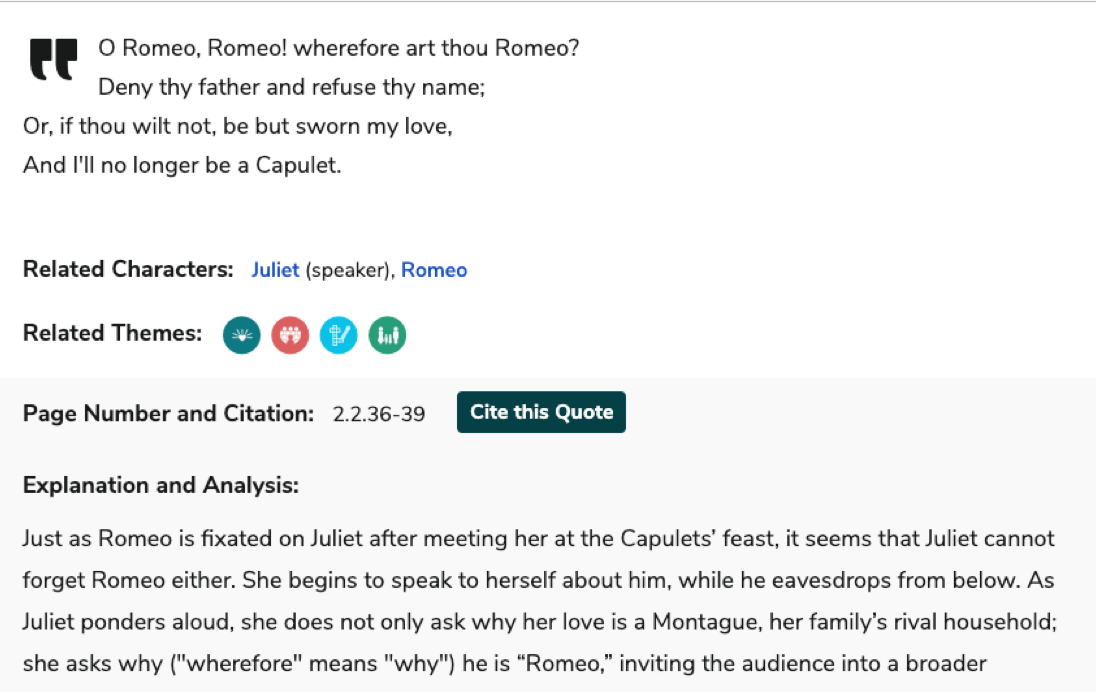
Quotes Explanations
Find the perfect quote. Understand it perfectly. Then rock the citation, too.
For all 49,945 quotes we cover.
For all 49,945 quotes we cover.



Teacher Editions
Close reading made easy for students.
Time saved for teachers.
For every book we cover.
Time saved for teachers.
For every book we cover.


Common Core-aligned


PDFs of modern translations of every one of Shakespeare's 37 plays, 154 sonnets, and 3 longer poems.

Literary Terms and Devices
Definitions and examples for every literary term and device you need to know.
Plus a quick-reference PDF with concise definitions of all 136 terms in one place.
Plus a quick-reference PDF with concise definitions of all 136 terms in one place.


Try a free sample literary term PDF.


Advanced Search
Refine any search. Find related themes, quotes, symbols, characters, and more.


Related Themes
Comparing and contrasting texts? Find where any theme occurs across all of LitCharts in seconds.



Poetry Guides
Line-by-line explanations and analysis of figurative language and poetic devices.
For every lyric poem we cover.
For every lyric poem we cover.
