


|
Have questions?
Contact us
Already a member? Sign in
|
Get every literary device explanation for Richard IIIPlus so much more...
Sign up for LitCharts A+Get instant access to every literary device explanation, plus so much more...
Imagery
Explanation and Analysis—Despair and Die:
Richard is visited by the ghosts of those he has wronged on the eve of the Battle of Bosworth Field. The Ghost of Henry VI gives a chilling prediction, using alliteration and tactile imagery to drive his point home:
When I was mortal my anointed body
By thee was punchèd full of deadly holes.
Think on the Tower and me. Despair, and die!
Harry the Sixth bids thee despair and die.
The phrase "punchèd full of deadly holes" presents the audience with visceral tactile sensations. The word "punchèd" evokes an aggressive, forceful feeling, creating a sense of violent intrusion and violation. This brings the brutality of the murder Richard ordered back to life, making it tangible to the audience. Furthermore, the description of "deadly holes" conjures a sense of extreme physical pain and suffering. By emphasizing the physical aspect of the act that killed him, the dead Henry VI makes the scene even more intense and harrowing than a ghost’s visit might otherwise be.
The line "Despair, and die!" as it appears here also makes significant use of alliteration. The repetition of the "d" sound emphasizes the relentlessness of the ghost's message, and adds to the somber, ominous tone of his words. This alliteration serves to highlight the inevitability of Richard's downfall. It's as if the harsh "d" sound is pounding into Richard, much like the "deadly holes" he inflicted on Henry VI. The repetition of the phrase "[d]espair, and die!” is also frightening, especially as the other ghosts then take it up. They do so a total of eight times, making “[d]espair, and die!” a haunting mantra that underscores Richard's isolation at the end of the play.
Monthly
Annual (Best Value)

$595USD/mo
Charged $71.40 USD every year





 Teacher
$795USD/mo
Charged $95.40 USD every year




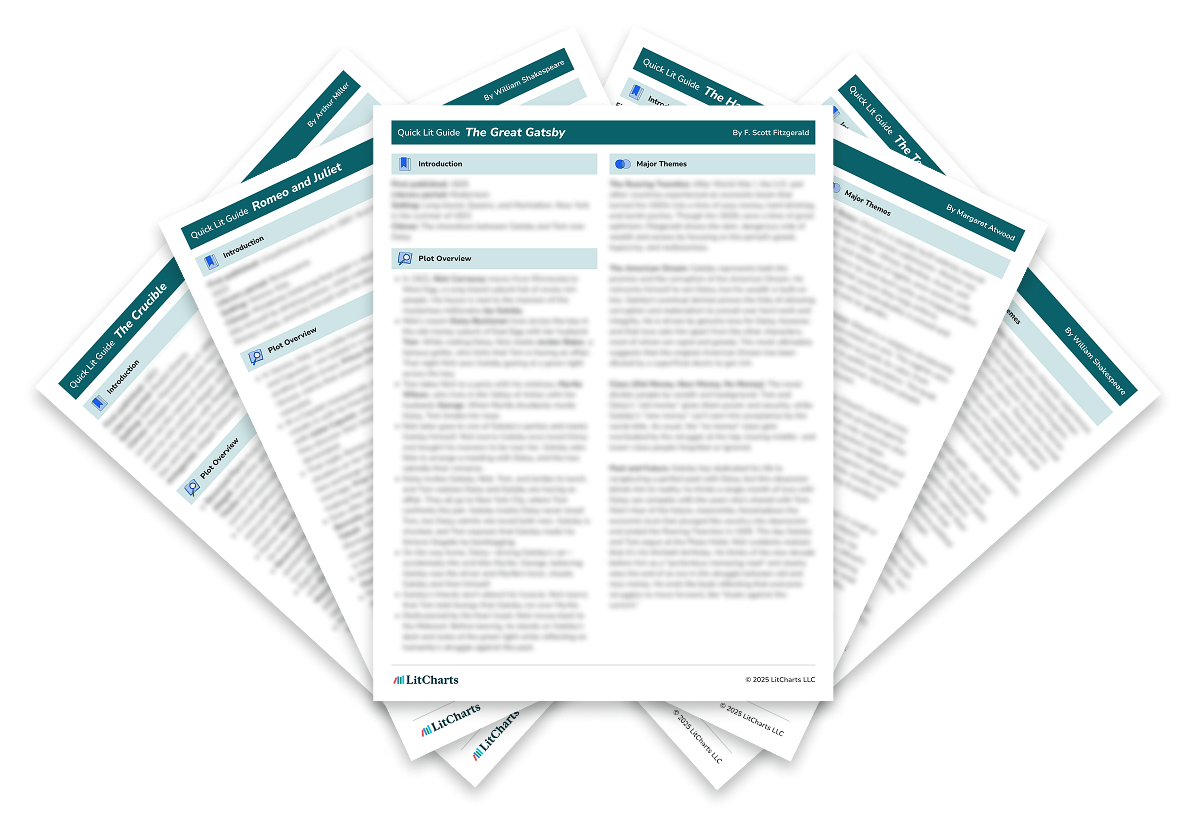
Literature Guide PDFs
LitCharts PDFs for every book you'll read this year.
Instant PDF downloads of all 2240 LitCharts literature guides and of every new one we publish. Try a free sample literature guide.
"Would not have made it through AP Literature without the printable PDFs. They're like having in-class notes for every discussion!"




Quotes Explanations
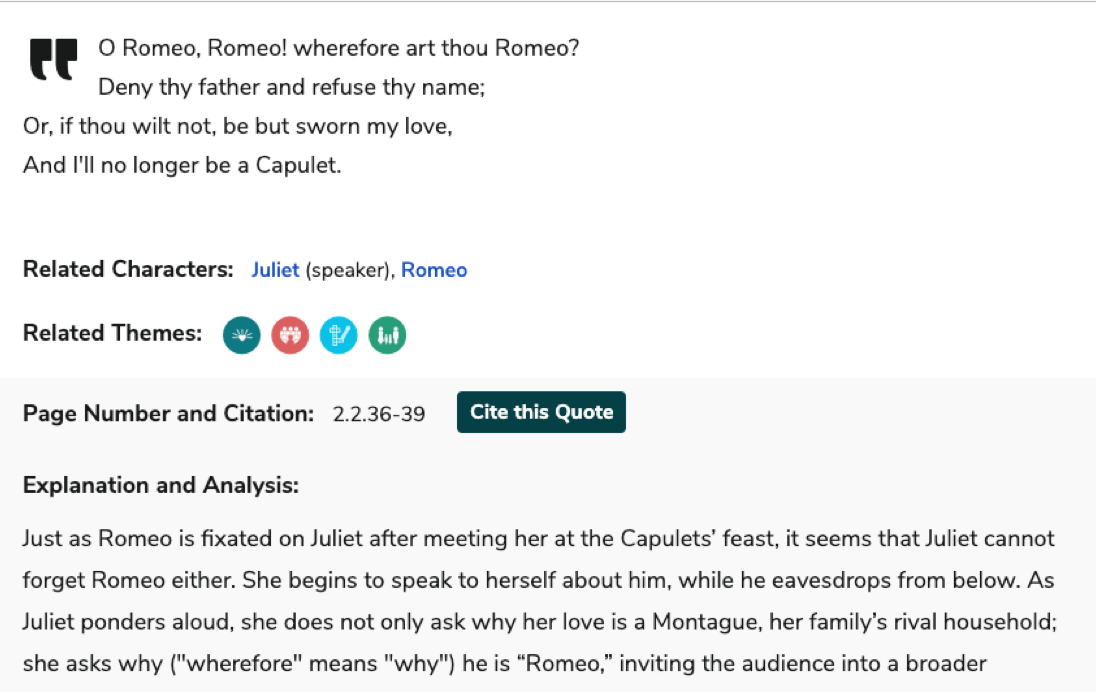
Find the perfect quote. Understand it perfectly. Then rock the citation, too.
For all 49,945 quotes we cover.
For all 49,945 quotes we cover.



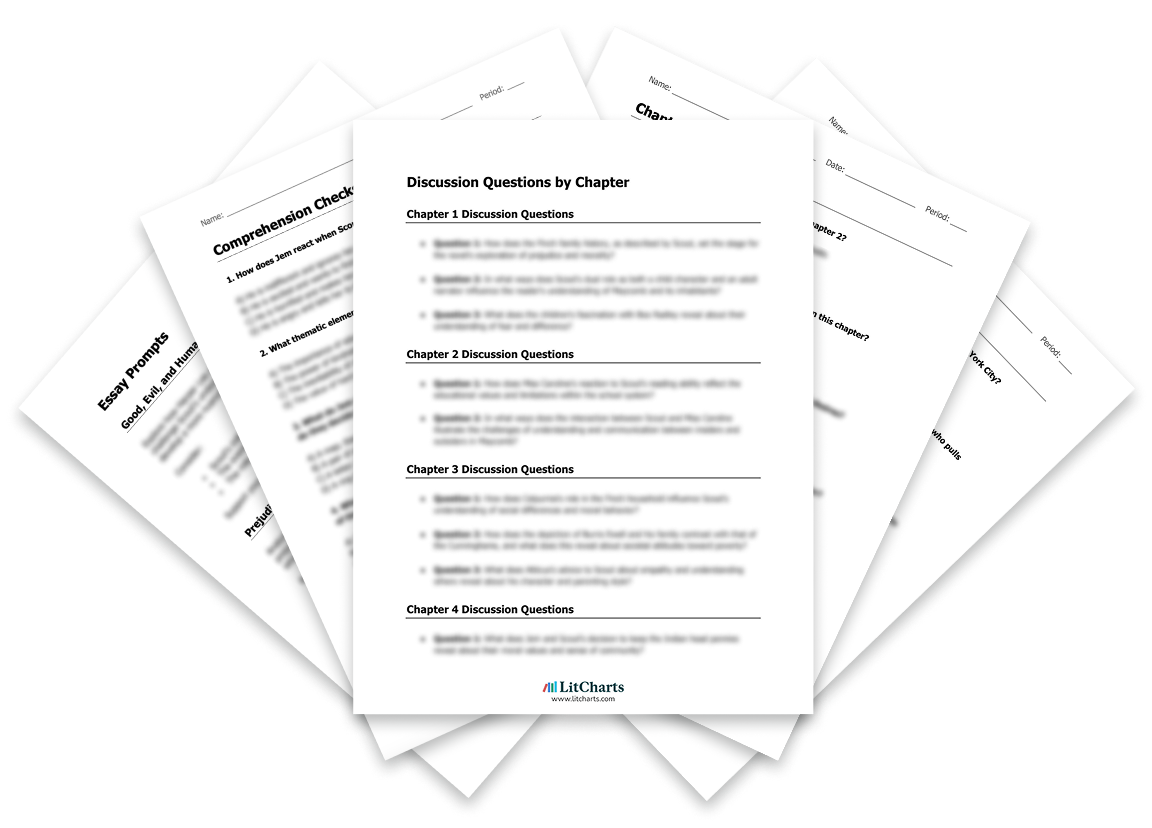
Teacher Editions
Close reading made easy for students.
Time saved for teachers.
For every book we cover.
Time saved for teachers.
For every book we cover.


Common Core-aligned


PDFs of modern translations of every one of Shakespeare's 37 plays, 154 sonnets, and 3 longer poems.

Literary Terms and Devices
Definitions and examples for every literary term and device you need to know.
Plus a quick-reference PDF with concise definitions of all 136 terms in one place.
Plus a quick-reference PDF with concise definitions of all 136 terms in one place.


Try a free sample literary term PDF.


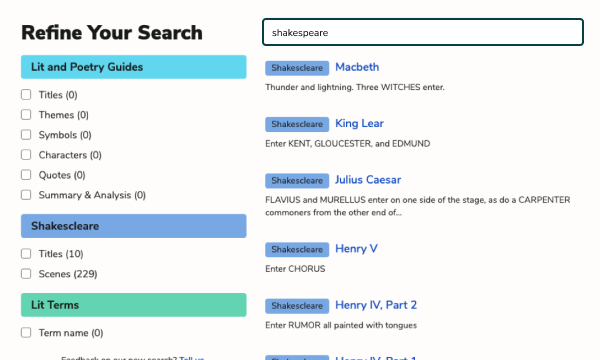
Advanced Search
Refine any search. Find related themes, quotes, symbols, characters, and more.


Related Themes
Comparing and contrasting texts? Find where any theme occurs across all of LitCharts in seconds.



Poetry Guides
Line-by-line explanations and analysis of figurative language and poetic devices.
For every lyric poem we cover.
For every lyric poem we cover.
