
|
Have questions?
Contact us
Already a member? Sign in
|
Get every literary device explanation for Flatland
Plus so much more...
Sign up for LitCharts A+
Get instant access to every literary device explanation, plus so much more...
Imagery
Explanation and Analysis—Art of Feeling:
In Flatland A Square explains the "art of feeling" as the primary way that lower-class and Female shapes recognize each other. Through this, Abbott satirizes the snobbery of the educational systems of his time. A Square also incorporates tactile imagery to convey his disdain for this method:
Feeling is, among our Women and lower classes—about our upper classes I shall speak presently—the principal test of recognition, at all events between strangers, and when the question is, not as to the individual, but as to the class [...] though we cannot see angles, we can infer them, and this with great precision. Our sense of touch, stimulated by necessity, and developed by long training, enables us to distinguish angles far more accurately than your sense of sight, when unaided by a rule or measure of angles.
The tactile imagery A Square uses to describe the "art of feeling" explains how touch is used as one way to distinguish the "real" shapes of other polygons in Flatland. Although A Square is dismissive of “Feeling” as primitive and uneducated, he also makes it clear that most shapes can instinctively do it very well. Interestingly, this is also a moment where the author deliberately alienates the reader from the narrator. It’s difficult enough to imagine “seeing” things in two dimensions, but here A Square tells the reader that their three-dimensional senses wouldn’t be of much use either. Although it seems like he is explaining an unfamiliar process so that they can understand, he is actually telling his audience in “the World of Space” that they couldn’t possibly understand it.
By stating that women and the lower classes primarily rely on feeling for recognition, A Square is implying that women and the “lower classes” are unable to think or “infer” in the same way as other shapes. They can only “Feel.” The narrator later goes on to explain the rarefied processes more socially elevated Shapes are taught to use to “see” each other. “Feeling” is regarded as being beneath them once they have learned these. This division of sensory perception along class and gender lines satirizes the accepted behaviors of the time, where intellectual capabilities and social status were often unjustly correlated by the ruling classes. The wealthy were often considered to be smarter and more educated regardless of the fact that the poor had far less access to education. It is also made clear that A Square thinks that “Females” and the “lower classes” are in fact universally only capable of “Feeling,” regardless of their individual characters or strengths. Thinking is arbitrarily reserved for Shapes with more sides, and "feeling" is for "Females" and Triangles.
Monthly
Annual (Best Value)

$595USD/mo
Charged $71.40 USD every year
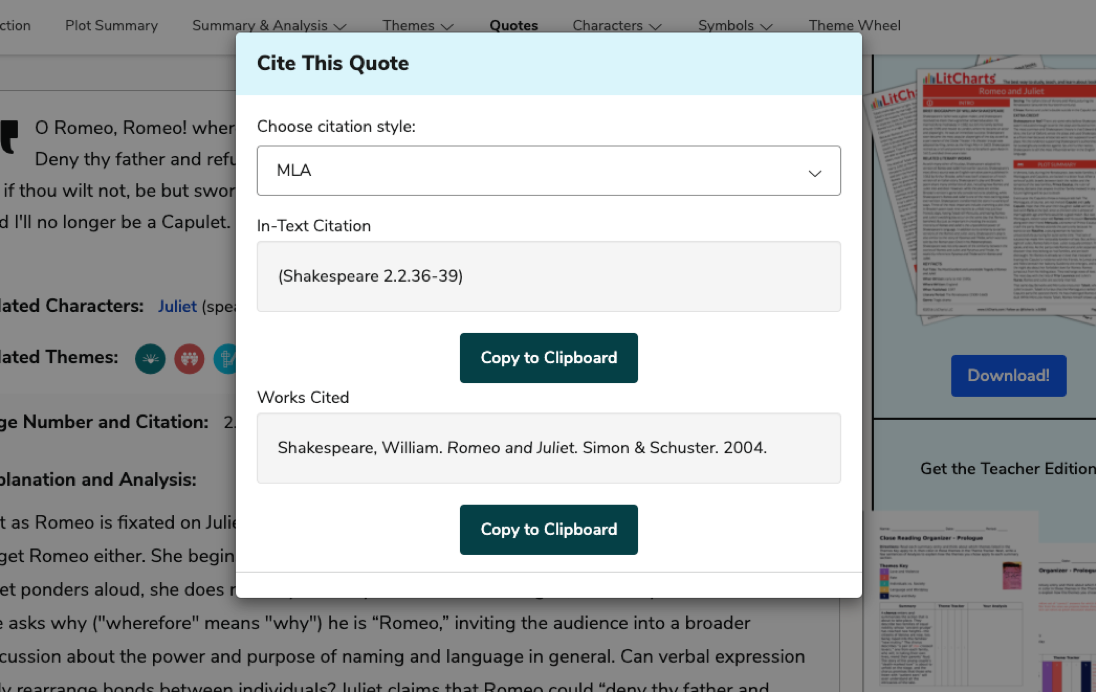
Quote explanations & citation info

Every PDF download
Printable PDFs for every guide
"Would not have made it through without the printable PDFs. They're like having in-class notes for every discussion!"
– LitCharts A⁺ user
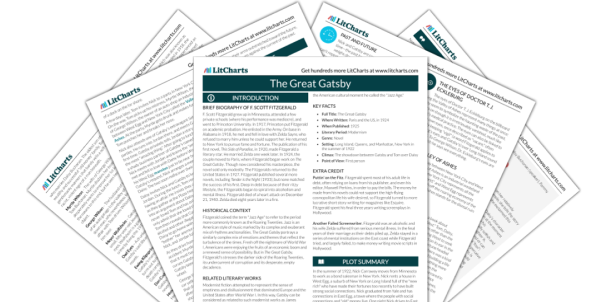
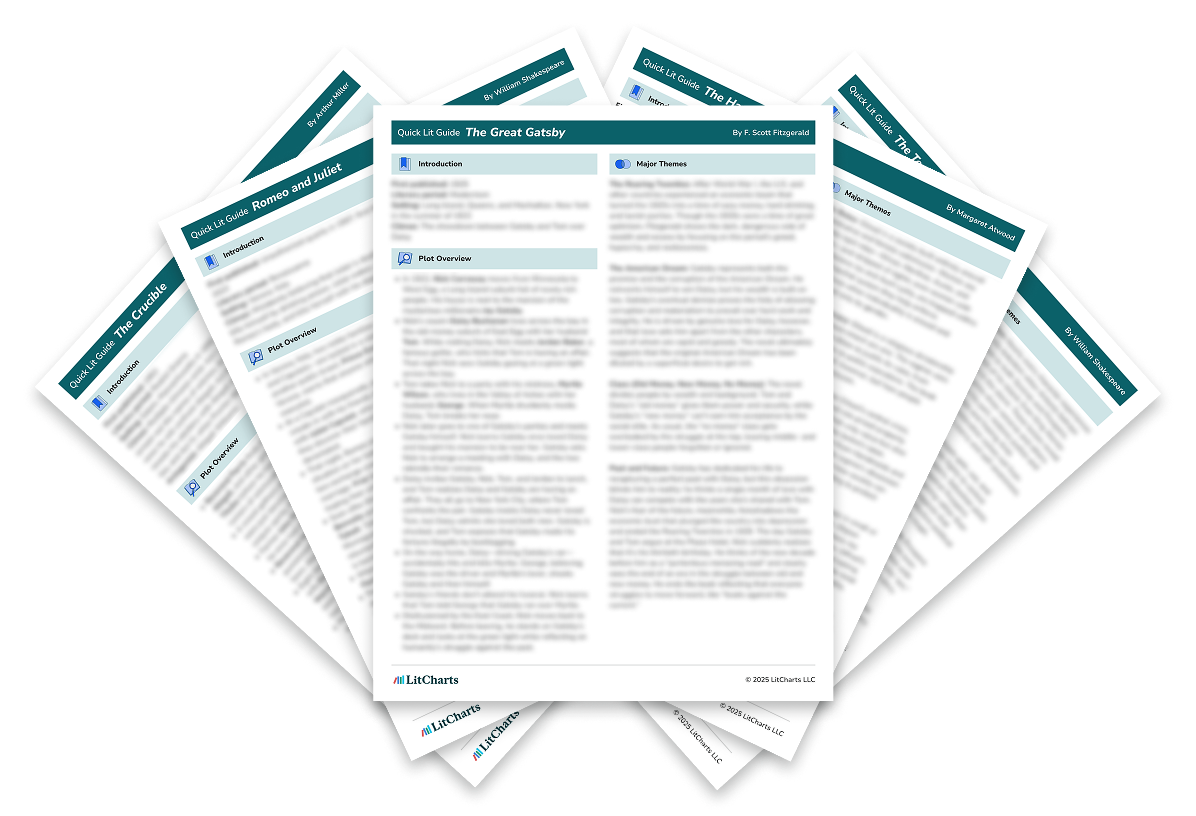
One-page Quick Lit Guides
Understand key basics—fast
Printable, one-page guides that cover the plot points, themes, and ideas you need to know.
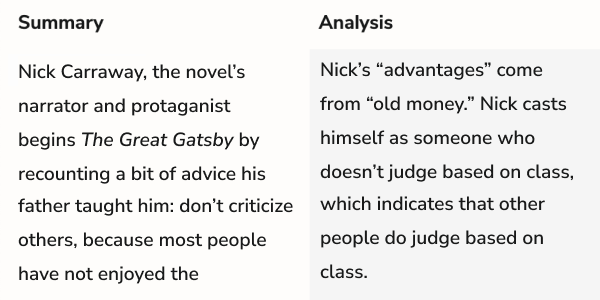
Detailed chapter analysis
Get what happens and what it means
Targeted analysis next to the summary ensures you’ll understand more than just the plot.
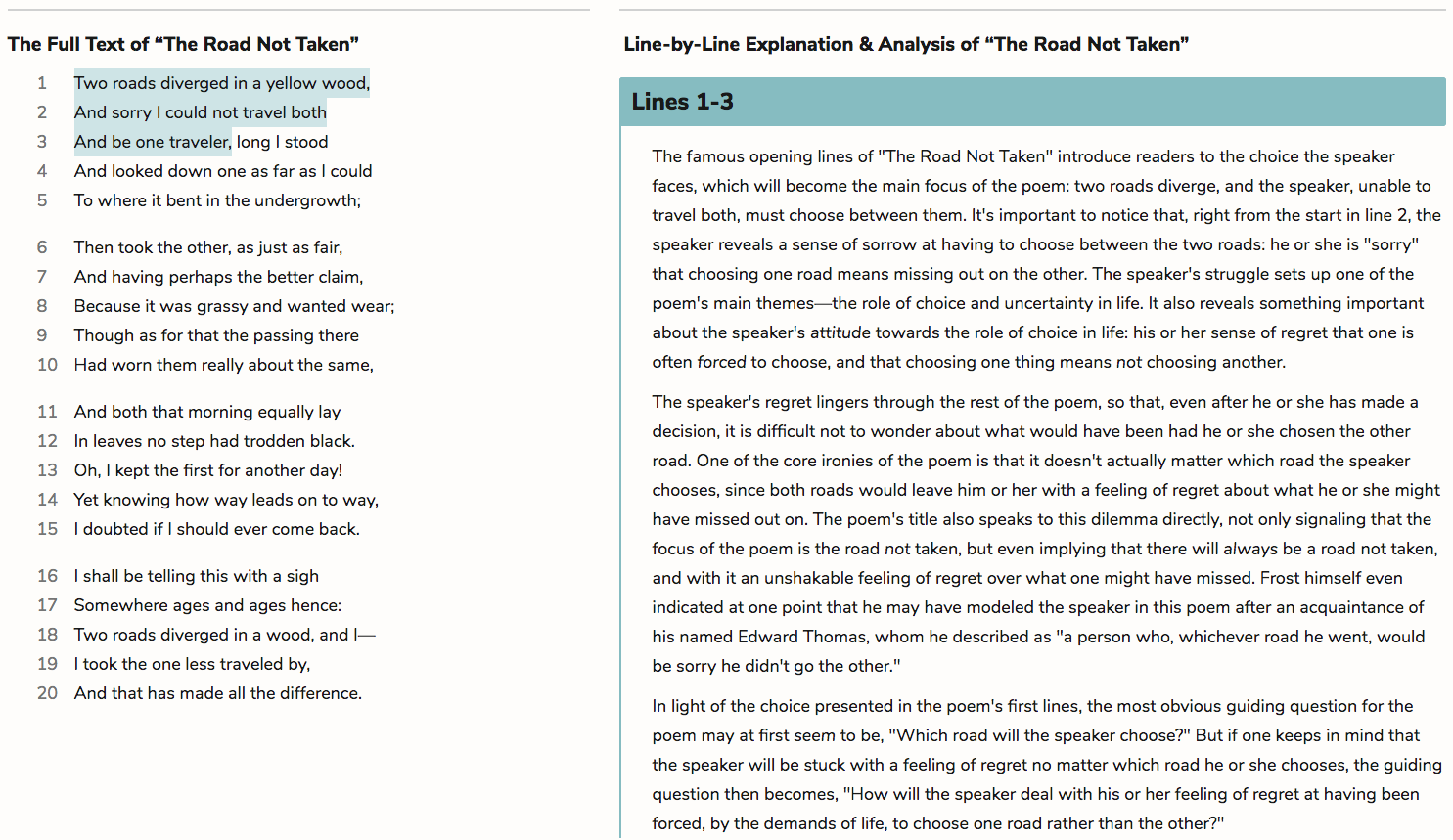
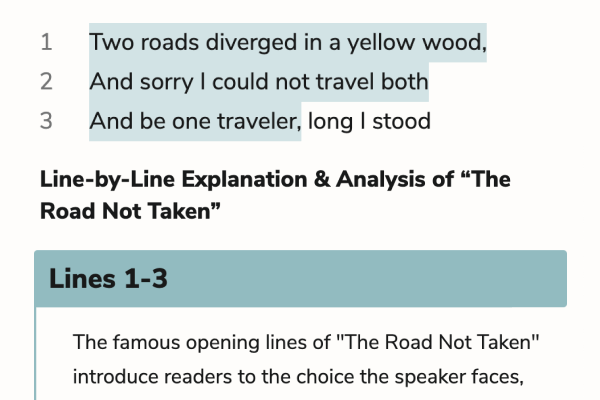
Line-by-line poetry analysis
Get the meaning in every line
Never feel lost reading a poem again with clear and in-depth analysis of each and every line.
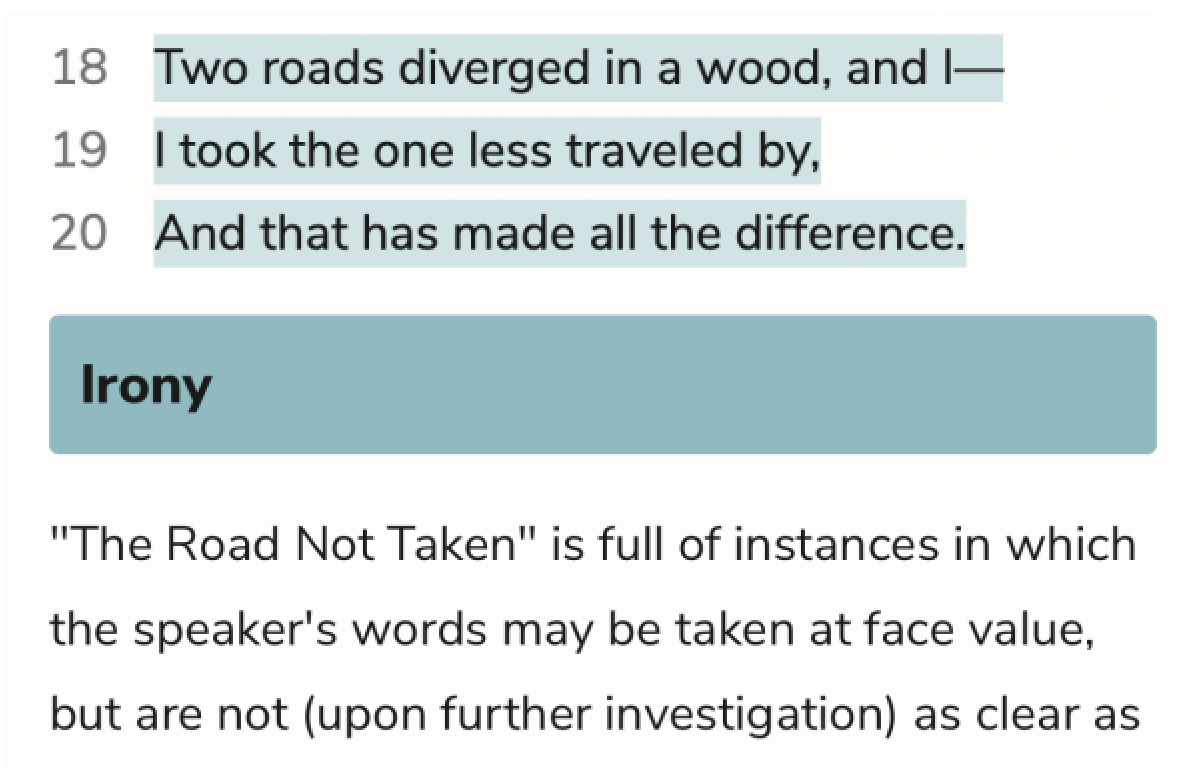
Literary & poetic device analysis
Decode the author’s language
Quickly find and understand the key devices in whatever you’re reading.
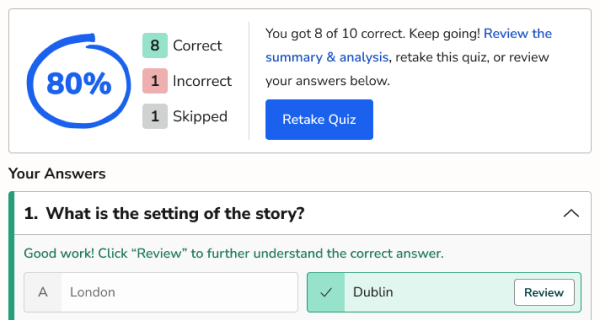
Unlimited quizzes
Unlimited quizzes and feedback
Boost your learning with quizzes that pinpoint and address knowledge gaps.
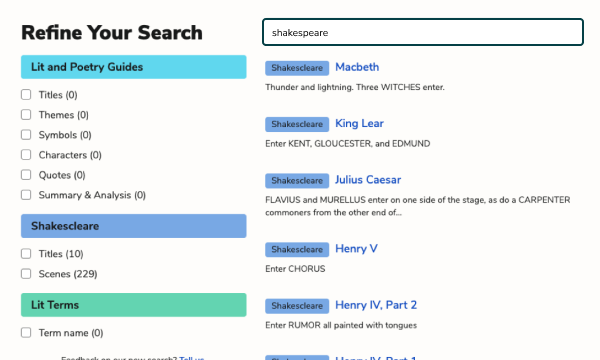
Advanced search
Find exactly what you need
Refine your search using advanced filters like genre, time period, literary movement, author context, grade level, and more.
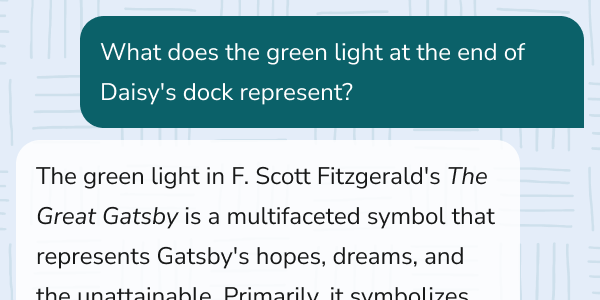
Ask LitCharts AI
Ask LitCharts AI
Instant answers to all your lit questions. Powered by LitCharts content and AI.
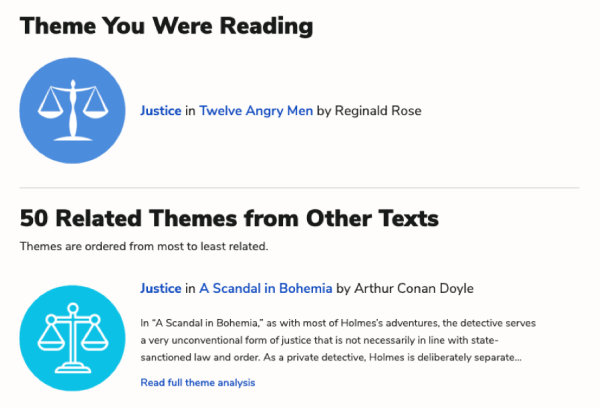
Theme comparisons across books
Compare and contrast
Identify similar themes across books, making comparisons fast and simple.
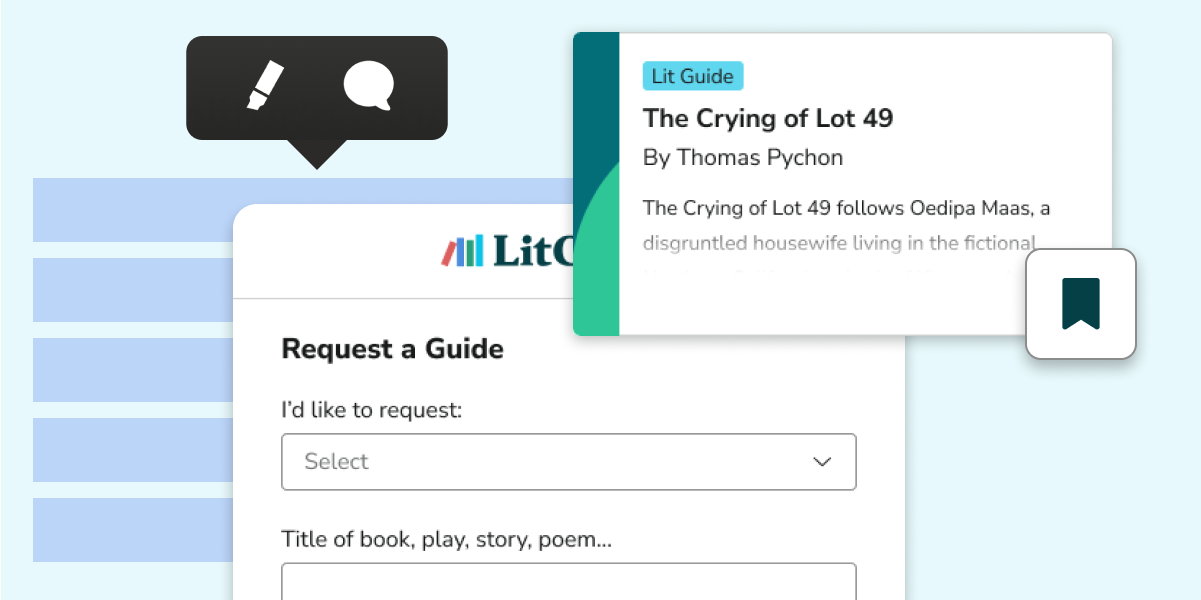
Highlight, take notes, & save guides
Make LitCharts your own
Add highlights or notes, save guides for easy access later, and request new titles.
 Teacher
$795USD/mo
Charged $95.40 USD every year
Quote explanations & citation info
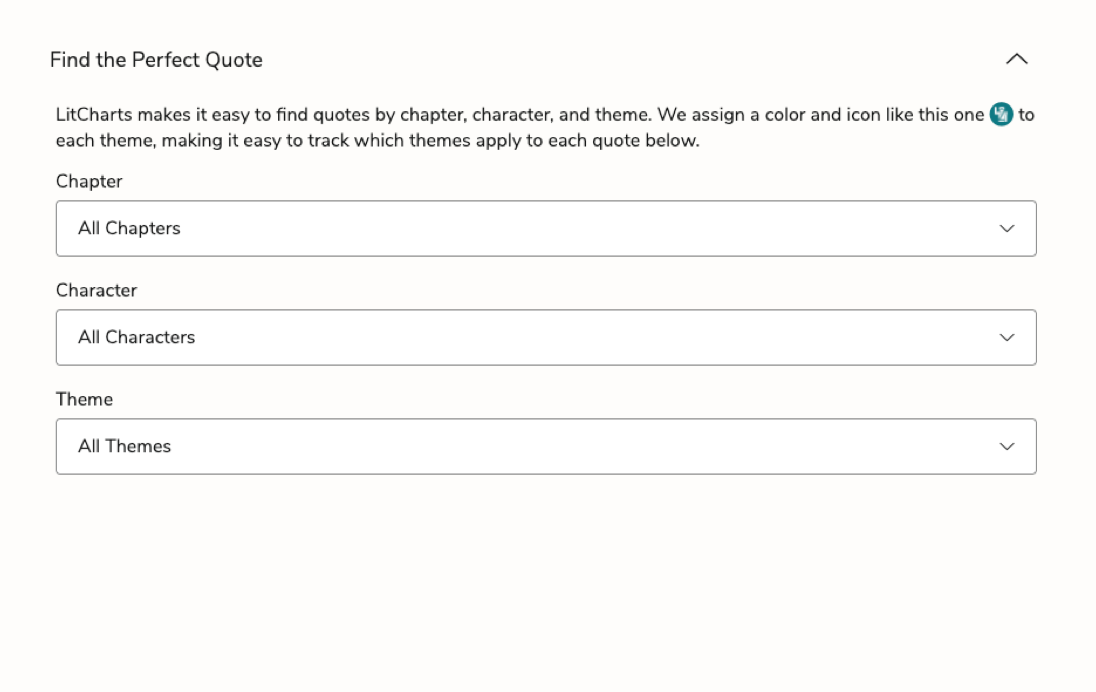
Find the perfect quote
Then understand it perfectly. And get the citation, too. For all 35,000+ quotes we cover.
Every PDF download
Printable PDFs for every guide
"Would not have made it through without the printable PDFs. They're like having in-class notes for every discussion!"
– LitCharts A⁺ user
One-page Quick Lit Guides
Understand key basics—fast
Printable, one-page guides that cover the plot points, themes, and ideas you need to know.
Detailed chapter analysis
Get what happens and what it means
Targeted analysis next to the summary ensures you’ll understand more than just the plot.
Line-by-line poetry analysis
Get the meaning in every line
Never feel lost reading a poem again with clear and in-depth analysis of each and every line.
Literary & poetic device analysis
Decode the author’s language
Quickly find and understand the key devices in whatever you’re reading.
Unlimited quizzes
Unlimited quizzes and feedback
Boost your learning with quizzes that pinpoint and address knowledge gaps.
Advanced search
Find exactly what you need
Refine your search using advanced filters like genre, time period, literary movement, author context, grade level, and more.
Ask LitCharts AI
Ask LitCharts AI
Instant answers to all your lit questions. Powered by LitCharts content and AI.
Theme comparisons across books
Compare and contrast
Identify similar themes across books, making comparisons fast and simple.
Highlight, take notes, & save guides
Make LitCharts your own
Add highlights or notes, save guides for easy access later, and request new titles.
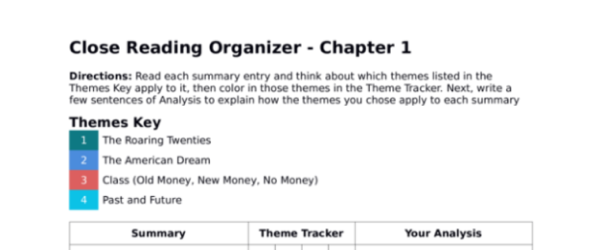
Teacher editions
Save time with in-depth organizers
"THE best teaching resource I have ever used. My students love the handouts."
– LitCharts A⁺ User
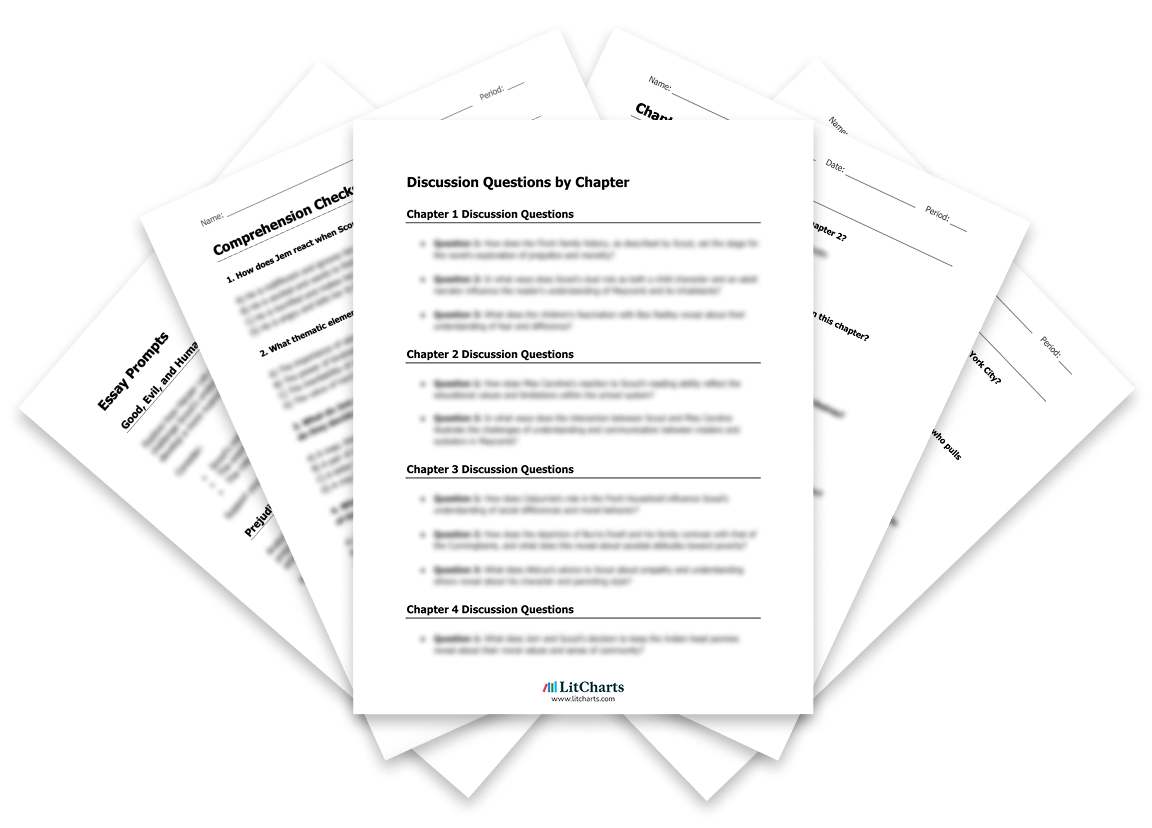
Printable classroom resources
Cut prep time in half
Essay prompts, discussion questions, and comprehension checks—easy to print and ready to use in class.
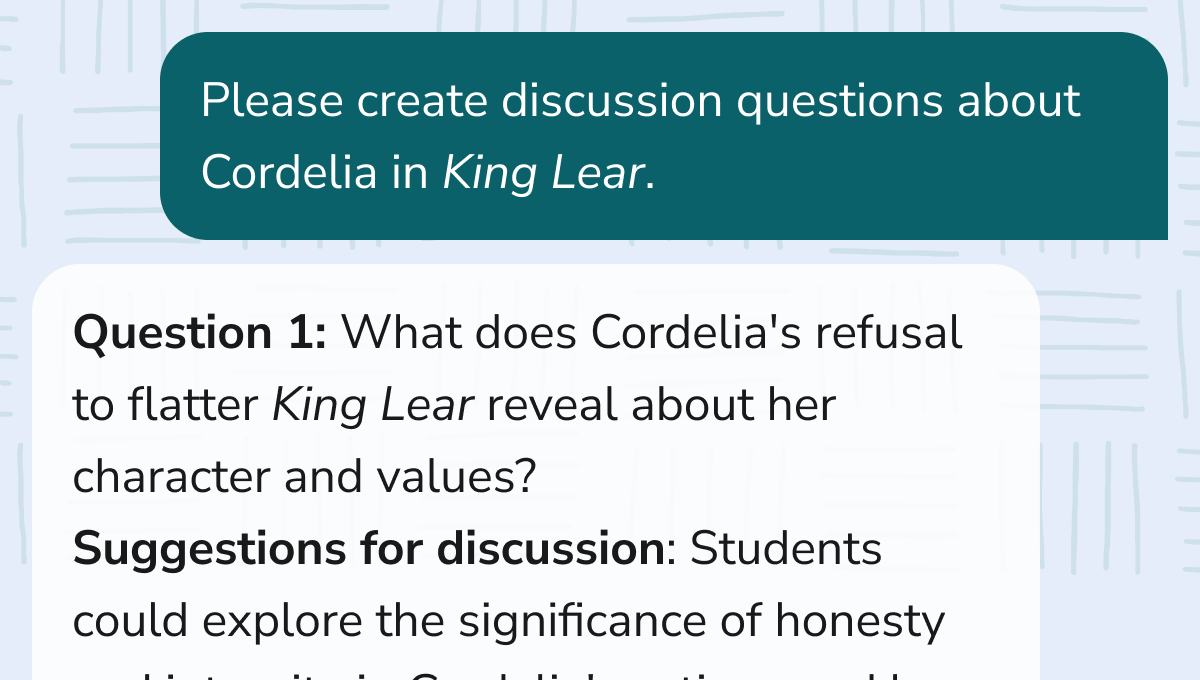
Discussion question generator
Discussion question generator
Instantly create discussion questions that get people talking, through the power of LitCharts analysis and AI.
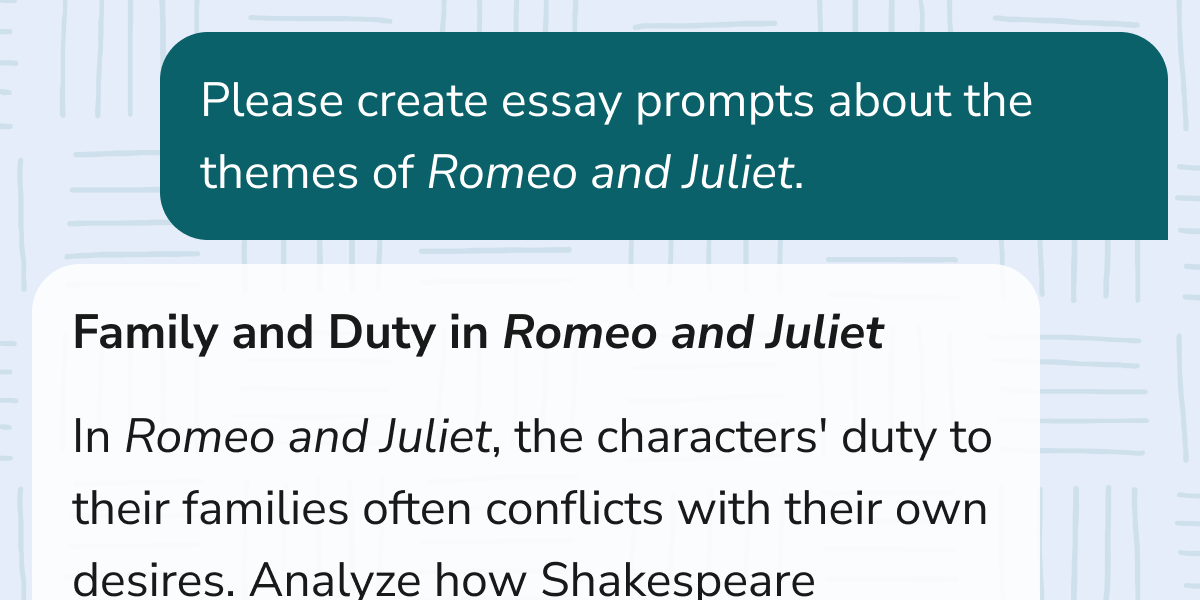
Essay prompt generator
Essay prompt generator
Quickly create thought-provoking essay prompts that will get your students writing, powered by LitCharts analysis and AI.
Quiz question generator
Quiz question generator
Effortlessly generate targeted quiz questions, powered by the world’s best literary analysis and AI.


Literature Guide PDFs
LitCharts PDFs for every book you'll read this year.
Instant PDF downloads of all 2256 LitCharts literature guides and of every new one we publish. Try a free sample literature guide.
"Would not have made it through AP Literature without the printable PDFs. They're like having in-class notes for every discussion!"



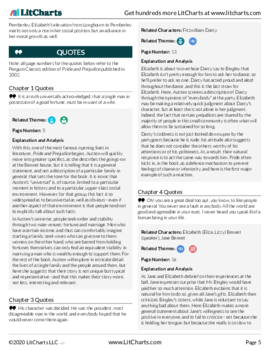


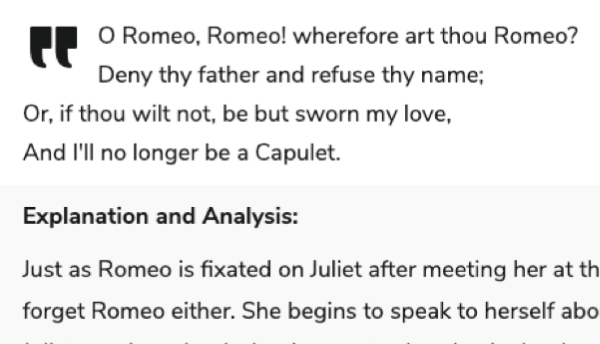
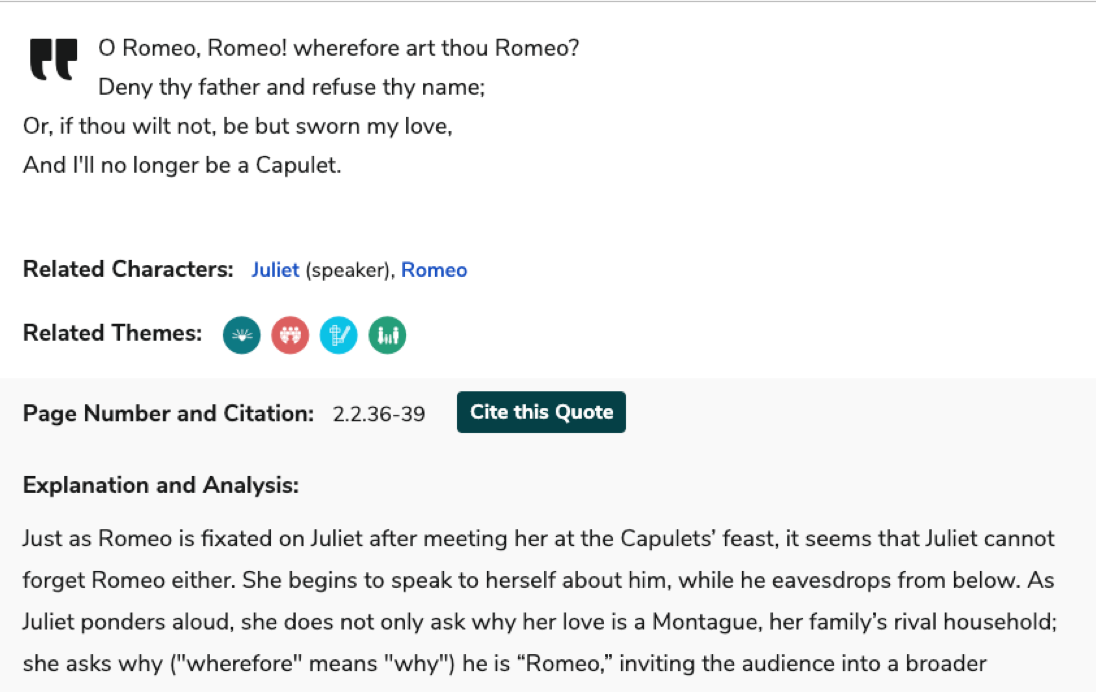
Quotes Explanations
Find the perfect quote. Understand it perfectly. Then rock the citation, too.
For all 50,308 quotes we cover.
For all 50,308 quotes we cover.


Teacher Editions
Close reading made easy for students.
Time saved for teachers.
For every book we cover.
Time saved for teachers.
For every book we cover.
Teacher Edition Contents

|
Close Reading Organizers |

|
Character Analysis Organizers |

|
Symbol Analysis Organizers |

|
Theme Analysis Organizers |

|
Quote Analysis Organizers |
Common Core-aligned
""
Try a free and complete sample Teacher Edition.


PDFs of modern translations of every one of Shakespeare's 37 plays, 154 sonnets, and 3 longer poems.
Every translation available to download as a PDF.
Try a free sample Shakespeare translation.
"Every teacher of literature should use these translations. They completely demystify Shakespeare. Students love them!"

Literary Terms and Devices
Definitions and examples for every literary term and device you need to know.
Plus a quick-reference PDF with concise definitions of all 136 terms in one place.
Plus a quick-reference PDF with concise definitions of all 136 terms in one place.
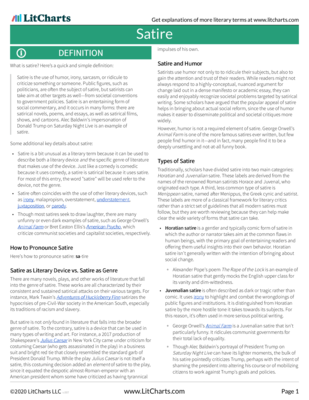
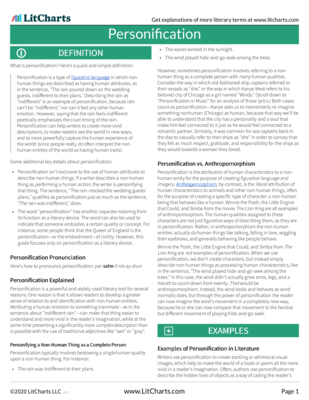
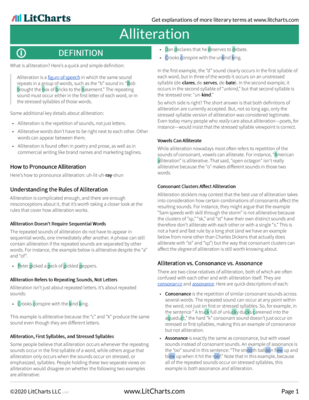
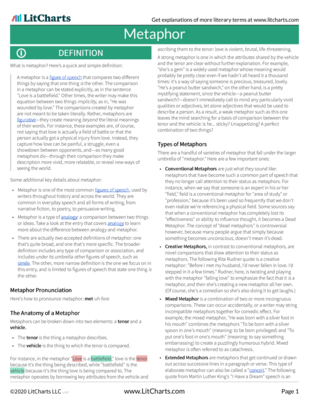
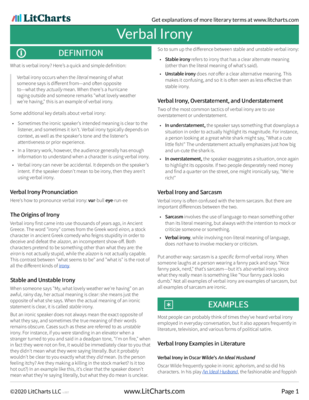
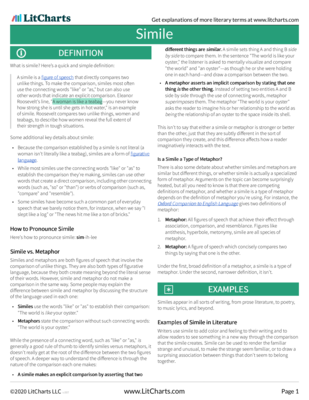
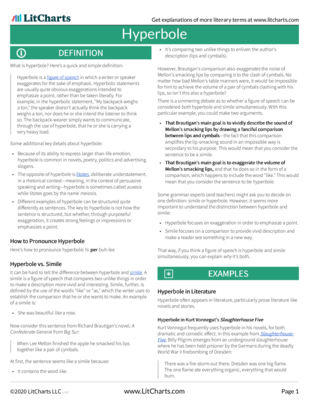
Try a free sample literary term PDF.


Advanced Search
Refine any search. Find related themes, quotes, symbols, characters, and more.
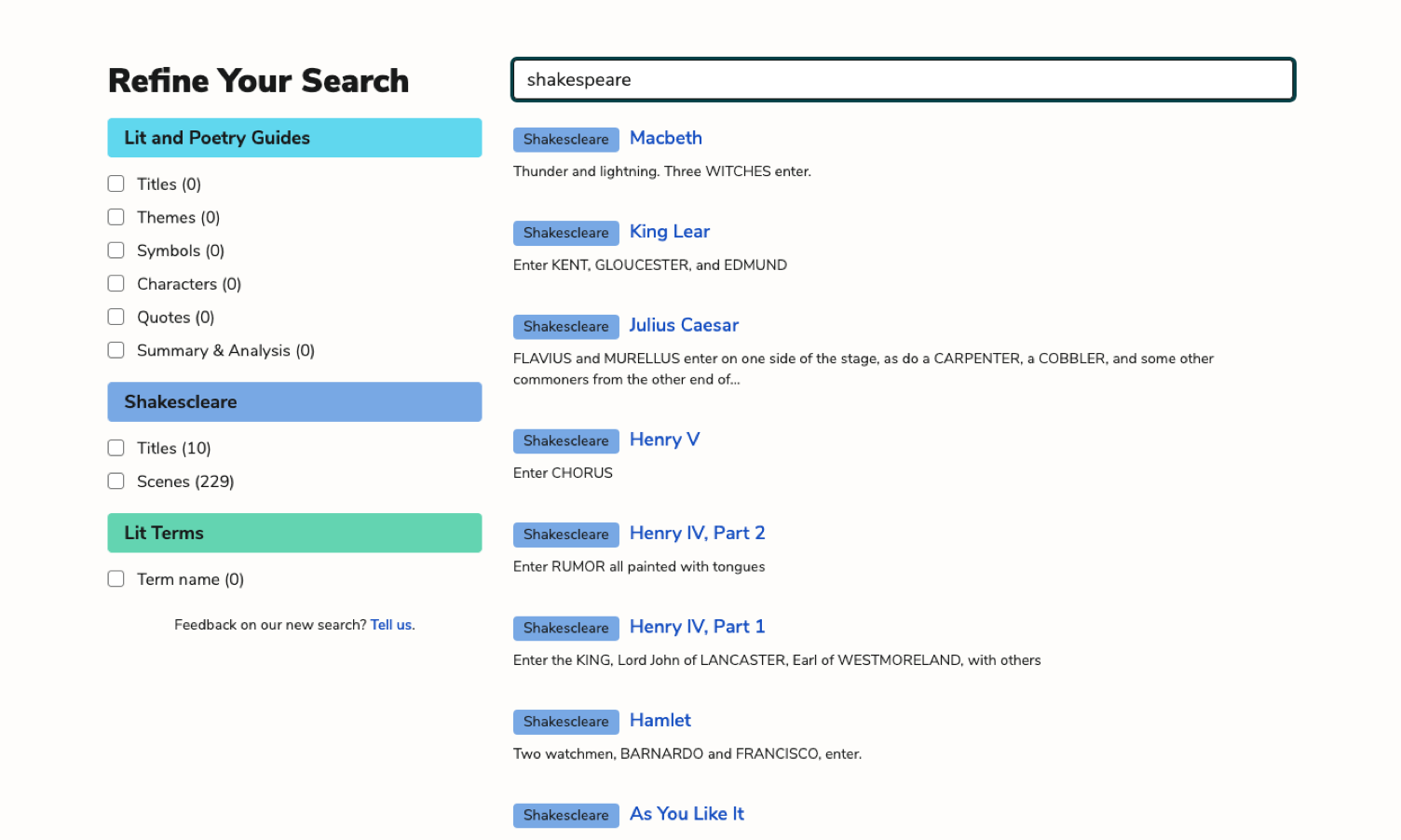
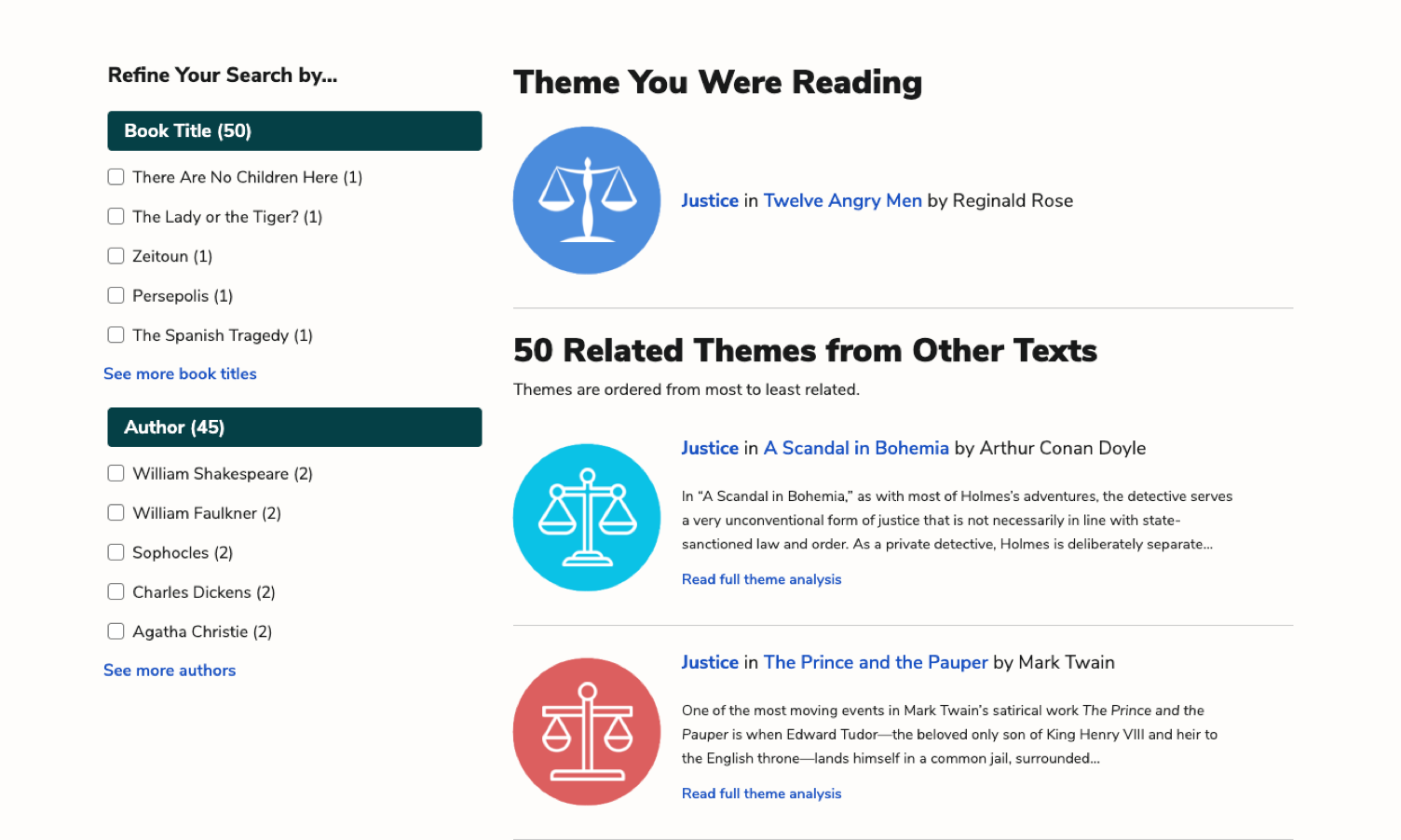
Related Themes
Comparing and contrasting texts? Find where any theme occurs across all of LitCharts in seconds.


Poetry Guides
Line-by-line explanations and analysis of figurative language and poetic devices.
For every lyric poem we cover.
For every lyric poem we cover.