
The LitCharts.com logo. Have questions? Contact us
Already a member? Sign in
Sign in
Get every literary device explanation for The Yellow WallpaperPlus so much more...
Sign up for LitCharts A+Get instant access to every literary device explanation, plus so much more...
Irony
Explanation and Analysis—He Loves Me So:

“The Yellow Wallpaper” uses dramatic irony to highlight Jane’s fragile mental state and helplessness. After a few weeks in isolation, Jane misses the comforts of her old home, and in her second diary entry she laments being forced to live in an unwelcoming environment:

The wall-paper, as I said before, is torn off in spots, and it sticketh closer than a brother—they must have had perseverance as well as hatred. Then the floor is scratched and gouged and splintered, the plaster itself is dug out here and there, and this great heavy bed which is all we found in the room, looks as if it had been through the wars.

Jane maintains that the room in which she’s recovering from postpartum depression used to be a nursery. Her diary entries, however, reveal that it likely housed a mentally ill person in the past. Jane’s description of the room creates dramatic irony by allowing the reader to pick up on things she misses. The “scratched and gouged and splintered” floor and “dug out” plaster seem to indicate that whoever stayed here before Jane was kept here against their will. Children, or even several children, probably couldn’t have caused the level of damage she reports. The reader can thus infer that the room previously housed another mentally ill person who tried to claw their way out of the room. This implication adds a sinister air to the story and hints that Jane is being treated more like a prisoner than a patient, even if she doesn’t verbalize this idea.

Jane and her husband, John’s, relationship also creates dramatic irony. Jane holds her husband in high esteem and often praises him, as in this example in the fifth entry:

It is so hard to talk to John about my case, because he is so wise, and because he loves me so.

Though John does seem to love his wife, Jane’s claim that he’s “so wise” is ironic because the reader can clearly see that John’s treatment plan for Jane—confining her to a room and denying her social interaction and intellectual pursuits—is worsening rather than healing her depression. Because John is a physician, both he and Jane believe that he must know best, even when his prescribed treatment is doing more harm than good. In this sense, the reader has a clearer understanding of Jane’s mental state than either John or Jane herself do.

Finally, when Jane begins to spiral into a mental breakdown, her seventh diary entry offers yet another instance of dramatic irony:

Life is very much more exciting now than it used to be. You see I have something more to expect, to look forward to, to watch. I really do eat better, and am more quiet than I was. John is so pleased to see me improve!

Again, John seems to think his treatment is working, but the reader knows that he is mistaken because Jane has, in fact, lost her grip on reality. Jane’s diary gives the reader access to her inner thoughts, which she does not share with anyone else—but Jane also doesn’t seem to recognize the signs of delusion in her own words. Prior to this passage, Jane revealed in her diary that she’s begun to see a mysterious figure—a woman—moving behind the wallpaper in her room. The reader is meant to interpret this as a hallucination, a sign that Jane isn’t, in fact, improving, even if John and she herself believe that she is. Together, these instances of dramatic irony emphasize how the characters fail to understand the true severity of Jane’s mental illness.

Monthly
Annual (Best Value)
A+ logo.
$595USD/mo
Charged $71.40 USD every year
  • Quote explanations & citation info
    Arrow Icon

    Find the perfect quote

    Then understand it perfectly. And get the citation, too. For all 35,000+ quotes we cover.

    Quote explanations & citation info
  • Every PDF download
    Arrow Icon

    Printable PDFs for every guide

    "Would not have made it through without the printable PDFs. They're like having in-class notes for every discussion!"

    – LitCharts A⁺ user

    Every PDF download
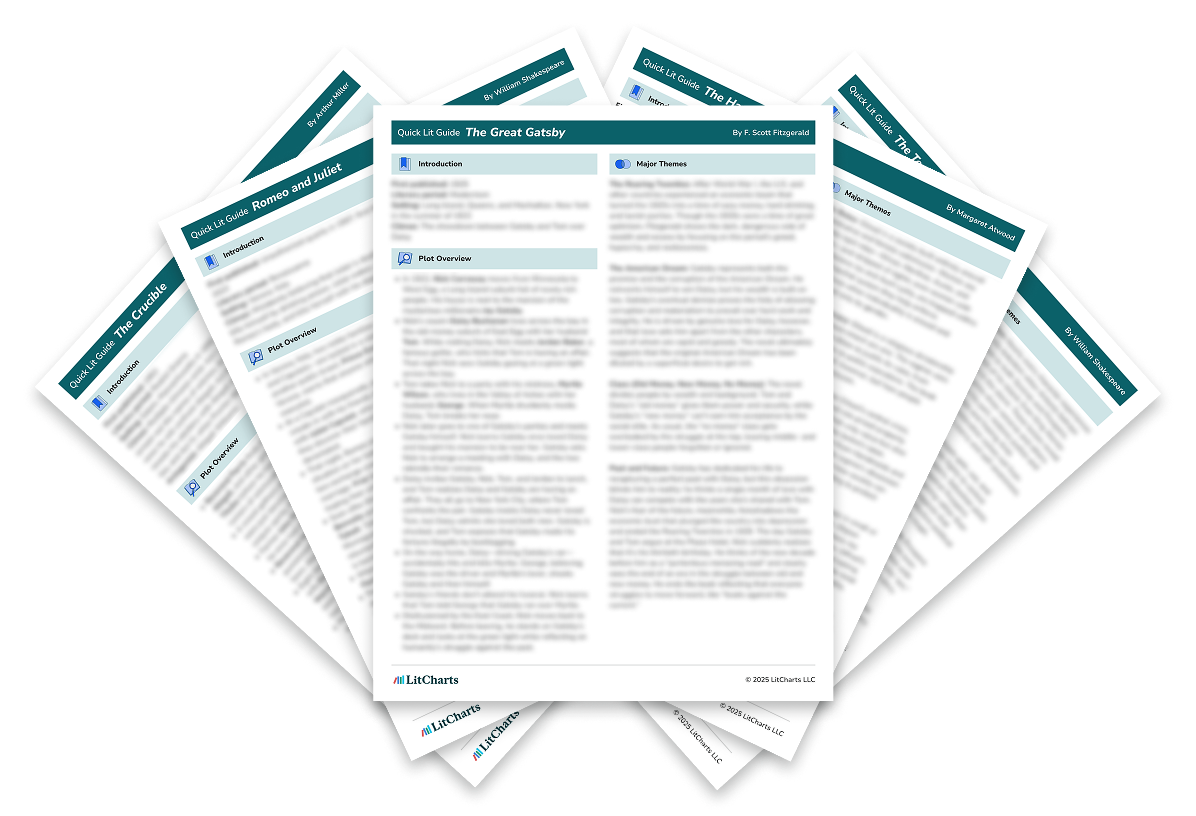
  • One-page Quick Lit Guides
    Arrow Icon

    Understand key basics—fast

    Printable, one-page guides that cover the plot points, themes, and ideas you need to know.

    One-page Quick Lit Guides
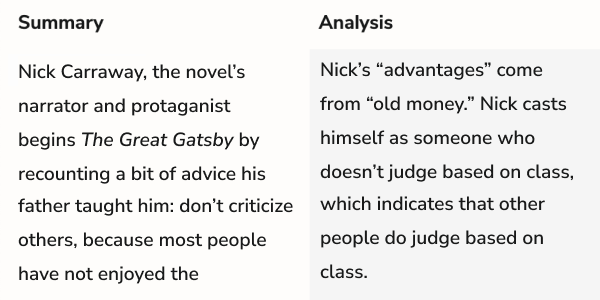
  • Detailed chapter analysis
    Arrow Icon

    Get what happens and what it means

    Targeted analysis next to the summary ensures you’ll understand more than just the plot.

    Detailed chapter analysis
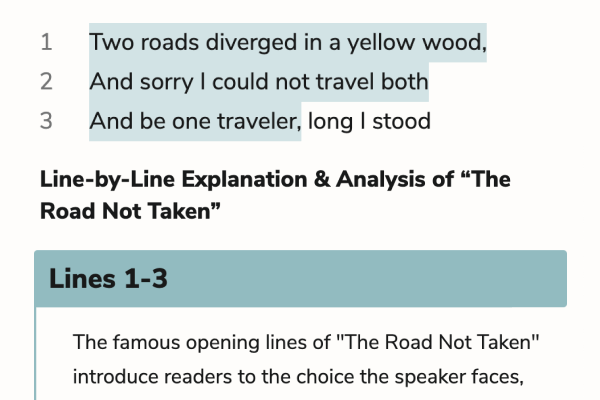
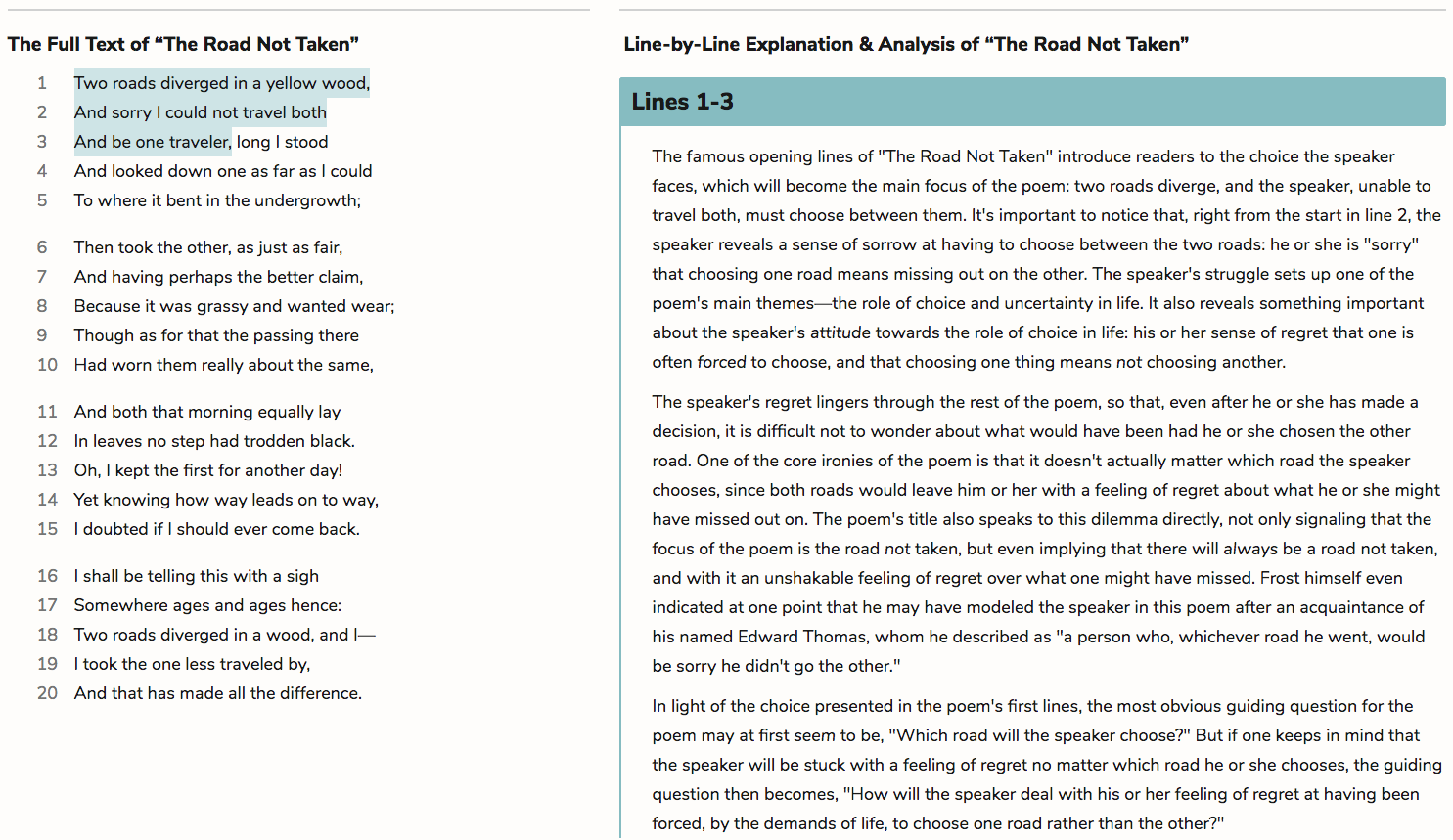
  • Line-by-line poetry analysis
    Arrow Icon

    Get the meaning in every line

    Never feel lost reading a poem again with clear and in-depth analysis of each and every line.

    Line-by-line poetry analysis
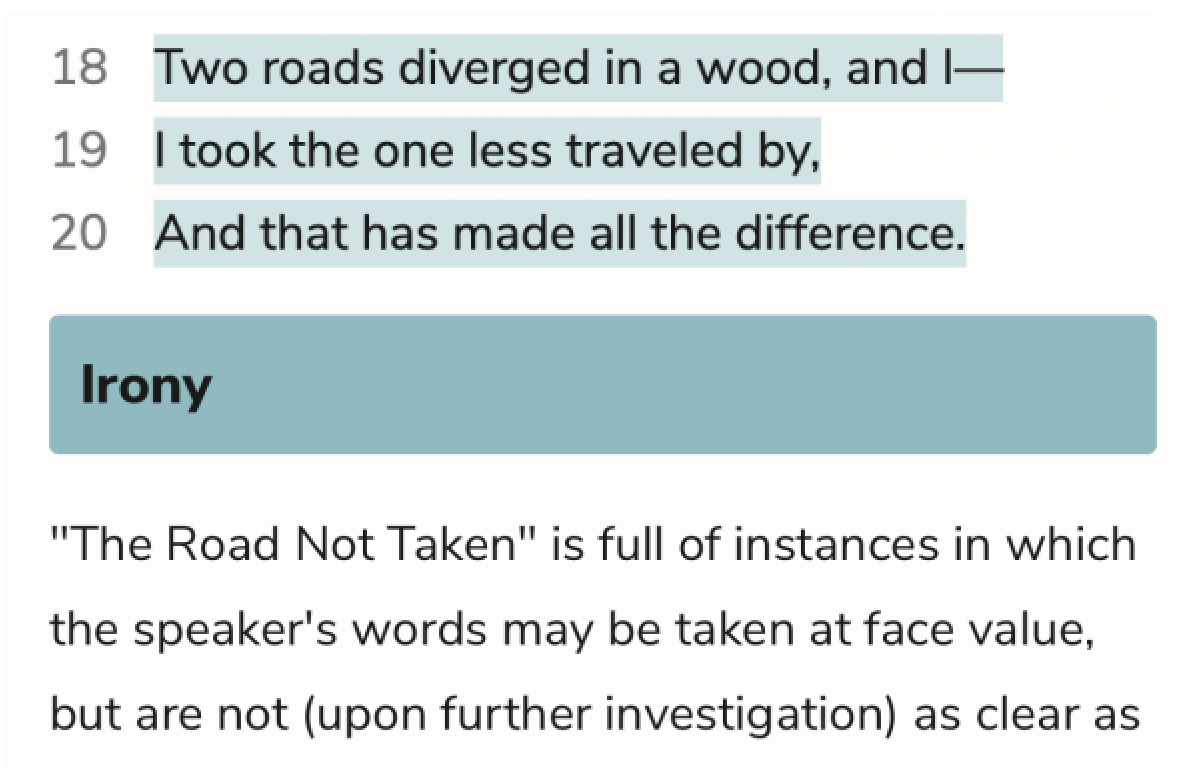
  • Literary & poetic device analysis
    Arrow Icon

    Decode the author’s language

    Quickly find and understand the key devices in whatever you’re reading.

    Literary & poetic device analysis
  • Unlimited quizzes
    Arrow Icon

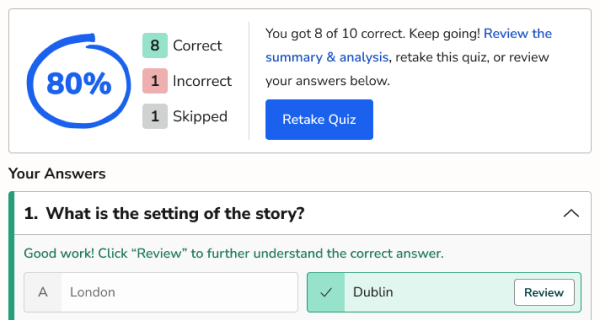
    Unlimited quizzes and feedback

    Boost your learning with quizzes that pinpoint and address knowledge gaps.

    Unlimited quizzes
  • Advanced search
    Arrow Icon

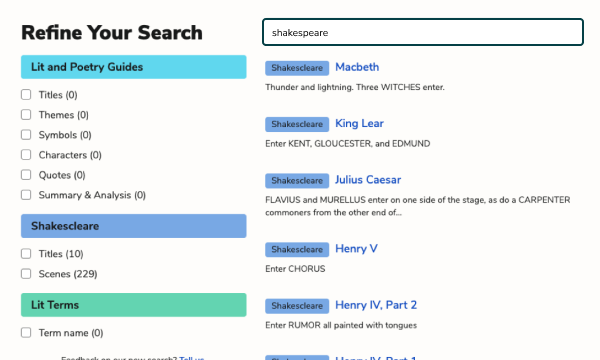
    Find exactly what you need

    Refine your search using advanced filters like genre, time period, literary movement, author context, grade level, and more.

    Advanced search
  • Ask LitCharts AI
    Arrow Icon

    Ask LitCharts AI

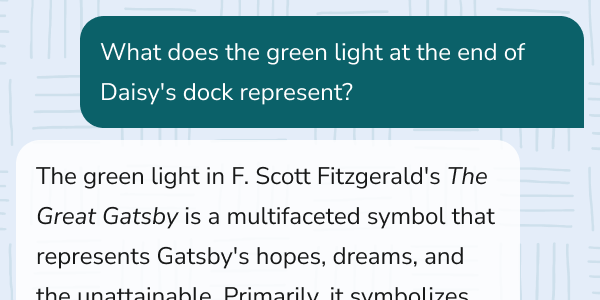
    Instant answers to all your lit questions. Powered by LitCharts content and AI.

    Ask LitCharts AI
  • Theme comparisons across books
    Arrow Icon

    Compare and contrast

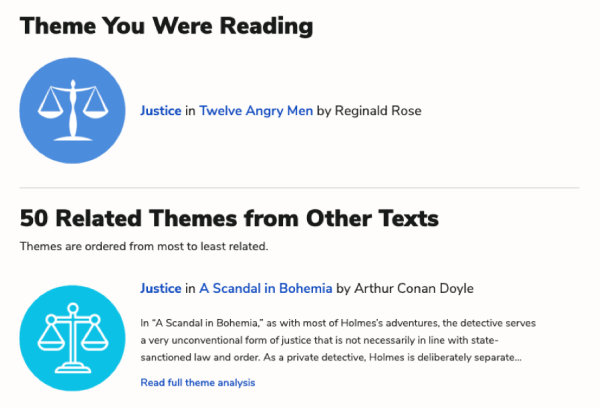
    Identify similar themes across books, making comparisons fast and simple.

    Theme comparisons across books
  • Highlight, take notes, & save guides
    Arrow Icon

    Make LitCharts your own

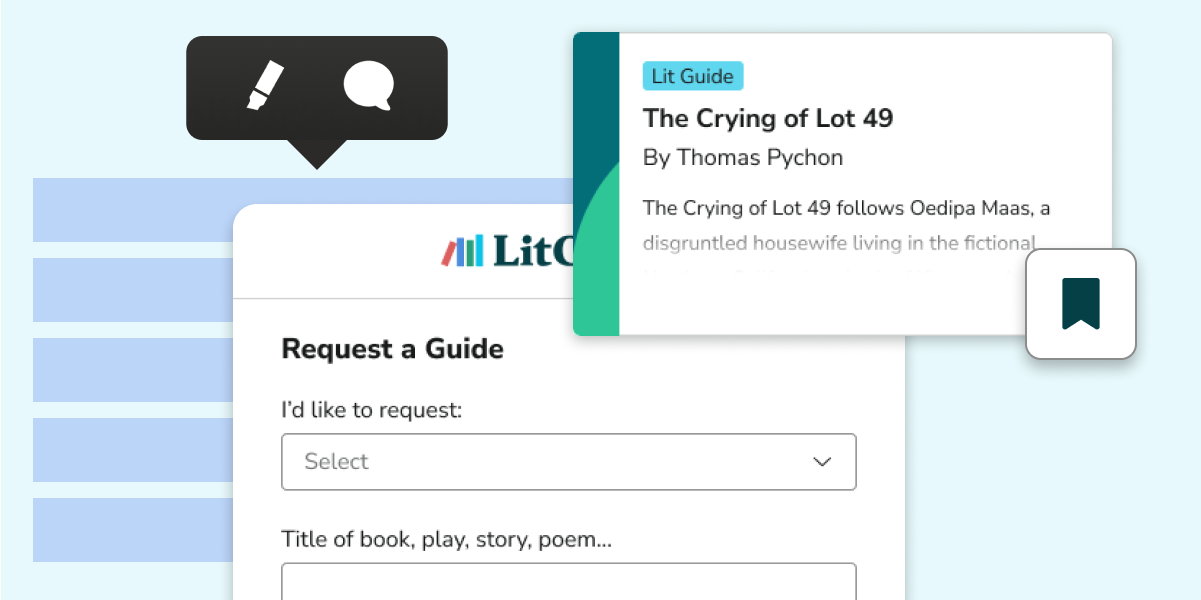
    Add highlights or notes, save guides for easy access later, and request new titles.

    Highlight, take notes, & save guides
  • A+ logo.Teacher
    $795USD/mo
    Charged $95.40 USD every year
  • Quote explanations & citation info
    Arrow Icon

    Find the perfect quote

    Then understand it perfectly. And get the citation, too. For all 35,000+ quotes we cover.

    Quote explanations & citation info
  • Every PDF download
    Arrow Icon

    Printable PDFs for every guide

    "Would not have made it through without the printable PDFs. They're like having in-class notes for every discussion!"

    – LitCharts A⁺ user

    Every PDF download
  • One-page Quick Lit Guides
    Arrow Icon

    Understand key basics—fast

    Printable, one-page guides that cover the plot points, themes, and ideas you need to know.

    One-page Quick Lit Guides
  • Detailed chapter analysis
    Arrow Icon

    Get what happens and what it means

    Targeted analysis next to the summary ensures you’ll understand more than just the plot.

    Detailed chapter analysis
  • Line-by-line poetry analysis
    Arrow Icon

    Get the meaning in every line

    Never feel lost reading a poem again with clear and in-depth analysis of each and every line.

    Line-by-line poetry analysis
  • Literary & poetic device analysis
    Arrow Icon

    Decode the author’s language

    Quickly find and understand the key devices in whatever you’re reading.

    Literary & poetic device analysis
  • Unlimited quizzes
    Arrow Icon

    Unlimited quizzes and feedback

    Boost your learning with quizzes that pinpoint and address knowledge gaps.

    Unlimited quizzes
  • Advanced search
    Arrow Icon

    Find exactly what you need

    Refine your search using advanced filters like genre, time period, literary movement, author context, grade level, and more.

    Advanced search
  • Ask LitCharts AI
    Arrow Icon

    Ask LitCharts AI

    Instant answers to all your lit questions. Powered by LitCharts content and AI.

    Ask LitCharts AI
  • Theme comparisons across books
    Arrow Icon

    Compare and contrast

    Identify similar themes across books, making comparisons fast and simple.

    Theme comparisons across books
  • Highlight, take notes, & save guides
    Arrow Icon

    Make LitCharts your own

    Add highlights or notes, save guides for easy access later, and request new titles.

    Highlight, take notes, & save guides
  • Teacher editions
    Arrow Icon

    Save time with in-depth organizers

    "THE best teaching resource I have ever used. My students love the handouts."

    – LitCharts A⁺ User

    Teacher editions
  • Printable classroom resources
    Arrow Icon

    Cut prep time in half

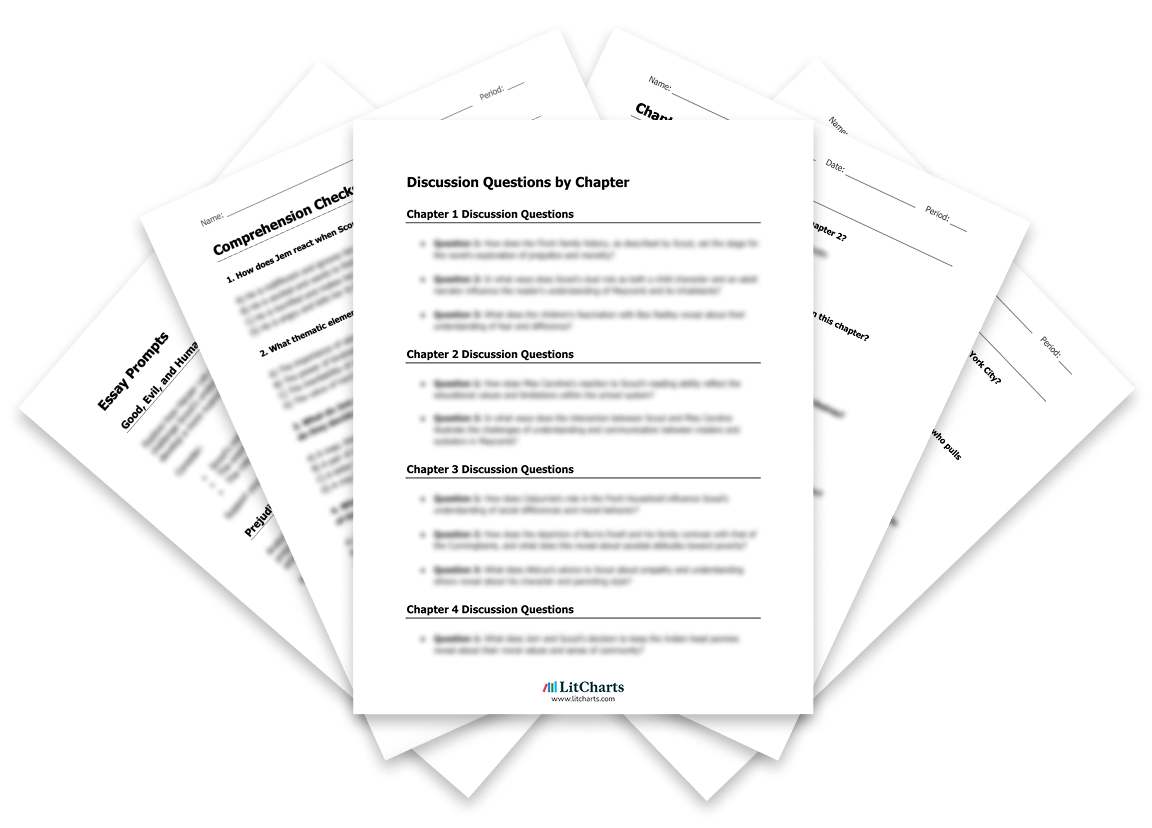
    Essay prompts, discussion questions, and comprehension checks—easy to print and ready to use in class.

    Printable classroom resources
  • Discussion question generator
    Arrow Icon

    Discussion question generator

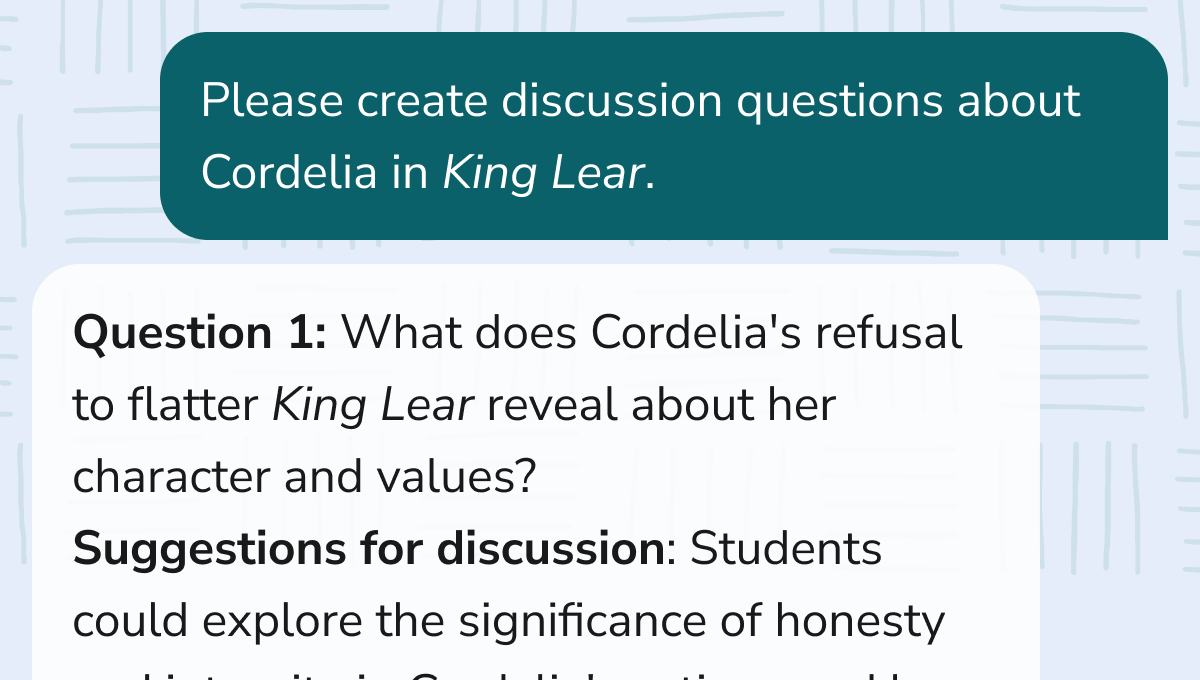
    Instantly create discussion questions that get people talking, through the power of LitCharts analysis and AI.

    Discussion question generator
  • Essay prompt generator
    Arrow Icon

    Essay prompt generator

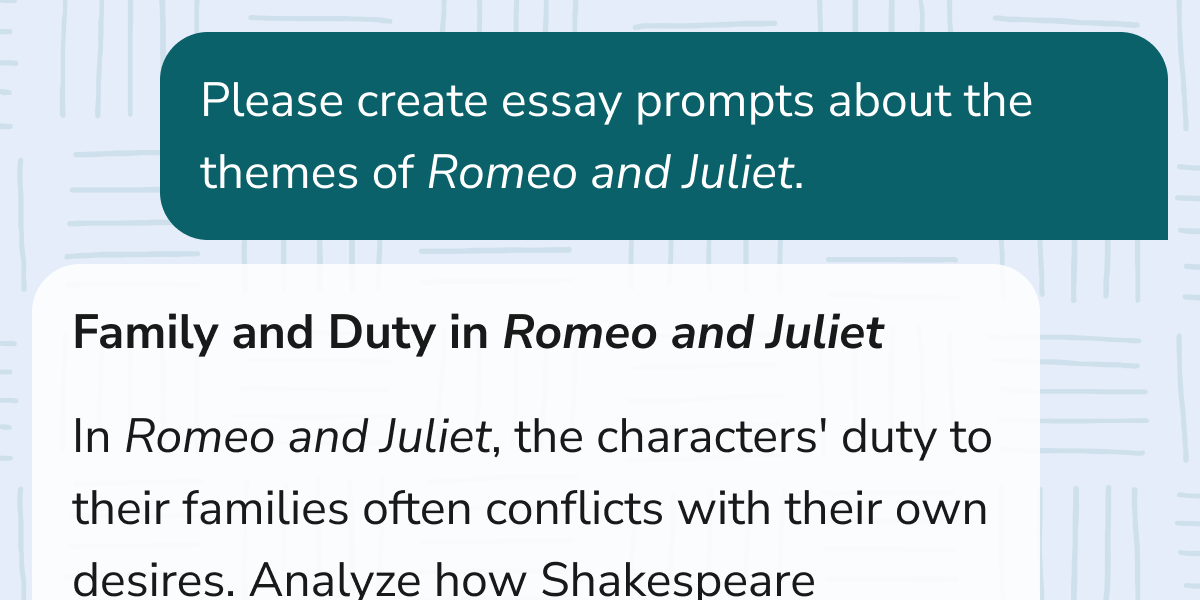
    Quickly create thought-provoking essay prompts that will get your students writing, powered by LitCharts analysis and AI.

    Essay prompt generator
  • Quiz question generator
    Arrow Icon

    Quiz question generator

    Effortlessly generate targeted quiz questions, powered by the world’s best literary analysis and AI.

    Quiz question generator
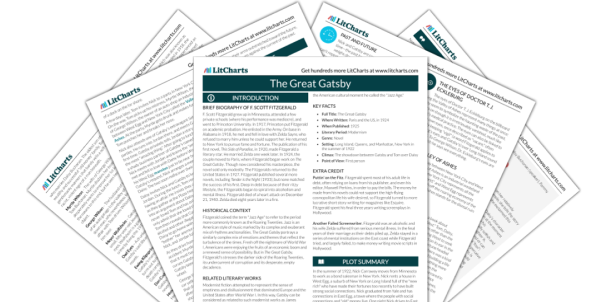
  • PDFs

    Literature Guide PDFs

    LitCharts PDFs for every book you'll read this year.

    Instant PDF downloads of all 2248 LitCharts literature guides and of every new one we publish. Try a free sample literature guide.
    "Would not have made it through AP Literature without the printable PDFs. They're like having in-class notes for every discussion!"
    Pride and Prejudice PDF
    Quotes

    Quotes Explanations

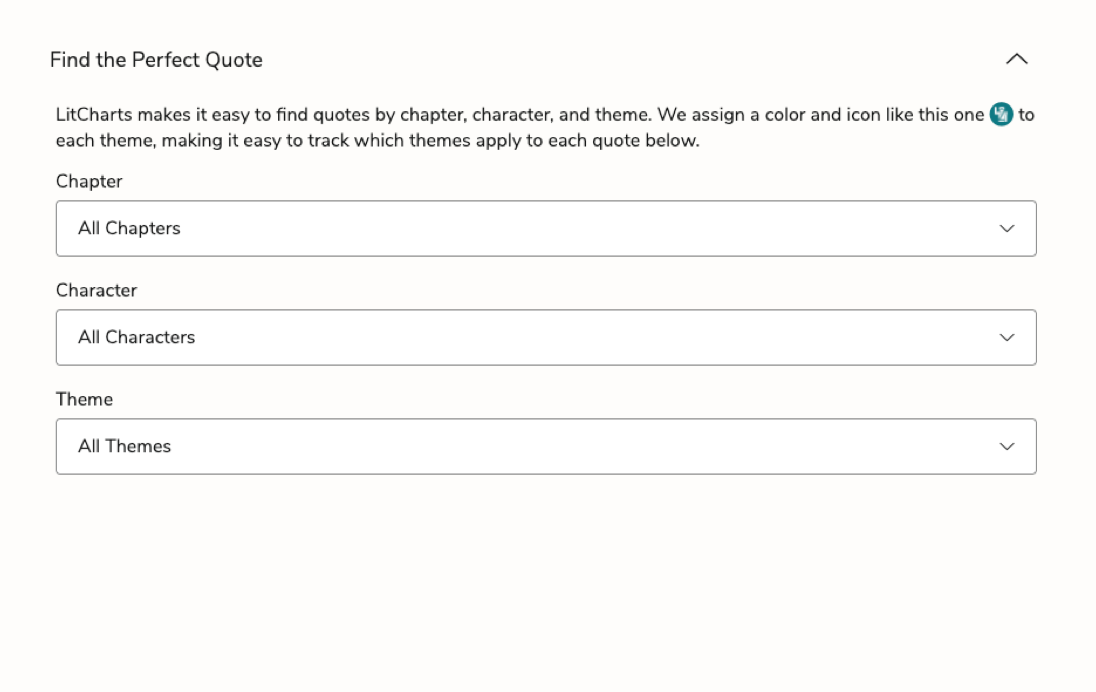
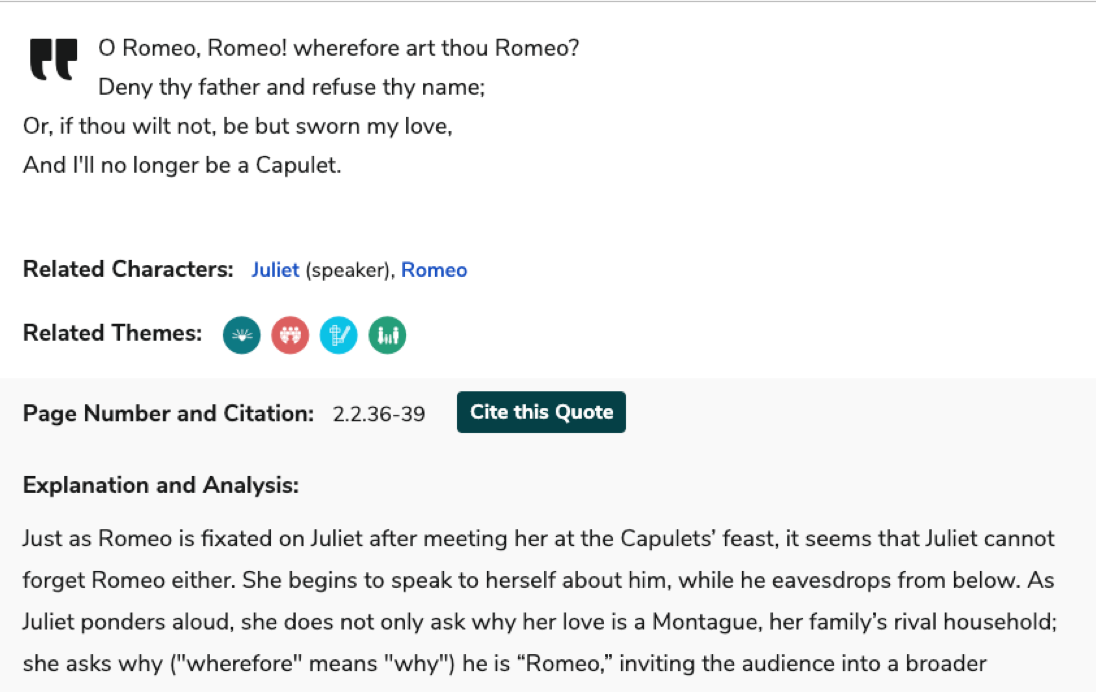
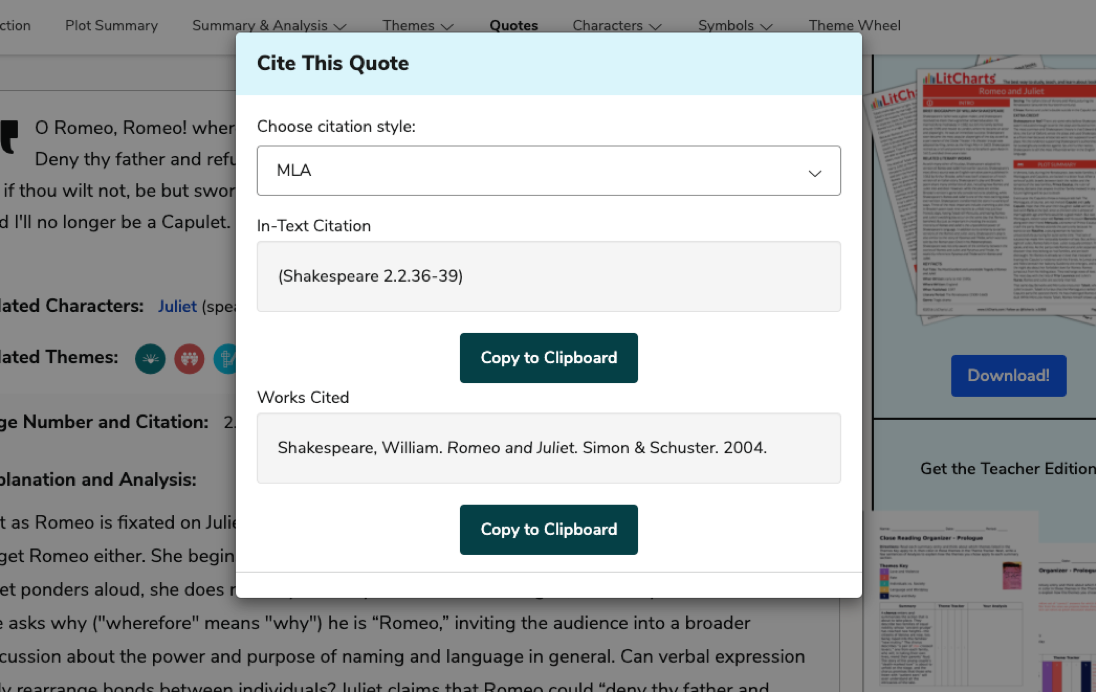
    Find the perfect quote. Understand it perfectly. Then rock the citation, too.
    For all 50,127 quotes we cover.
    Find. Search every LitChart by chapter, theme, or character to find just the quote you need.
    Understand. Grasp the quote's significance with our detailed Explanation and Analysis.
    Cite. Get the quote's page or line number, or a perfect citation with our Cite this Quote button.
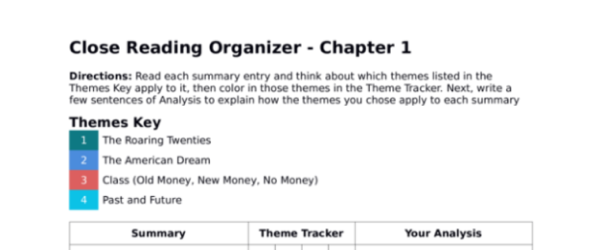
    Teacher editions

    Teacher Editions

    Close reading made easy for students.
    Time saved for teachers.
    For every book we cover.

    Teacher Edition Contents

    Close Reading Organizers
    Character Analysis Organizers
    Symbol Analysis Organizers
    Theme Analysis Organizers
    Quote Analysis Organizers

    Common Core-aligned

    ""
    Try a free and complete sample Teacher Edition.

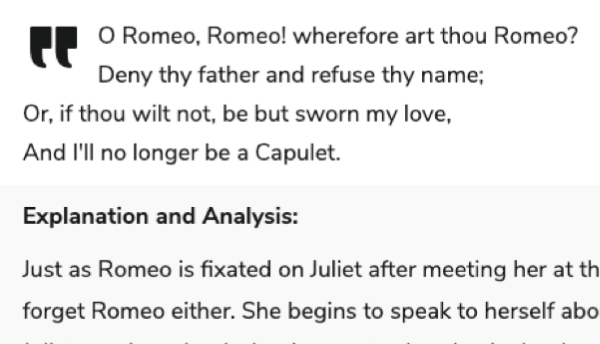
    PDFs of modern translations of every one of Shakespeare's 37 plays, 154 sonnets, and 3 longer poems.

    Every translation available to download as a PDF. Try a free sample Shakespeare translation.
    "Every teacher of literature should use these translations. They completely demystify Shakespeare. Students love them!"
    Original
    Romeo
    (aside) She speaks.
    O, speak again, bright angel! For thou art
    As glorious to this night, being o’er my head,
    As is a winged messenger of heaven
    Unto the white, upturnèd, wondering eyes
    Of mortals that fall back to gaze on him
    When he bestrides the lazy-puffing clouds
    And sails upon the bosom of the air.
    Juliet
    O Romeo, Romeo! Wherefore art though Romeo?
    Deny they father and refuse they name.
    Or, if thou wilt not, be but sworn my love,
    And I’ll no longer be a Capulet.
    Modern
    Romeo
    (to himself) She speaks. Speak again, bright angel! For tonight you are as glorious, there up above me, as a winged messenger of heaven who makes mortals fall onto their backs to gaze up with awestruck eyes as he strides across the lazy clouds and sails through the air.
    Juliet
    O Romeo, Romeo! Why must you be Romeo? Deny your father and give up your name. Or, if you won’t change your name, just swear your love to me and I’ll give up being a Capulet.
    Lit terms
    Literary Terms and Devices
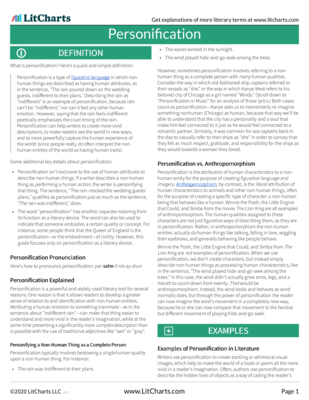
    Definitions and examples for every literary term and device you need to know.
    Plus a quick-reference PDF with concise definitions of all 136 terms in one place.
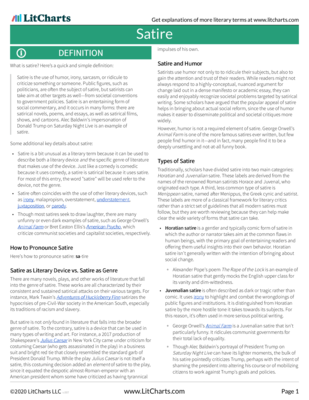
    Try a free sample literary term PDF.

    Advanced search
    Advanced Search
    Refine any search. Find related themes, quotes, symbols, characters, and more.
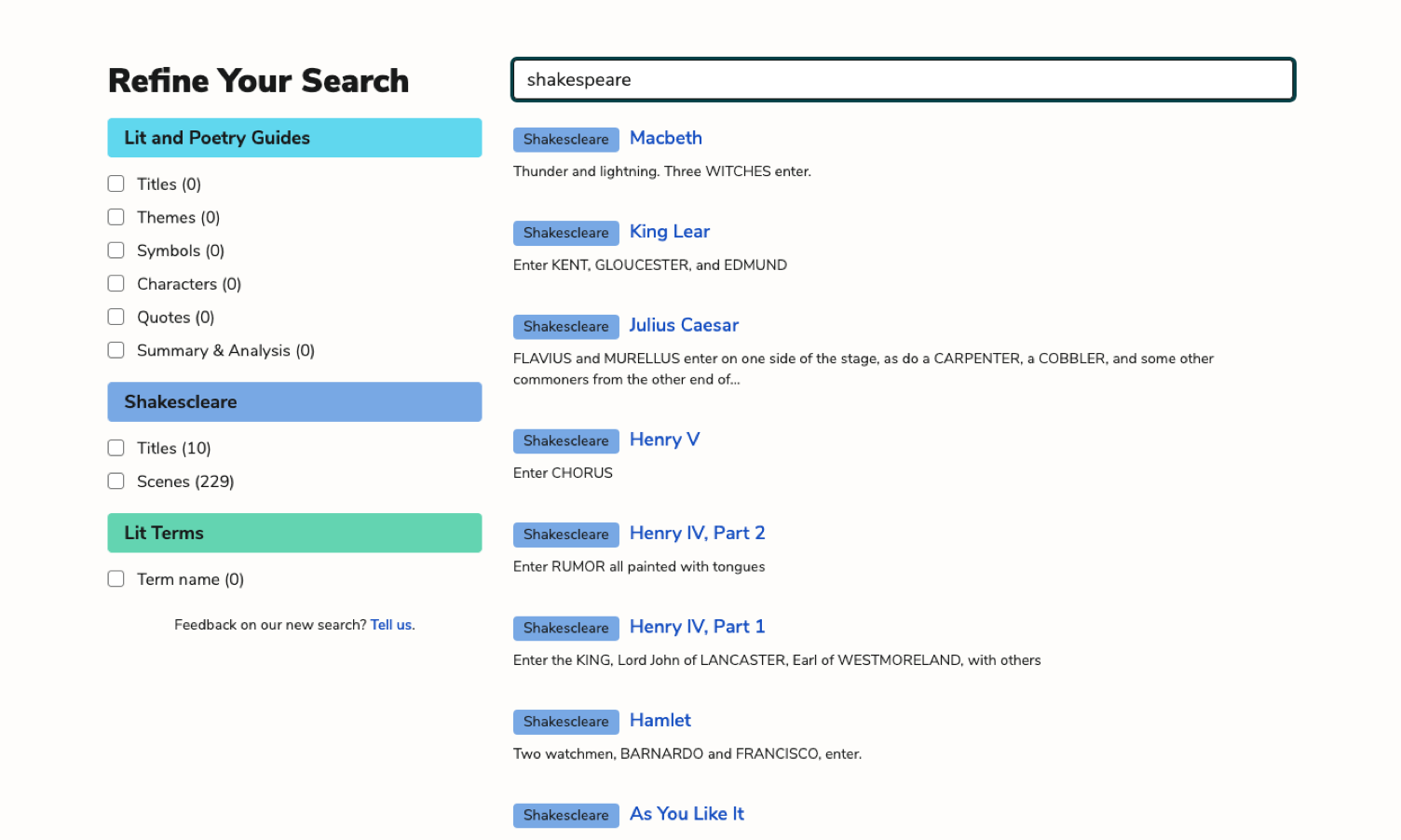
    Advanced search
    Related themes
    Related Themes
    Comparing and contrasting texts? Find where any theme occurs across all of LitCharts in seconds.
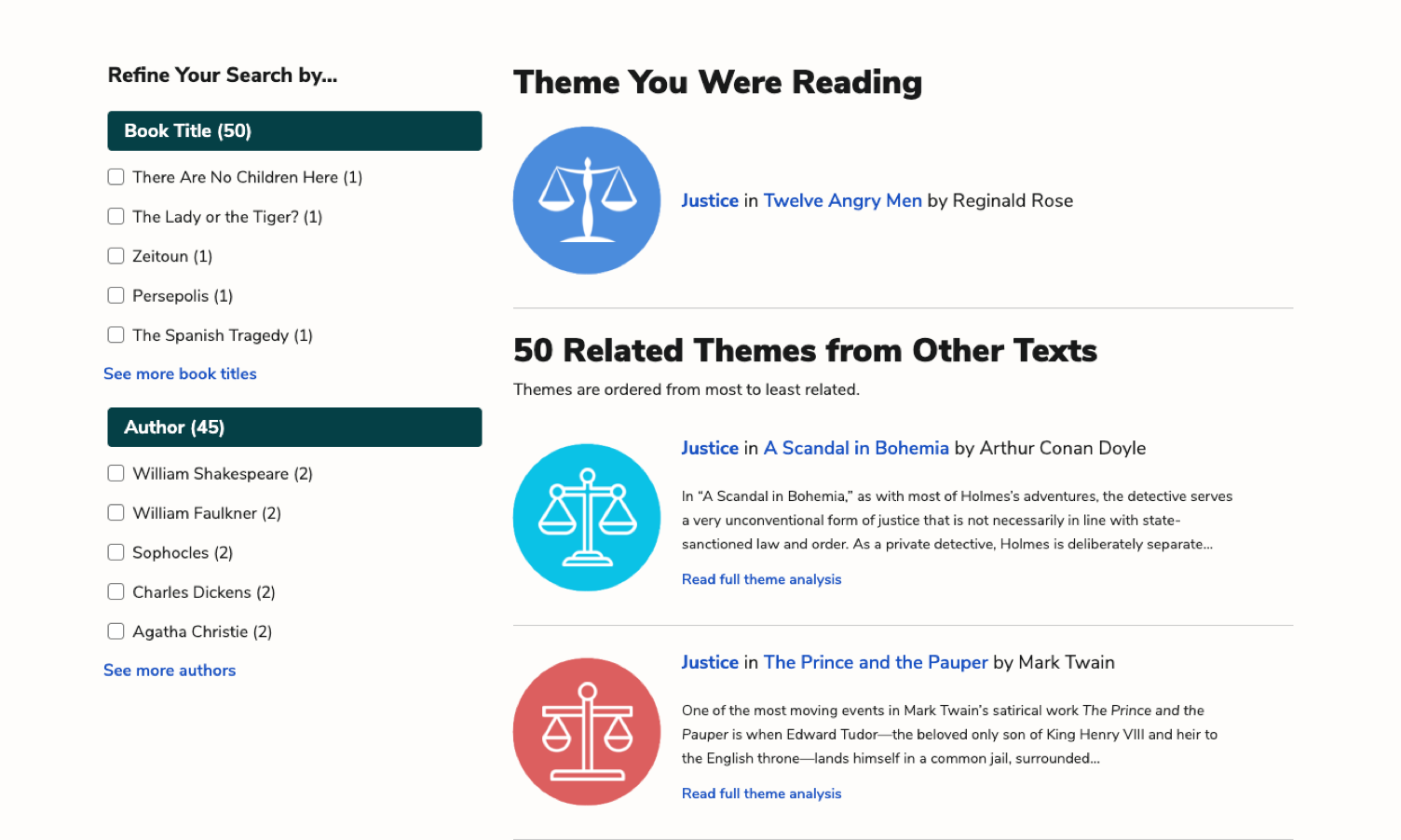
    Related themes
    Poetry guides
    Poetry Guides
    Line-by-line explanations and analysis of figurative language and poetic devices.
    For every lyric poem we cover.
    Poetry guides
    Sign up for LitCharts A+
    Company
    About Us Our Story
    Support
    Help Center Contact Us
    Connect
    Facebook Twitter
    Legal
    Terms of Service Privacy Policy Privacy Request
    Home About Contact Help
    LitCharts, a Learneo, Inc. business
    Copyright © 2026 All Rights Reserved
    Terms Privacy Privacy Request