


|
Have questions?
Contact us
Already a member? Sign in
|
Get every literary device explanation for Through the Looking-GlassPlus so much more...
Sign up for LitCharts A+Get instant access to every literary device explanation, plus so much more...
Irony
Explanation and Analysis—Fabulous Monsters:
In Chapter 7, Alice meets a Unicorn who is surprised to meet a real-life human child. The Unicorn uses a twist on an idiom that helps convey a sense of situational irony:
“This is a child!” Haigha replied eagerly, coming in front of Alice to introduce her, and spreading out both his hands towards her in an Anglo-Saxon attitude. “We only found it to-day. It’s as large as life, and twice as natural!”
“I always thought they were fabulous monsters!” said the Unicorn.
The phrase "as large as life, and quite as natural" often refers to renderings of the real world in art. Realism was a major art movement in the mid-19th century: artists tried to paint the real world just as they saw it. The idea of a painting as "large as life, and quite as natural" is complimentary, meaning that the painting is a faithful, successful reproduction. Here, the Unicorn calls Alice "as large as life, and twice as natural." This phrase, which became something of an idiom in its own right after Carroll published Through the Looking-Glass, suggests that the unicorn sees Alice as a work of art that has come to life. She is almost supernatural, eerily giving movement to the images of human children the Unicorn has only seen in art.
It is ironic that the Unicorn sees Alice as a work of art come to life because, to Alice, the Unicorn itself is a living manifestation of a mythical creature she has only seen in paintings and in her imagination. The idea that Alice is the strange, fantastical creature in this situation is an example of the many inversions of the Looking-Glass World. Not only is this a strange and fantastical world for Alice to explore, but it also reflects the "real" world and makes it look just as bizarre. This exchange raises the question of what "reality" really is. Does each one of us have our own version of reality?
Monthly
Annual (Best Value)

$595USD/mo
Charged $71.40 USD every year





 Teacher
$795USD/mo
Charged $95.40 USD every year




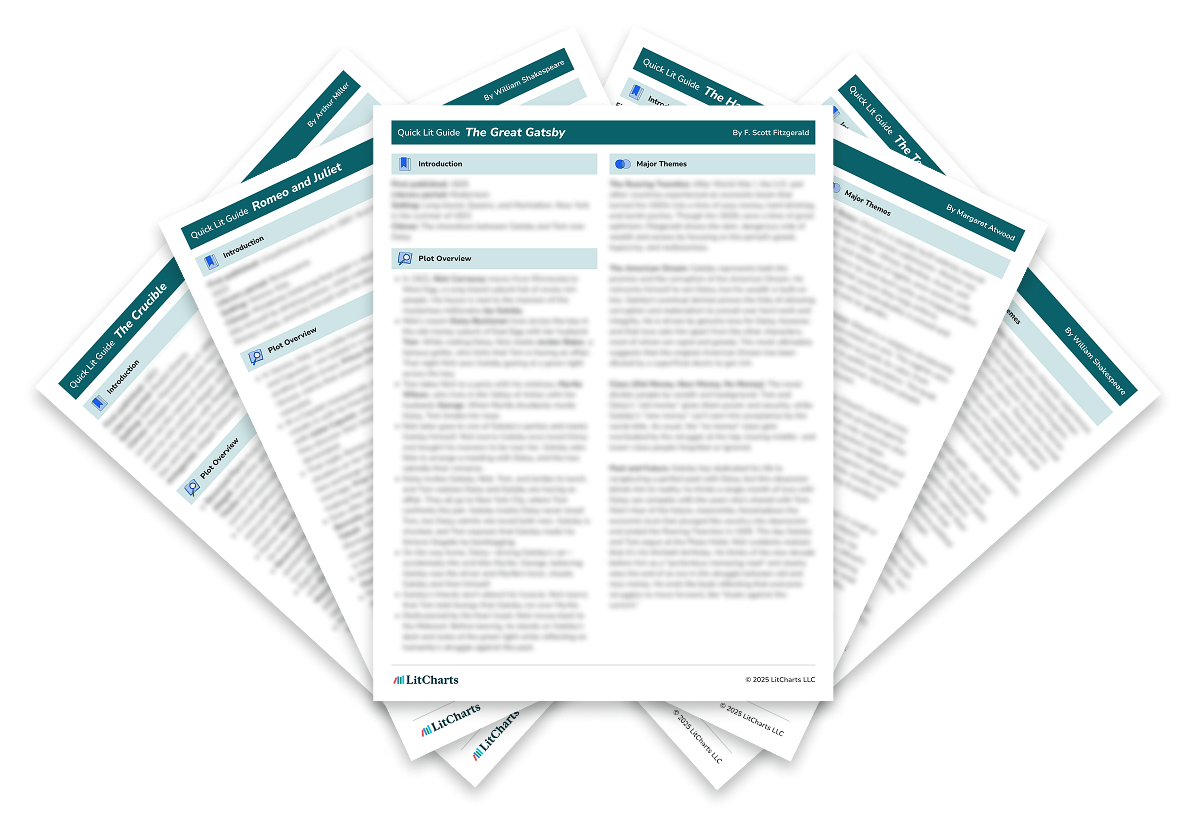
Literature Guide PDFs
LitCharts PDFs for every book you'll read this year.
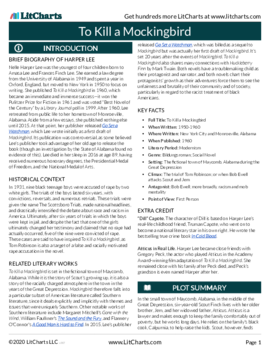
Instant PDF downloads of all 2238 LitCharts literature guides and of every new one we publish. Try a free sample literature guide.
"Would not have made it through AP Literature without the printable PDFs. They're like having in-class notes for every discussion!"




Quotes Explanations
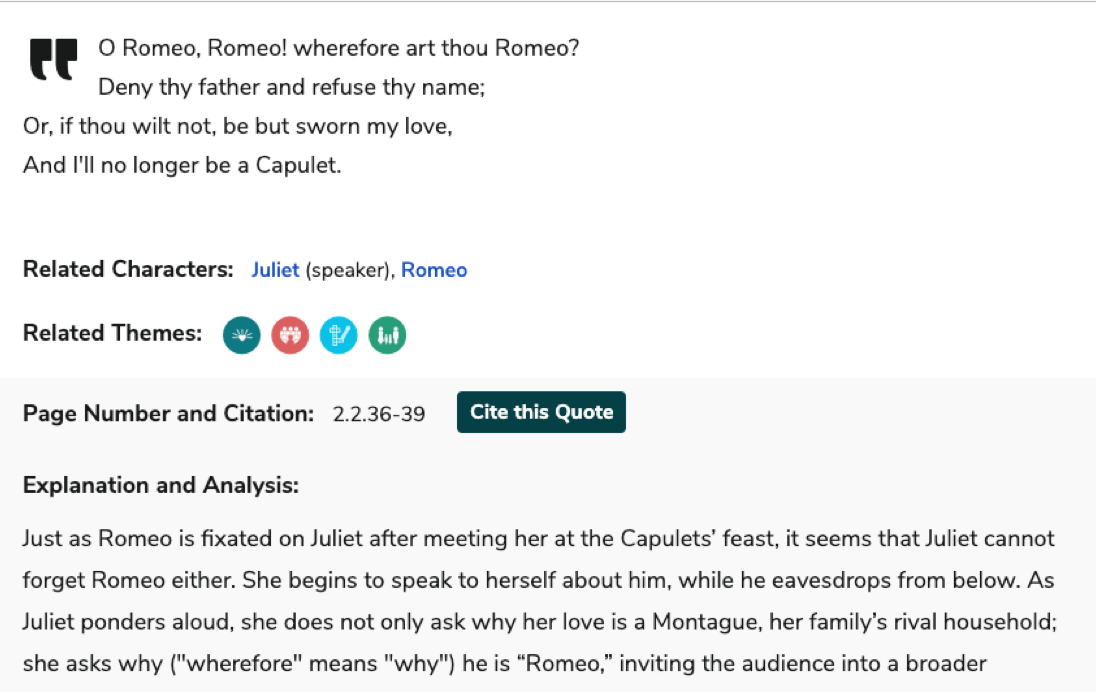
Find the perfect quote. Understand it perfectly. Then rock the citation, too.
For all 49,919 quotes we cover.
For all 49,919 quotes we cover.



Teacher Editions
Close reading made easy for students.
Time saved for teachers.
For every book we cover.
Time saved for teachers.
For every book we cover.


Common Core-aligned


PDFs of modern translations of every one of Shakespeare's 37 plays, 154 sonnets, and 3 longer poems.

Literary Terms and Devices
Definitions and examples for every literary term and device you need to know.
Plus a quick-reference PDF with concise definitions of all 136 terms in one place.
Plus a quick-reference PDF with concise definitions of all 136 terms in one place.


Try a free sample literary term PDF.


Advanced Search
Refine any search. Find related themes, quotes, symbols, characters, and more.

Related Themes
Comparing and contrasting texts? Find where any theme occurs across all of LitCharts in seconds.


Poetry Guides
Line-by-line explanations and analysis of figurative language and poetic devices.
For every lyric poem we cover.
For every lyric poem we cover.
