
|
Have questions?
Contact us
Already a member? Sign in
|
Get every literary device explanation for Caesar and CleopatraPlus so much more...
Sign up for LitCharts A+Get instant access to every literary device explanation, plus so much more...
Irony
Explanation and Analysis—Apollodorus' Boat:
In Act 3, Caesar Britannus hands Caesar a bag containing letters, written from Pompey's party to the Roman army of occupation in Alexandria. Caesar refuses to open the bag or read the letters, a decision that later leads to a moment of dramatic irony. He justifies his choice in the following manner:
Would you have me waste the next few years of my life proscribing and condemning men who will be my friends when I have proved that my friendship is worth more than Pompey's was—than Cato's is.
Immediately after making the above statement, Caesar throws the satchel into the sea. This entire interaction provides important insight into Caesar's character and moral values: he is a merciful man who understands human nature and believes in second chances. The mood in this passage is more serious and less comedic. The serious mood is almost instantly undermined when, later, in a moment of dramatic irony, Apollodorus reveals what actually happened to the satchel:
APOLLODORUS: Caesar: I cannot return. As I approached the lighthouse, some fool threw a great leathern bag into the sea. It broke the nose of my boat; and I had hardly time to get myself and my charge to shore before the poor little cockleshell sank.
CAESAR: I am sorry, Apollodorus. The fool shall be rebuked.
In this scene, Apollodorus is unaware of information that the audience is privy to: that Caesar himself was the one to throw the satchel into the ocean. This dramatic irony is made all the more potent by the fact that Caesar himself states that "the fool shall be rebuked." Despite making a serious and morally significant decision in the previous scene, Caesar acknowledges the humor and irony inherent in the situation, taking these things in stride. This moment is fundamental to the audience's understanding of Caesar's character.
Monthly
Annual (Best Value)

$595USD/mo
Charged $71.40 USD every year
 Teacher
$795USD/mo
Charged $95.40 USD every year
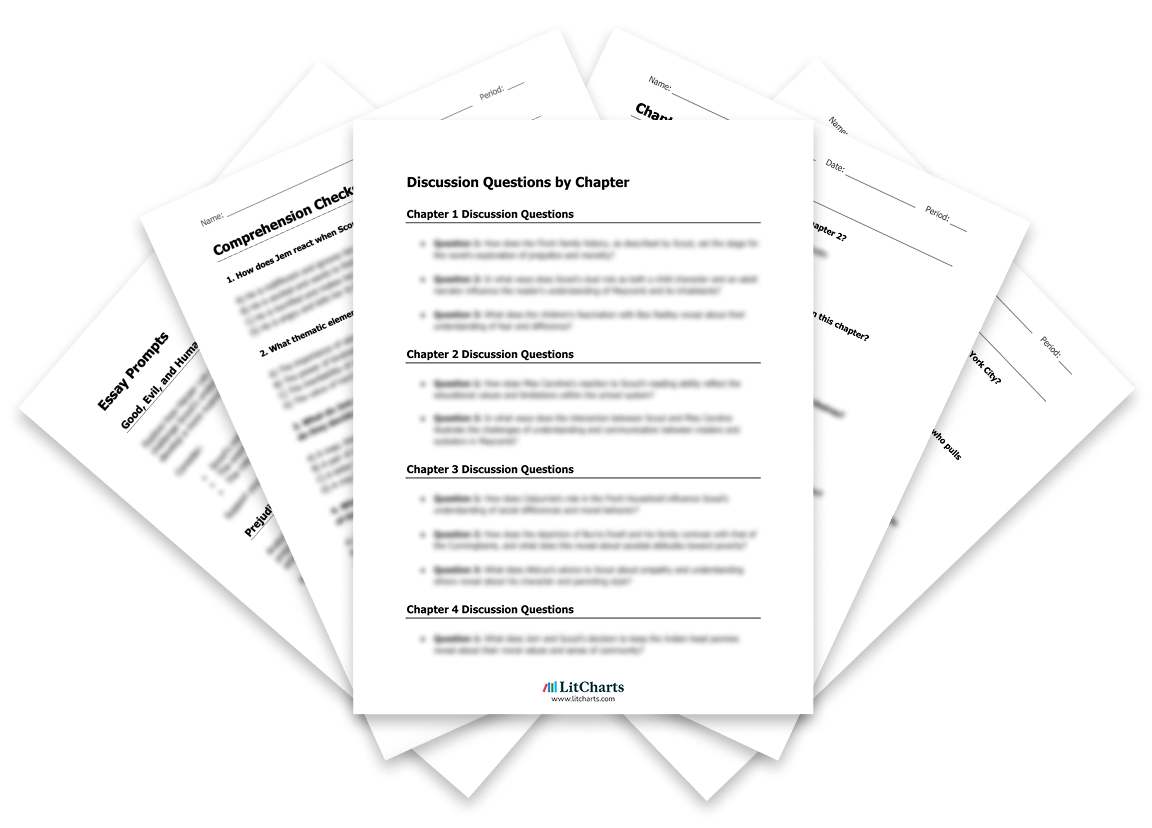
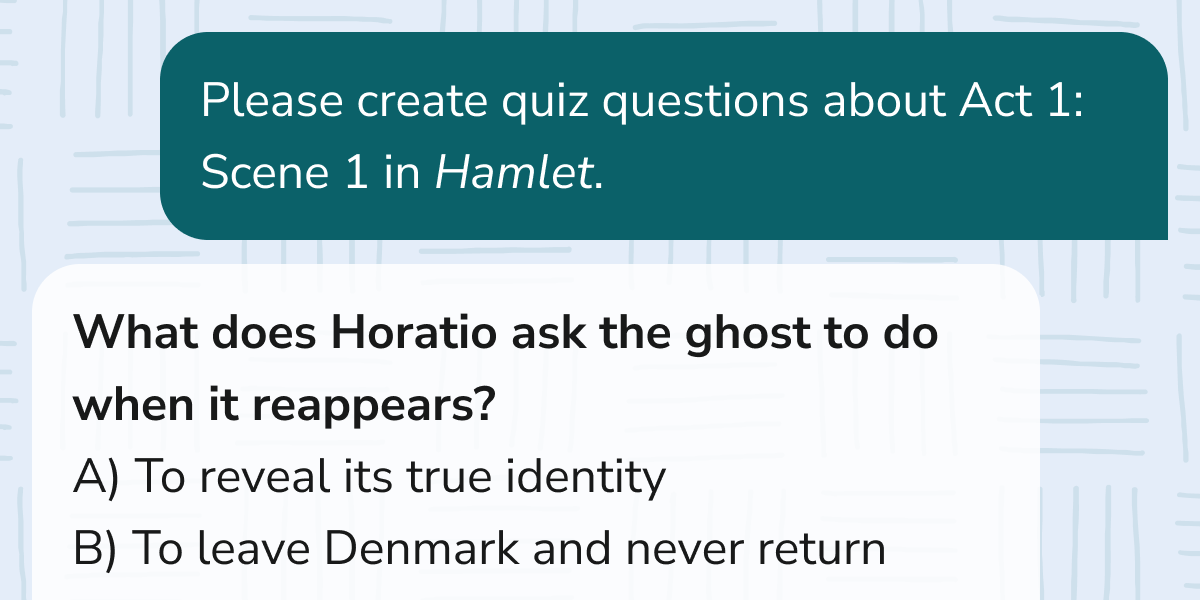


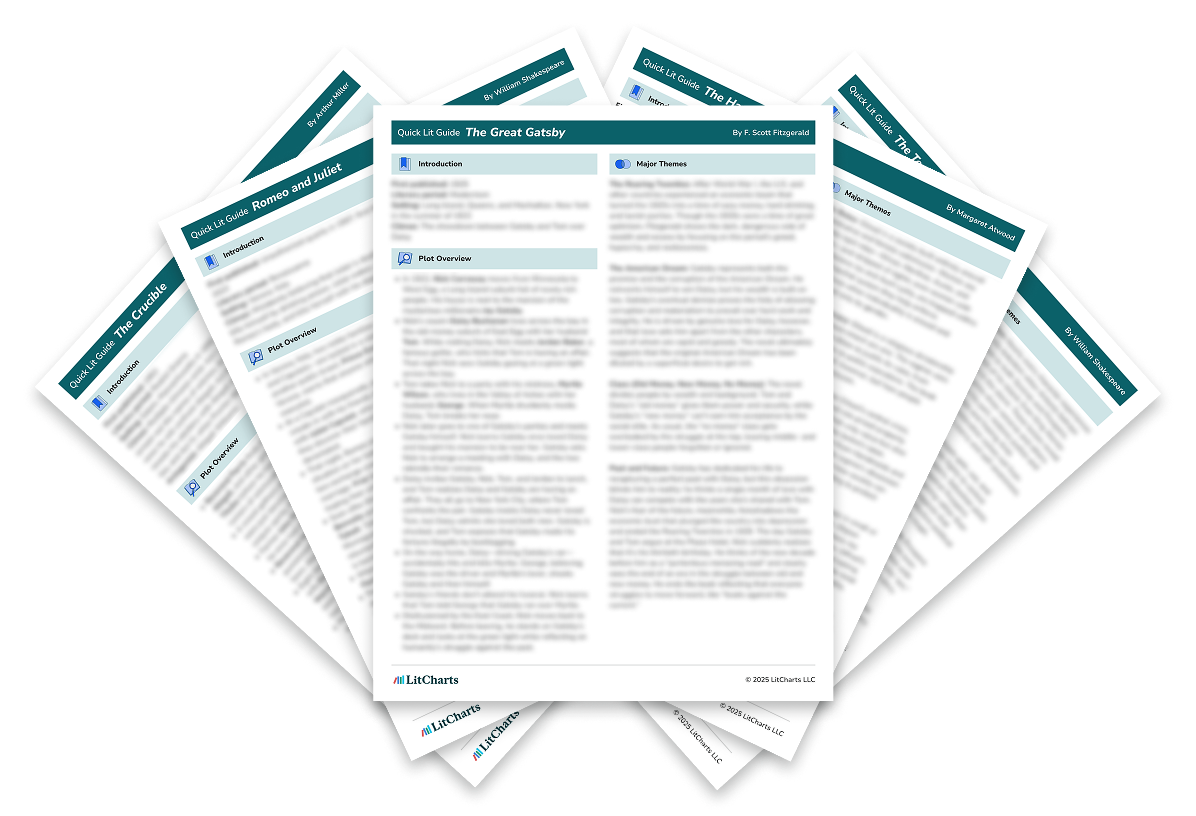
Literature Guide PDFs
LitCharts PDFs for every book you'll read this year.
Instant PDF downloads of all 2243 LitCharts literature guides and of every new one we publish. Try a free sample literature guide.
"Would not have made it through AP Literature without the printable PDFs. They're like having in-class notes for every discussion!"









Quotes Explanations
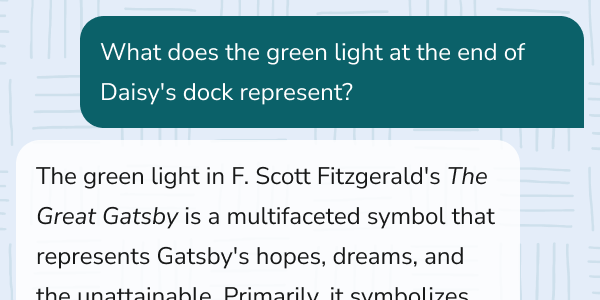
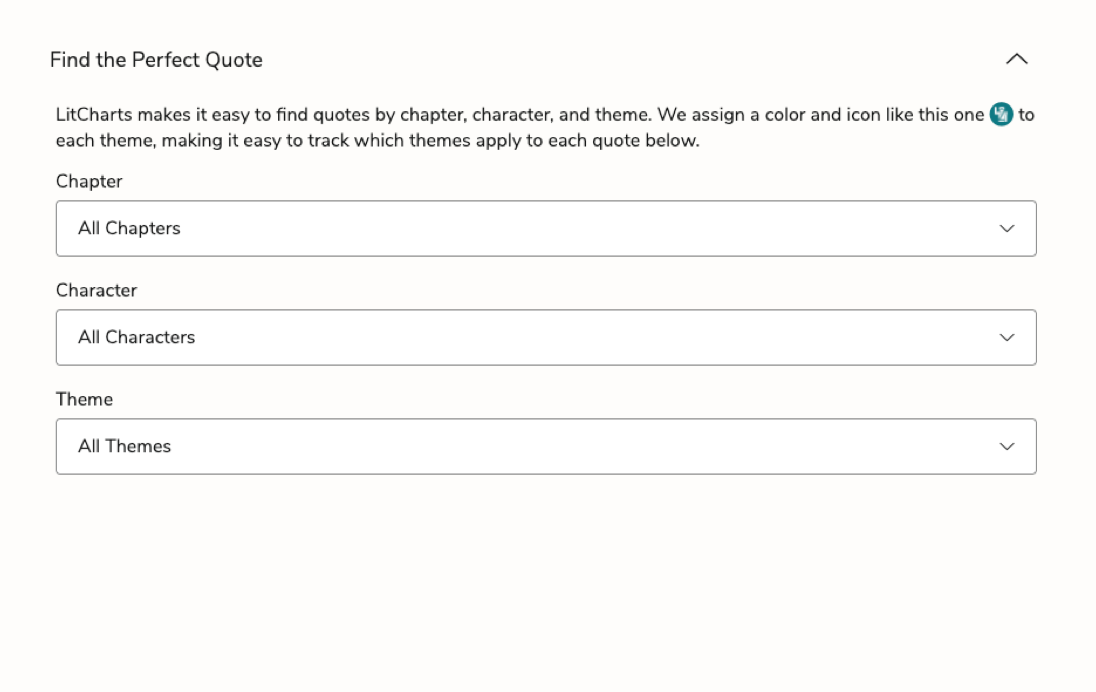
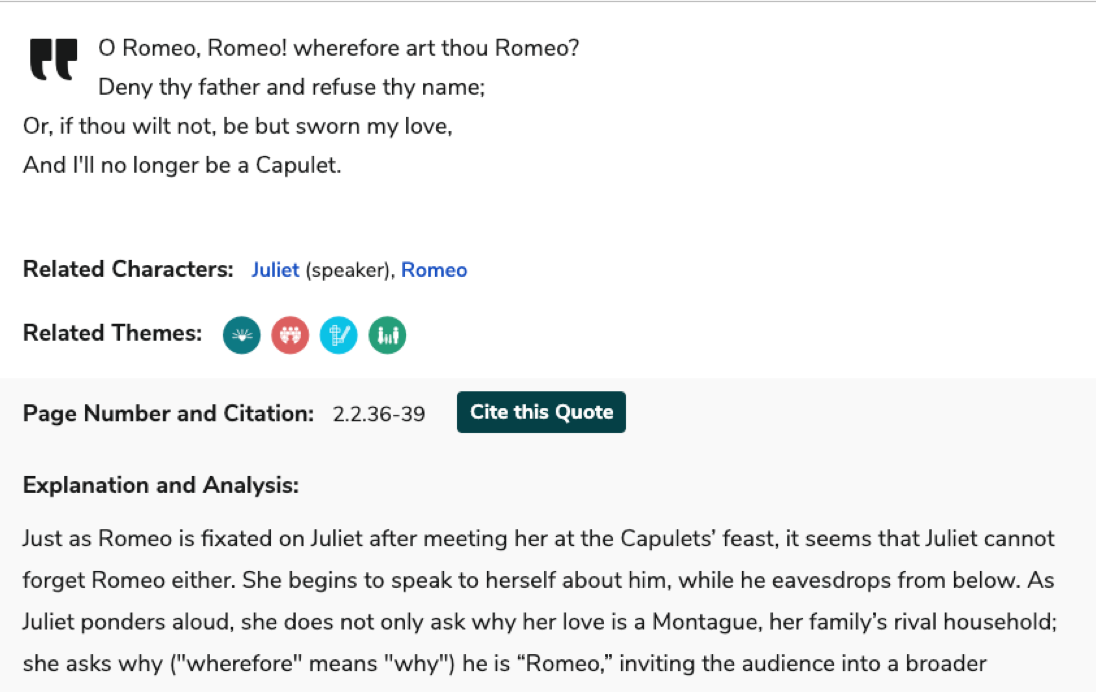
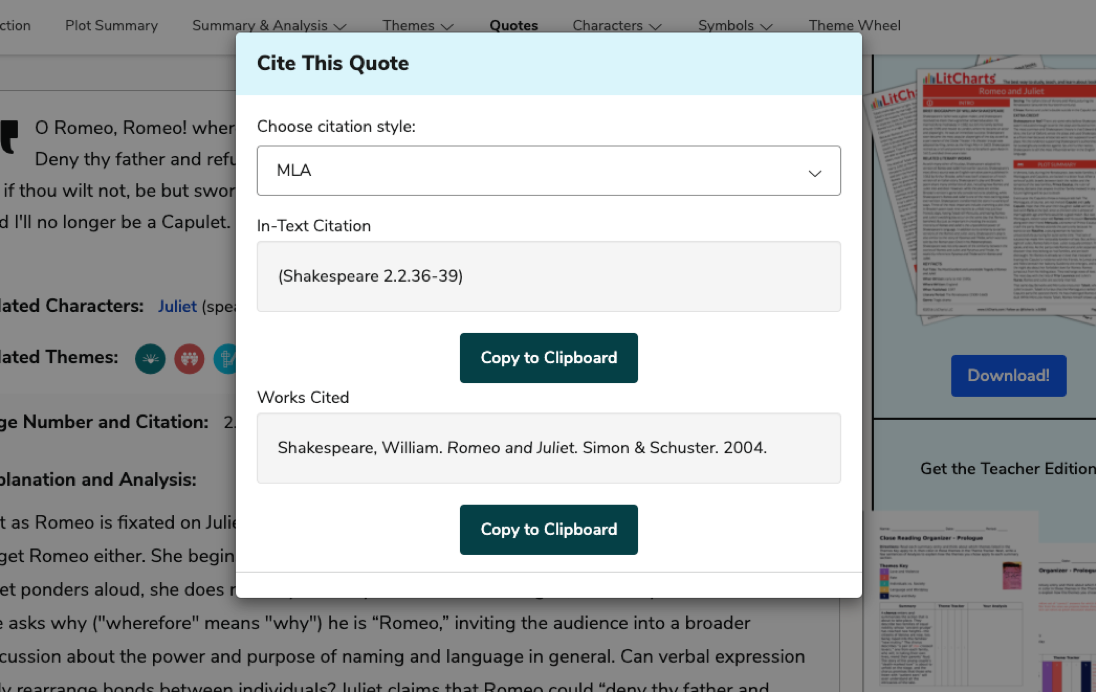
Find the perfect quote. Understand it perfectly. Then rock the citation, too.
For all 50,016 quotes we cover.
For all 50,016 quotes we cover.


Teacher Editions
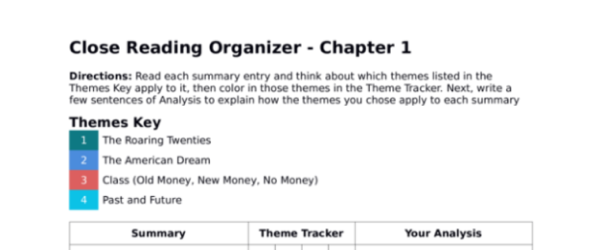
Close reading made easy for students.
Time saved for teachers.
For every book we cover.
Time saved for teachers.
For every book we cover.


Common Core-aligned


PDFs of modern translations of every one of Shakespeare's 37 plays, 154 sonnets, and 3 longer poems.

Literary Terms and Devices
Definitions and examples for every literary term and device you need to know.
Plus a quick-reference PDF with concise definitions of all 136 terms in one place.
Plus a quick-reference PDF with concise definitions of all 136 terms in one place.
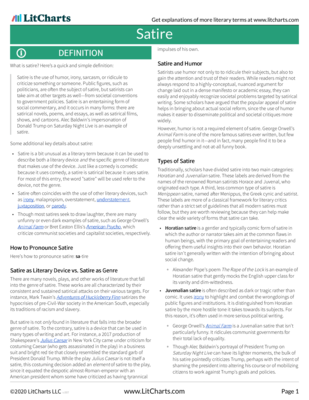
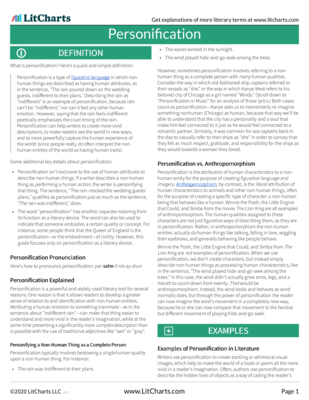
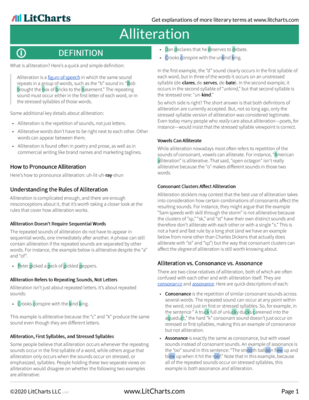
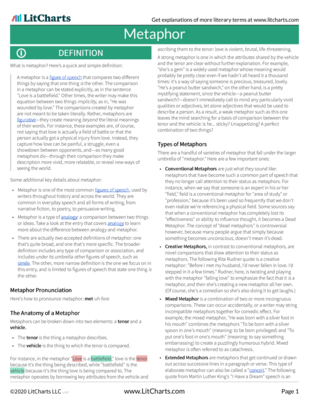
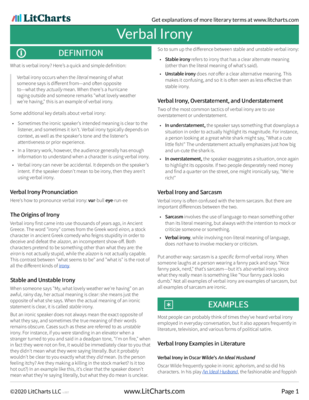
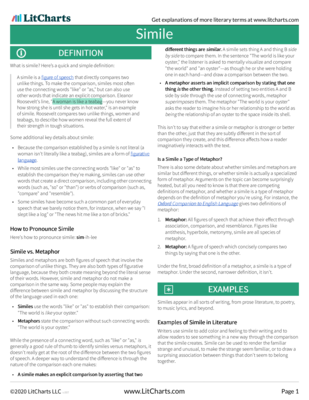
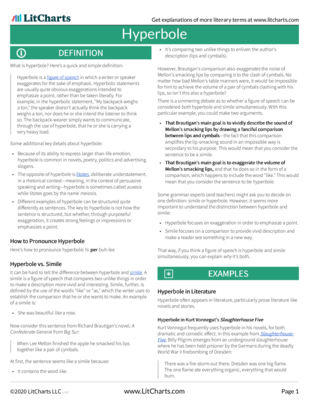
Try a free sample literary term PDF.


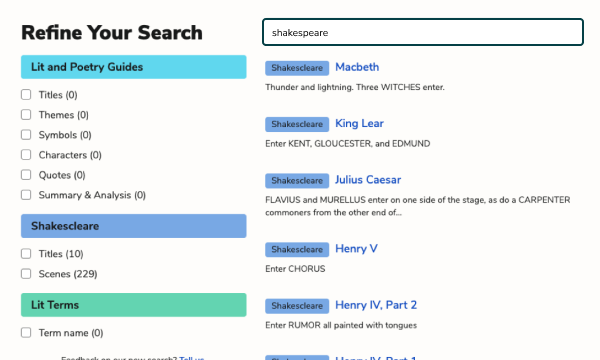
Advanced Search
Refine any search. Find related themes, quotes, symbols, characters, and more.
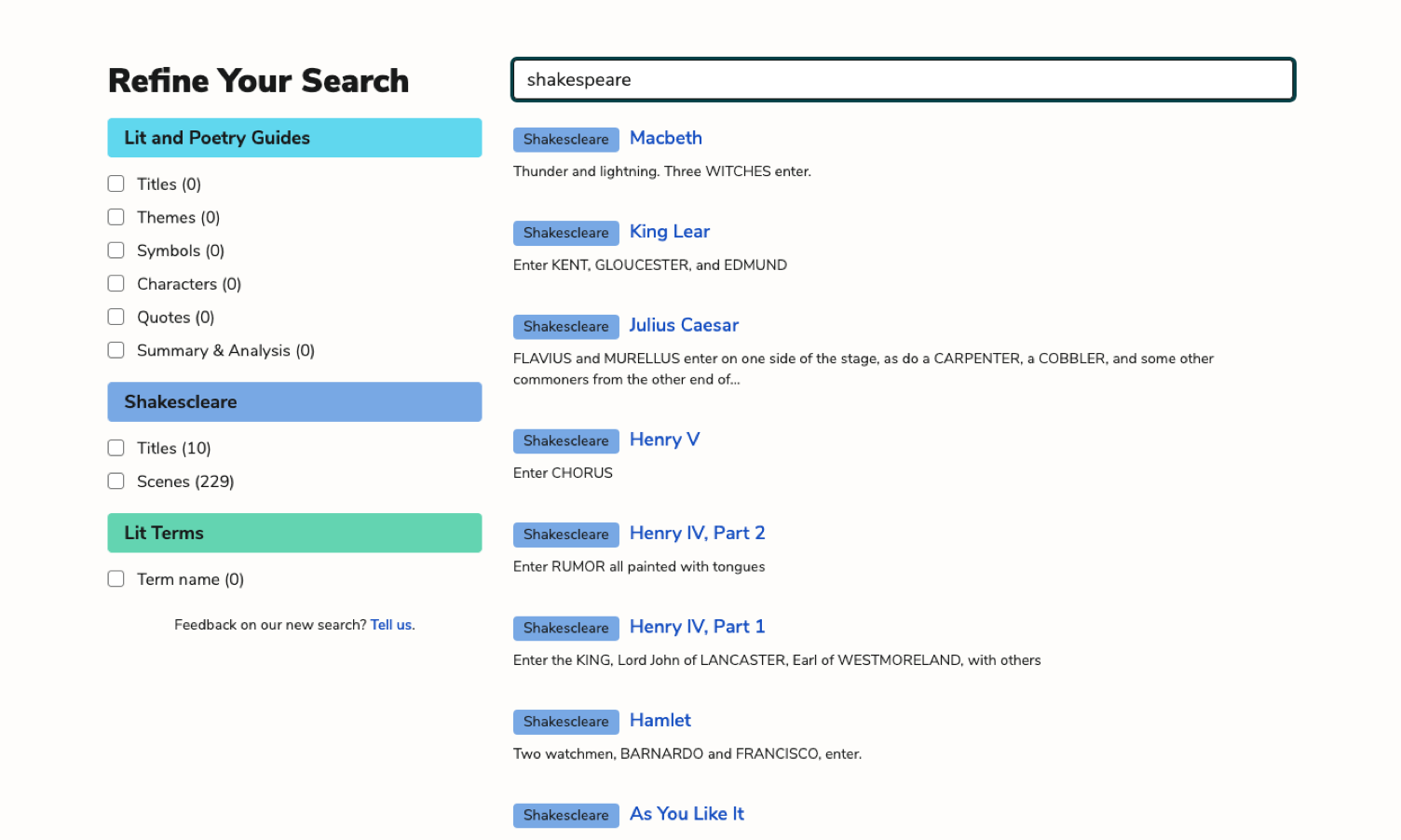

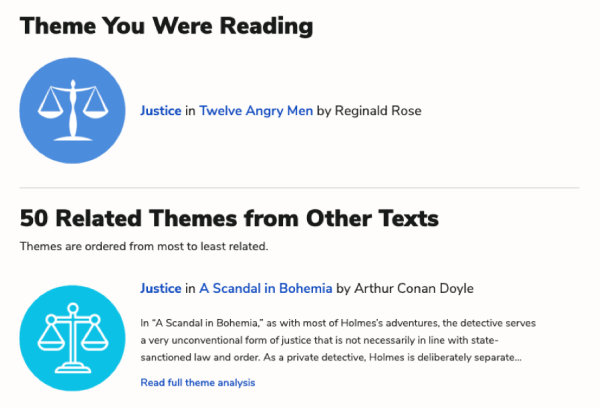
Related Themes
Comparing and contrasting texts? Find where any theme occurs across all of LitCharts in seconds.


Poetry Guides
Line-by-line explanations and analysis of figurative language and poetic devices.
For every lyric poem we cover.
For every lyric poem we cover.