
|
Have questions?
Contact us
Already a member? Sign in
|
Get every literary device explanation for White TeethPlus so much more...
Sign up for LitCharts A+Get instant access to every literary device explanation, plus so much more...
Metaphor
Explanation and Analysis—Aaaaaaa!:
In Chapter 12, the narrator considers the 20th century at large: "This has been the century of the great immigrant experiment." This leads to a discussion of the idea of "dilution," by which different races intermarry so much that they are no longer distinguishable. This is a concern for White Britons and some immigrants alike, including Alsana. The narrator describes her worries about Millat's diluted progeny in a metaphor based on a Punnett square:
Even the unflappable Alsana Iqbal would regularly wake up in a puddle of her own sweat after a night visited by visions of Millat (genetically BB; where B stands for Bengaliness) marrying someone called Sarah (aa, where a stands for Aryan), resulting in a child called Michael (Ba), who in turn marries somebody called Lucy (aa), leaving Alsana with a legacy of unrecognizable great-grandchildren (Aaaaaaa!), their Bengaliness thoroughly diluted, genotype hidden by phenotype.
A Punnett square, as taught in many grade school biology classes, is a simple diagram to describe the probability of inheritance of dominant and recessive traits, usually represented in upper- and lowercase letters, respectively. Millat is fully Bengali, represented by his BB allele. By intermarrying with Aryan people (i.e., those from the "Aryan race," the pseudoscientific hypothetical ancestors of a unified White race), his children would have mixed traits from both, eventually leaving "a legacy of unrecognizable great-grandchildren." The narrator turns the Punnett square metaphor into a joke, as the "a"s representing "Aryan" start piling up until they become a scream of terror: "Aaaaaaa!"
Race is not a strict genetic reality, but a complex result of genetic inheritance mixed with cultural, societal, and political factors. Because of this, Alsana's Punnett square is metaphorical: races cannot actually be defined by simple dominant and recessive traits. However, colonialist ideology has often been justified by scientific racism, which claims that races have fundamental biological differences. Those who believe such a thing would not take this passage as metaphorical at all. The novel, especially through the Futuremouse project, is especially interested in genetics and what is fundamental about a person (or any organism) as compared to the choices they make. This passage, though funny, reminds the reader that simple genetic theories have real consequences when applied to real people.
Monthly
Annual (Best Value)

$595USD/mo
Charged $71.40 USD every year
 Teacher
$795USD/mo
Charged $95.40 USD every year


Literature Guide PDFs
LitCharts PDFs for every book you'll read this year.
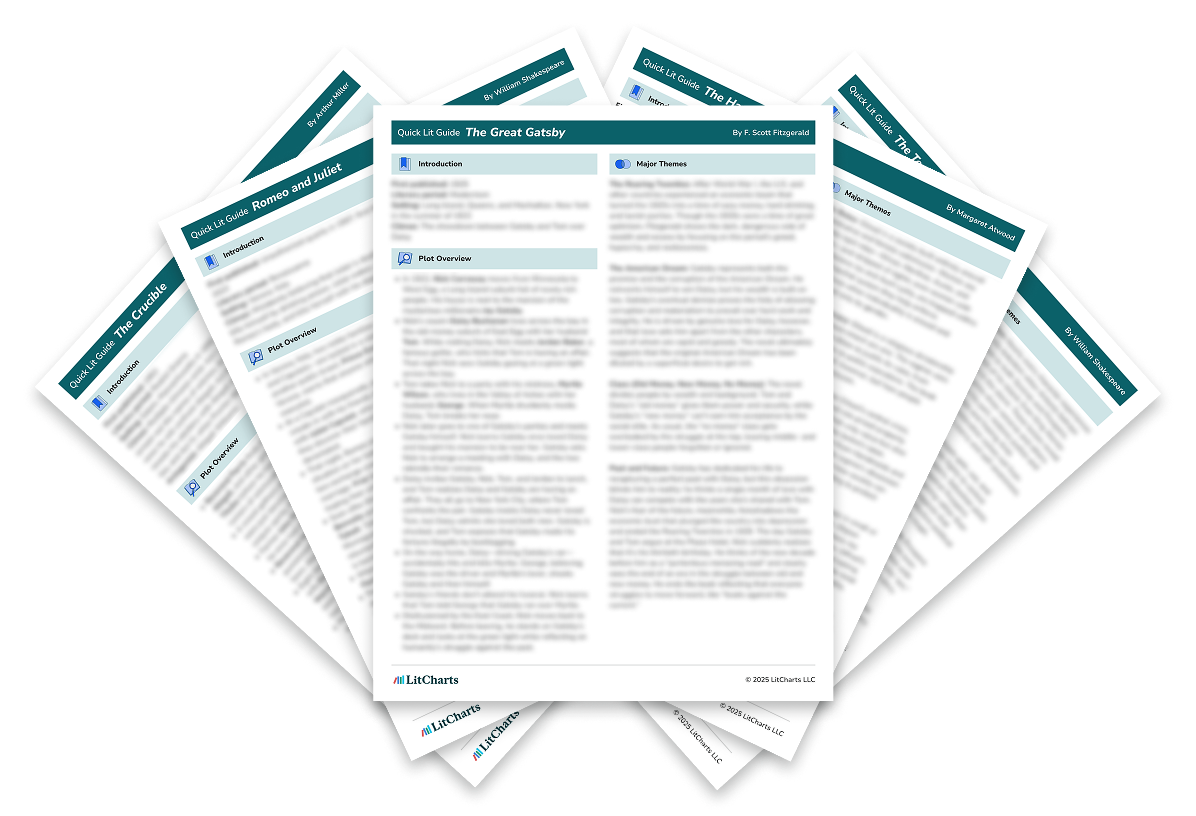
Instant PDF downloads of all 2252 LitCharts literature guides and of every new one we publish. Try a free sample literature guide.
"Would not have made it through AP Literature without the printable PDFs. They're like having in-class notes for every discussion!"








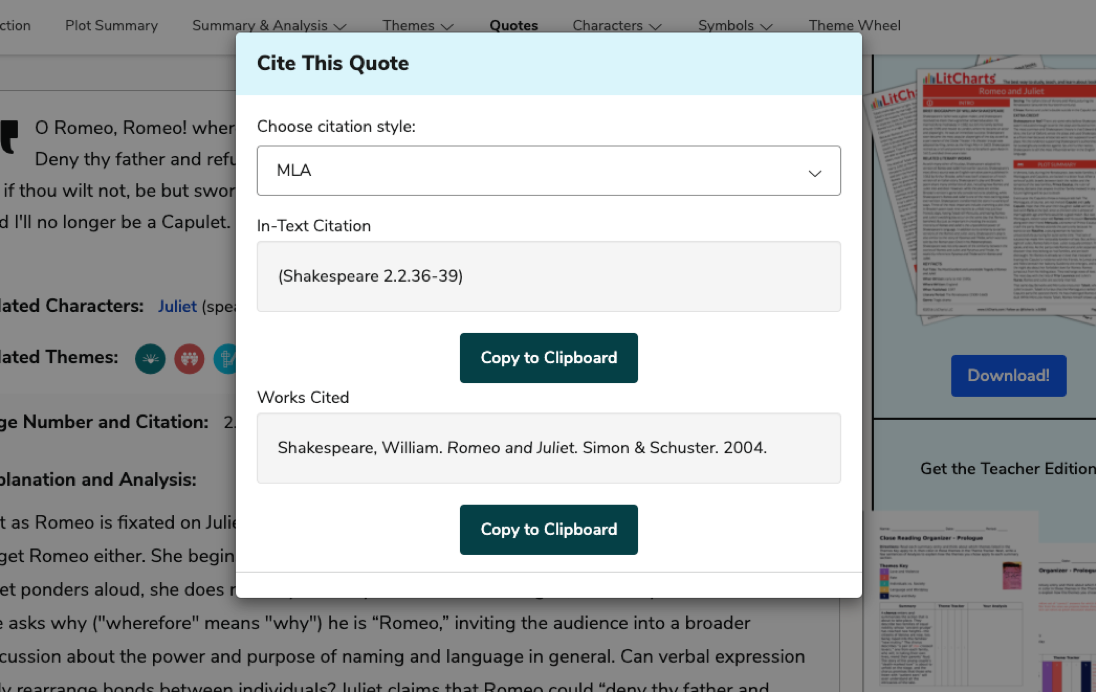
Quotes Explanations
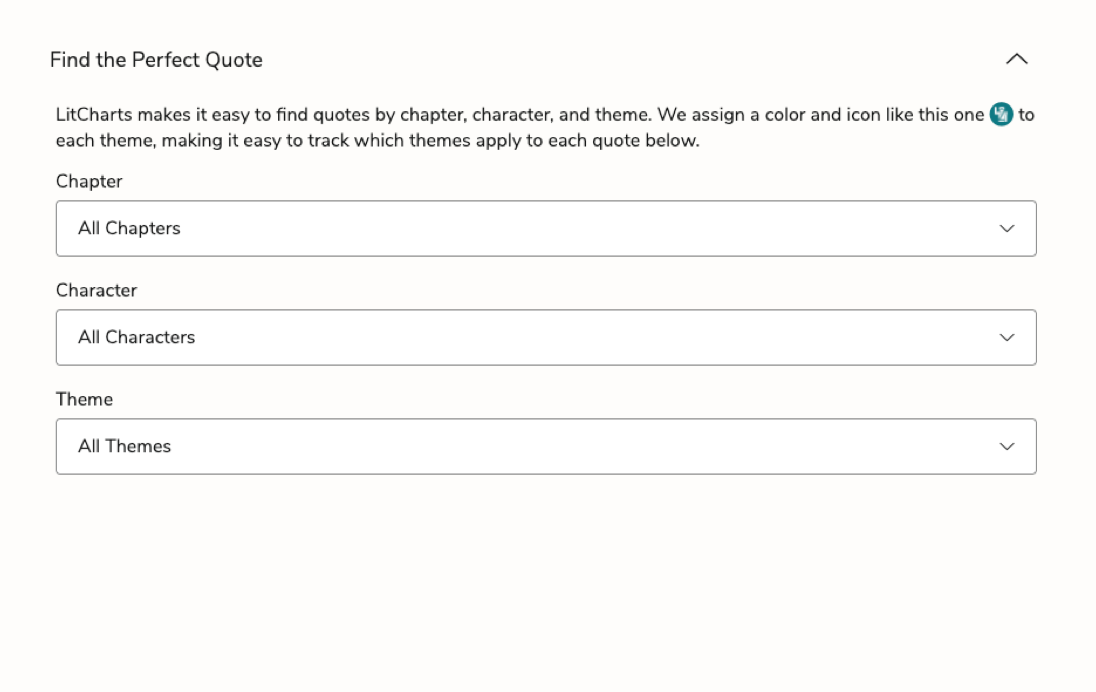
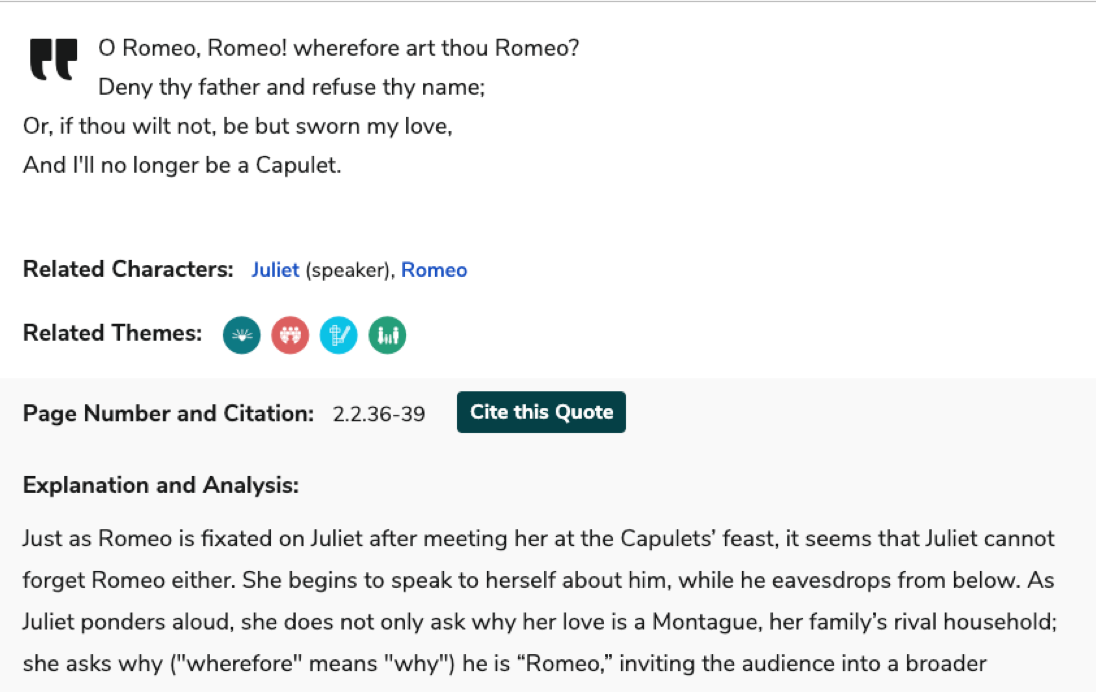
Find the perfect quote. Understand it perfectly. Then rock the citation, too.
For all 50,213 quotes we cover.
For all 50,213 quotes we cover.


Teacher Editions
Close reading made easy for students.
Time saved for teachers.
For every book we cover.
Time saved for teachers.
For every book we cover.


Common Core-aligned


PDFs of modern translations of every one of Shakespeare's 37 plays, 154 sonnets, and 3 longer poems.

Literary Terms and Devices
Definitions and examples for every literary term and device you need to know.
Plus a quick-reference PDF with concise definitions of all 136 terms in one place.
Plus a quick-reference PDF with concise definitions of all 136 terms in one place.
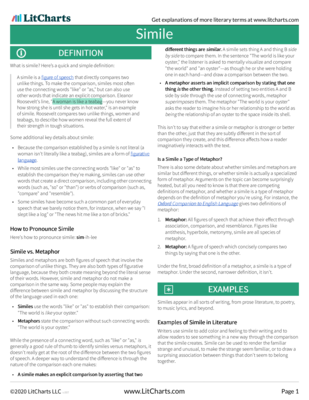
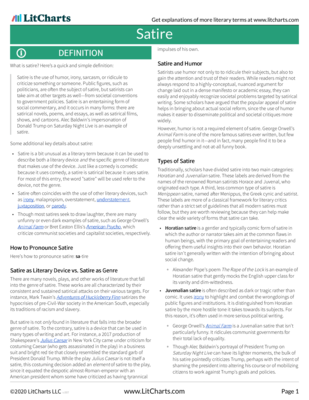
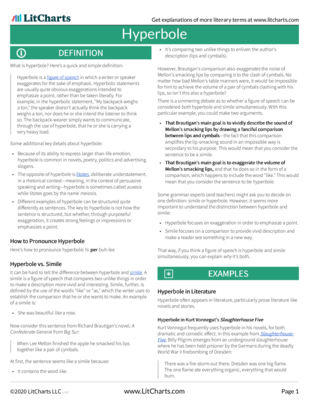
Try a free sample literary term PDF.


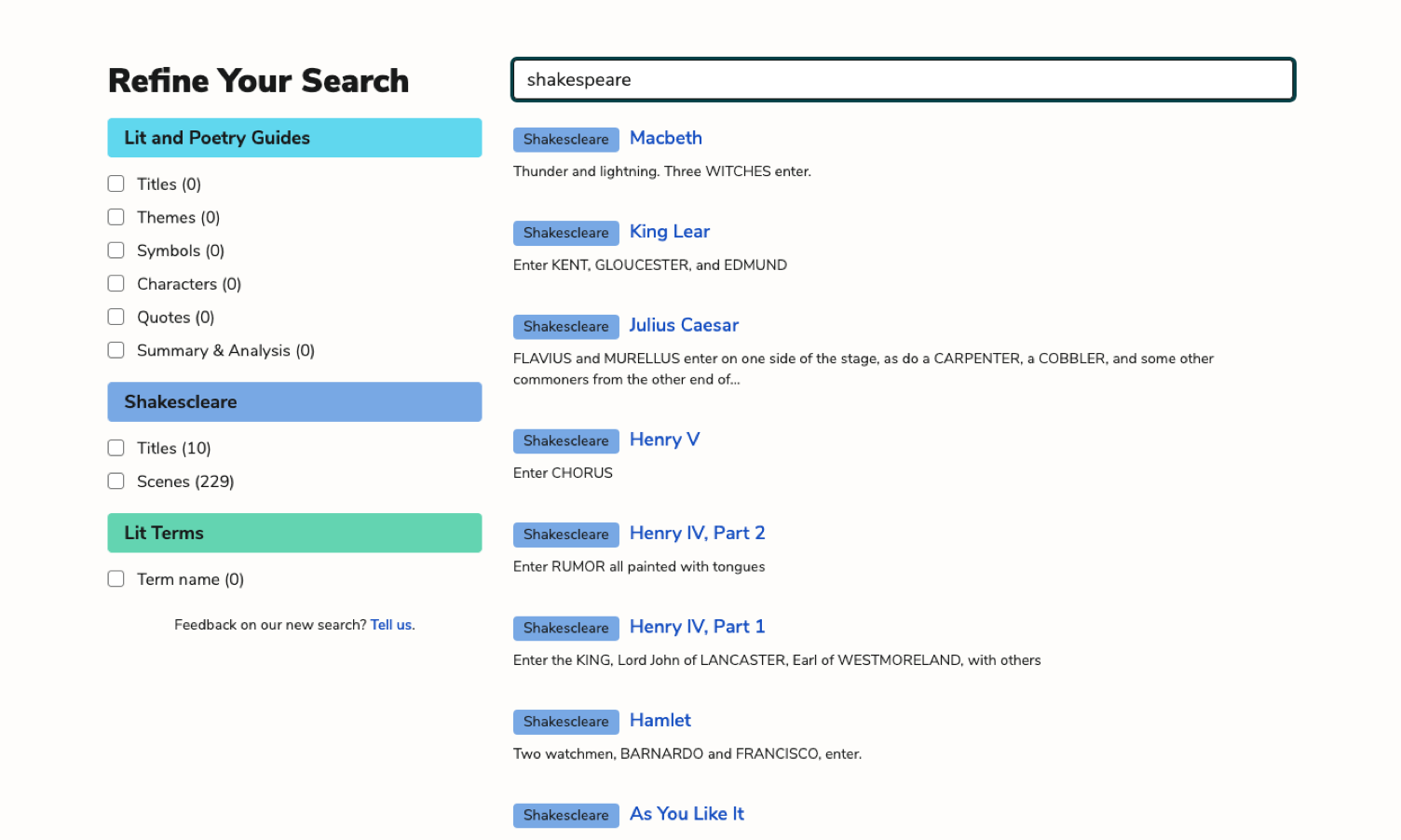
Advanced Search
Refine any search. Find related themes, quotes, symbols, characters, and more.

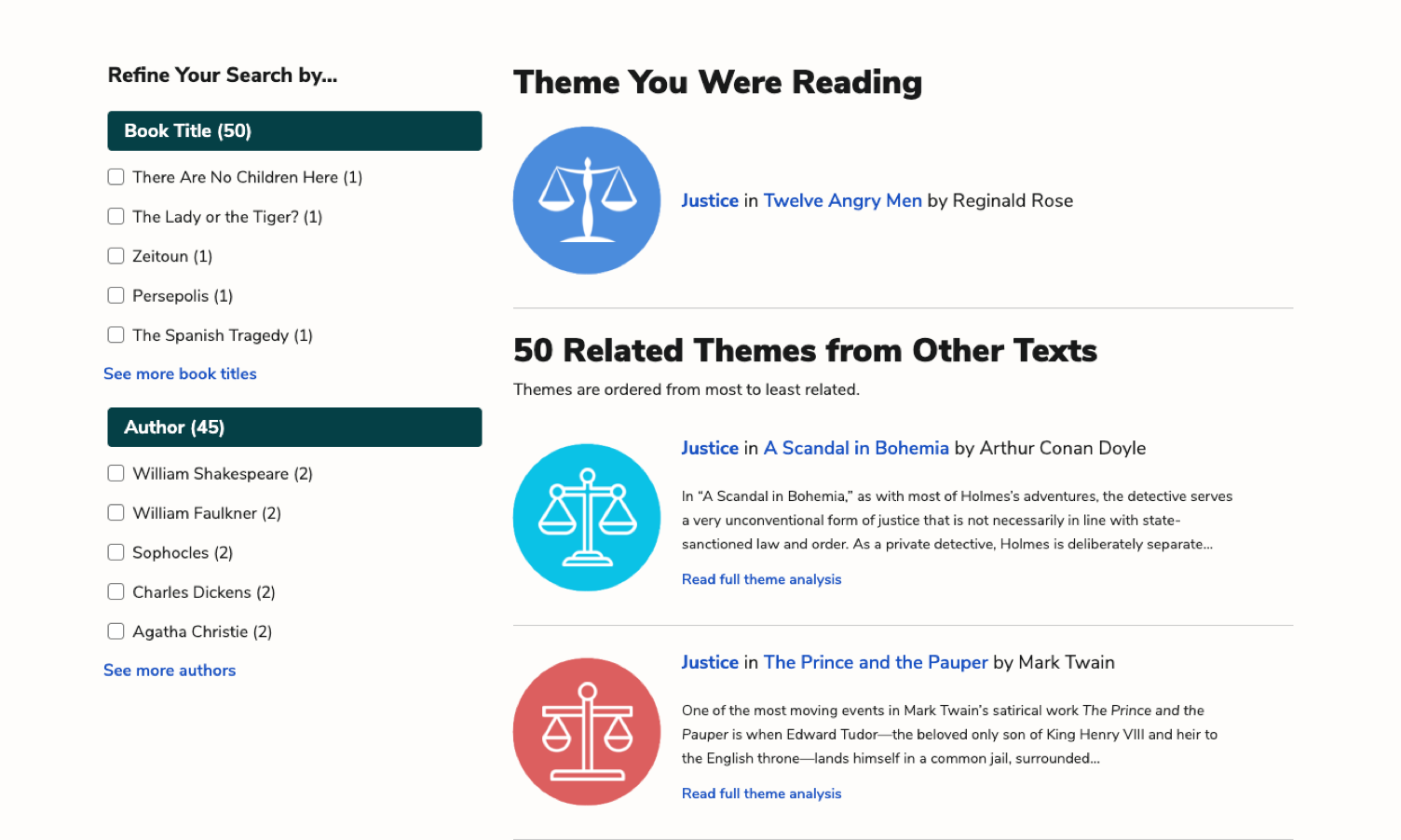
Related Themes
Comparing and contrasting texts? Find where any theme occurs across all of LitCharts in seconds.


Poetry Guides
Line-by-line explanations and analysis of figurative language and poetic devices.
For every lyric poem we cover.
For every lyric poem we cover.