
|
Have questions?
Contact us
Already a member? Sign in
|
Get every literary device explanation for The Scarlet LetterPlus so much more...
Sign up for LitCharts A+Get instant access to every literary device explanation, plus so much more...
Metaphor
Explanation and Analysis—Moral Stains:
Metaphorical stains appear as a motif throughout the novel, suggesting that immorality leaves traces that can't be erased. Although the scarlet letter itself is the primary example of such a mark, the narrator introduces the idea of moral stains in the "Custom House" chapter:
His son, too, inherited the persecuting spirit, and made himself so conspicuous in the martyrdom of the witches, that their blood may fairly be said to have left a stain upon him. So deep a stain, indeed, that his old dry bones, in the Charter Street burial-ground, must still retain it, if they have not crumbled utterly to dust!
The narrator describes a moral stain left on the bones of his own grandfather, Judge Hathorne, known for persecuting witches during the Salem Witch trials. The bones must not be literally stained with other people's blood, but the narrator imagines that this man's remains must bear a lasting mark of the atrocities he once committed. Hawthorne himself was descended from Hathorne and changed the spelling of his name to distance himself from this man's sins. He was thus personally familiar with the idea of being marked by immoral actions from long ago, and he felt that it was up to descendants to rid themselves of these old stains.
Pearl functions as a moral stain on Hester. Once Hester is pregnant with Pearl, it is impossible for her to conceal her adultery. But Pearl, like Hawthorne, is also a descendant who has been stained by her parents' actions. In Chapter 6, the narrator writes of Pearl's moral development:
The mother's impassioned state had been the medium through which were transmitted to the unborn infant the rays of its moral life; and, however white and clear originally, they had taken the deep stains of crimson and gold, the fiery lustre, the black shadow, and the untempered light of the intervening substance.
Pearl complicates the idea of moral stains as something always to be eradicated. She is "stained" with Hester's sin, but she is also stained with rays of light that have shone on her as though through a stained glass window. Hester is a complicated person who has stamped Pearl with all kinds of marks. There is beauty in the way Pearl bears all these marks. The fact that Hester's "impassioned state" has added color and depth to the originally "white and clear rays of [Pearl's] moral life" makes for a more interesting and captivating child.
The complexity of Pearl's inherited moral stains allows the scarlet A, too, to become a complex mark of Hester and Dimmesdale's morality. The A takes many forms (the fabric letter, Dimmesdale's brand, the meteor in the sky) and is not always something the characters long to cast off. Pearl even imagines that she will inherit Hester's A one day, and that it will simply mark her passage into adulthood. The A thus comes to signify a variety of meanings, even to the townspeople. Unlike the stain on Judge Hathorne's bones, the stain on Hester and Pearl is not wholly horrifying. Rather, it symbolizes an interest in and an ongoing reckoning with the past.
Monthly
Annual (Best Value)

$595USD/mo
Charged $71.40 USD every year
 Teacher
$795USD/mo
Charged $95.40 USD every year


Literature Guide PDFs
LitCharts PDFs for every book you'll read this year.
Instant PDF downloads of all 2245 LitCharts literature guides and of every new one we publish. Try a free sample literature guide.
"Would not have made it through AP Literature without the printable PDFs. They're like having in-class notes for every discussion!"





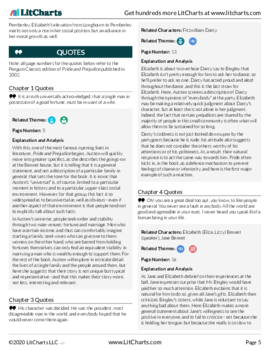



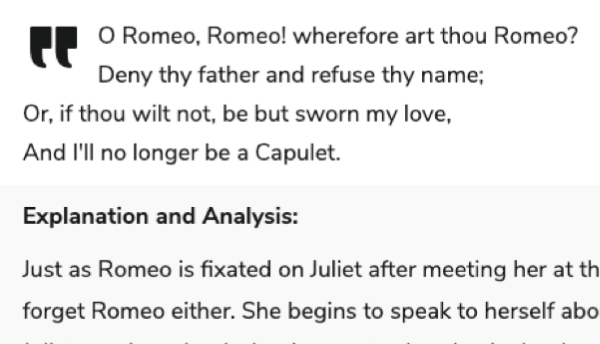
Quotes Explanations
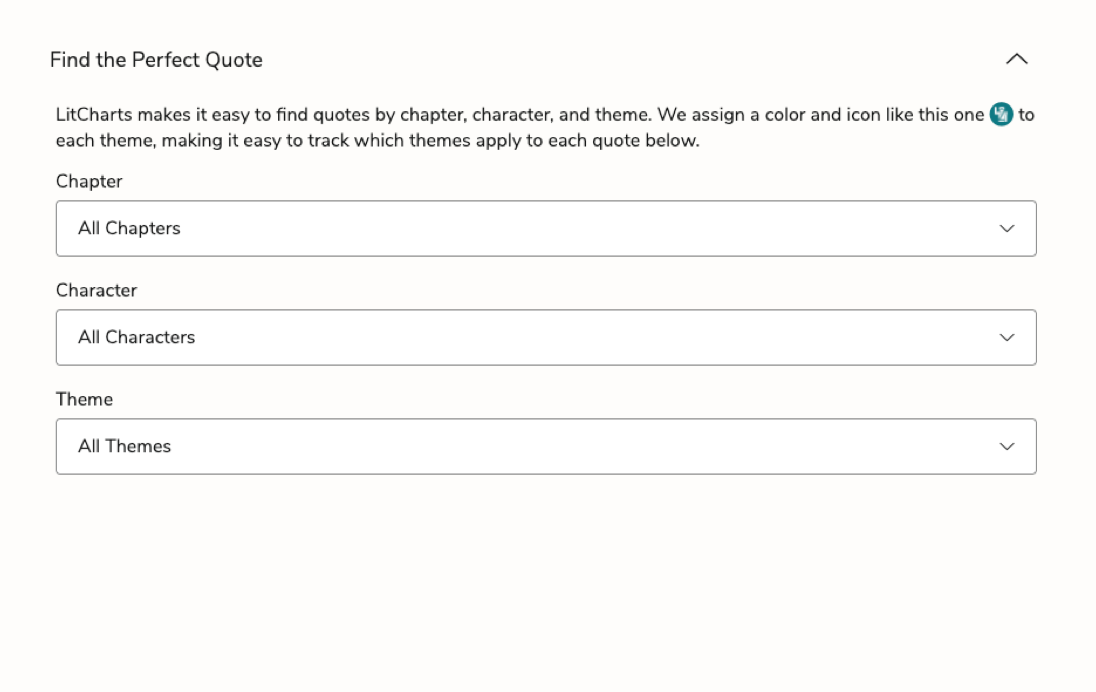
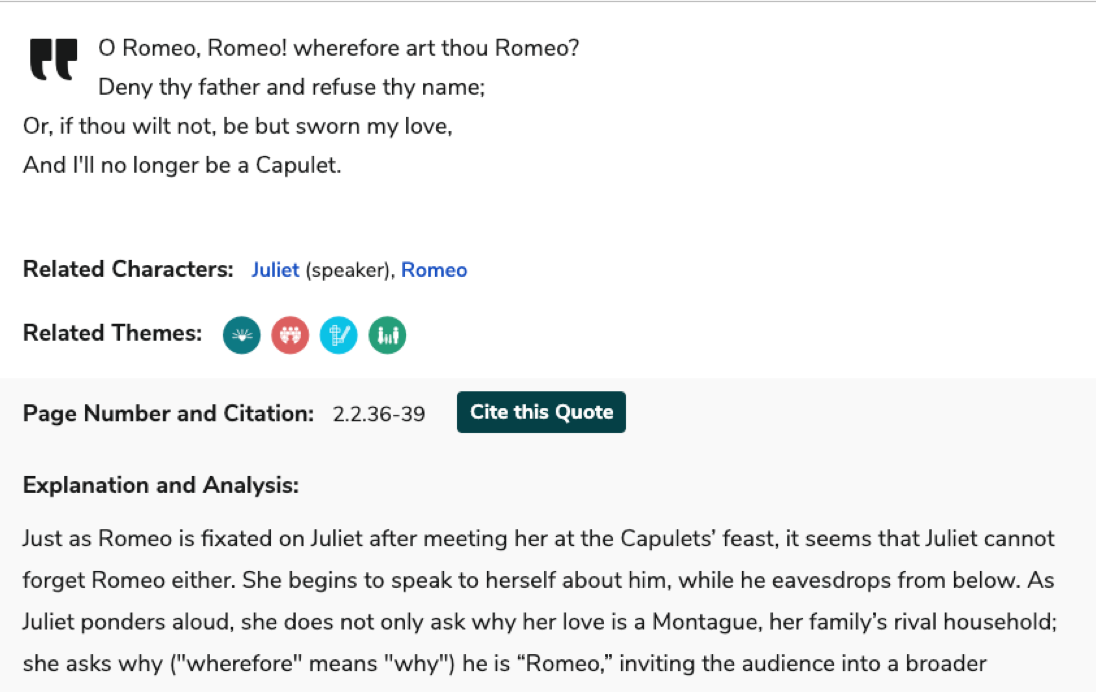
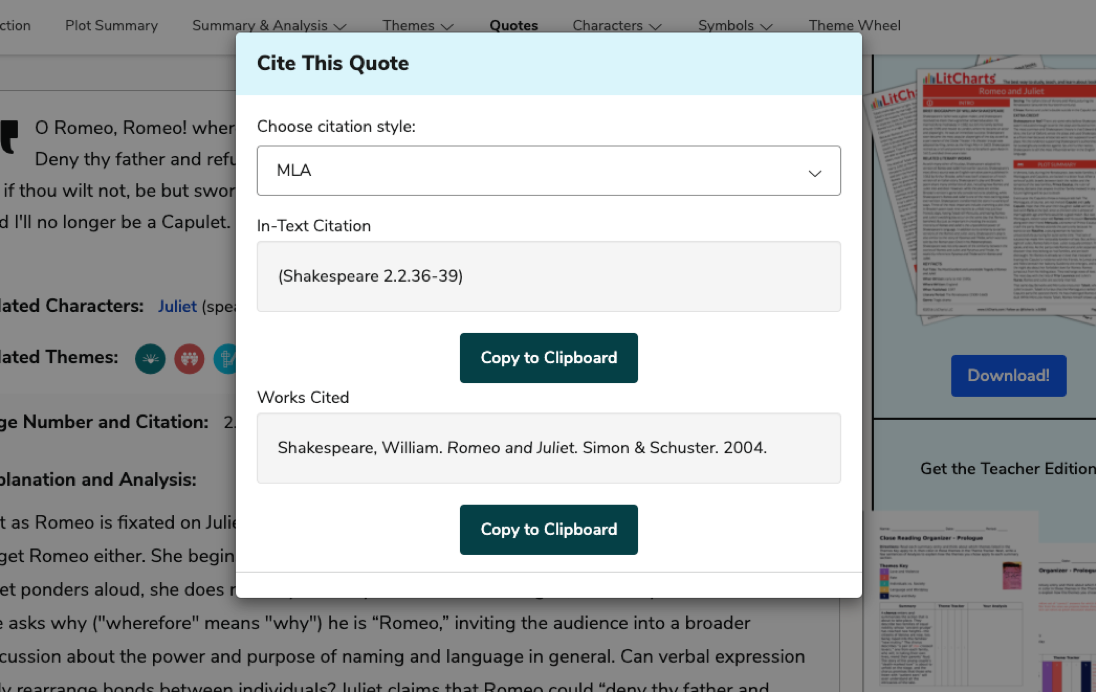
Find the perfect quote. Understand it perfectly. Then rock the citation, too.
For all 50,066 quotes we cover.
For all 50,066 quotes we cover.


Teacher Editions
Close reading made easy for students.
Time saved for teachers.
For every book we cover.
Time saved for teachers.
For every book we cover.


Common Core-aligned


PDFs of modern translations of every one of Shakespeare's 37 plays, 154 sonnets, and 3 longer poems.

Literary Terms and Devices
Definitions and examples for every literary term and device you need to know.
Plus a quick-reference PDF with concise definitions of all 136 terms in one place.
Plus a quick-reference PDF with concise definitions of all 136 terms in one place.
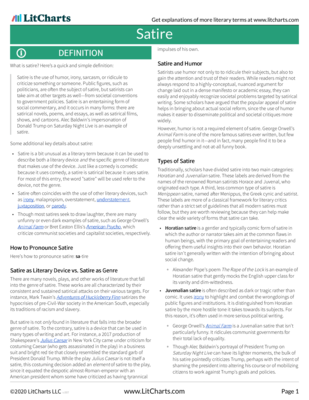
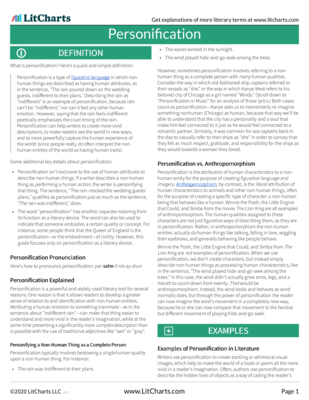
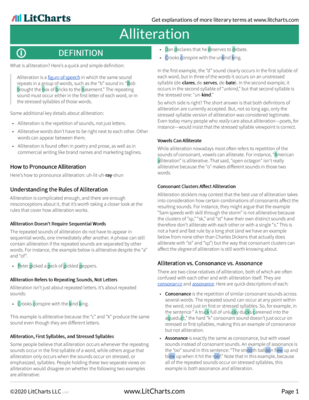
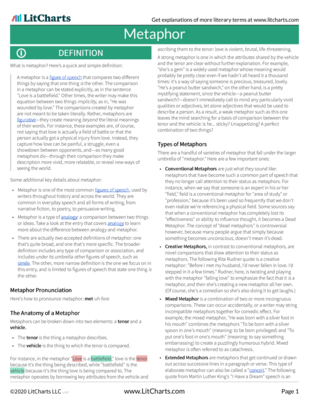
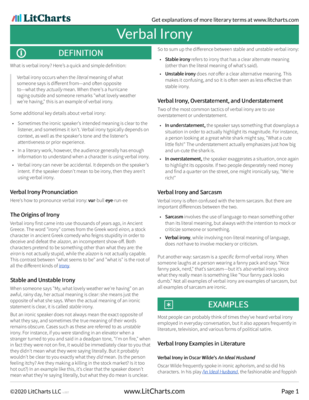
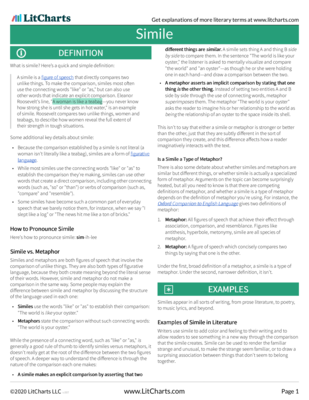
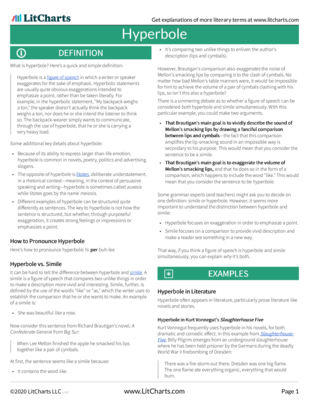
Try a free sample literary term PDF.


Advanced Search
Refine any search. Find related themes, quotes, symbols, characters, and more.
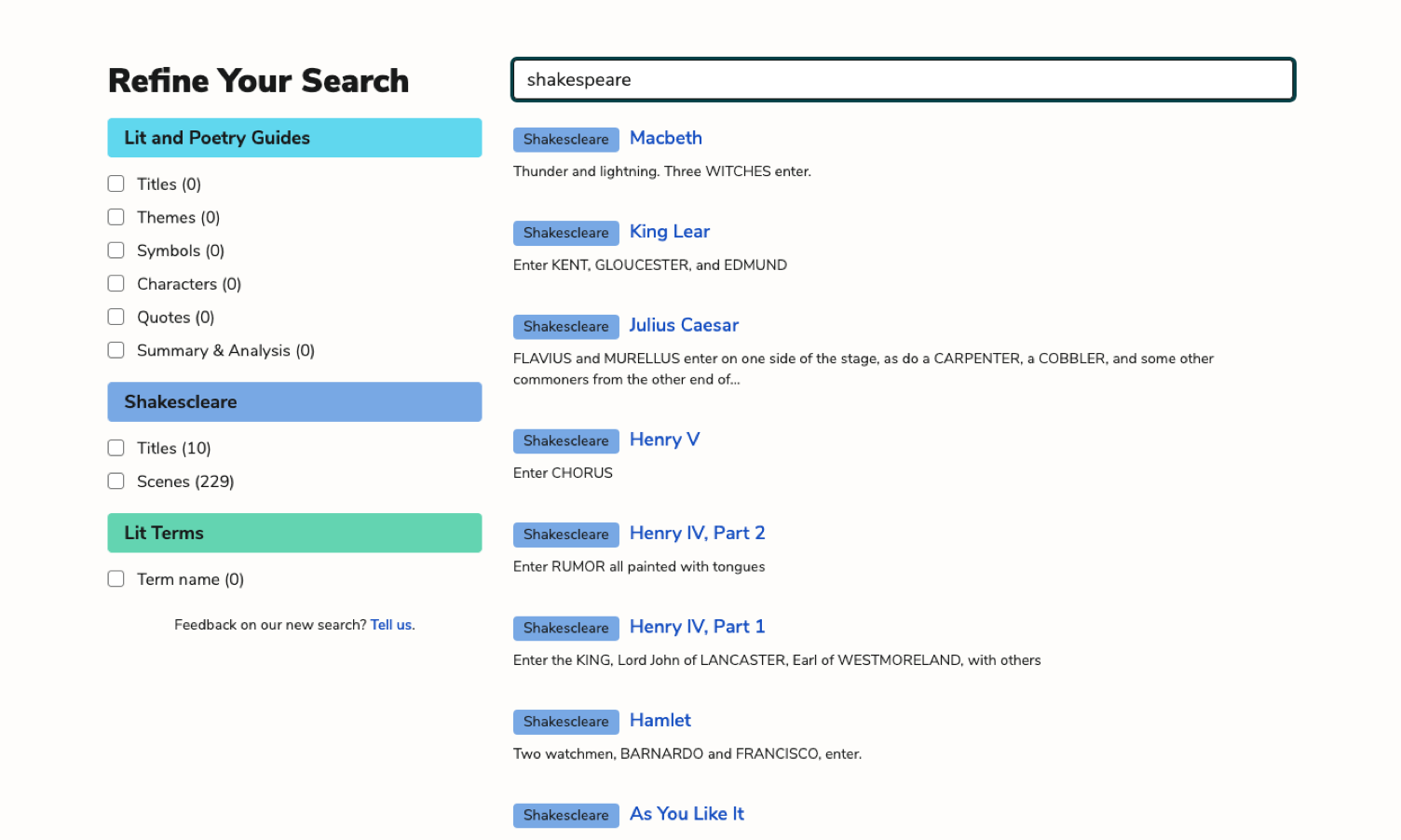

Related Themes
Comparing and contrasting texts? Find where any theme occurs across all of LitCharts in seconds.


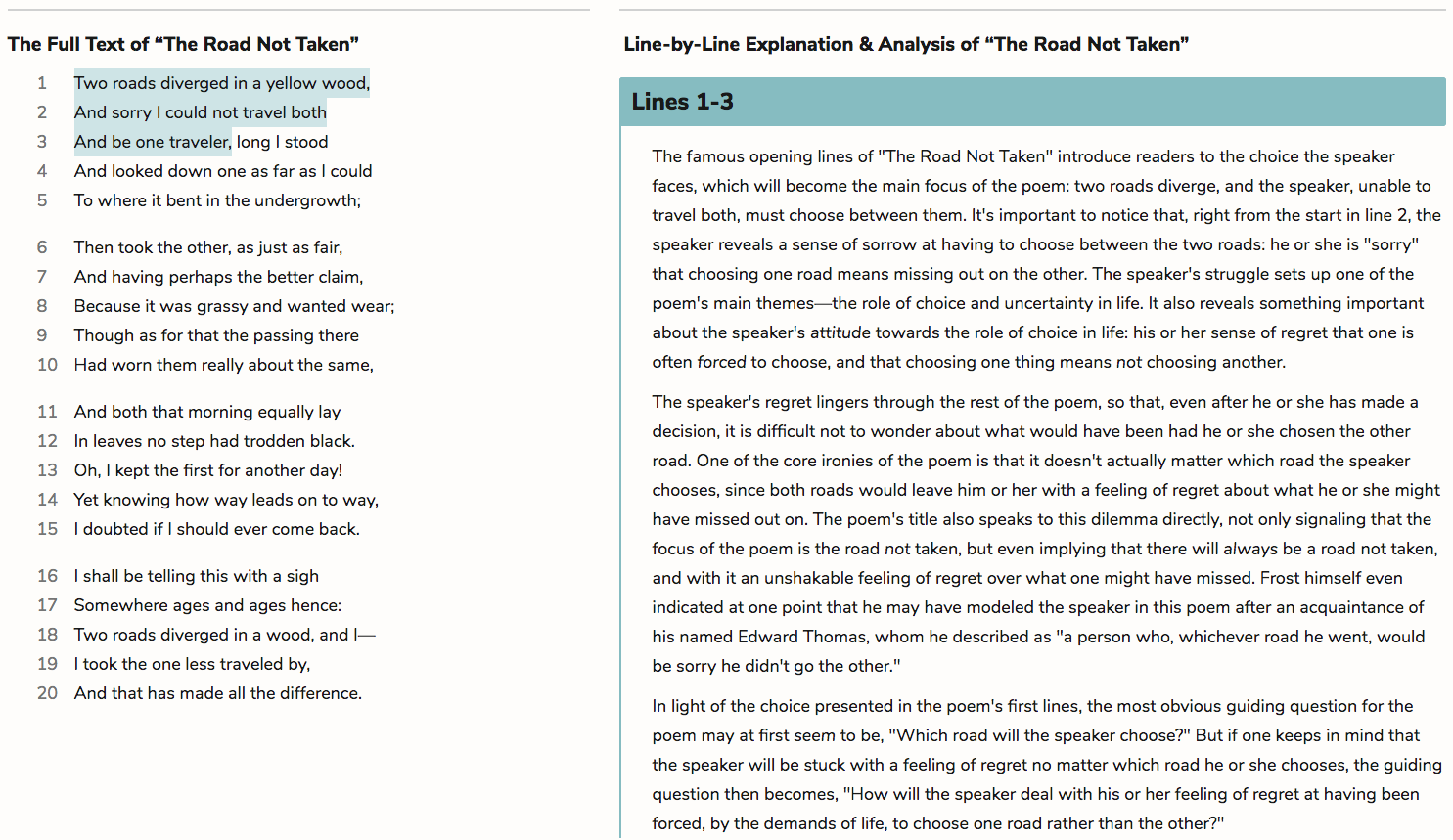
Poetry Guides
Line-by-line explanations and analysis of figurative language and poetic devices.
For every lyric poem we cover.
For every lyric poem we cover.