


|
Have questions?
Contact us
Already a member? Sign in
|
Get every literary device explanation for Julius CaesarPlus so much more...
Sign up for LitCharts A+Get instant access to every literary device explanation, plus so much more...
Metaphor
Explanation and Analysis—A Wolf in Roman Clothing:
In Act 1, Scene 3, Cassius offers his withering opinion of Caesar. Using a set of nested metaphors, he sets up his rival as a lowly man who nonetheless presents a threat to the people of Rome if they do not pay attention:
And why should Caesar be a tyrant, then?
Poor man, I know he would not be a wolf
But that he sees the Romans are but sheep;
He were no lion, were not Romans hinds.
Those that with haste will make a mighty fire
Begin it with weak straws. What trash is Rome,
What rubbish, and what offal when it serves
For the base matter to illuminate
So vile a thing as Caesar!
Cassius demeans Caesar’s political prowess by accusing him of taking advantage of the weak Roman public using comparisons between the Romans being prey animals (sheep and hinds, or deer) who enable Caesar to act as a wolf or lion. Caesar “hastily” attempts to gain power, like the building of a fire, by manipulating the Roman populace like “weak straws,” fuel for his fire. Romans must be "rubbish," in Cassius’s view, to empower someone like Caesar.
This mixed metaphor conveys Cassius’s passionate angst as as he runs through a set of comparisons to convey his disdain for Caesar. Shakespeare also takes this opportunity to emphasizes a certain weakness in Cassius as an orator—his comparisons overlap in a bit of a jumble, though they do show the extent of Cassius's loathing.
Shakespeare pays particular attention to various uses of language and argument in Julius Caesar, as he examines the power of speech to affect political sentiment. This sequence presents Cassius at his most passionate and least refined. It also underscores a major point of pride for the political power players in Shakespeare's fictionalized Rome: manhood and honor are at the core of everything, and Cassius is keen to portray Caesar as a dishonorable and weak "wolf in sheep's clothing."
Monthly
Annual (Best Value)

$595USD/mo
Charged $71.40 USD every year





 Teacher
$795USD/mo
Charged $95.40 USD every year




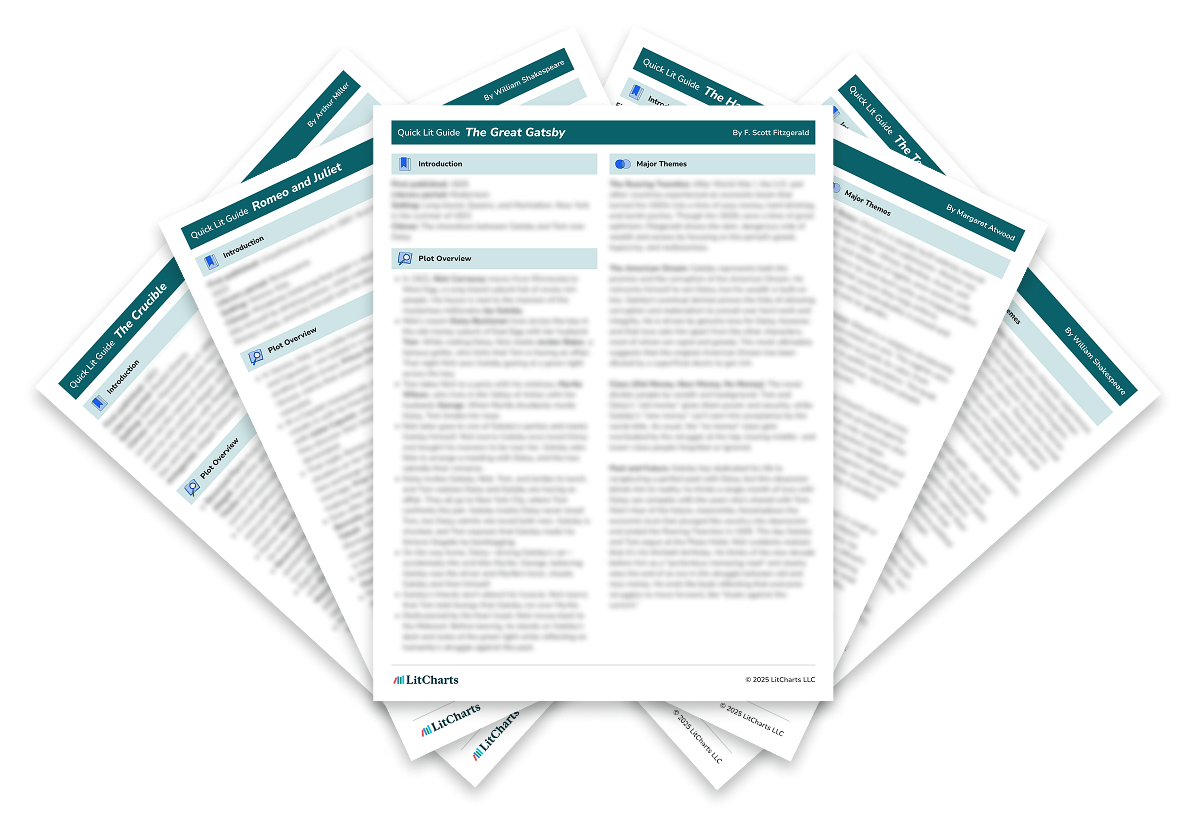
Literature Guide PDFs
LitCharts PDFs for every book you'll read this year.
Instant PDF downloads of all 2240 LitCharts literature guides and of every new one we publish. Try a free sample literature guide.
"Would not have made it through AP Literature without the printable PDFs. They're like having in-class notes for every discussion!"




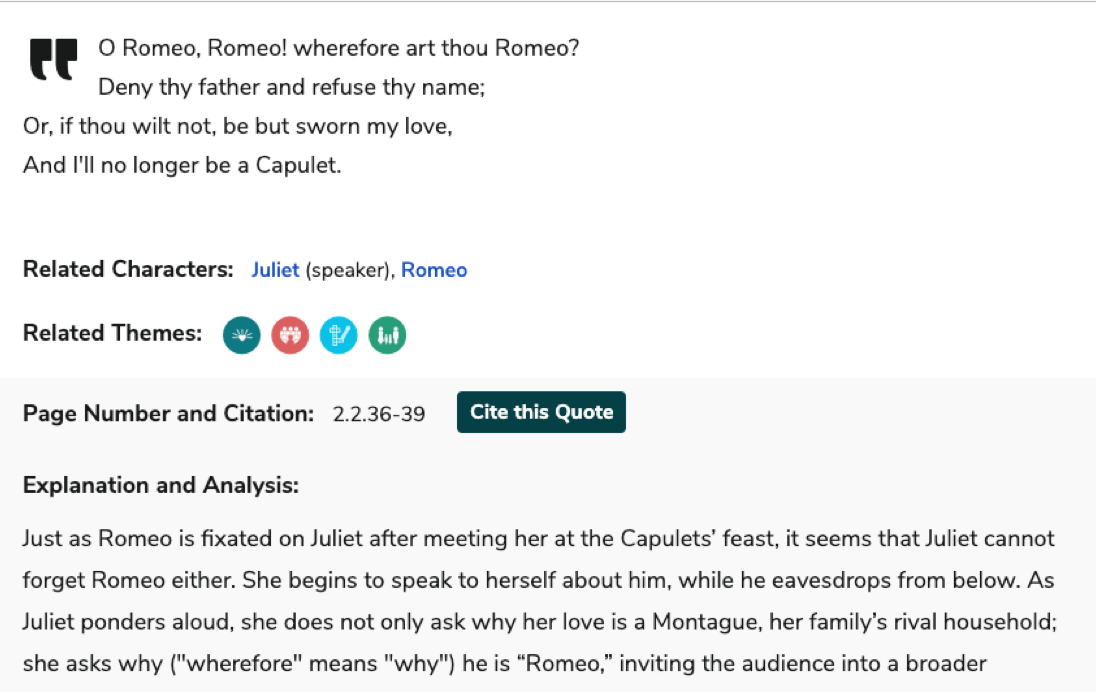
Quotes Explanations
Find the perfect quote. Understand it perfectly. Then rock the citation, too.
For all 49,945 quotes we cover.
For all 49,945 quotes we cover.



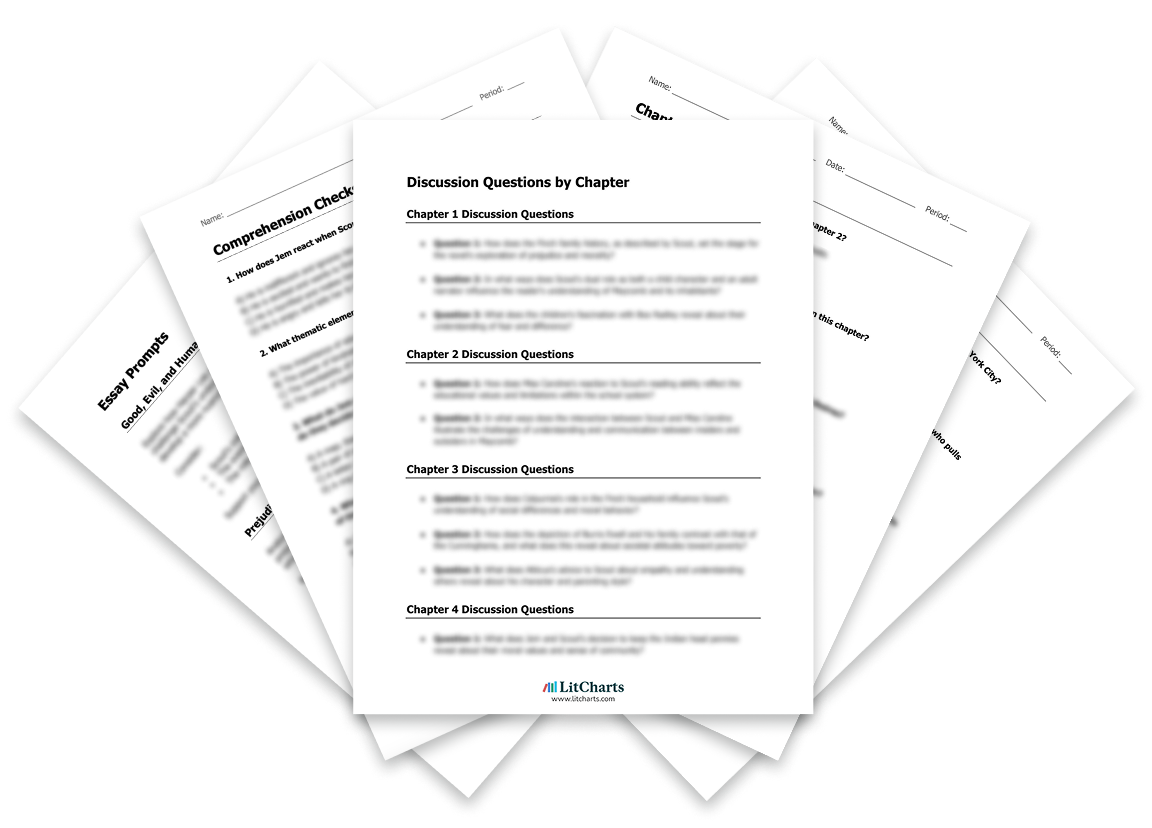
Teacher Editions
Close reading made easy for students.
Time saved for teachers.
For every book we cover.
Time saved for teachers.
For every book we cover.


Common Core-aligned


PDFs of modern translations of every one of Shakespeare's 37 plays, 154 sonnets, and 3 longer poems.

Literary Terms and Devices
Definitions and examples for every literary term and device you need to know.
Plus a quick-reference PDF with concise definitions of all 136 terms in one place.
Plus a quick-reference PDF with concise definitions of all 136 terms in one place.


Try a free sample literary term PDF.


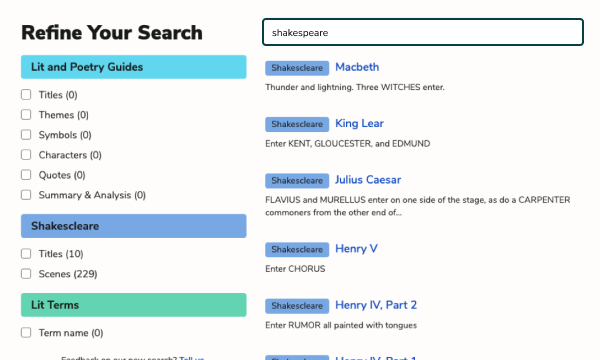
Advanced Search
Refine any search. Find related themes, quotes, symbols, characters, and more.


Related Themes
Comparing and contrasting texts? Find where any theme occurs across all of LitCharts in seconds.



Poetry Guides
Line-by-line explanations and analysis of figurative language and poetic devices.
For every lyric poem we cover.
For every lyric poem we cover.
