
|
Have questions?
Contact us
Already a member? Sign in
|
Get every literary device explanation for An Ideal Husband
Plus so much more...
Sign up for LitCharts A+
Get instant access to every literary device explanation, plus so much more...
Metaphor
Explanation and Analysis—Arnheim's Avarice:
In Act 2, Part 1, Sir Robert Chiltern recalls his meeting with Baron Arnheim—the aristocrat to whom he sold the secret of the Suez Canal in order to jumpstart his own political career. In his description of Arnheim and his lavish residence, Wilde goes wild with literary devices; the sequence is laden with metaphors and the visual imagery of wealth:
…with a strange smile on his pale, curved lips, he led me through his wonderful picture gallery, showed me his tapestries, his enamels, his jewels, his carved ivories, made me wonder at the strange loveliness of the luxury in which he lived; and then told me that luxury was nothing but a background, a painted scene in a play, and that power, power over other men, power over the world, was the one thing worth having, the one supreme pleasure worth knowing, the one joy one never tired of, and that in our century only the rich possessed it.
The rich visual description of Arnheim’s surroundings underscores the passage's central metaphor that this excess, extraordinary though it may seem, is only a “painted scene in a play.” Wealth is the background set design for the real drama of life: the power to manipulate, to control, and to rule over other people. By this metaphor, Arnheim appears to think of himself as a sort of theatrical director or puppet master—and that this is the “natural” way for the rich and powerful to behave. Robert’s account of Arnheim’s worldview self-consciously toys with its own setting within an actual work of theater: even as Robert describes the artifice of Arnheim’s life, he is himself a character played by an actor within a fictional environment created by Wilde. Throughout An Ideal Husband, Wilde uses the inherently artificial nature of theatrical drama to reveal and critique the more insidious artifice of London society—a world that, Wilde argues, is no more real than a play.
Monthly
Annual (Best Value)

$595USD/mo
Charged $71.40 USD every year
 Teacher
$795USD/mo
Charged $95.40 USD every year
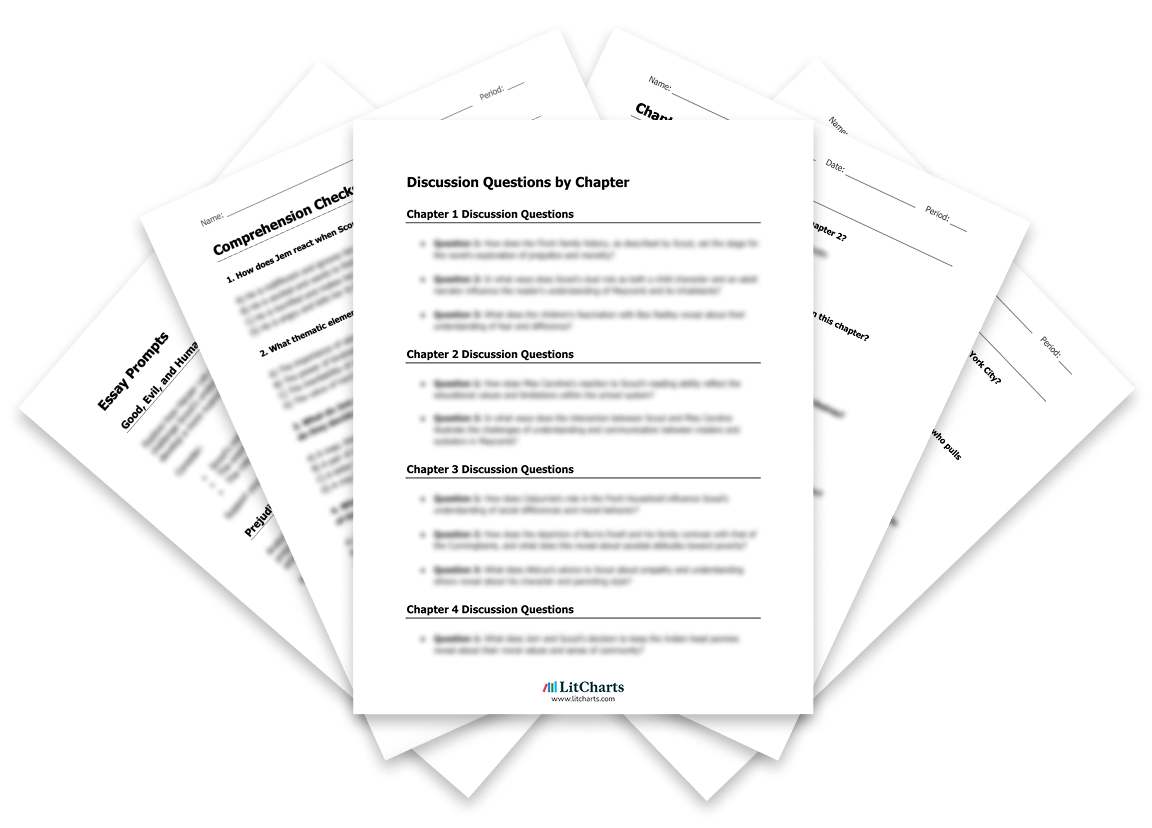


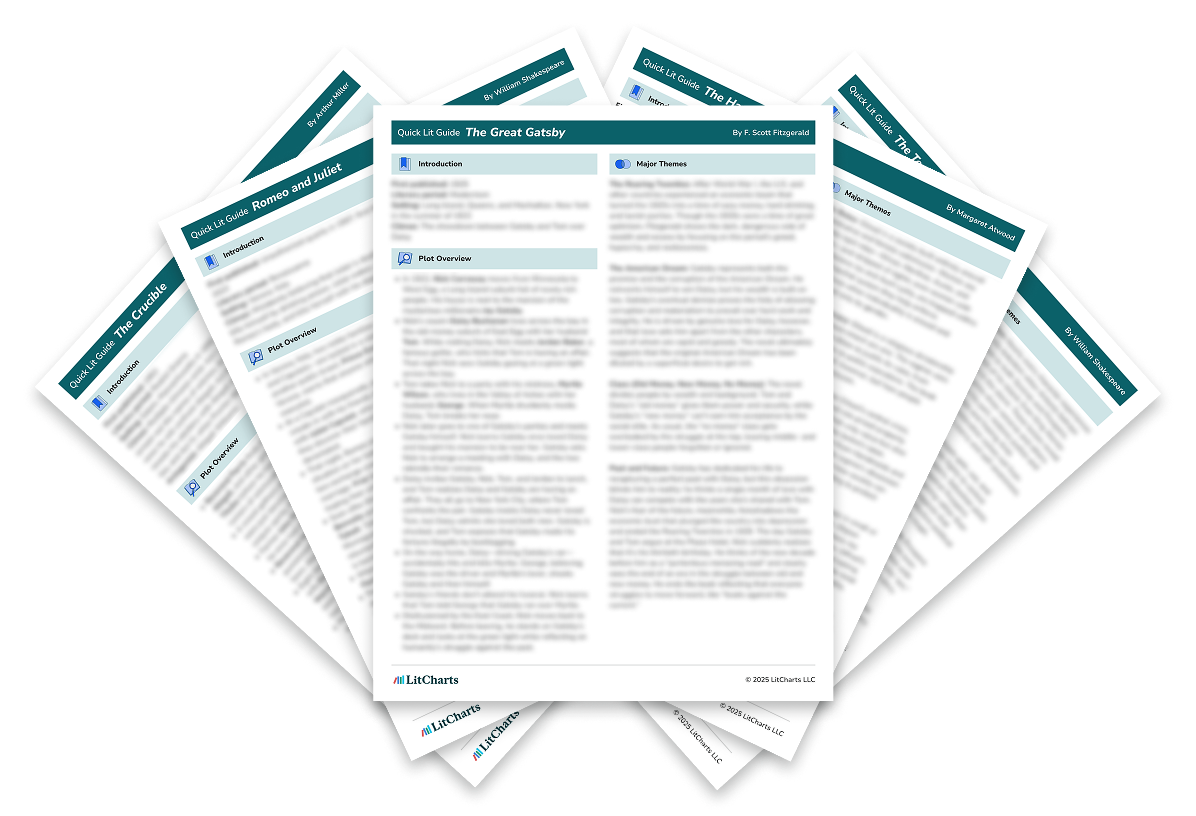
Literature Guide PDFs
LitCharts PDFs for every book you'll read this year.
Instant PDF downloads of all 2256 LitCharts literature guides and of every new one we publish. Try a free sample literature guide.
"Would not have made it through AP Literature without the printable PDFs. They're like having in-class notes for every discussion!"






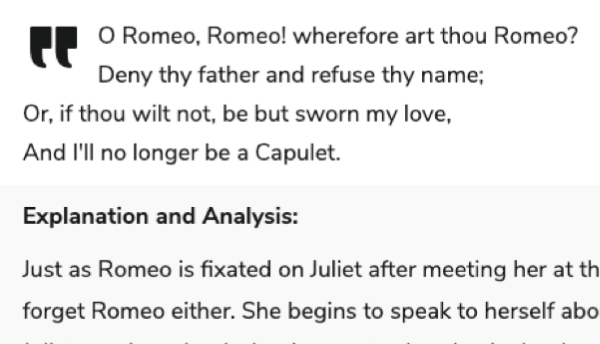
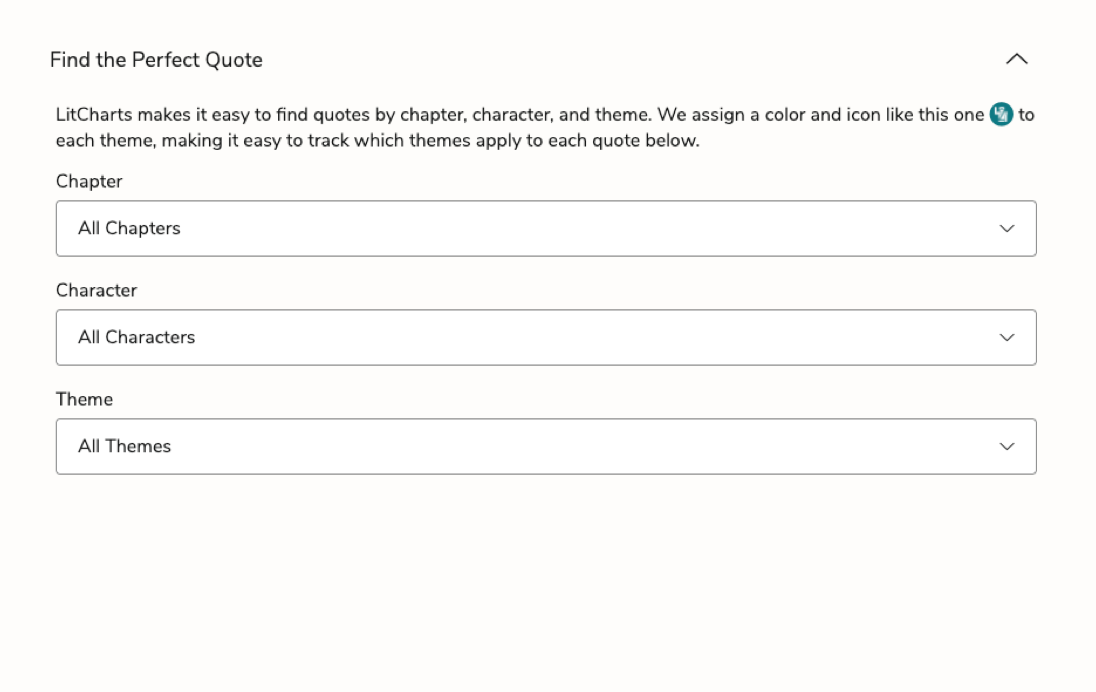
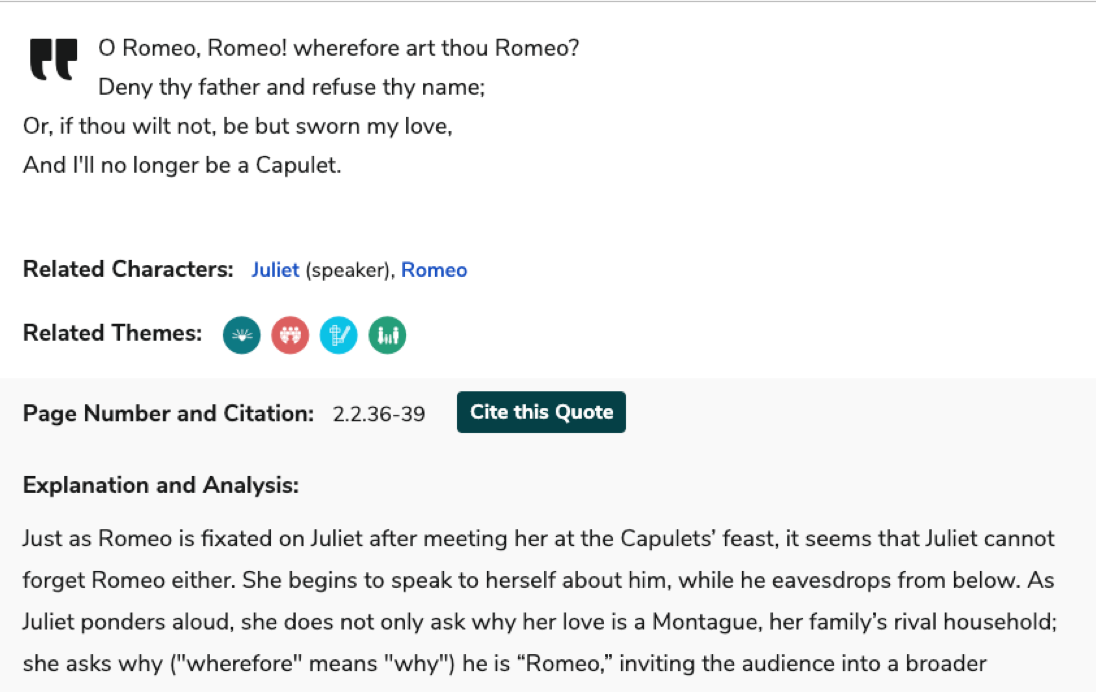
Quotes Explanations
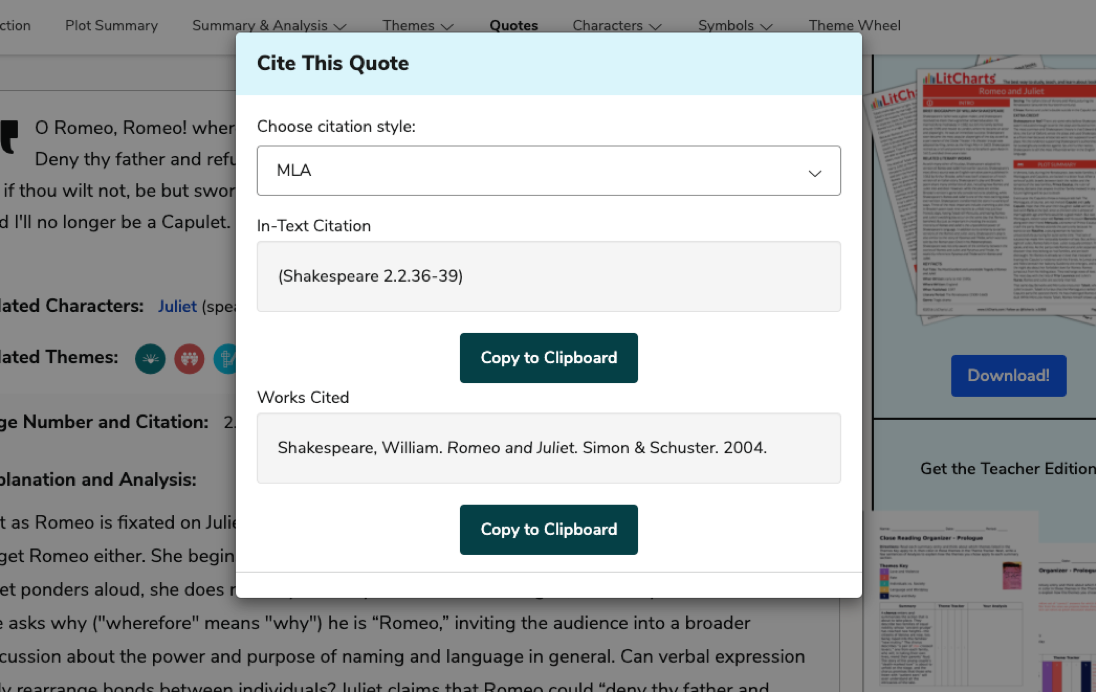
Find the perfect quote. Understand it perfectly. Then rock the citation, too.
For all 50,308 quotes we cover.
For all 50,308 quotes we cover.


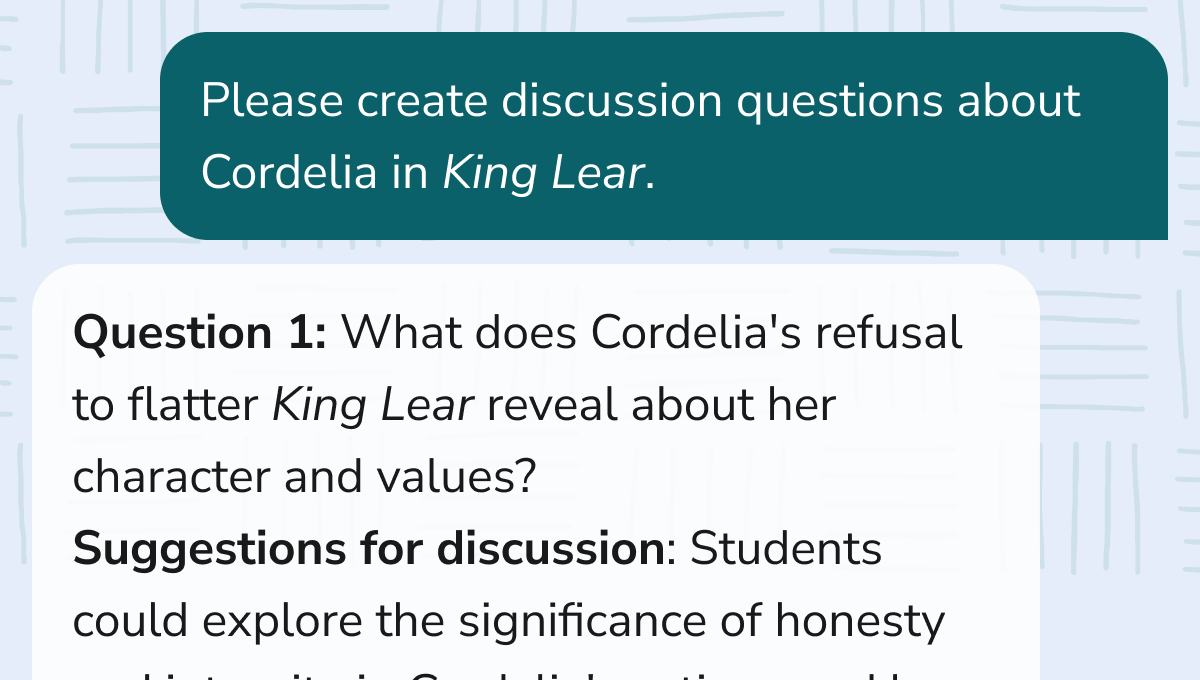
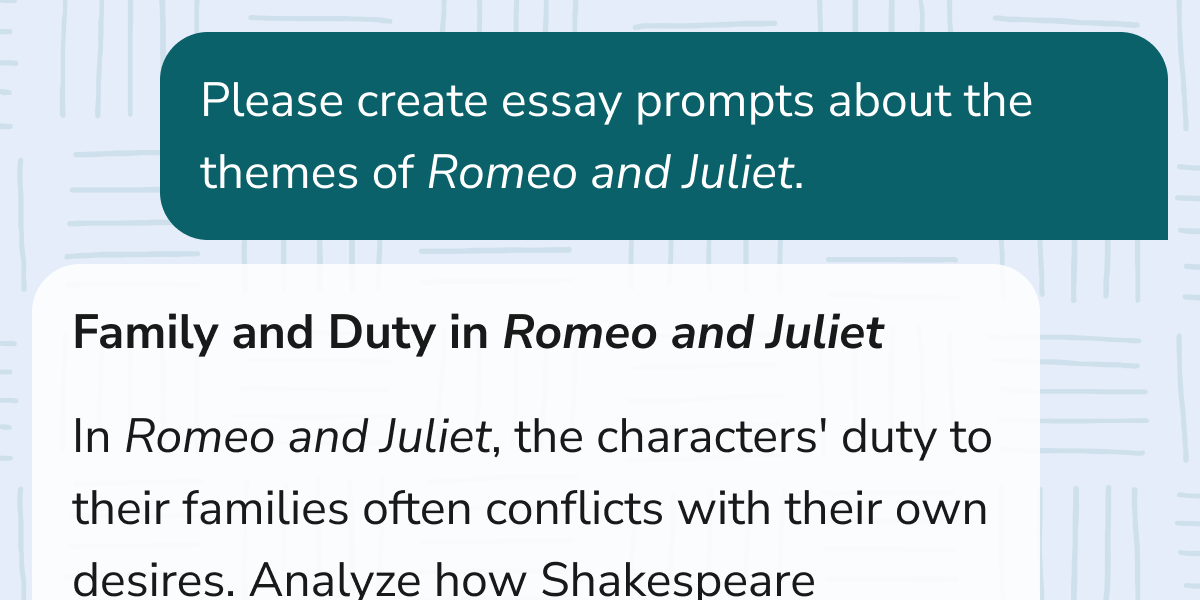
Teacher Editions
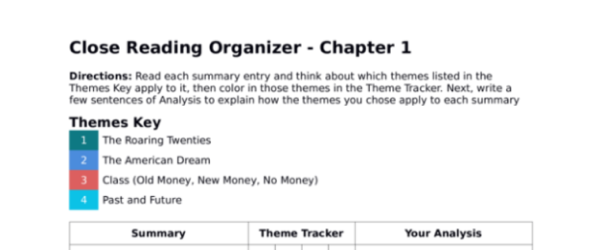
Close reading made easy for students.
Time saved for teachers.
For every book we cover.
Time saved for teachers.
For every book we cover.


Common Core-aligned


PDFs of modern translations of every one of Shakespeare's 37 plays, 154 sonnets, and 3 longer poems.

Literary Terms and Devices
Definitions and examples for every literary term and device you need to know.
Plus a quick-reference PDF with concise definitions of all 136 terms in one place.
Plus a quick-reference PDF with concise definitions of all 136 terms in one place.
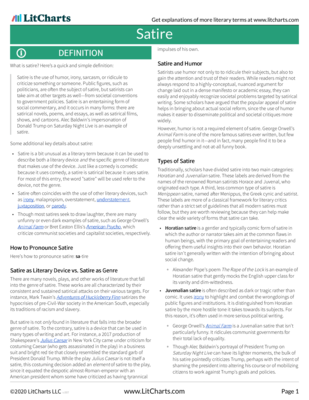
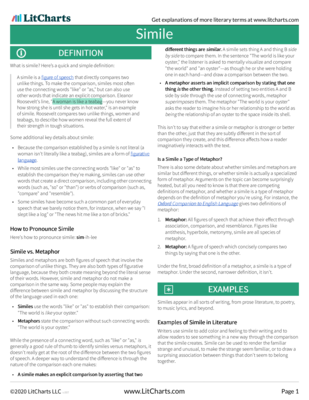
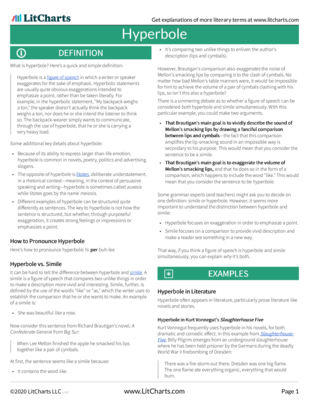
Try a free sample literary term PDF.


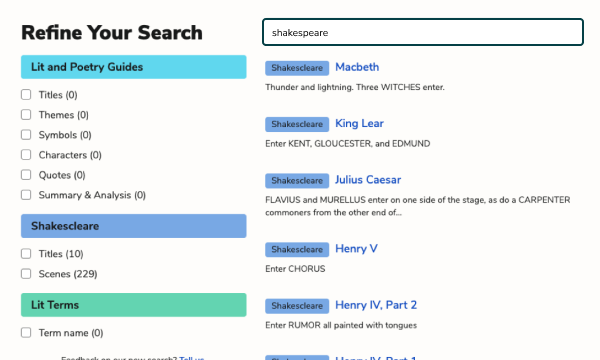
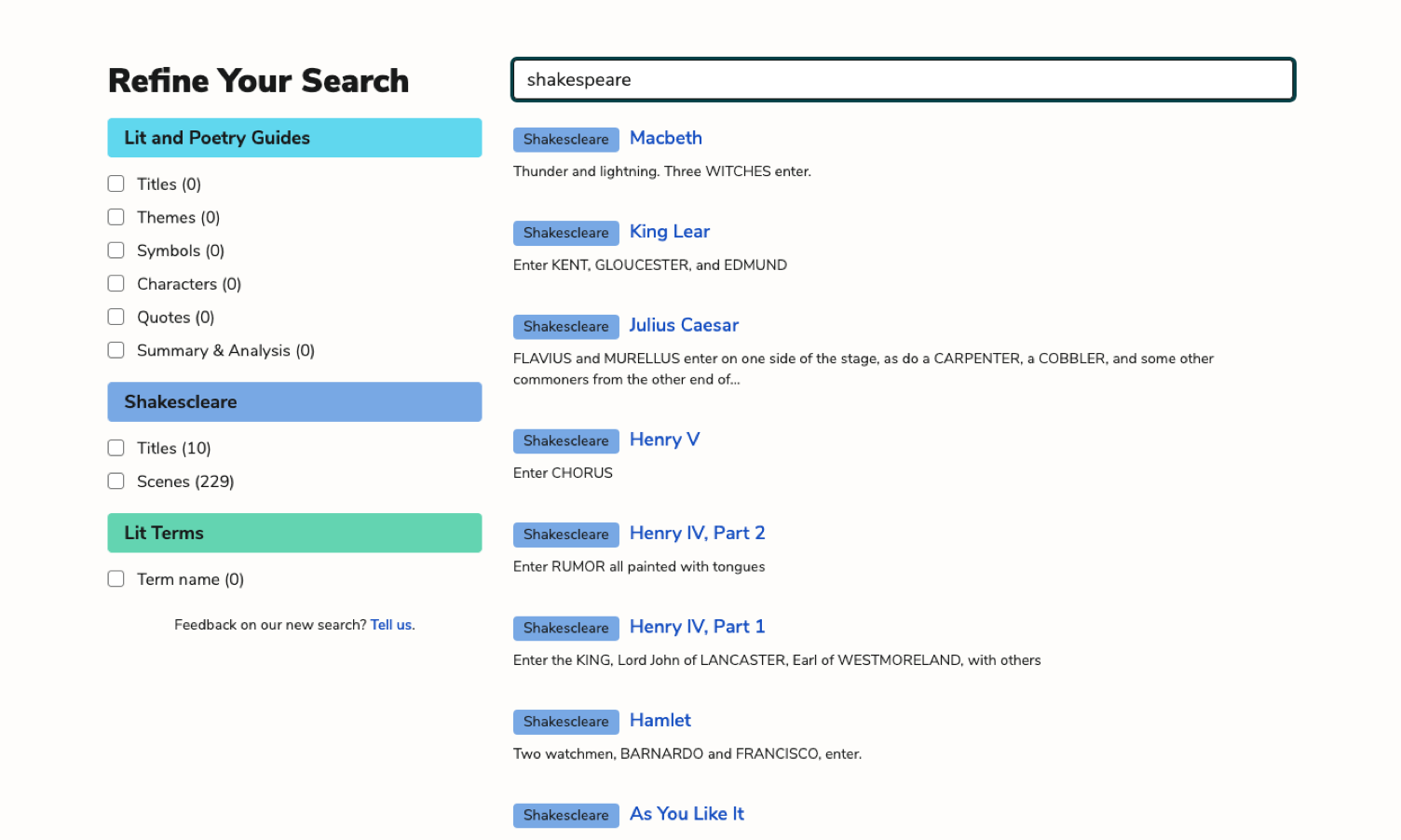
Advanced Search
Refine any search. Find related themes, quotes, symbols, characters, and more.

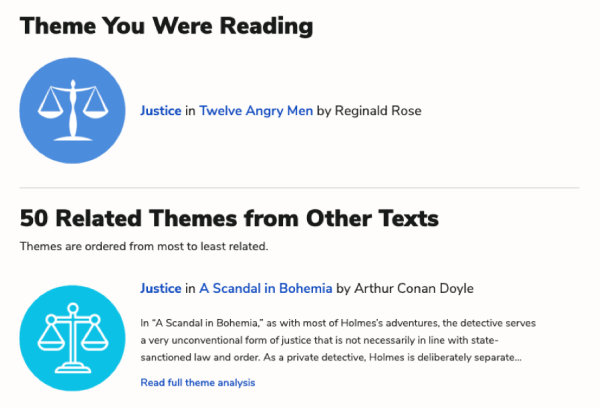
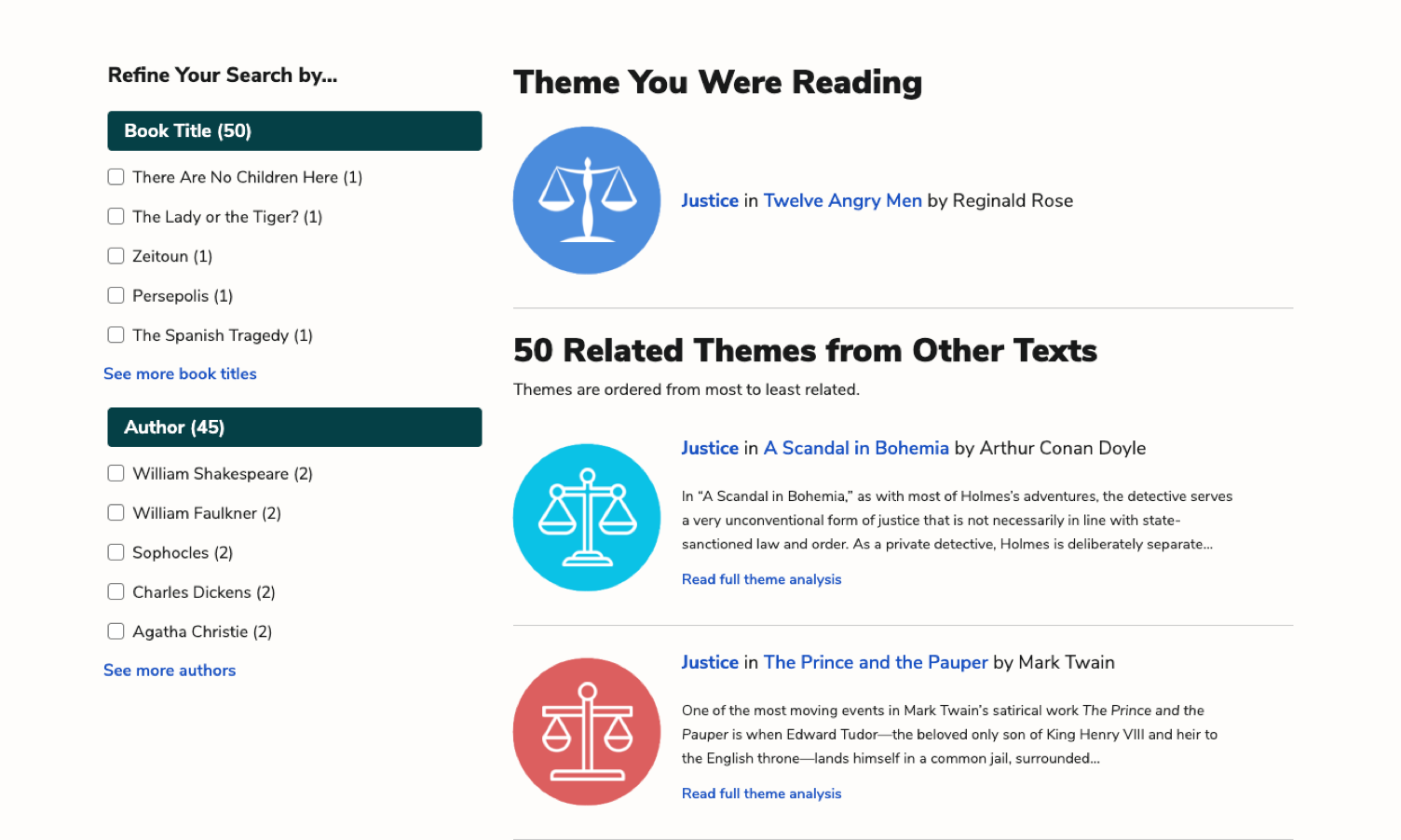
Related Themes
Comparing and contrasting texts? Find where any theme occurs across all of LitCharts in seconds.


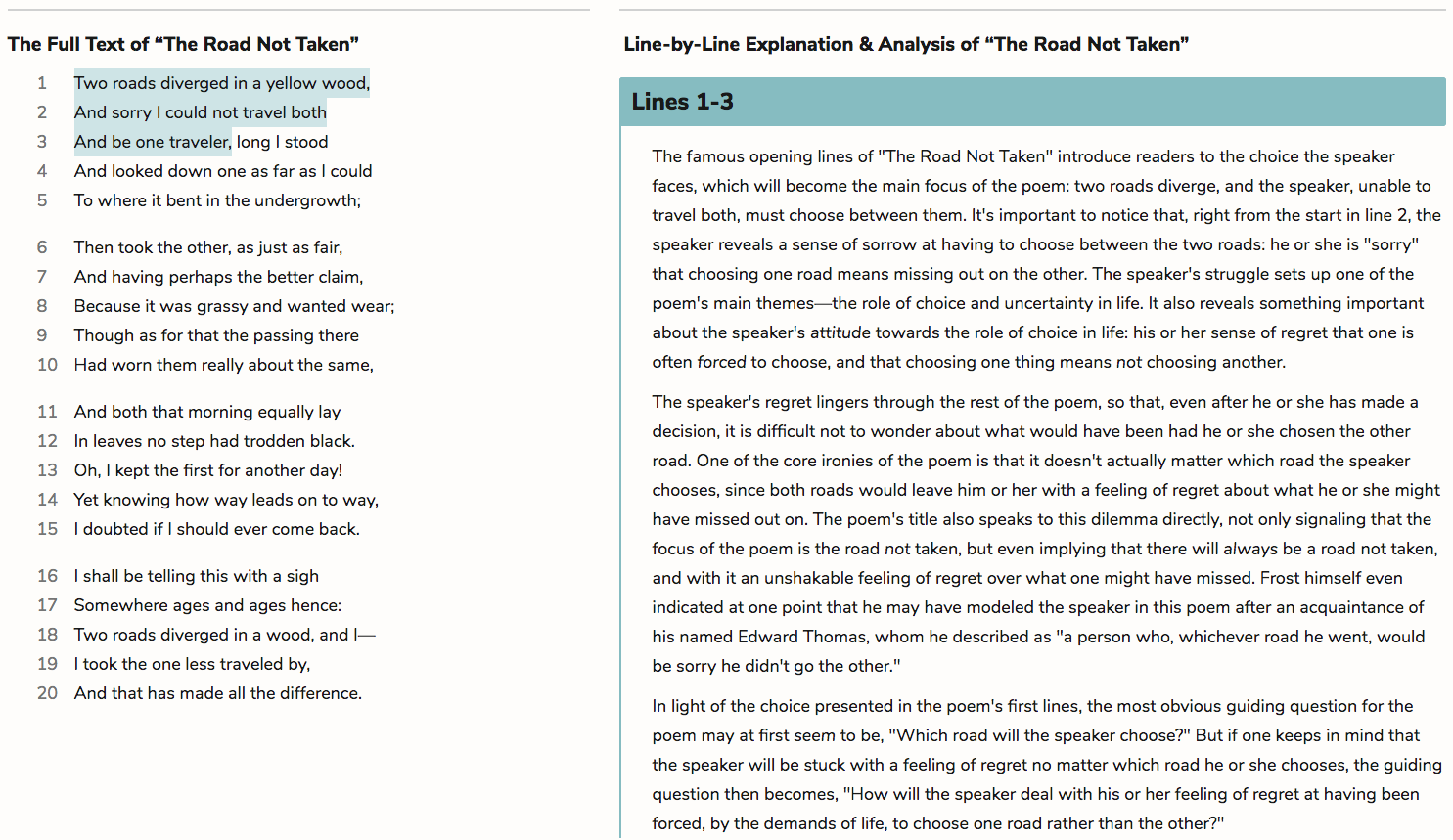
Poetry Guides
Line-by-line explanations and analysis of figurative language and poetic devices.
For every lyric poem we cover.
For every lyric poem we cover.