
|
Have questions?
Contact us
Already a member? Sign in
|
Get every literary device explanation for 1984
Plus so much more...
Sign up for LitCharts A+
Get instant access to every literary device explanation, plus so much more...
Metaphor
Explanation and Analysis—The Past:
Over the course of the first book, the past is described using metaphors and similes that revolve around mist, erasure, and unsolvable equations. Through this, Orwell shows that the Party's rigorous control of reality and narratives about reality has emptied history of the meaning it once had. In Winston's view, the Party's most dangerous power is its ability to control people's own memories of the past: "If the Party could thrust its hand into the past and say of this or that event, it never happened—that, surely, was more terrifying than mere torture and death."
In the third chapter of the first book, Winston ponders the meaninglessness of a past that is constantly subject to top-down alterations:
The past, he reflected, had not merely been altered, it had been actually destroyed. For how could you establish even the most obvious fact when there existed no record outside your own memory? [...] Everything melted into mist.
At the end of a passage in which Winston reflects on the destruction of the past, he uses a metaphor to compare history to mist. While one can see and sometimes lightly feel mist, it cannot be captured. Mainly, it limits normal visibility. The past in Winston's world is not only nebulous, but adds to the obscurity of other aspects of life. Without a clear, verifiable knowledge of where one comes from, it is difficult to know where one is headed.
In the fourth chapter of the first book, this conception of the past is consolidated by a new metaphor. As Winston sits at his work desk making corrections to past records so that they correspond with the present, it occurs to him that history is like a palimpsest:
All history was a palimpsest, scraped clean and reinscribed exactly as often as was necessary.
A palimpsest is a manuscript page that has been scraped or wiped clean for the purpose of reuse. "Palimpsest" derives from an Ancient Greek word that means "scrape again," and it points to the ancient practice of reusing wax-coated tablets by smoothing them off after writing on them with a stylus. By comparing history to a palimpsest, Winston expresses that the Party uses the past at their whim: they tell a certain version of history while it works with their goals, until they wipe this version away in favor of a new, preferable version.
In the seventh chapter of the first book, another comparison occurs to Winston. With a simile, he compares the past to an unsolvable equation.
It was like a single equation with two unknowns. It might very well be that literally every word in the history books, even the things that one accepted without question, was pure fantasy.
Typically, a mathematical equation requires you to solve for one unknown variable. A single equation with two unknowns does not have a single solution. Through this simile, Winston captures the meaninglessness of the reality enforced by the Party. When the past is an unknown and the present is an unknown, it seems impossible to reach any stable, objective conclusions about the world. He then reinvokes the mist metaphor from the third chapter: "Everything faded into mist. The past was erased, the erasure was forgotten, the lie became truth." Not only is Winston exasperated at having to witness this cycle, he is forced to play a part in it every day at work.
Monthly
Annual (Best Value)

$595USD/mo
Charged $71.40 USD every year
 Teacher
$795USD/mo
Charged $95.40 USD every year
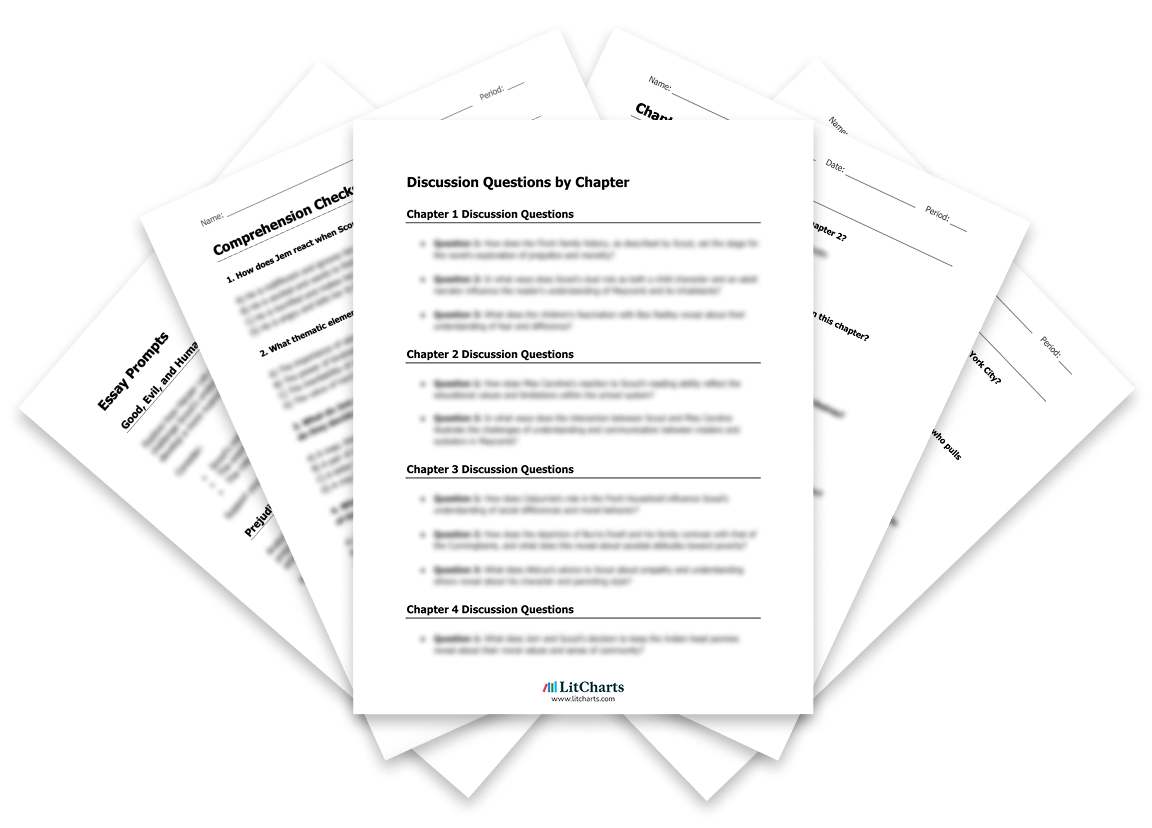


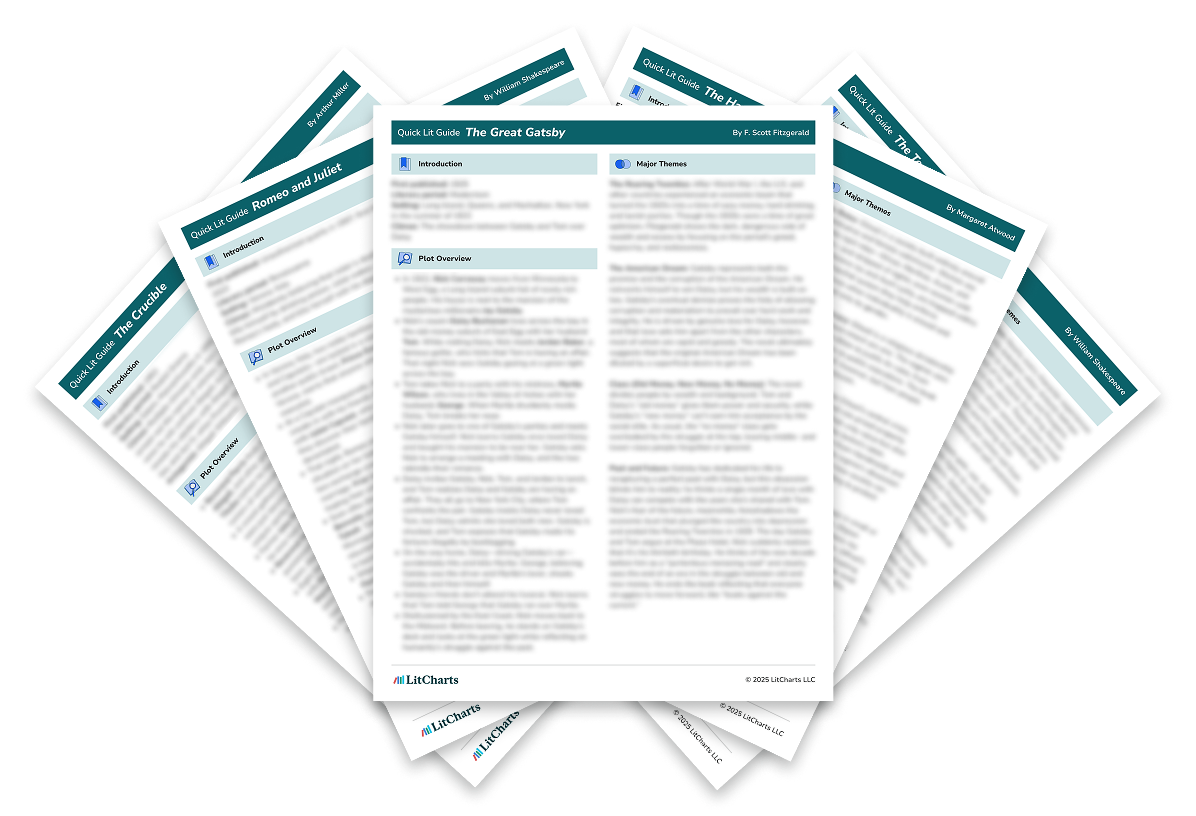
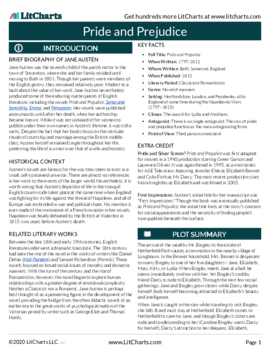
Literature Guide PDFs
LitCharts PDFs for every book you'll read this year.
Instant PDF downloads of all 2256 LitCharts literature guides and of every new one we publish. Try a free sample literature guide.
"Would not have made it through AP Literature without the printable PDFs. They're like having in-class notes for every discussion!"





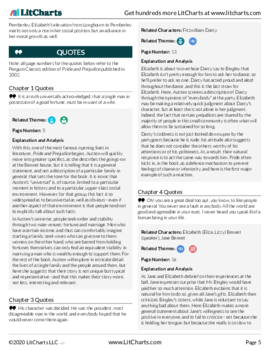


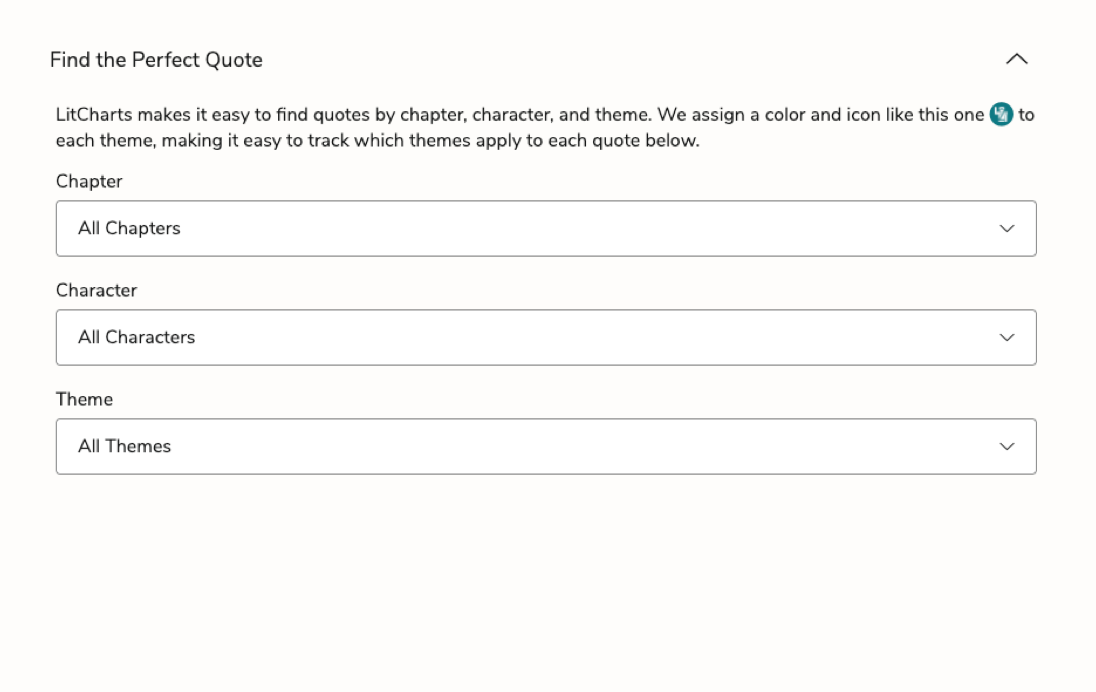
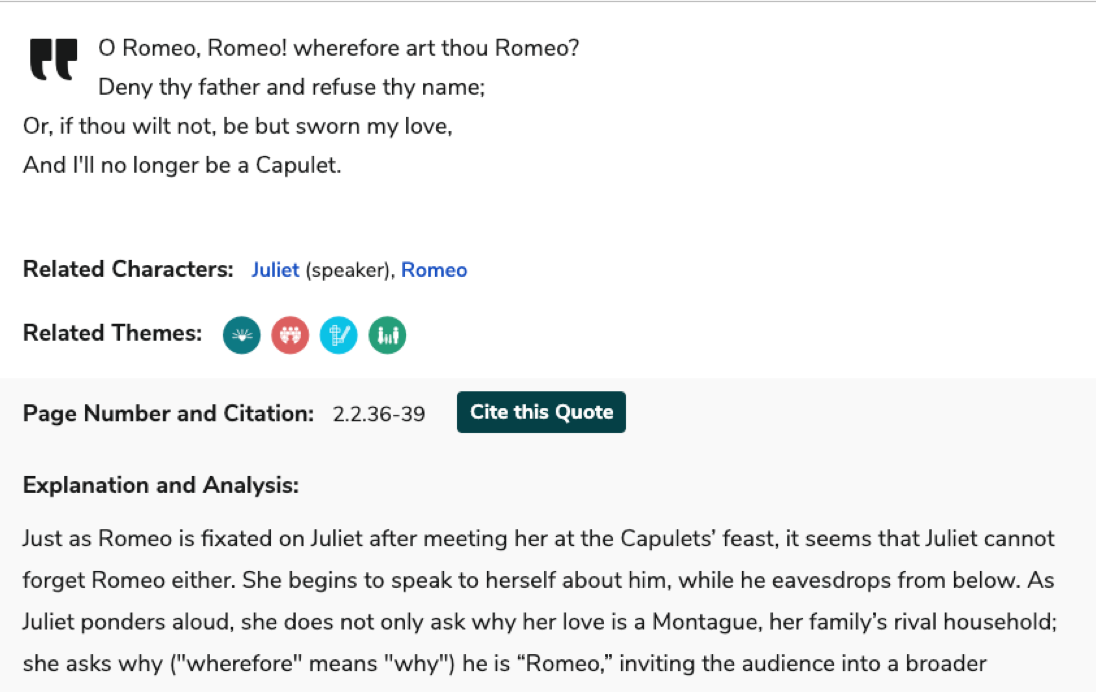
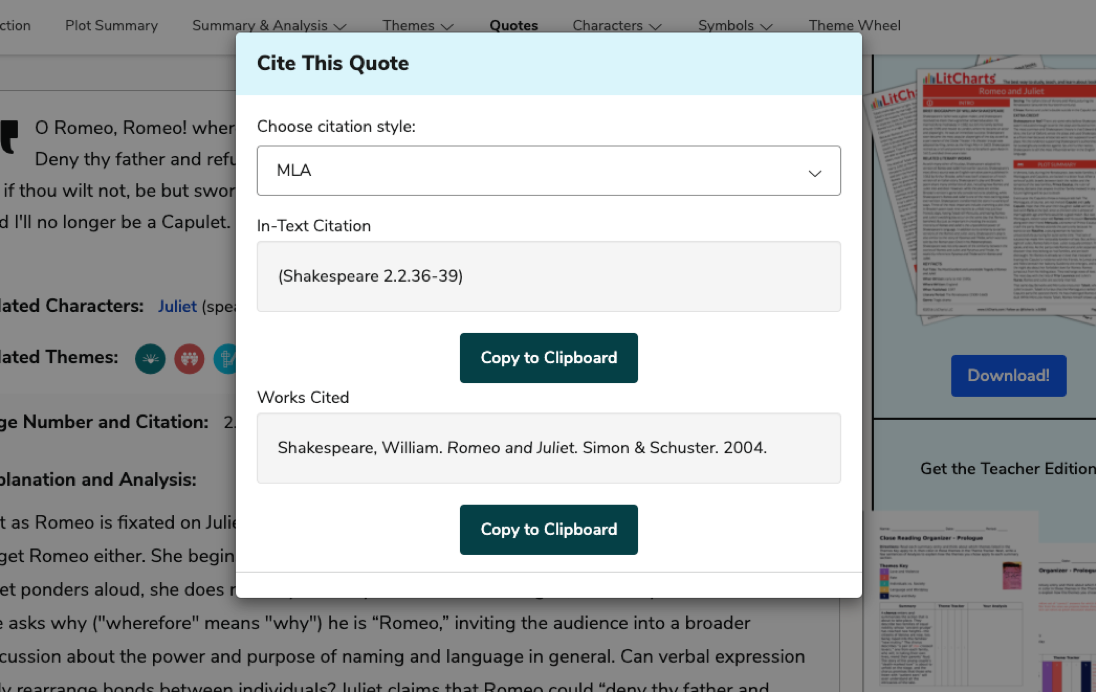
Quotes Explanations
Find the perfect quote. Understand it perfectly. Then rock the citation, too.
For all 50,308 quotes we cover.
For all 50,308 quotes we cover.


Teacher Editions
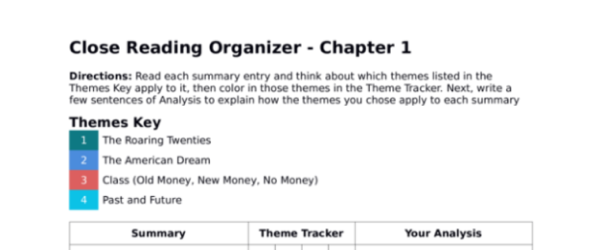
Close reading made easy for students.
Time saved for teachers.
For every book we cover.
Time saved for teachers.
For every book we cover.


Common Core-aligned


PDFs of modern translations of every one of Shakespeare's 37 plays, 154 sonnets, and 3 longer poems.

Literary Terms and Devices
Definitions and examples for every literary term and device you need to know.
Plus a quick-reference PDF with concise definitions of all 136 terms in one place.
Plus a quick-reference PDF with concise definitions of all 136 terms in one place.
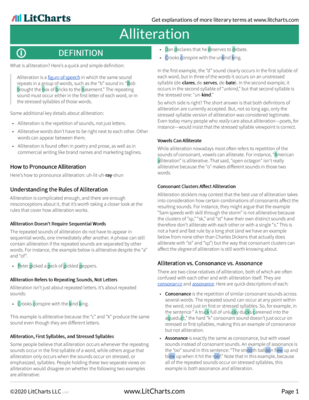
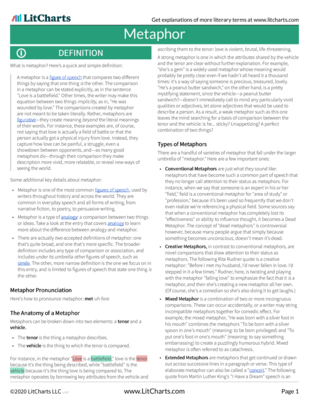
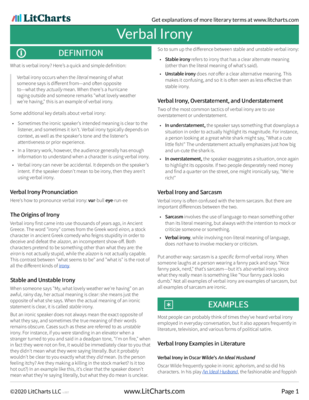
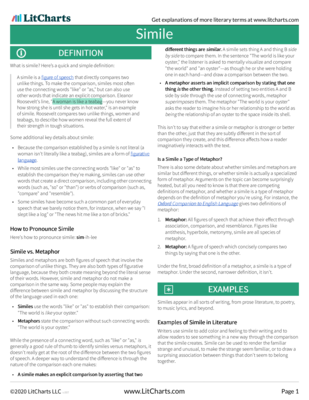
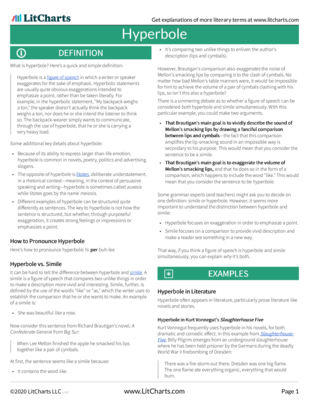
Try a free sample literary term PDF.


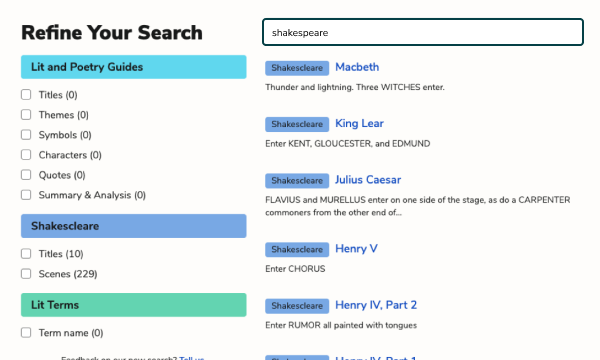
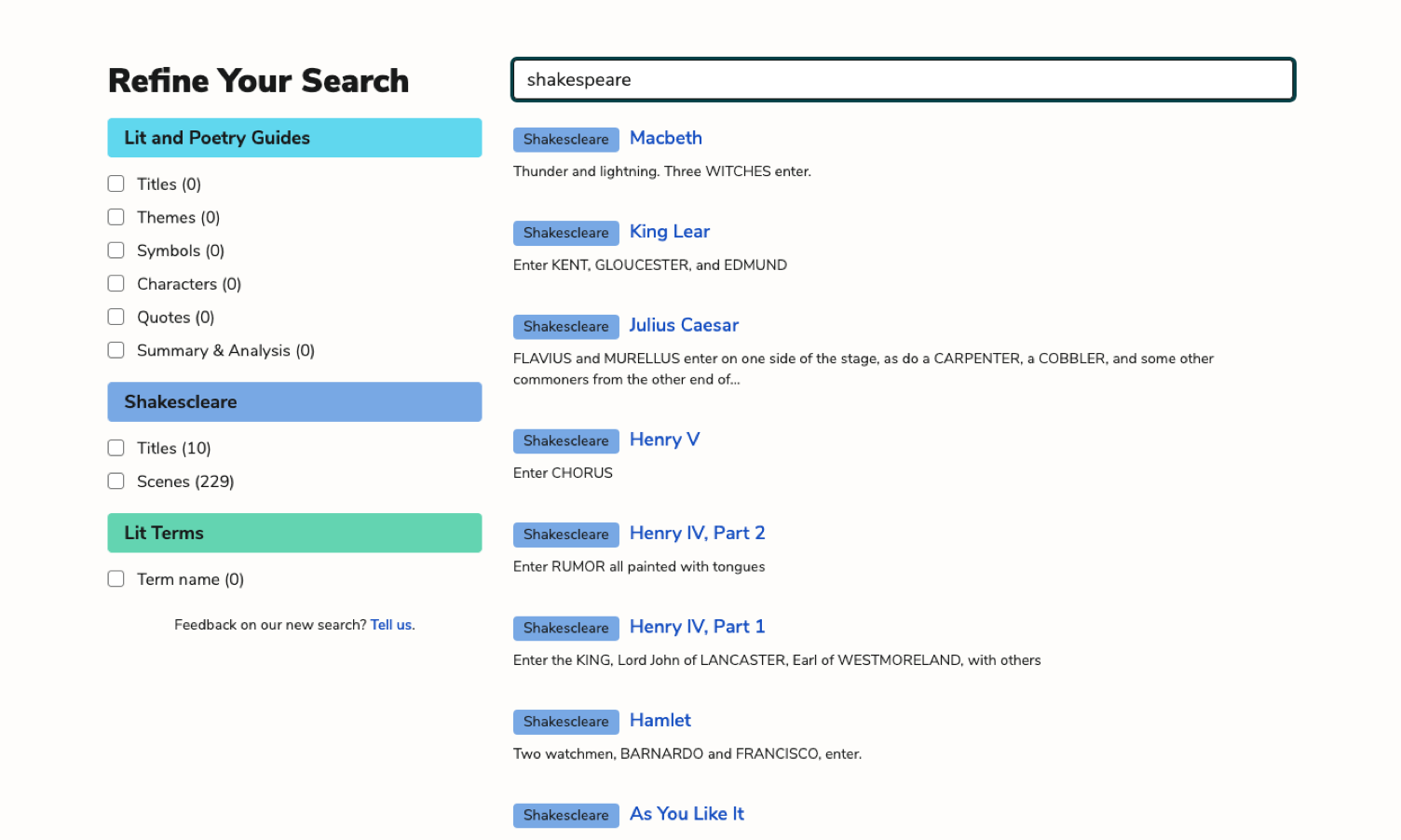
Advanced Search
Refine any search. Find related themes, quotes, symbols, characters, and more.
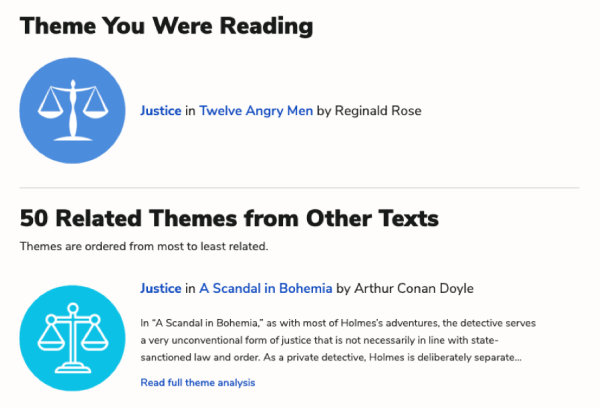
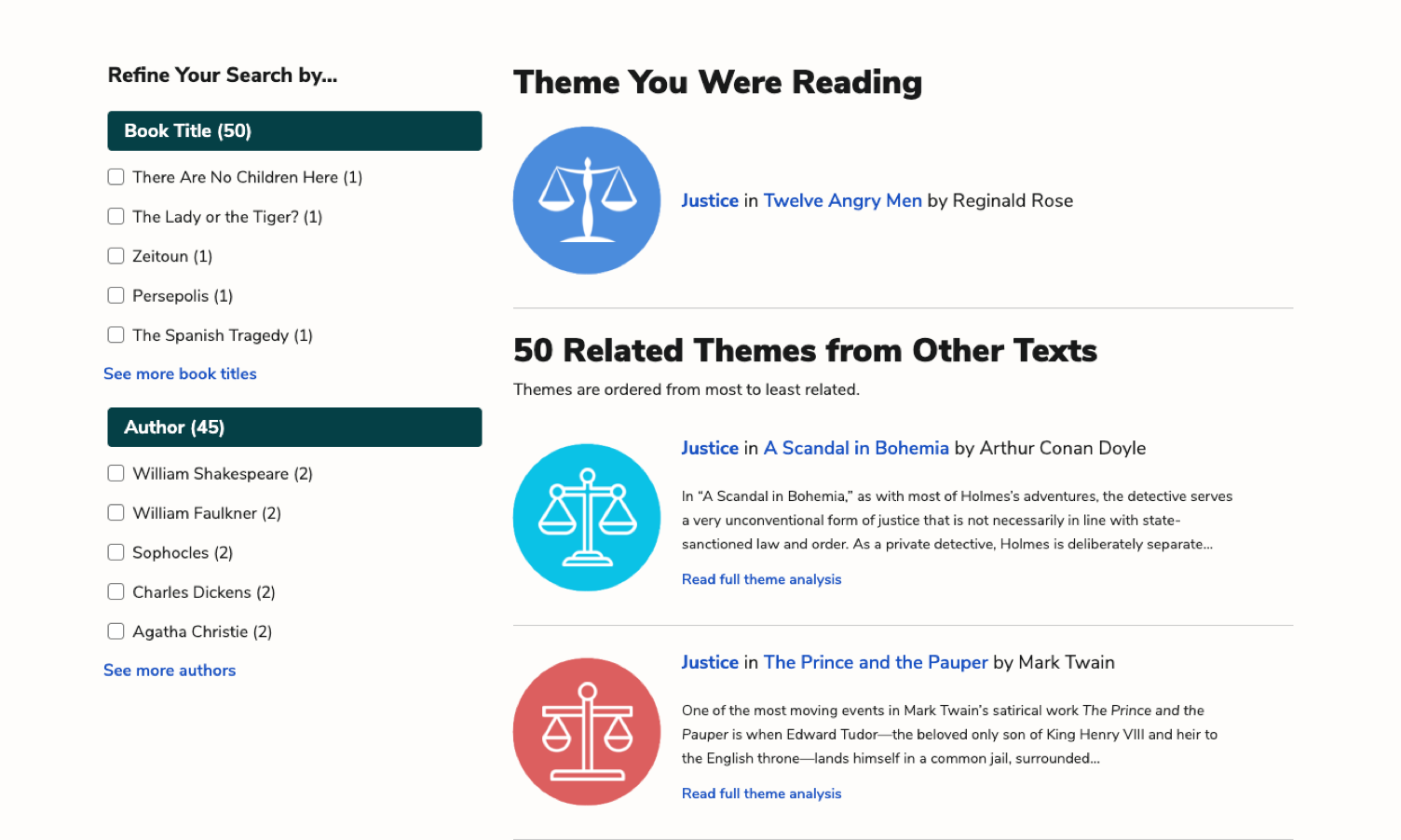
Related Themes
Comparing and contrasting texts? Find where any theme occurs across all of LitCharts in seconds.


Poetry Guides
Line-by-line explanations and analysis of figurative language and poetic devices.
For every lyric poem we cover.
For every lyric poem we cover.