
|
Have questions?
Contact us
Already a member? Sign in
|
Get every literary device explanation for Pride and PrejudicePlus so much more...
Sign up for LitCharts A+Get instant access to every literary device explanation, plus so much more...
Motif
Explanation and Analysis—Dancing:
The first volume of Pride and Prejudice features several balls where, through partnered dance, different relationship dynamics between the characters come to light. These balls form a motif of dancing that encourages readers to take note of which characters work well together as dance partners and perhaps, Austen implies, as life partners. In other words, the way that characters engage in dance mirrors their courtship patterns, foreshadowing who may make a good pair in marriage.
At the assembly ball where the Bennets first meet Darcy and Bingley, Bingley dances every dance—highlighting his fun and social nature—and shows interest in Jane right away by repeatedly asking her to dance with him. Darcy, on the other hand, rarely dances and blatantly refuses to ask Elizabeth to dance because she is “not handsome enough.” This moment encourages readers to understand Bingley to be an excellent romantic fit for Jane and also to form a judgment of Darcy similar to Elizabeth’s—that he is proud and unpleasant.
When Bingley throws a ball at Netherfield, Collins asks Elizabeth to dance, and Elizabeth narrates that he “often mov[ed] wrong without being aware of it,” which is the narrator's way of hinting that they are not a good match. Darcy, on the other hand, is a good dancer, but he and Elizabeth get into an argument while dancing, indicating that they could make a good pair if they stopped letting pride and vanity get in the way.
Monthly
Annual (Best Value)

$595USD/mo
Charged $71.40 USD every year
 Teacher
$795USD/mo
Charged $95.40 USD every year
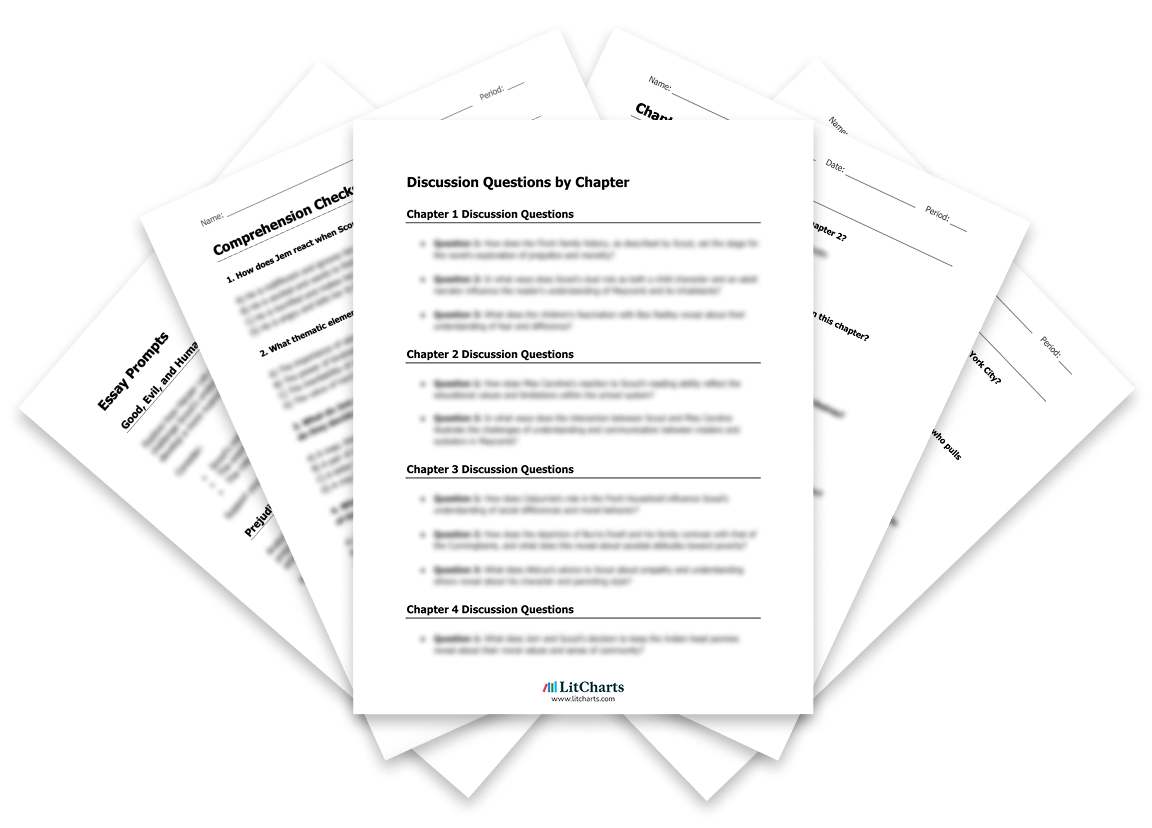


Literature Guide PDFs
LitCharts PDFs for every book you'll read this year.
Instant PDF downloads of all 2247 LitCharts literature guides and of every new one we publish. Try a free sample literature guide.
"Would not have made it through AP Literature without the printable PDFs. They're like having in-class notes for every discussion!"




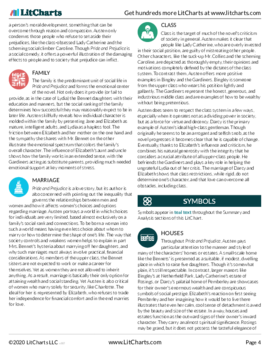
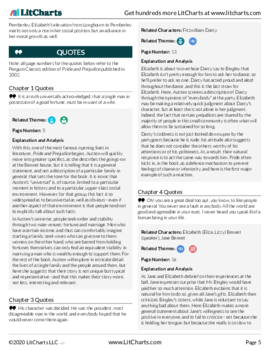



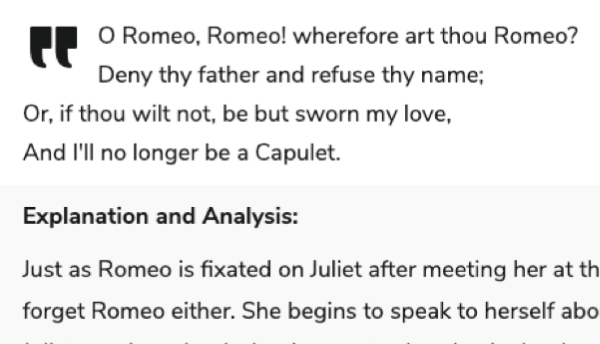
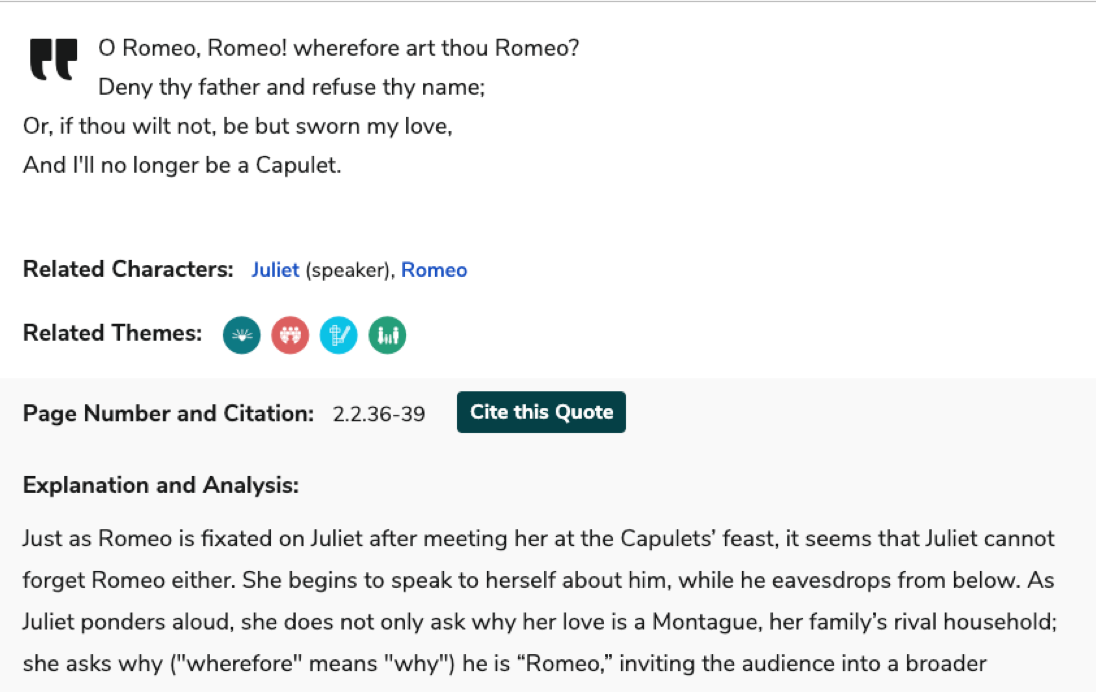
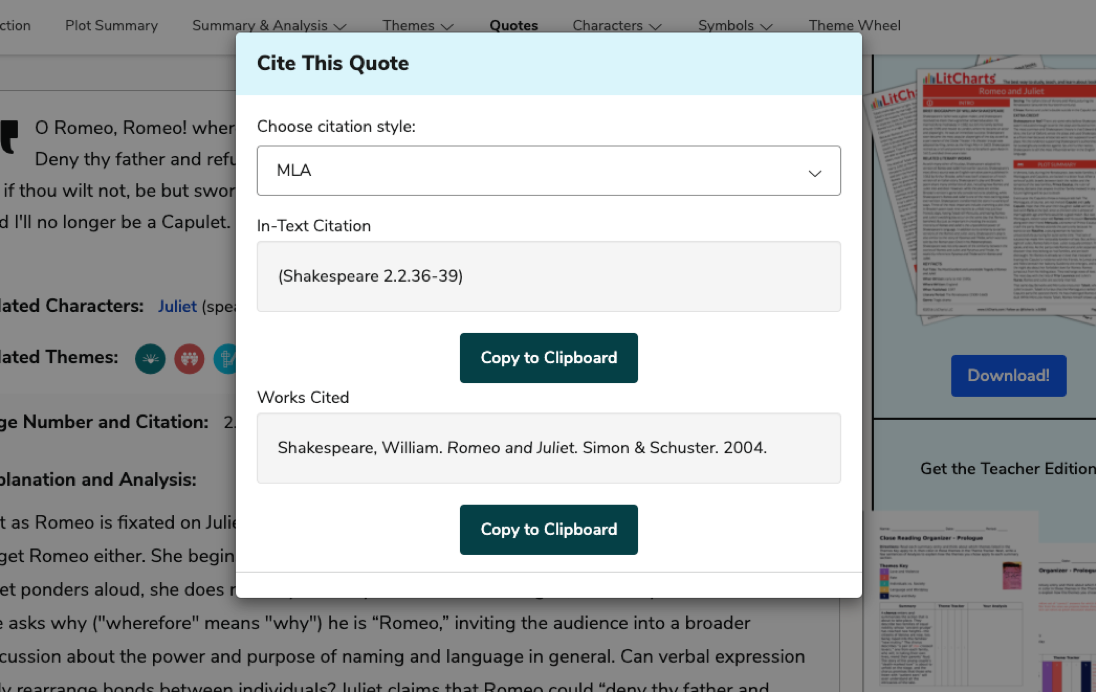
Quotes Explanations
Find the perfect quote. Understand it perfectly. Then rock the citation, too.
For all 50,101 quotes we cover.
For all 50,101 quotes we cover.


Teacher Editions
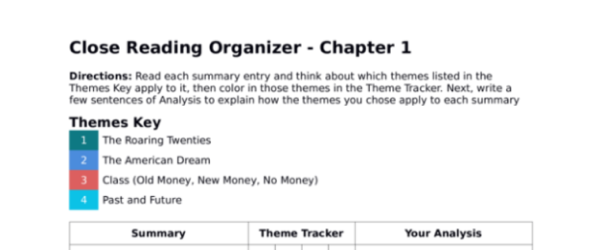
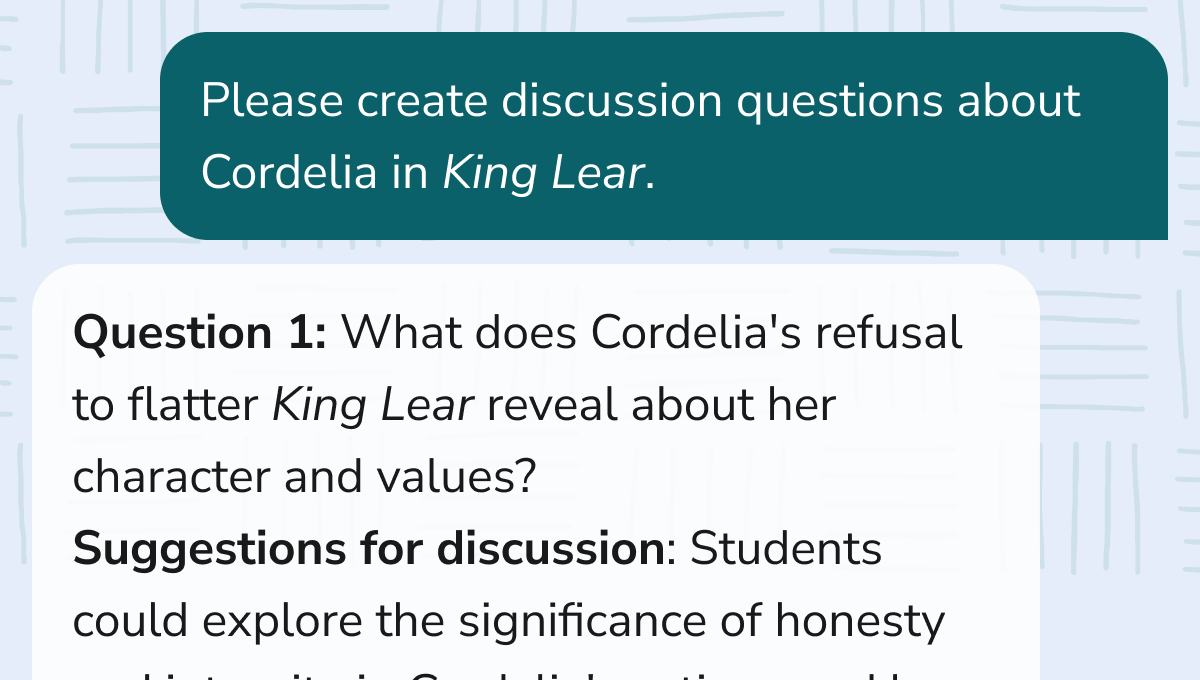
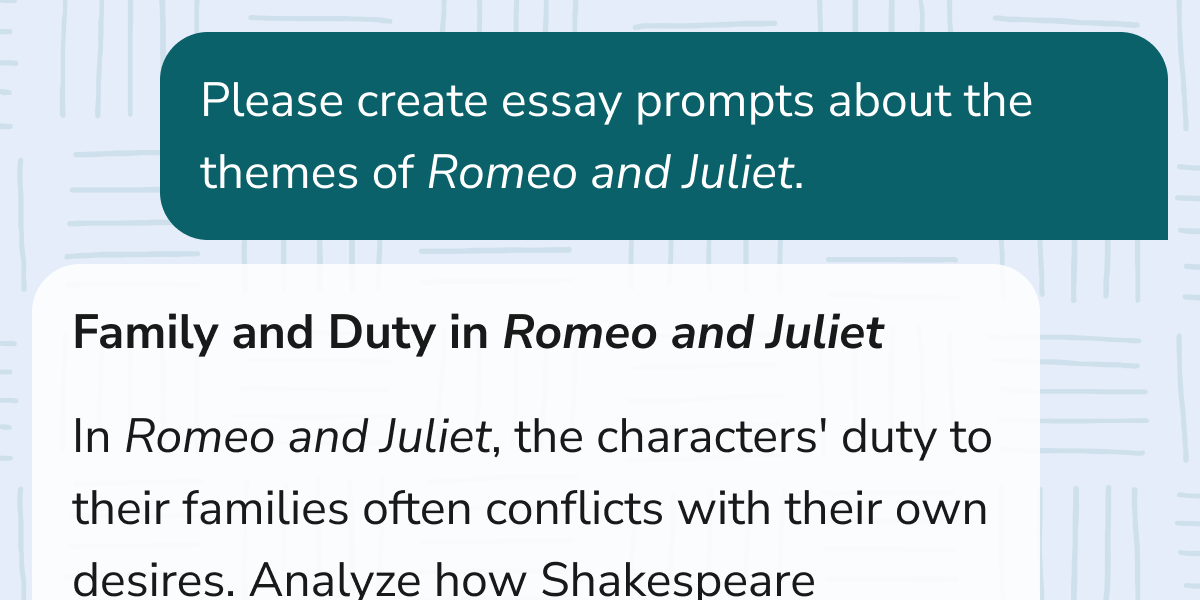
Close reading made easy for students.
Time saved for teachers.
For every book we cover.
Time saved for teachers.
For every book we cover.


Common Core-aligned


PDFs of modern translations of every one of Shakespeare's 37 plays, 154 sonnets, and 3 longer poems.

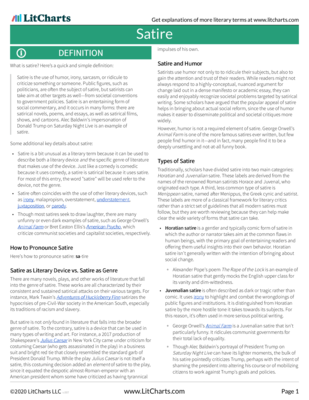
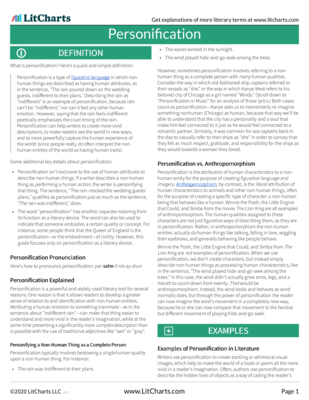
Literary Terms and Devices
Definitions and examples for every literary term and device you need to know.
Plus a quick-reference PDF with concise definitions of all 136 terms in one place.
Plus a quick-reference PDF with concise definitions of all 136 terms in one place.
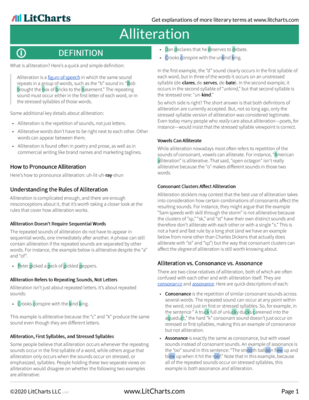
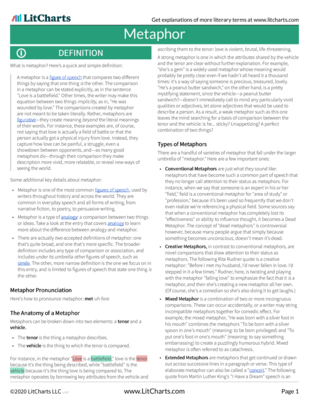
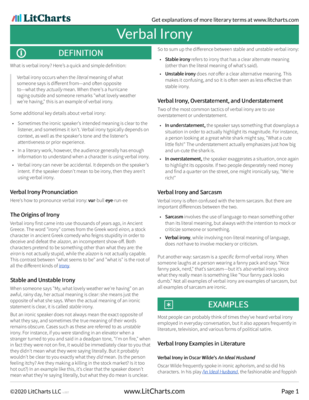
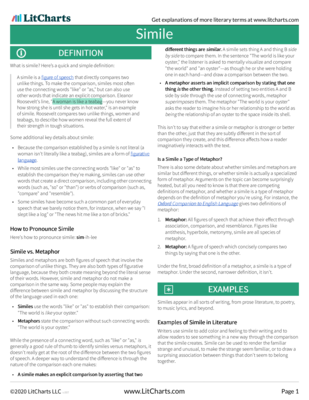
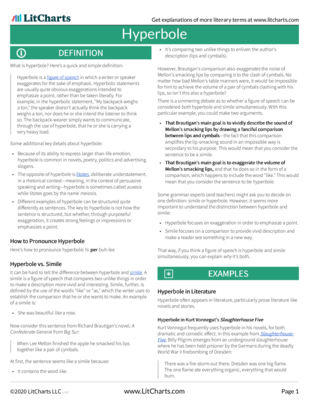
Try a free sample literary term PDF.


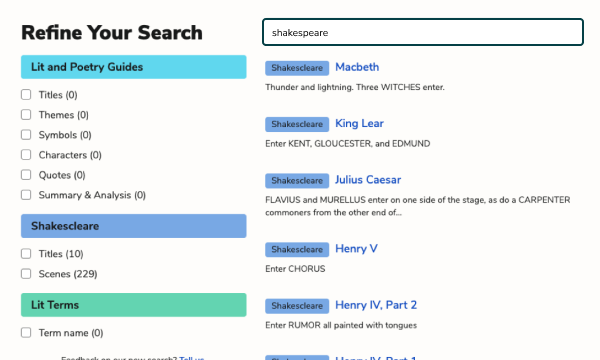
Advanced Search
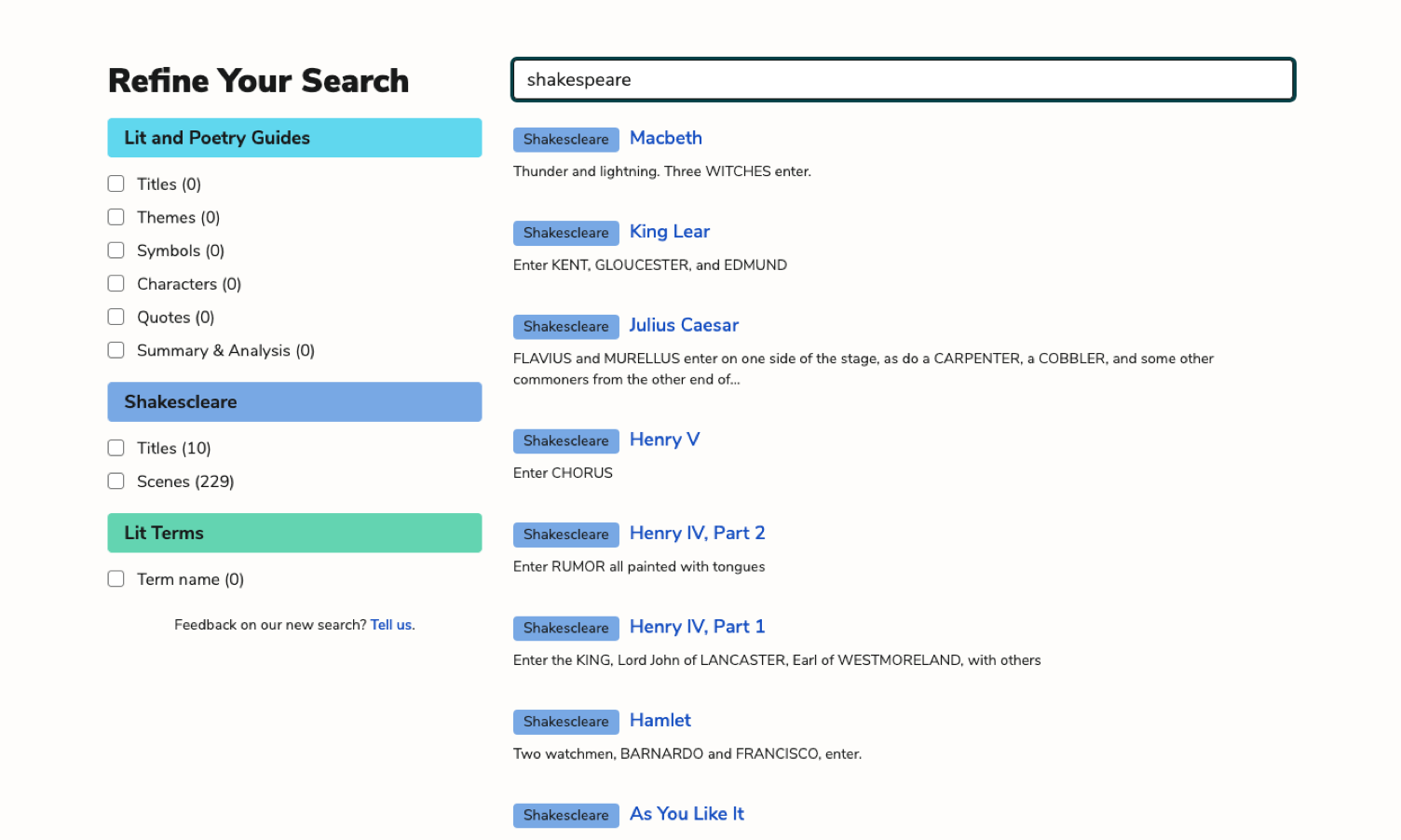
Refine any search. Find related themes, quotes, symbols, characters, and more.

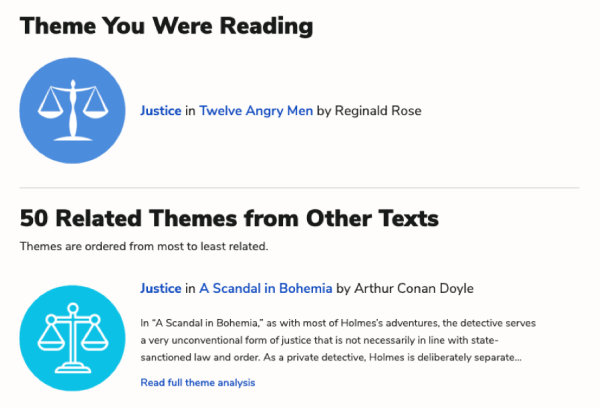
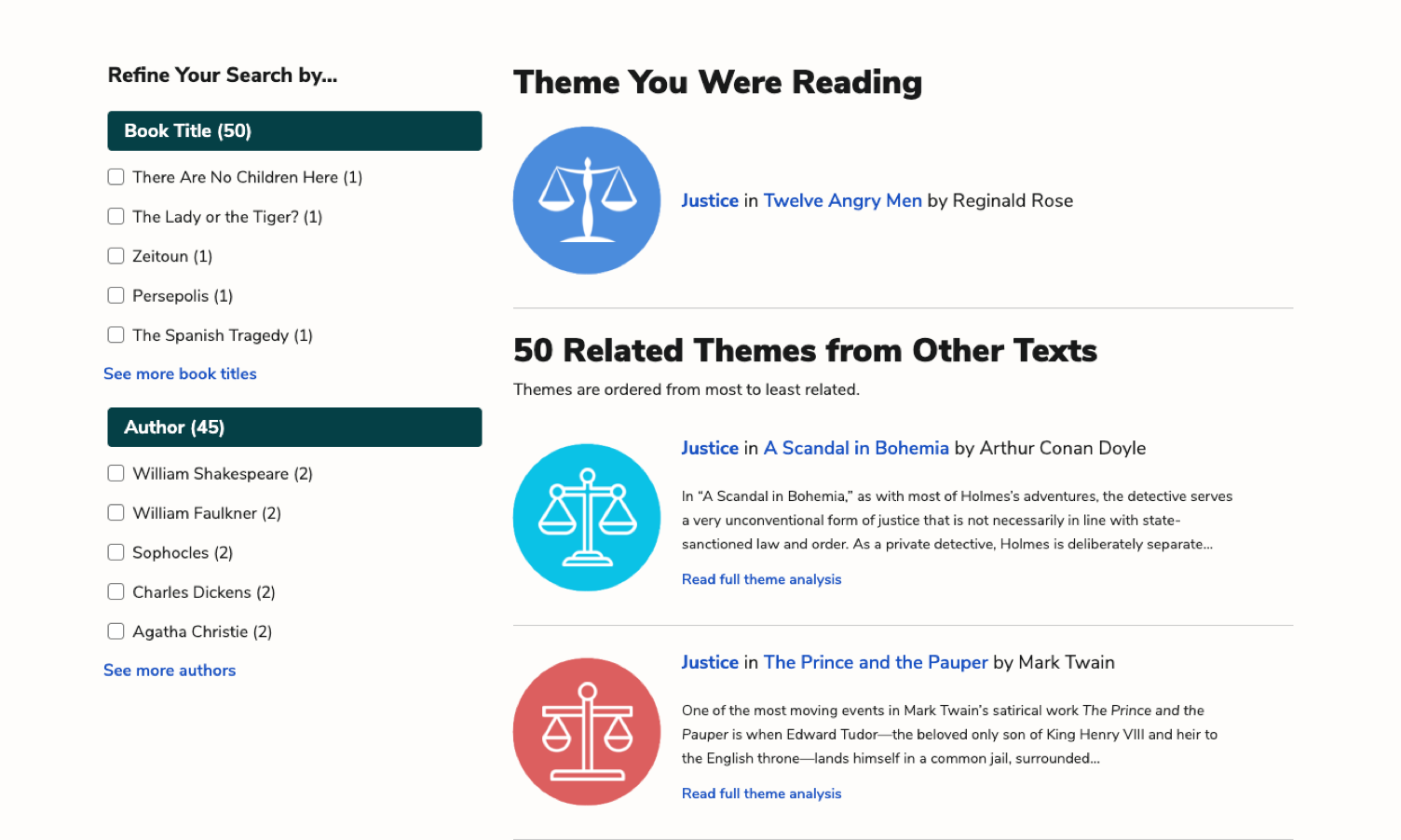
Related Themes
Comparing and contrasting texts? Find where any theme occurs across all of LitCharts in seconds.


Poetry Guides
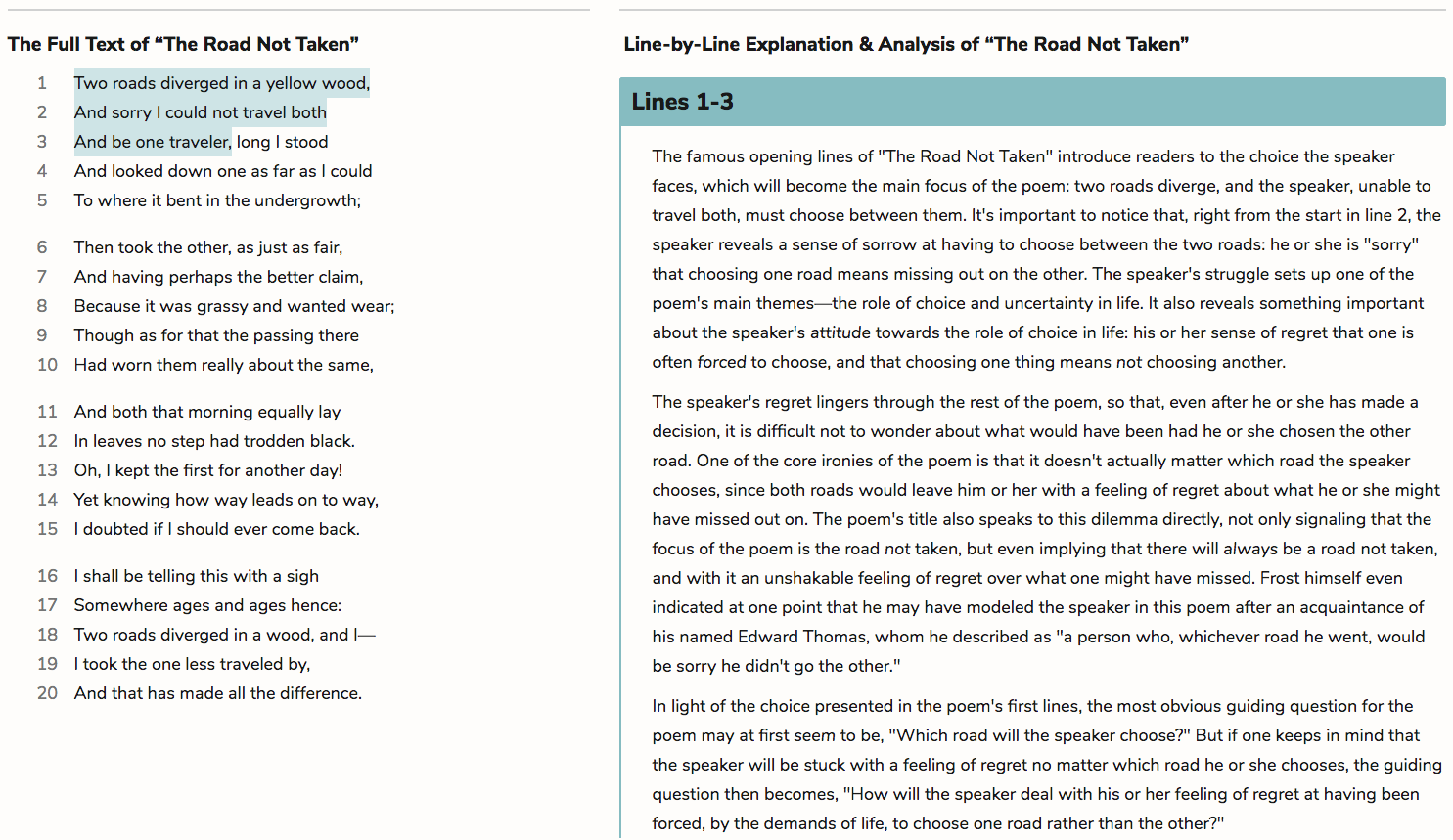
Line-by-line explanations and analysis of figurative language and poetic devices.
For every lyric poem we cover.
For every lyric poem we cover.