
|
Have questions?
Contact us
Already a member? Sign in
|
Get every literary device explanation for Hope LesliePlus so much more...
Sign up for LitCharts A+Get instant access to every literary device explanation, plus so much more...
Motif
Explanation and Analysis—Birds in Captivity:
A motif in the novel is a comparison between women and birds in captivity. For instance, in Volume 2, Chapter 8, after Faith has been taken back to Governor Winthrop's house, Mr. Fletcher describes her behavior as bird-like:
“All day, and all night, they tell me, she goes from window to window, like an imprisoned bird fluttering against the bars of its cage; and so wistfully she looks abroad, as if her heart went forth with the glance of her eye.”
Faith seems to think she is trapped in the governor's house, and she is "fluttering" against all the windows as if she knows she belongs out in the forest. It makes sense that Faith would behave like a bird if she feels like she belongs with Oneco; the eagle is the emblem of Magawsica and Oneco's people. Magawisca has repeatedly taken eagle feathers as a sign that her father passed through a place, and she makes Hope swear on a carving of an eagle that she will tell no one about their clandestine meeting in the cemetery. Faith's birdlike behavior represents her assimilation to Oneco's culture.
When Hope and Magawisca's plan backfires, leading to Faith and Magawisca's arrests in Volume 2, Chapter 5, Magawisca says of Hope that
She was the decoy bird, [...] and she too is caught in the net.
Magawisca's comparison between Hope and a "decoy bird" expands the symbolism of the bird. Hope does not yearn to live in the wilderness, and yet she too is a trapped bird. The idea that she is a "decoy bird" suggests that, either knowingly or unknowingly, Hope has been exploited by the system that wants to capture Faith and Magawisca. All three women have been made unfree by Puritan systems of power.
Later, when Magawisca is on trial, she asks to be executed rather than kept in captivity. Magawisca's desire to be free or die once again echoes the motif of these women as trapped birds, but it also reinforces the idea of Puritan hypocrisy. Puritans, such as Mr. Fletcher, are supposedly willing to go to any lengths to defend their commitment to freedom. Mr. Fletcher unmistakably sacrifices his first love and his intended fortune for religious "freedom." Magawisca's ultimatum illuminates the fact that the Puritans have not made most of their community very free at all.
Monthly
Annual (Best Value)

$595USD/mo
Charged $71.40 USD every year
 Teacher
$795USD/mo
Charged $95.40 USD every year
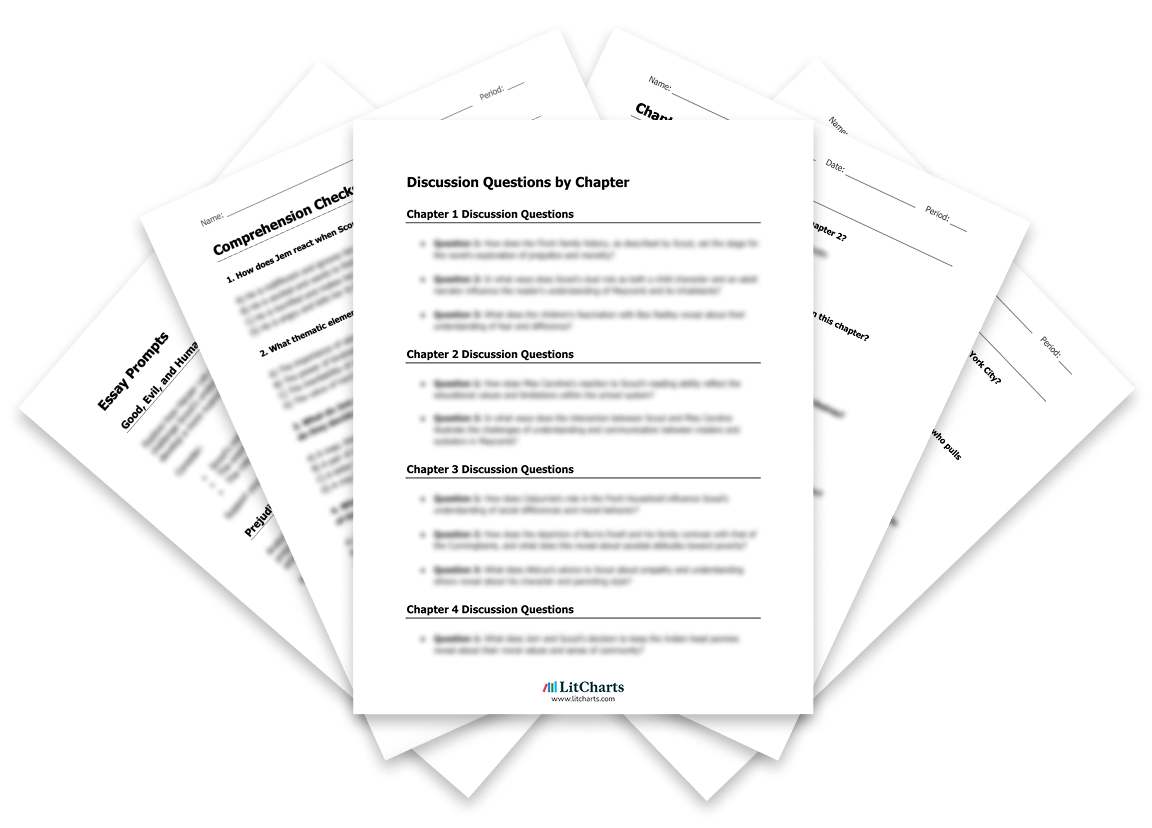


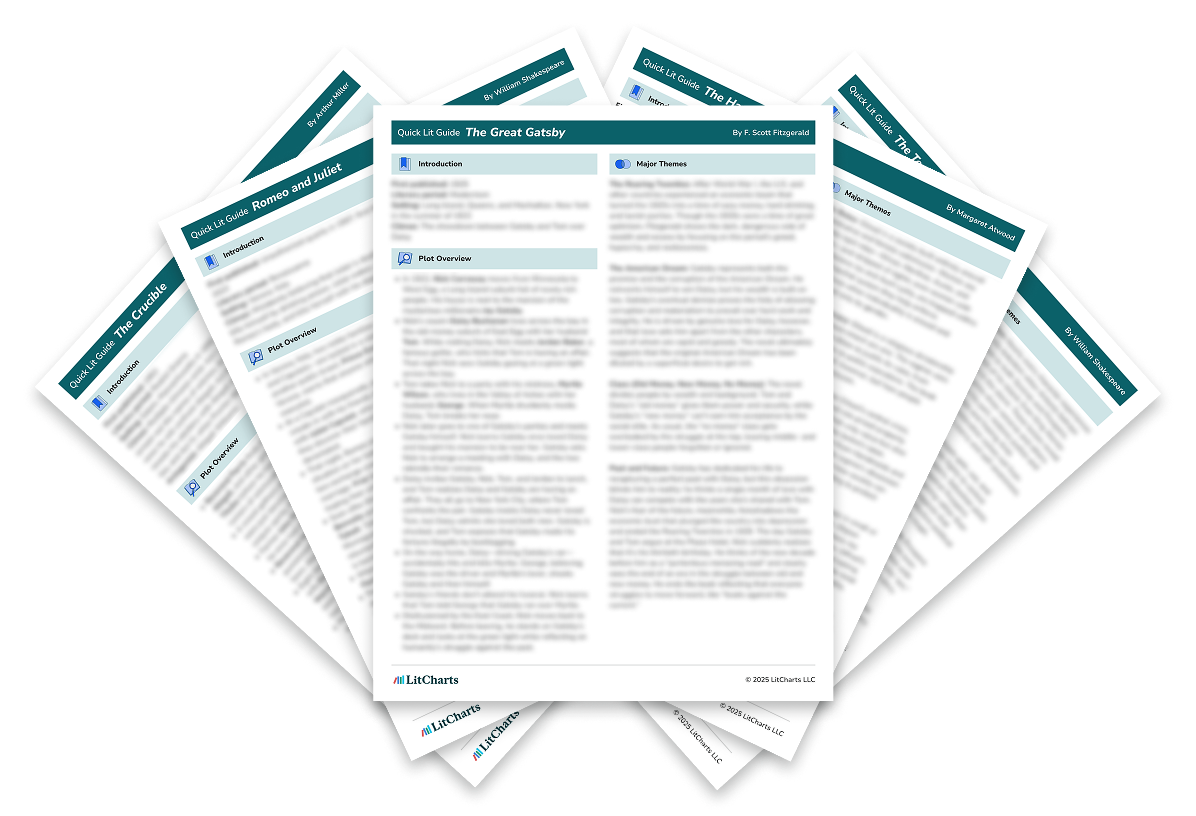
Literature Guide PDFs
LitCharts PDFs for every book you'll read this year.
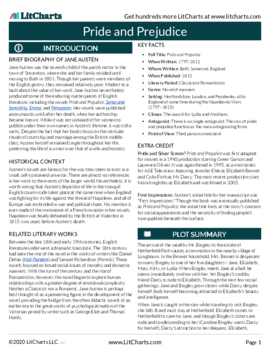
Instant PDF downloads of all 2251 LitCharts literature guides and of every new one we publish. Try a free sample literature guide.
"Would not have made it through AP Literature without the printable PDFs. They're like having in-class notes for every discussion!"


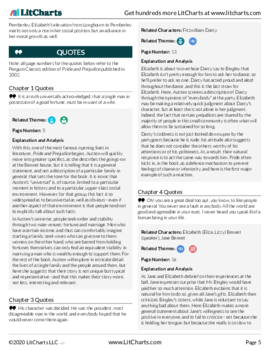


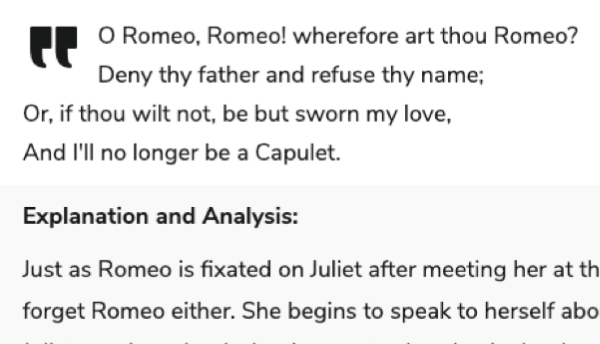
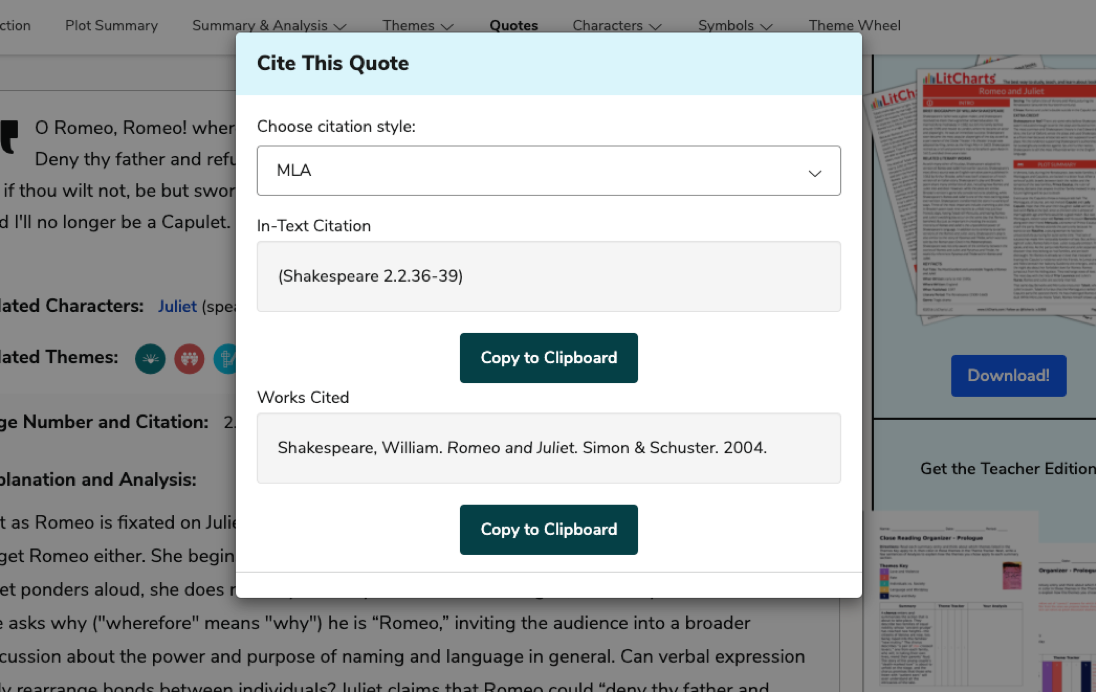
Quotes Explanations
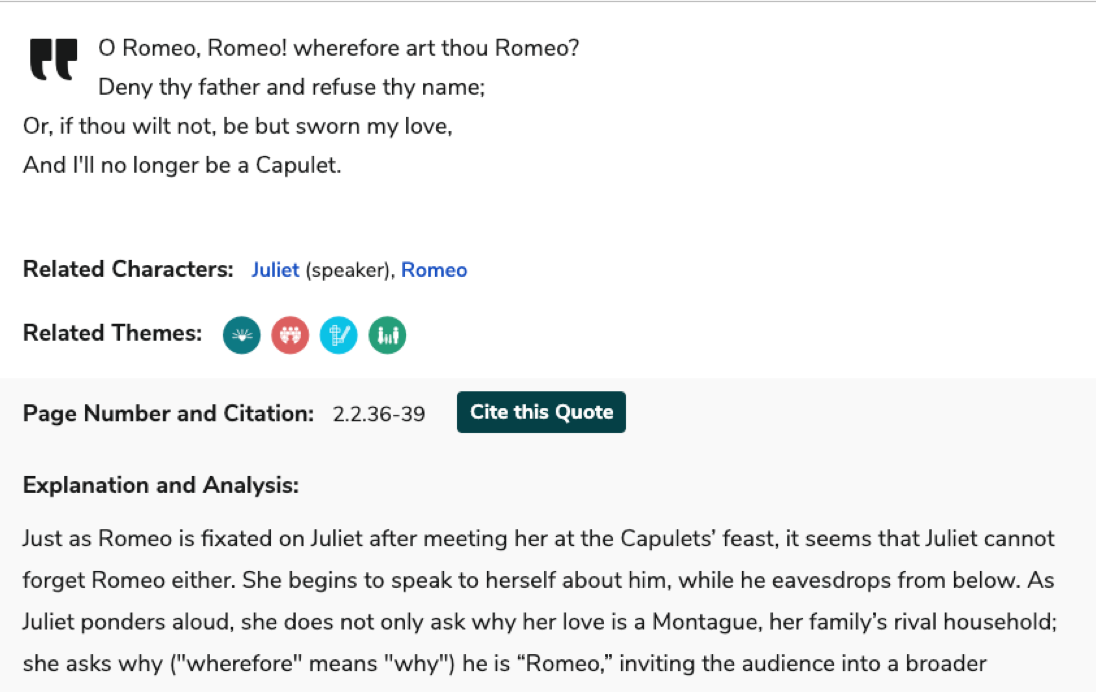
Find the perfect quote. Understand it perfectly. Then rock the citation, too.
For all 50,202 quotes we cover.
For all 50,202 quotes we cover.


Teacher Editions
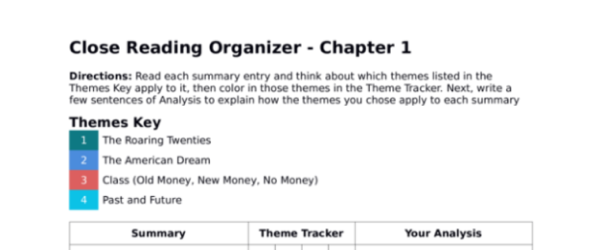
Close reading made easy for students.
Time saved for teachers.
For every book we cover.
Time saved for teachers.
For every book we cover.


Common Core-aligned


PDFs of modern translations of every one of Shakespeare's 37 plays, 154 sonnets, and 3 longer poems.

Literary Terms and Devices
Definitions and examples for every literary term and device you need to know.
Plus a quick-reference PDF with concise definitions of all 136 terms in one place.
Plus a quick-reference PDF with concise definitions of all 136 terms in one place.
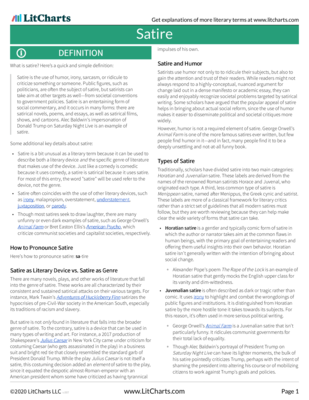
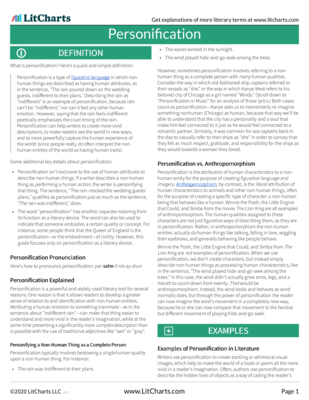
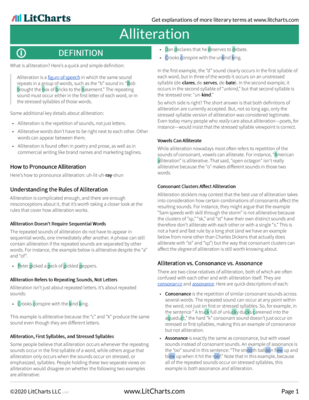
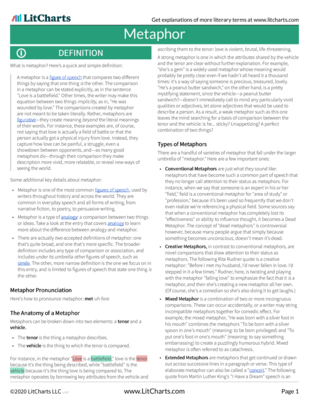
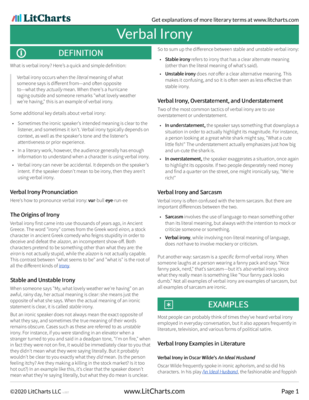
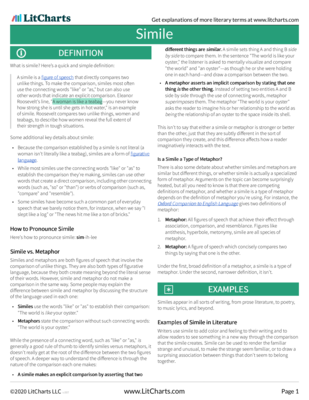
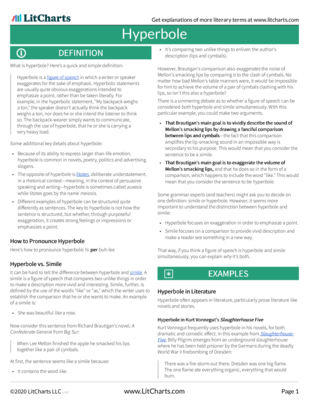
Try a free sample literary term PDF.


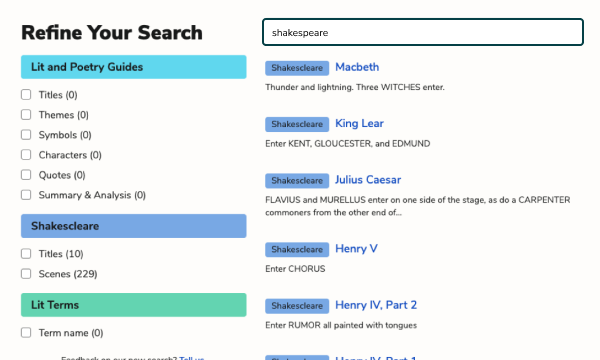
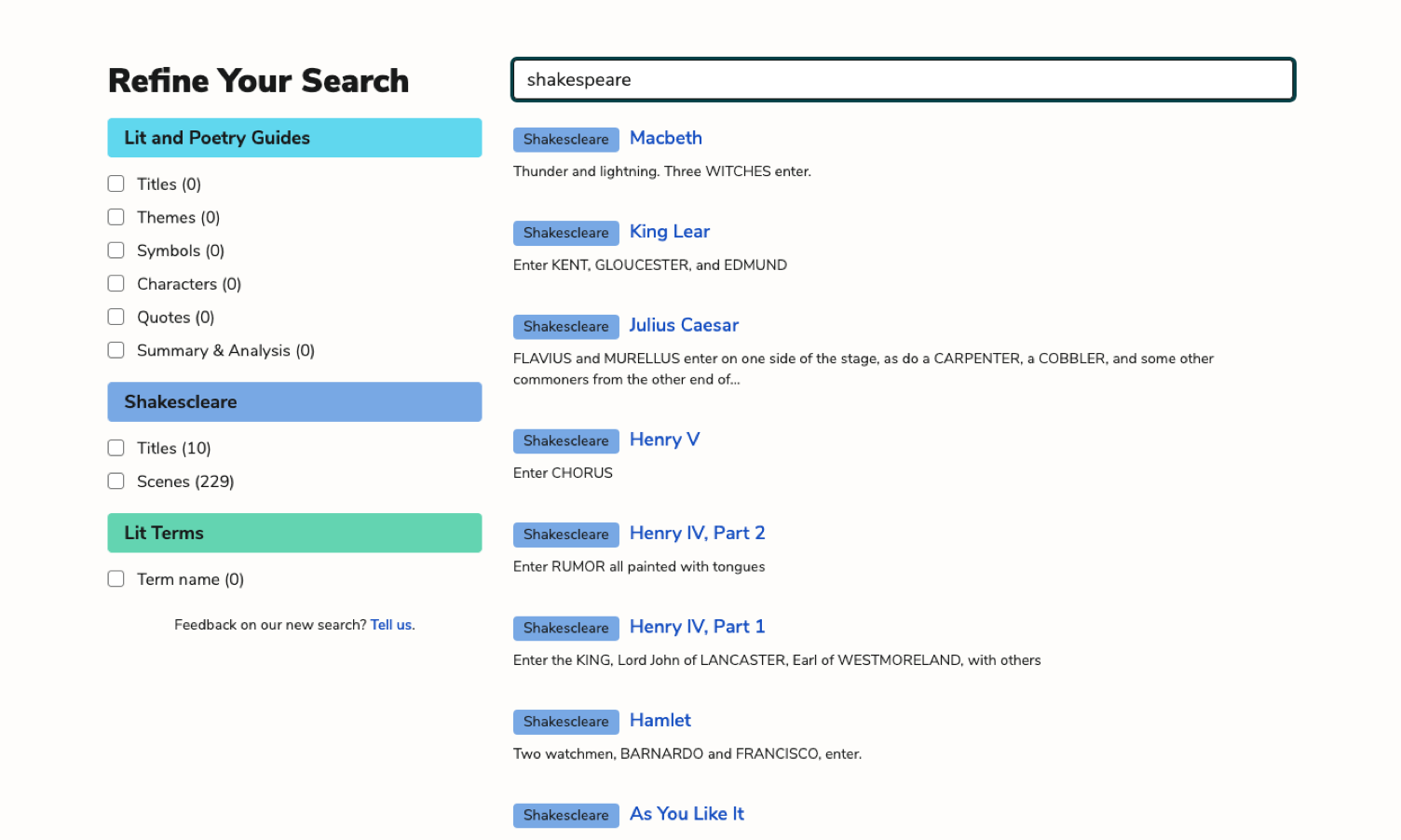
Advanced Search
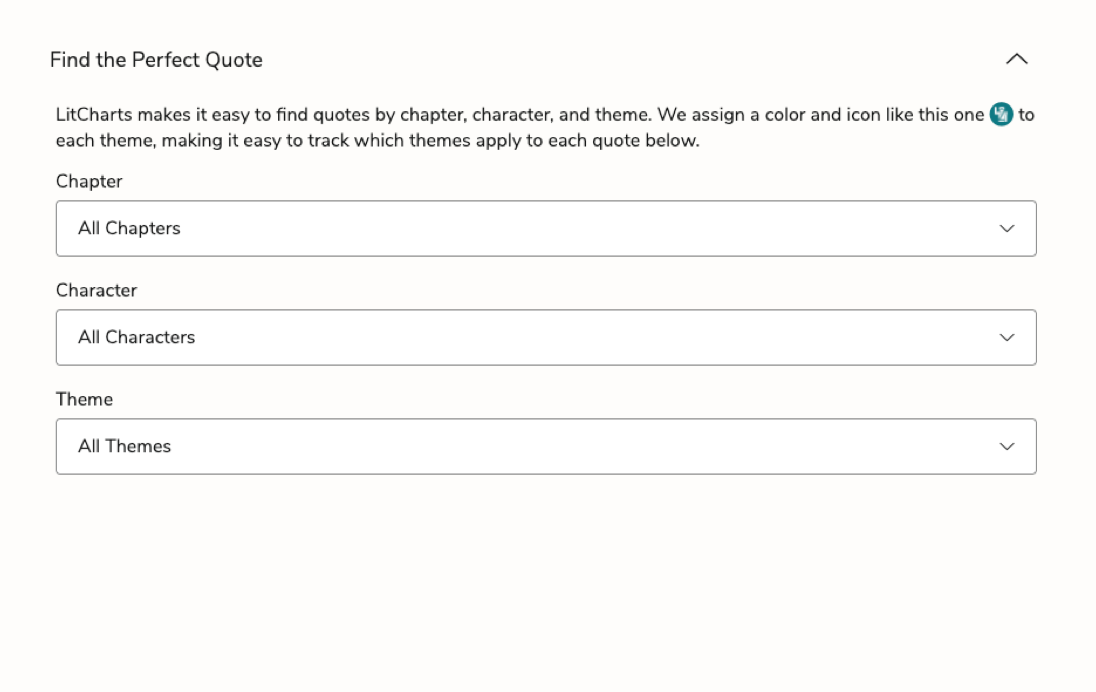
Refine any search. Find related themes, quotes, symbols, characters, and more.

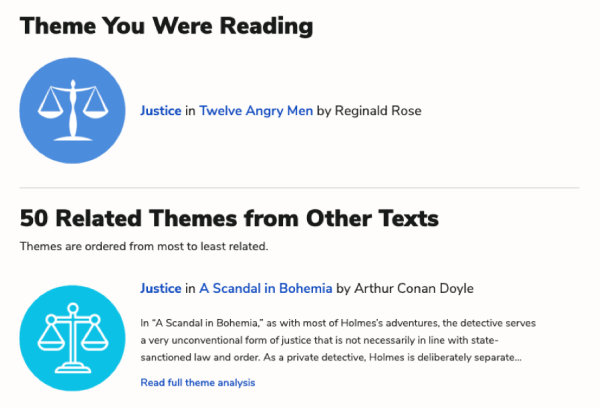
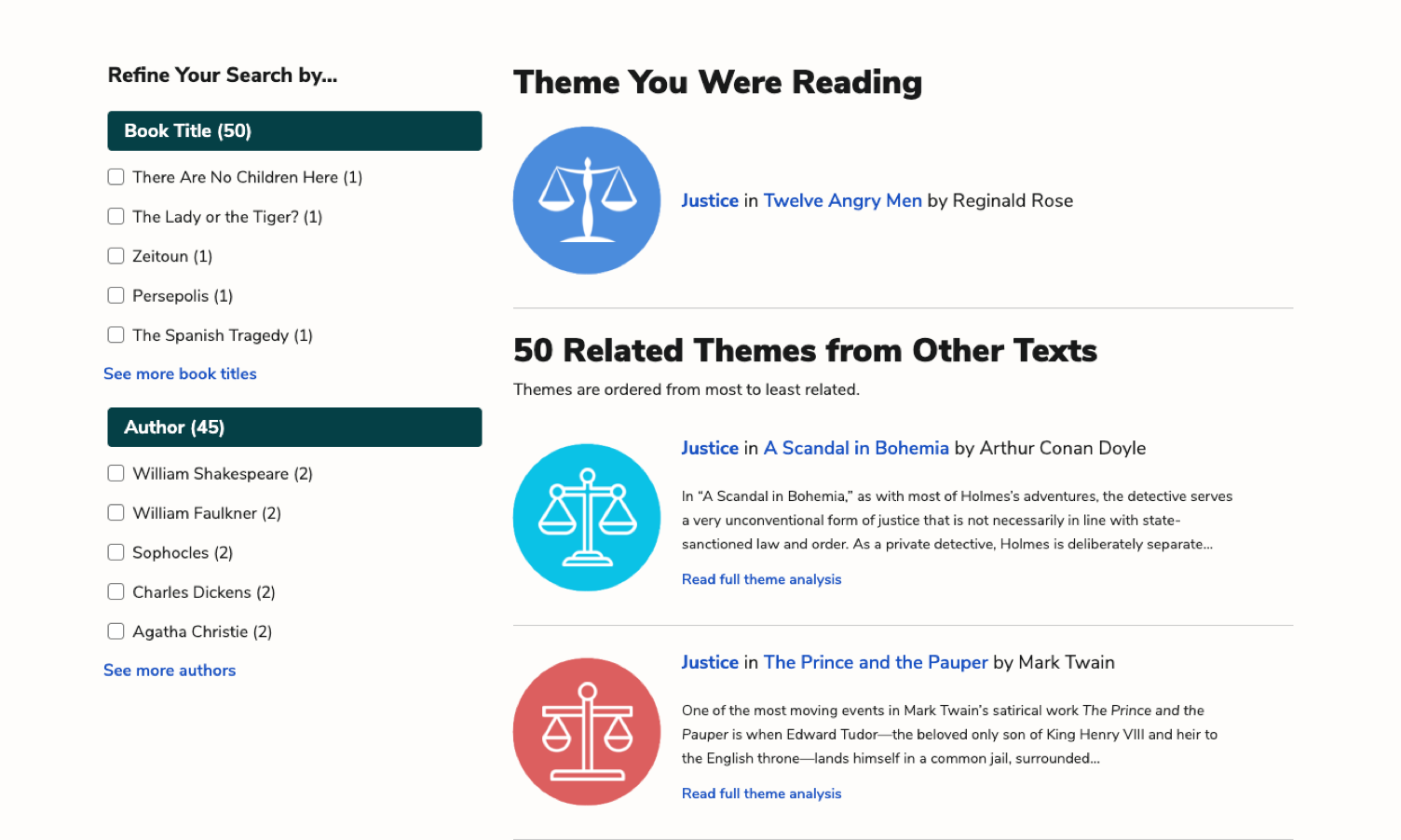
Related Themes
Comparing and contrasting texts? Find where any theme occurs across all of LitCharts in seconds.


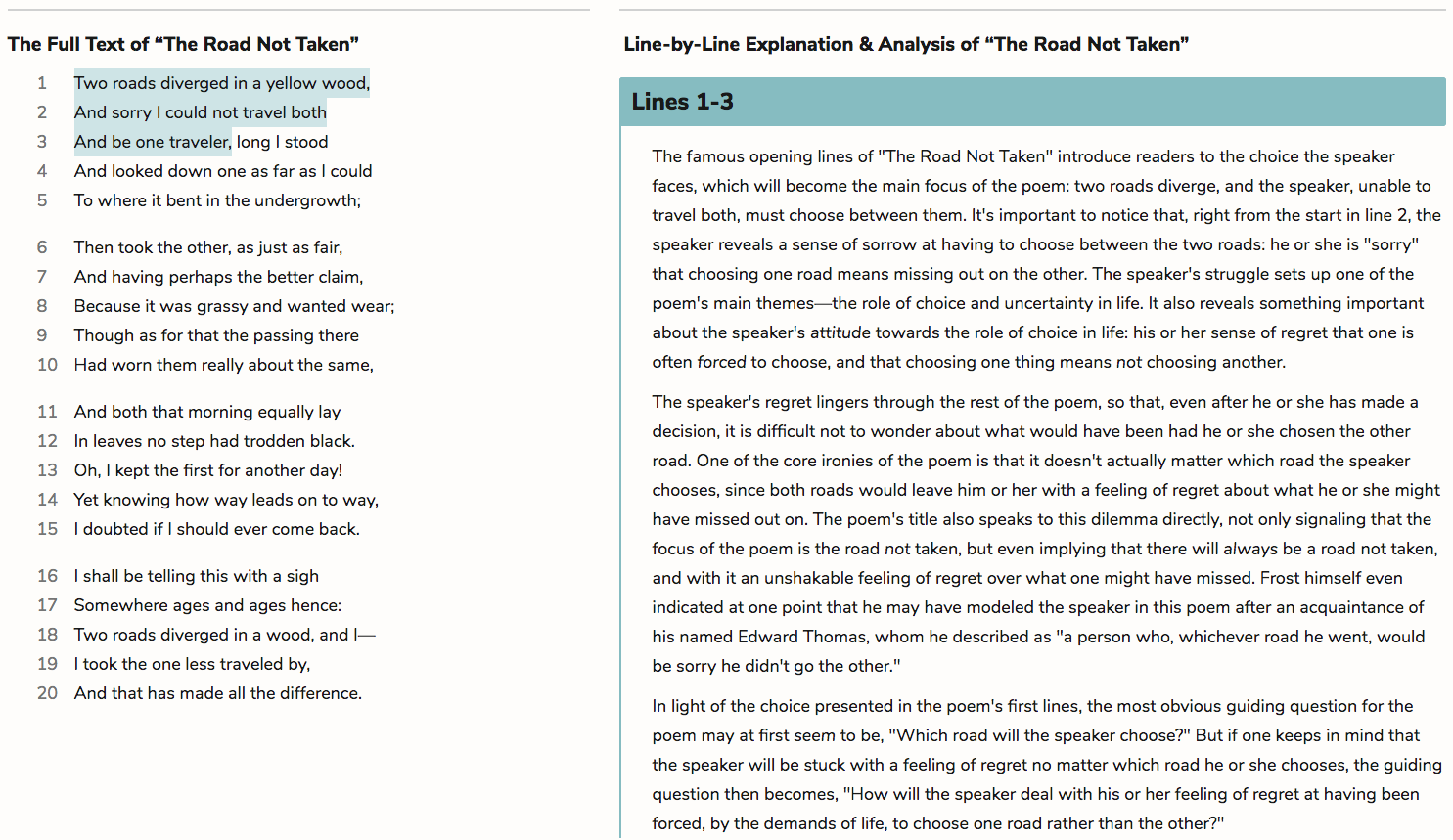
Poetry Guides
Line-by-line explanations and analysis of figurative language and poetic devices.
For every lyric poem we cover.
For every lyric poem we cover.