
The LitCharts.com logo. Have questions? Contact us
Already a member? Sign in
Sign in
Get every literary device explanation for The Origin of SpeciesPlus so much more...
Sign up for LitCharts A+Get instant access to every literary device explanation, plus so much more...
Personification
Explanation and Analysis—Nature Personified:

In Chapter 4, Darwin comments on the way he personifies "Nature" in his writing, using logos to defend his choice:

It has been said that I speak of natural selection as an active power or Deity; but who objects to an author speaking of the attraction of gravity as ruling the movements of the planets? Every one knows what is meant and is implied by such metaphorical expressions; and they are almost necessary for brevity. So again it is difficult to avoid personifying the word Nature; but I mean by Nature, only the aggregate action and product of many natural laws, and by laws the sequence of events as ascertained by us.

Darwin is addressing complaints that he is treating natural selection as though it is some new force that supplants God as the creator of the universe. He admits that he writes about it as if it has the kind of volition and power God has. However, he draws a distinction between literal and figurative language. He does not literally mean that Nature is God-like. Rather, he writes, he personifies it so that he can speak about the "aggregate and product of many natural laws" under the umbrella of his unified theory about the way life has evolved on earth. To defend his choice to use this figurative language, he reminds readers that other scientific writers personify forces of nature all the time. For instance, it is common to read that gravity "rules" planetary movements. By invoking this norm within scientific writing, Darwin aims to convince his readers not to read too much into his own personification of nature.

While Darwin's logic holds true here, it is also important to note that his personification often serves to dramatize nature and the process of natural selection. He frequently describes nature using comparisons to human dynamics and institutions. For example, he refers to the "physiological division of labor," a metaphor many scientists used at this time. By invoking one of the core principles of capitalism, this concept aims to explain how different tissues in an organism take care of different functions the organism needs to stay alive. Humans invented capitalism long after complex life forms emerged on earth, so it is somewhat odd to describe biological functions in terms of capitalism. Darwin's frequent use of personification and other figurative language invoking human society helps him persuade readers who are compelled by stories of human conflict and triumph. Furthermore, it makes for a good narrative.

Monthly
Annual (Best Value)
A+ logo.
$595USD/mo
Charged $71.40 USD every year
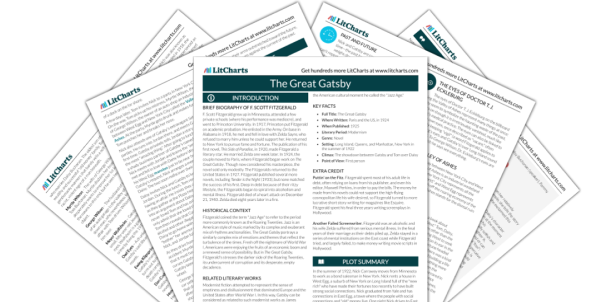
  • Quote explanations & citation info
    Arrow Icon

    Find the perfect quote

    Then understand it perfectly. And get the citation, too. For all 35,000+ quotes we cover.

    Quote explanations & citation info
  • Every PDF download
    Arrow Icon

    Printable PDFs for every guide

    "Would not have made it through without the printable PDFs. They're like having in-class notes for every discussion!"

    – LitCharts A⁺ user

    Every PDF download
  • One-page Quick Lit Guides
    Arrow Icon

    Understand key basics—fast

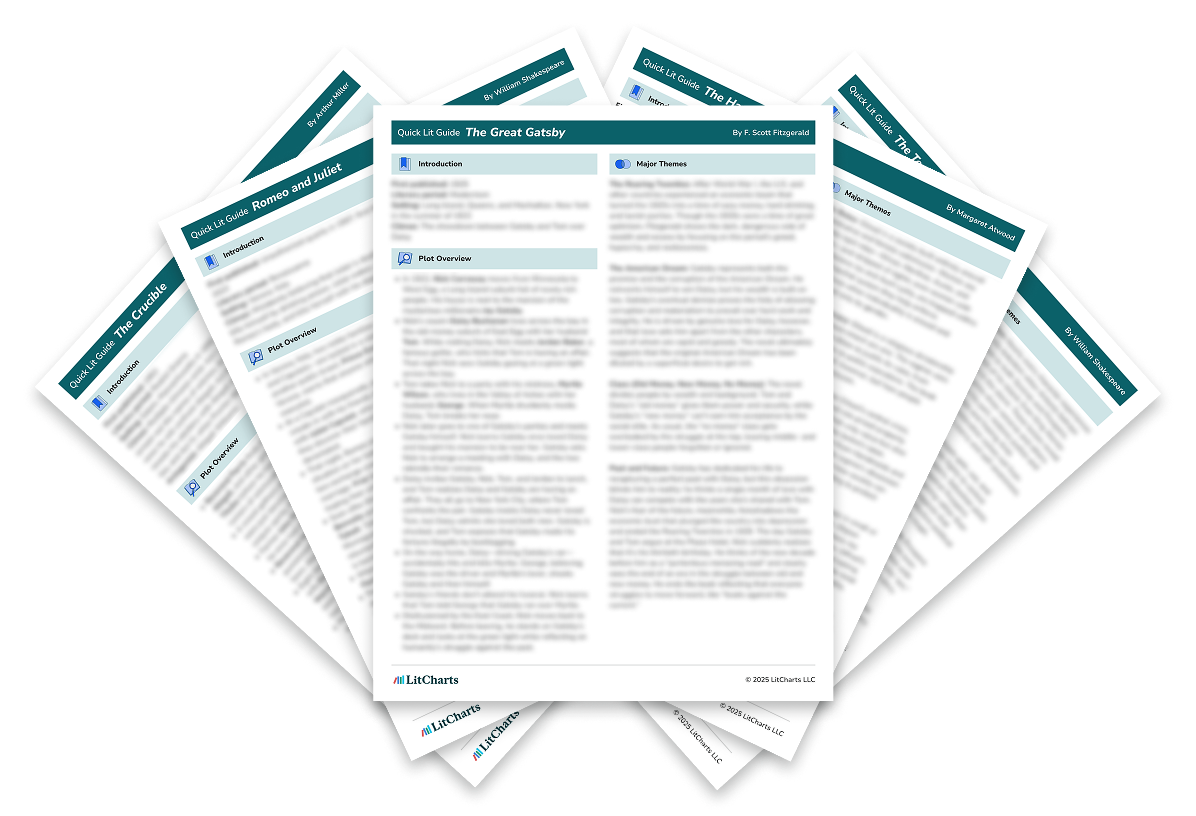
    Printable, one-page guides that cover the plot points, themes, and ideas you need to know.

    One-page Quick Lit Guides
  • Detailed chapter analysis
    Arrow Icon

    Get what happens and what it means

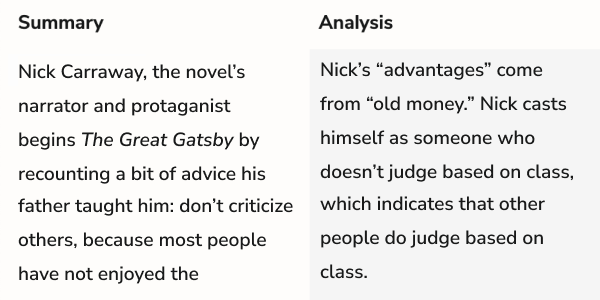
    Targeted analysis next to the summary ensures you’ll understand more than just the plot.

    Detailed chapter analysis
  • Line-by-line poetry analysis
    Arrow Icon

    Get the meaning in every line

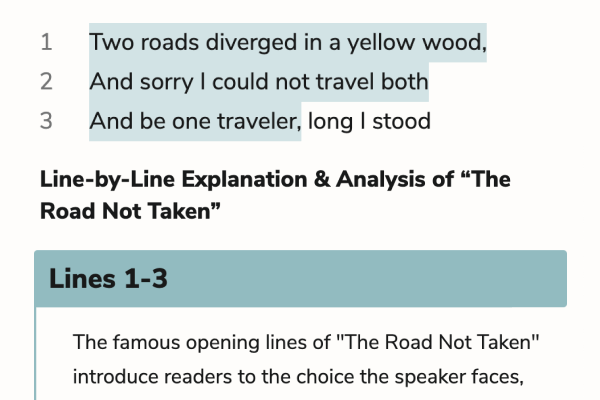
    Never feel lost reading a poem again with clear and in-depth analysis of each and every line.

    Line-by-line poetry analysis
  • Literary & poetic device analysis
    Arrow Icon

    Decode the author’s language

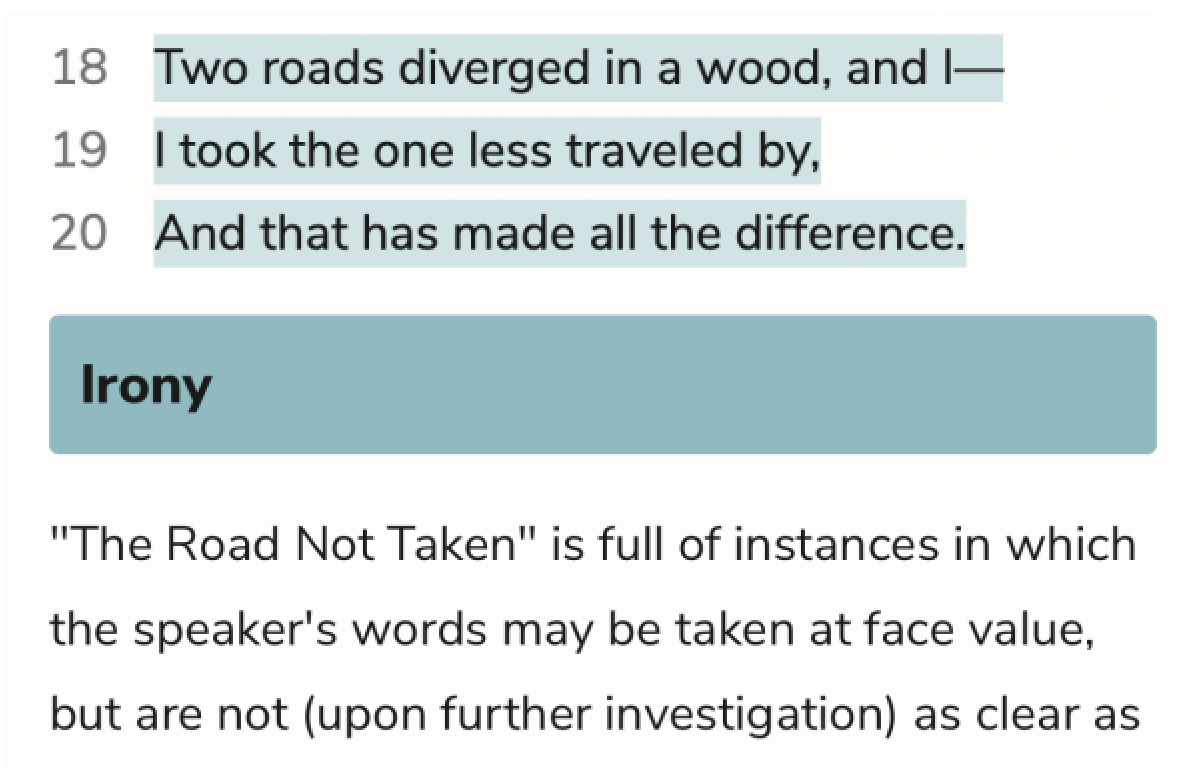
    Quickly find and understand the key devices in whatever you’re reading.

    Literary & poetic device analysis
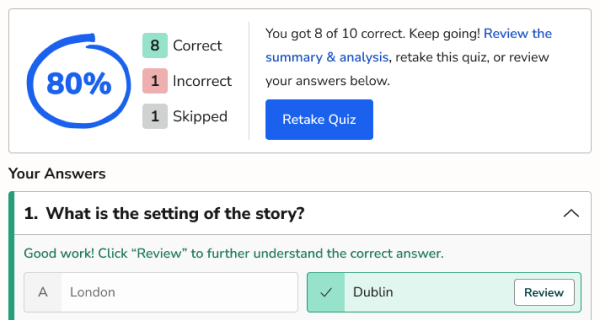
  • Unlimited quizzes
    Arrow Icon

    Unlimited quizzes and feedback

    Boost your learning with quizzes that pinpoint and address knowledge gaps.

    Unlimited quizzes
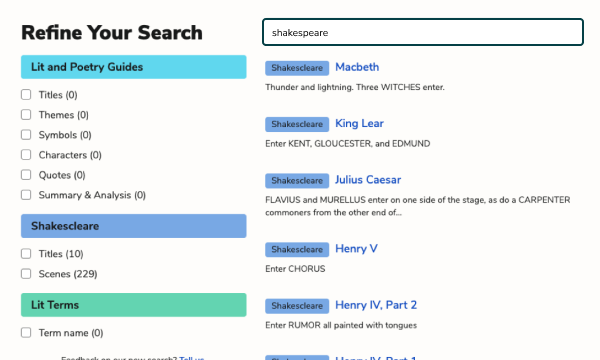
  • Advanced search
    Arrow Icon

    Find exactly what you need

    Refine your search using advanced filters like genre, time period, literary movement, author context, grade level, and more.

    Advanced search
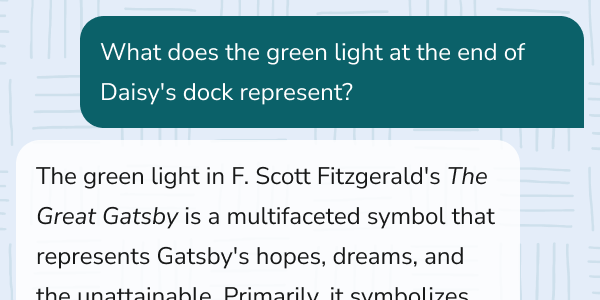
  • Ask LitCharts AI
    Arrow Icon

    Ask LitCharts AI

    Instant answers to all your lit questions. Powered by LitCharts content and AI.

    Ask LitCharts AI
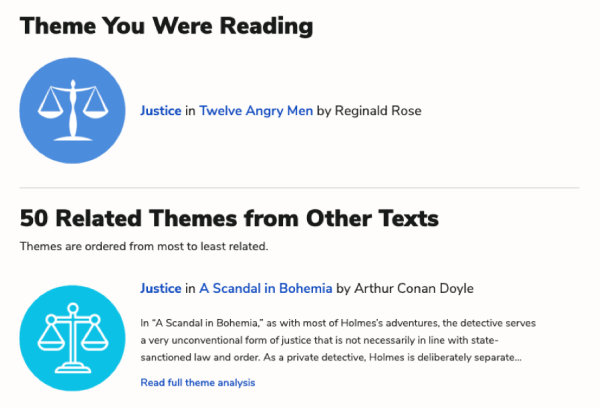
  • Theme comparisons across books
    Arrow Icon

    Compare and contrast

    Identify similar themes across books, making comparisons fast and simple.

    Theme comparisons across books
  • Highlight, take notes, & save guides
    Arrow Icon

    Make LitCharts your own

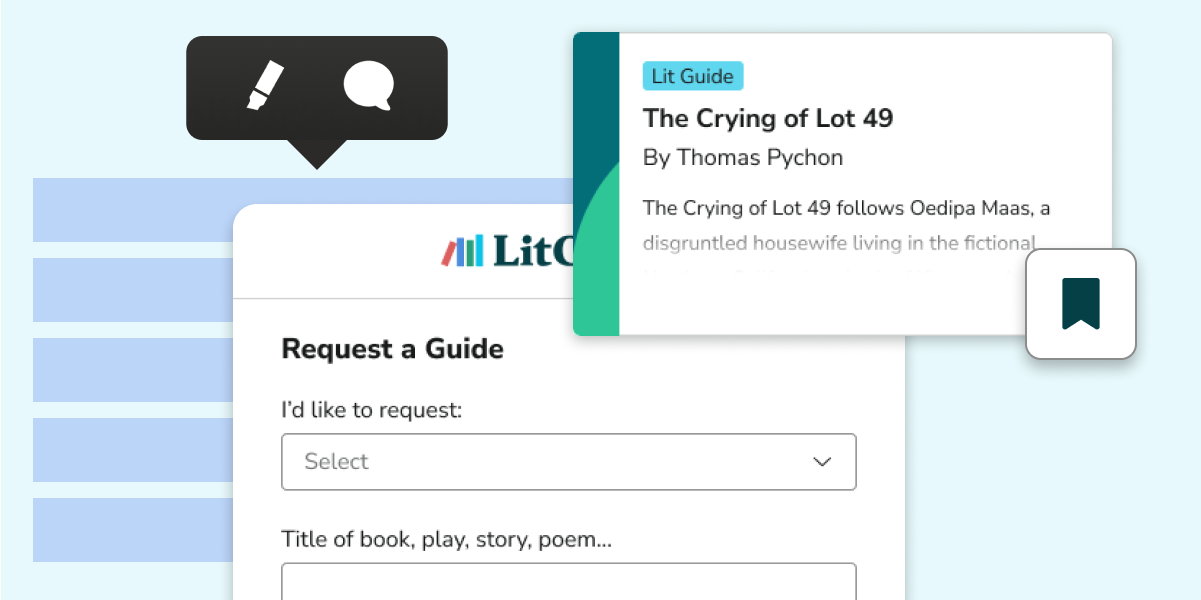
    Add highlights or notes, save guides for easy access later, and request new titles.

    Highlight, take notes, & save guides
  • A+ logo.Teacher
    $795USD/mo
    Charged $95.40 USD every year
  • Quote explanations & citation info
    Arrow Icon

    Find the perfect quote

    Then understand it perfectly. And get the citation, too. For all 35,000+ quotes we cover.

    Quote explanations & citation info
  • Every PDF download
    Arrow Icon

    Printable PDFs for every guide

    "Would not have made it through without the printable PDFs. They're like having in-class notes for every discussion!"

    – LitCharts A⁺ user

    Every PDF download
  • One-page Quick Lit Guides
    Arrow Icon

    Understand key basics—fast

    Printable, one-page guides that cover the plot points, themes, and ideas you need to know.

    One-page Quick Lit Guides
  • Detailed chapter analysis
    Arrow Icon

    Get what happens and what it means

    Targeted analysis next to the summary ensures you’ll understand more than just the plot.

    Detailed chapter analysis
  • Line-by-line poetry analysis
    Arrow Icon

    Get the meaning in every line

    Never feel lost reading a poem again with clear and in-depth analysis of each and every line.

    Line-by-line poetry analysis
  • Literary & poetic device analysis
    Arrow Icon

    Decode the author’s language

    Quickly find and understand the key devices in whatever you’re reading.

    Literary & poetic device analysis
  • Unlimited quizzes
    Arrow Icon

    Unlimited quizzes and feedback

    Boost your learning with quizzes that pinpoint and address knowledge gaps.

    Unlimited quizzes
  • Advanced search
    Arrow Icon

    Find exactly what you need

    Refine your search using advanced filters like genre, time period, literary movement, author context, grade level, and more.

    Advanced search
  • Ask LitCharts AI
    Arrow Icon

    Ask LitCharts AI

    Instant answers to all your lit questions. Powered by LitCharts content and AI.

    Ask LitCharts AI
  • Theme comparisons across books
    Arrow Icon

    Compare and contrast

    Identify similar themes across books, making comparisons fast and simple.

    Theme comparisons across books
  • Highlight, take notes, & save guides
    Arrow Icon

    Make LitCharts your own

    Add highlights or notes, save guides for easy access later, and request new titles.

    Highlight, take notes, & save guides
  • Teacher editions
    Arrow Icon

    Save time with in-depth organizers

    "THE best teaching resource I have ever used. My students love the handouts."

    – LitCharts A⁺ User

    Teacher editions
  • Printable classroom resources
    Arrow Icon

    Cut prep time in half

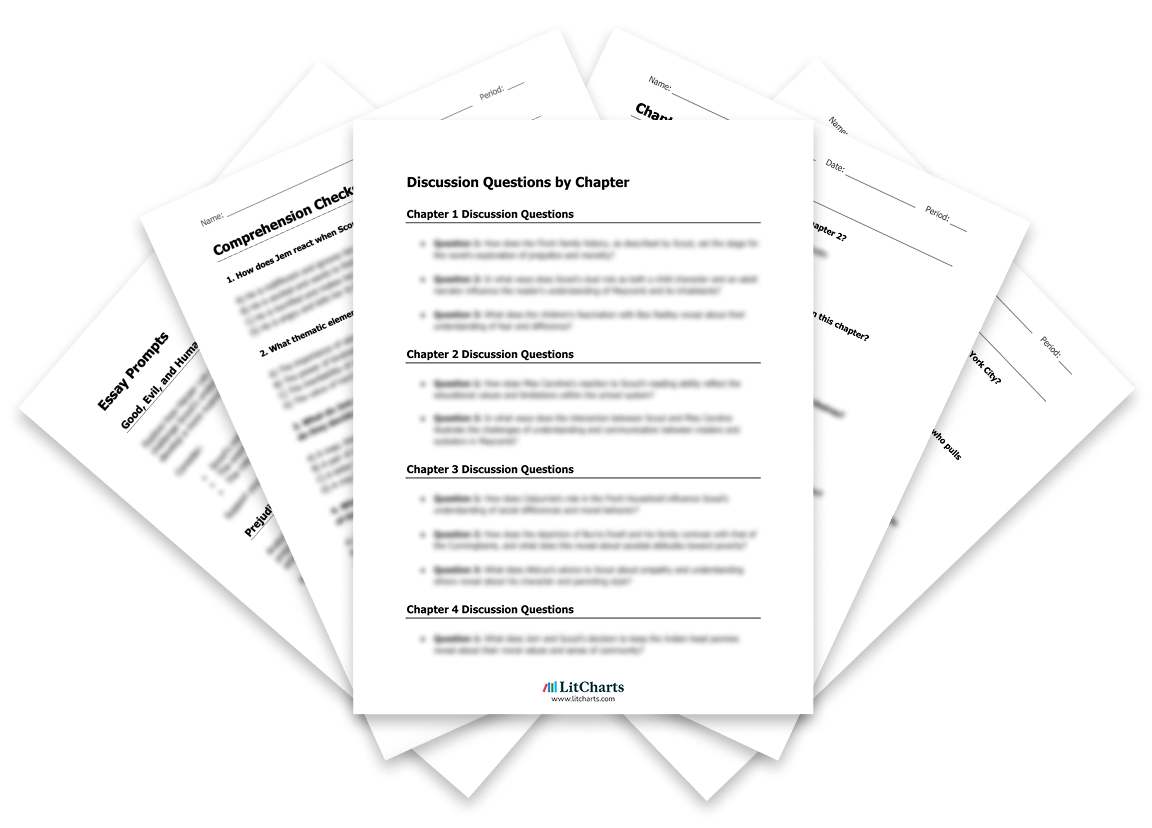
    Essay prompts, discussion questions, and comprehension checks—easy to print and ready to use in class.

    Printable classroom resources
  • Discussion question generator
    Arrow Icon

    Discussion question generator

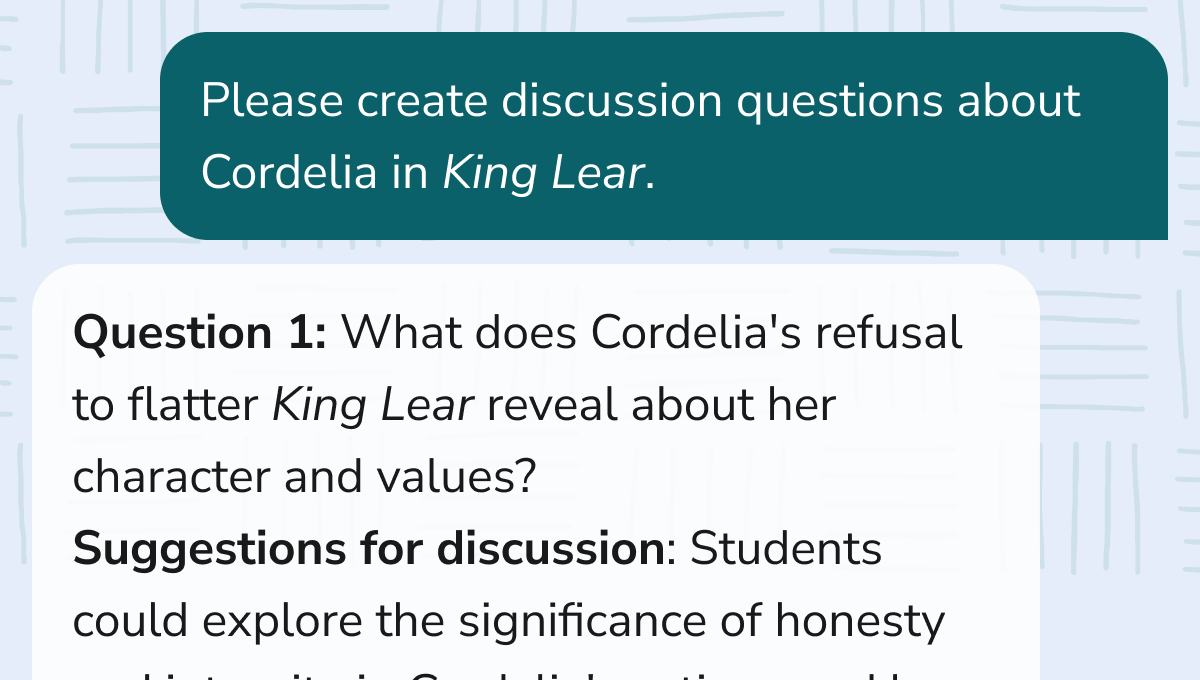
    Instantly create discussion questions that get people talking, through the power of LitCharts analysis and AI.

    Discussion question generator
  • Essay prompt generator
    Arrow Icon

    Essay prompt generator

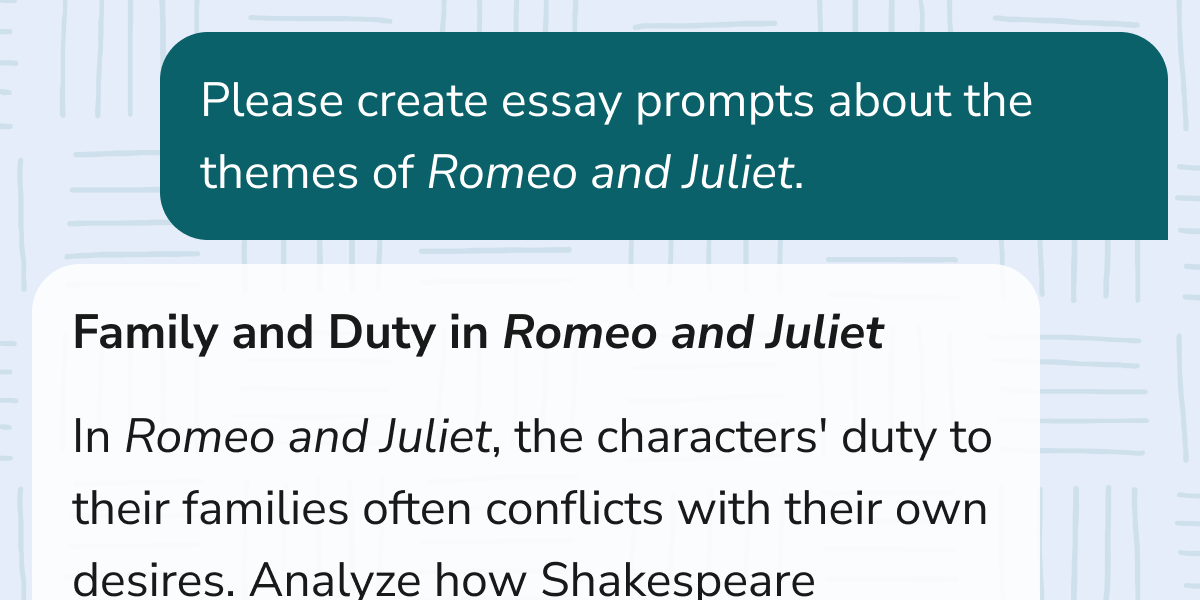
    Quickly create thought-provoking essay prompts that will get your students writing, powered by LitCharts analysis and AI.

    Essay prompt generator
  • Quiz question generator
    Arrow Icon

    Quiz question generator

    Effortlessly generate targeted quiz questions, powered by the world’s best literary analysis and AI.

    Quiz question generator
  • PDFs

    Literature Guide PDFs

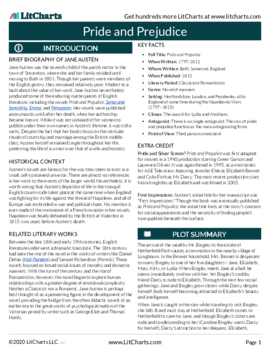
    LitCharts PDFs for every book you'll read this year.

    Instant PDF downloads of all 2247 LitCharts literature guides and of every new one we publish. Try a free sample literature guide.
    "Would not have made it through AP Literature without the printable PDFs. They're like having in-class notes for every discussion!"
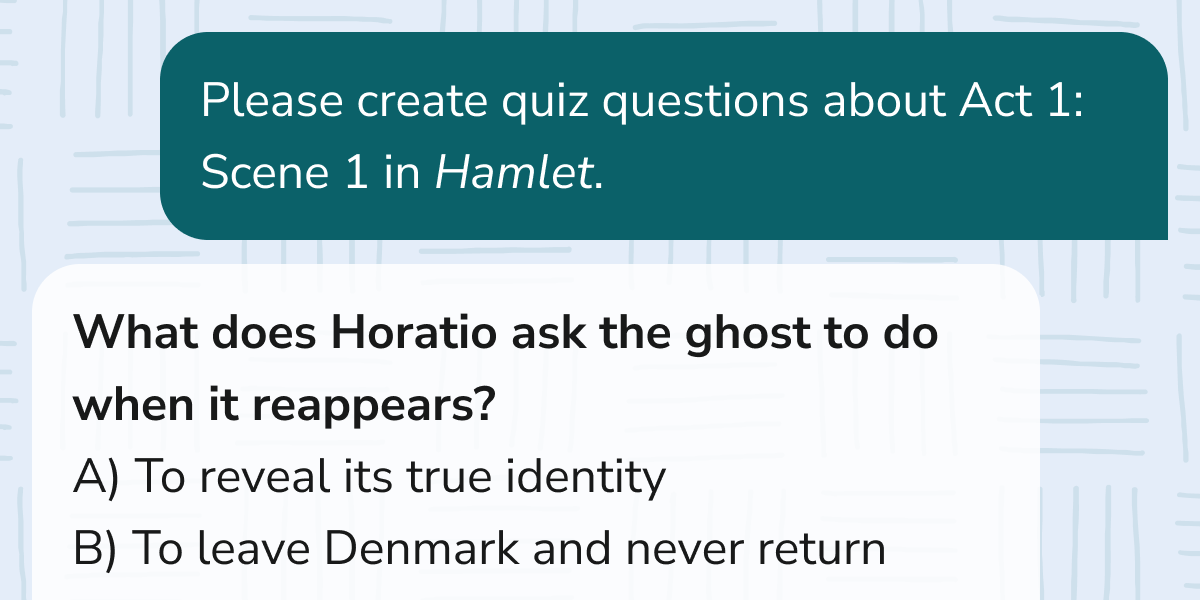
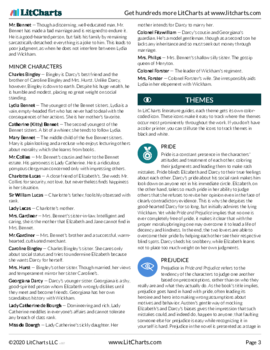
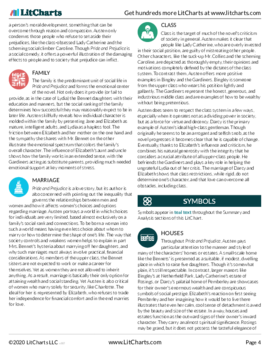
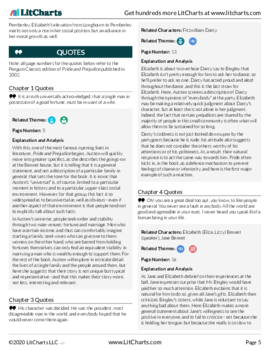
    Pride and Prejudice PDF
    Quotes

    Quotes Explanations

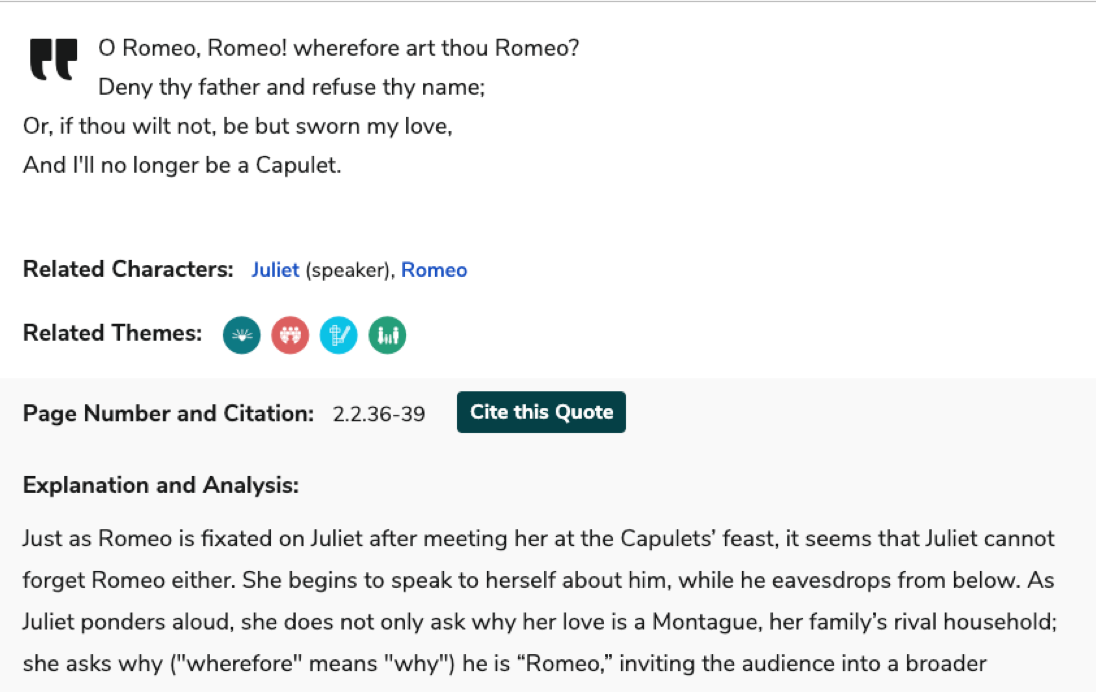
    Find the perfect quote. Understand it perfectly. Then rock the citation, too.
    For all 50,101 quotes we cover.
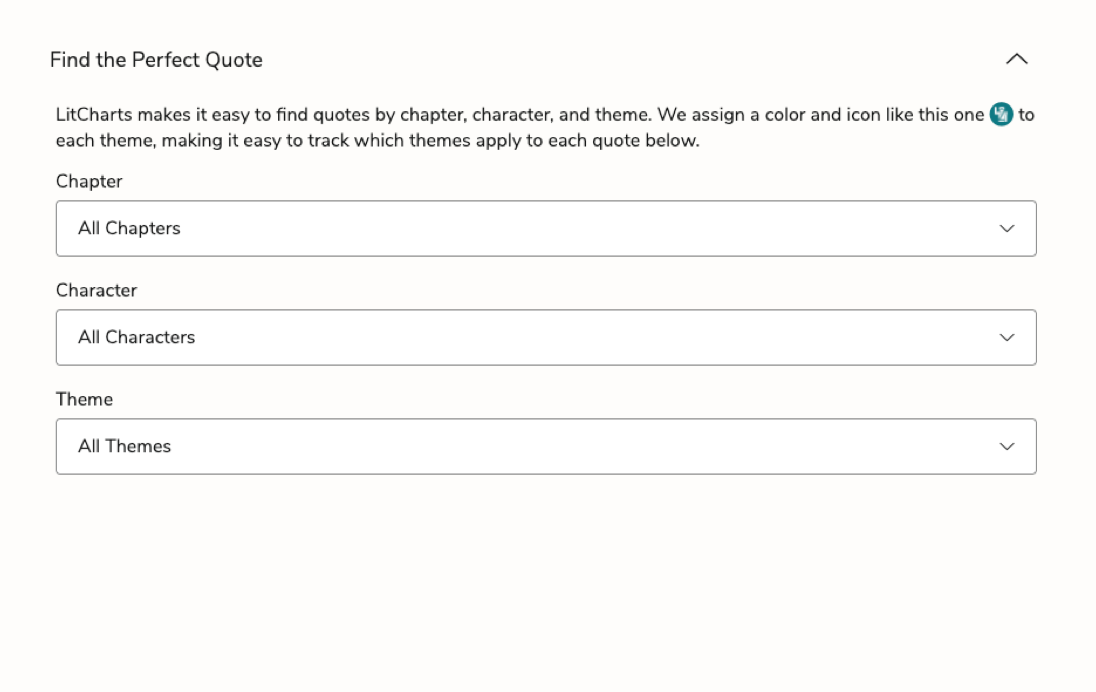
    Find. Search every LitChart by chapter, theme, or character to find just the quote you need.
    Understand. Grasp the quote's significance with our detailed Explanation and Analysis.
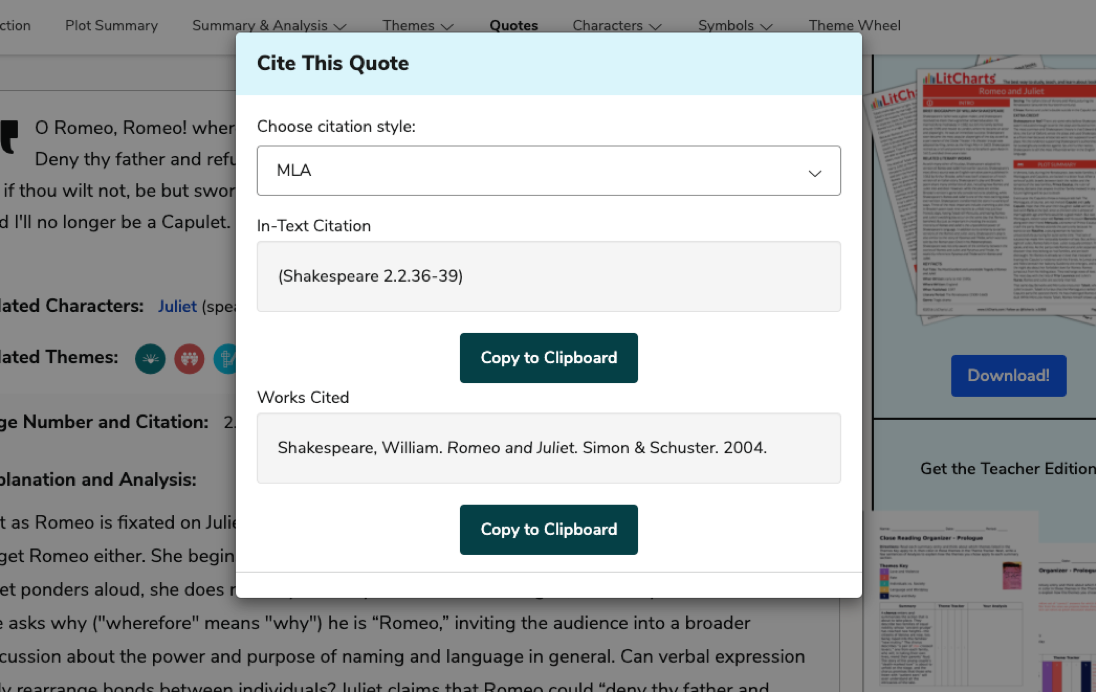
    Cite. Get the quote's page or line number, or a perfect citation with our Cite this Quote button.
    Teacher editions

    Teacher Editions

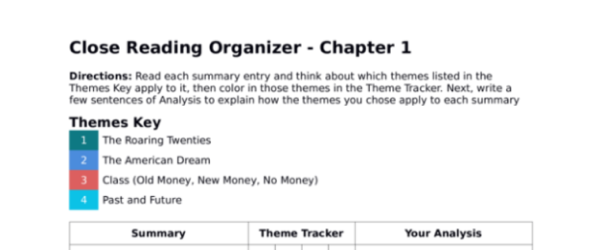
    Close reading made easy for students.
    Time saved for teachers.
    For every book we cover.

    Teacher Edition Contents

    Close Reading Organizers
    Character Analysis Organizers
    Symbol Analysis Organizers
    Theme Analysis Organizers
    Quote Analysis Organizers

    Common Core-aligned

    ""
    Try a free and complete sample Teacher Edition.

    PDFs of modern translations of every one of Shakespeare's 37 plays, 154 sonnets, and 3 longer poems.

    Every translation available to download as a PDF. Try a free sample Shakespeare translation.
    "Every teacher of literature should use these translations. They completely demystify Shakespeare. Students love them!"
    Original
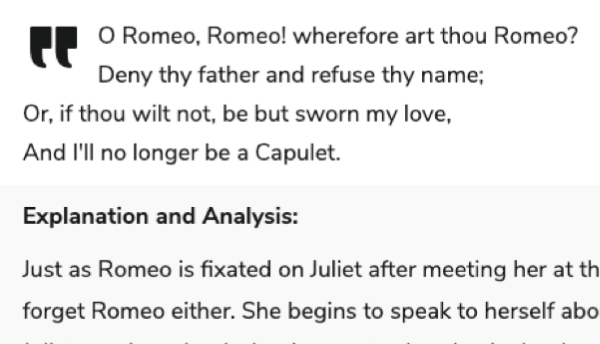
    Romeo
    (aside) She speaks.
    O, speak again, bright angel! For thou art
    As glorious to this night, being o’er my head,
    As is a winged messenger of heaven
    Unto the white, upturnèd, wondering eyes
    Of mortals that fall back to gaze on him
    When he bestrides the lazy-puffing clouds
    And sails upon the bosom of the air.
    Juliet
    O Romeo, Romeo! Wherefore art though Romeo?
    Deny they father and refuse they name.
    Or, if thou wilt not, be but sworn my love,
    And I’ll no longer be a Capulet.
    Modern
    Romeo
    (to himself) She speaks. Speak again, bright angel! For tonight you are as glorious, there up above me, as a winged messenger of heaven who makes mortals fall onto their backs to gaze up with awestruck eyes as he strides across the lazy clouds and sails through the air.
    Juliet
    O Romeo, Romeo! Why must you be Romeo? Deny your father and give up your name. Or, if you won’t change your name, just swear your love to me and I’ll give up being a Capulet.
    Lit terms
    Literary Terms and Devices
    Definitions and examples for every literary term and device you need to know.
    Plus a quick-reference PDF with concise definitions of all 136 terms in one place.
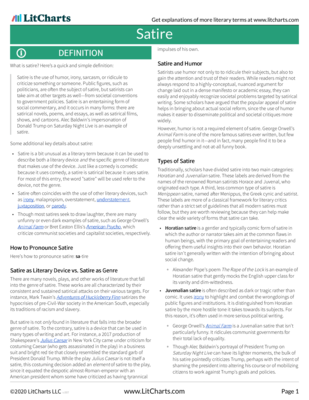
    Try a free sample literary term PDF.

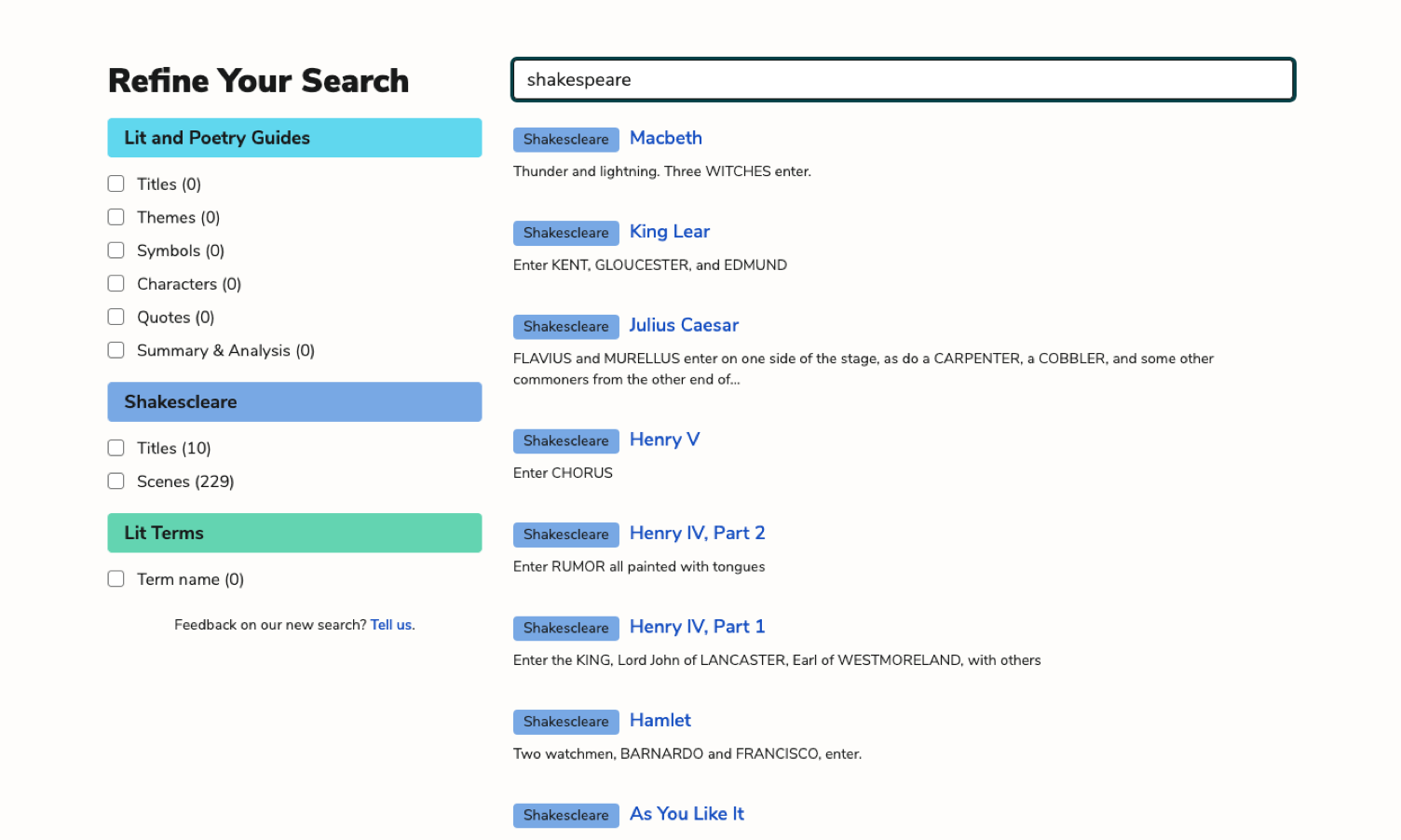
    Advanced search
    Advanced Search
    Refine any search. Find related themes, quotes, symbols, characters, and more.
    Advanced search
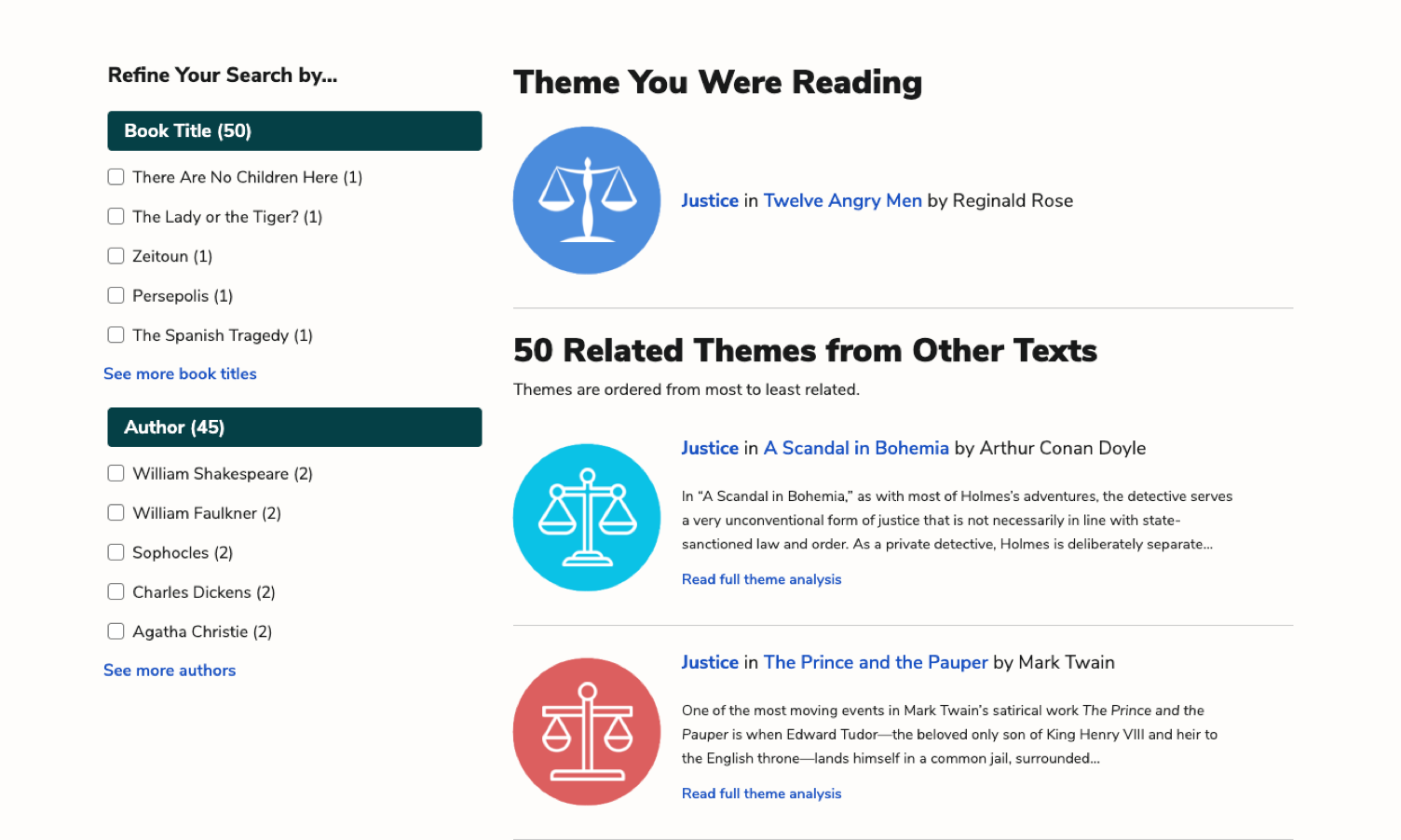
    Related themes
    Related Themes
    Comparing and contrasting texts? Find where any theme occurs across all of LitCharts in seconds.
    Related themes
    Poetry guides
    Poetry Guides
    Line-by-line explanations and analysis of figurative language and poetic devices.
    For every lyric poem we cover.
    Poetry guides
    Sign up for LitCharts A+
    Company
    About Us Our Story
    Support
    Help Center Contact Us
    Connect
    Facebook Twitter
    Legal
    Terms of Service Privacy Policy Privacy Request
    Home About Contact Help
    LitCharts, a Learneo, Inc. business
    Copyright © 2026 All Rights Reserved
    Terms Privacy Privacy Request